dating

Theme

3 image(s) · 11 News

Image gallery

Tooth of extinct Hybodontidae

View: Occlusal
Datation: Jurássic Sup., Kimmerdgian/Tithonian ~150 Millions years
Geologic horizon: Sub bacia Bombarral-Alcobaça / Lourinhã Fm. - PORTUGAL
Deposit Number: PE02-VET-00087 in CCN Coll.
Scale:  1 mm

Tooth of extinct Hybodontidae View: Occlusal Datation: Jurássic Sup., Kimmerdgian/Tithonian ~150 Millions years Geologic horizon: Sub bacia Bombarral-Alcobaça / Lourinhã Fm. - PORTUGAL Deposit Number: PE02-VET-00087 in CCN Coll. Scale: 1 mm

scale tooth Portugal Alcobaça +3
Rates of skeletal character evolution in the skull and postcranial skeleton of hadrosauroids. Cladograms illustrate the results from branch likelihood tests for two morphological partitions: skull (cranium and mandible) (A) and postcranial skeleton (B). In both cladograms, results from the branch likelihood tests are summarized on a strict consensus tree derived from four separately analyzed MPTs, each with 100 dating replicates (a total of 400 Hedman-dated phylogenies). Pie charts on branches illustrate the proportion of dating replicates that showed significantly high rates (red), slow rates (blue), or nonsignificant average rates (white). No pie charts are plotted on branches that showed nonsignificant rates in 100% of dating replicates. Branches that showed high rates (red) in more than 50% of dating replicates are doubled in length. See the Supplementary Material for Hedman-based results plotted separately for each MPT (Supplementary Fig. S2) and for results using the MBL dating method (Supplementary Fig. S3). Silhouettes were created by Scott Hartman and were downloaded from http://phylopic.org (Creative Commons license CC BY 3.0).

Rates of skeletal character evolution in the skull and postcranial skeleton of hadrosauroids. Cladograms illustrate the results from branch likelihood tests for two morphological partitions: skull (cranium and mandible) (A) and postcranial skeleton (B). In both cladograms, results from the branch likelihood tests are summarized on a strict consensus tree derived from four separately analyzed MPTs, each with 100 dating replicates (a total of 400 Hedman-dated phylogenies). Pie charts on branches illustrate the proportion of dating replicates that showed significantly high rates (red), slow rates (blue), or nonsignificant average rates (white). No pie charts are plotted on branches that showed nonsignificant rates in 100% of dating replicates. Branches that showed high rates (red) in more than 50% of dating replicates are doubled in length. See the Supplementary Material for Hedman-based results plotted separately for each MPT (Supplementary Fig. S2) and for results using the MBL dating method (Supplementary Fig. S3). Silhouettes were created by Scott Hartman and were downloaded from http://phylopic.org (Creative Commons license CC BY 3.0).

Protohadros dating evolution skeleton +1
Natural-colour satellite image of part of the Kaiparowits Basin (a central portion of Grand Staircase-Escalante). The branch-like shapes are networks of canyons carved by rivers that dried up millions of years ago. The ridge running roughly north-south through the scene is the Cockscomb, which is surrounded by distinct rock formations deposited at different times in the geologic past. West of the Cockscomb is the Navajo Sandstone, dating from the Triassic. East of the Cockscomb are two formations from the Cretaceous: the light-toned Wahweap and darker Kaiparowits.

Natural-colour satellite image of part of the Kaiparowits Basin (a central portion of Grand Staircase-Escalante). The branch-like shapes are networks of canyons carved by rivers that dried up millions of years ago. The ridge running roughly north-south through the scene is the Cockscomb, which is surrounded by distinct rock formations deposited at different times in the geologic past. West of the Cockscomb is the Navajo Sandstone, dating from the Triassic. East of the Cockscomb are two formations from the Cretaceous: the light-toned Wahweap and darker Kaiparowits.

Allen Kaiparowits Navajo Sandstone Cretaceous +3

News

Did T. rex leave these 66-million-year-old bite marks?
bone tooth feeding Dinosauria Tyrannosaurus behavior dating
Fossilized dinosaur bones from Wyoming are offering a rare glimpse into the feeding behavior of Tyrannosaurus rex. Researchers examined more than 3,000 bones dating back 72 to 66 million years and found just 12 with possible tooth traces, including four with patterns that closely matched the shape and spacing of T. rex teeth.
05/08/2026 sciencedaily
Hidden charcoal reveals the true age of ancient cave paintings
France dating
A new analysis has precisely dated paintings in France’s Font-de-Gaume cave for the first time. Scientists discovered charcoal inside black pigments once thought to contain only minerals, allowing them to use radiocarbon dating. The results show that a bison was painted about 13,000 years ago, while sections of a mask-like figure were added during several widely separated periods.
28/07/2026 sciencedaily
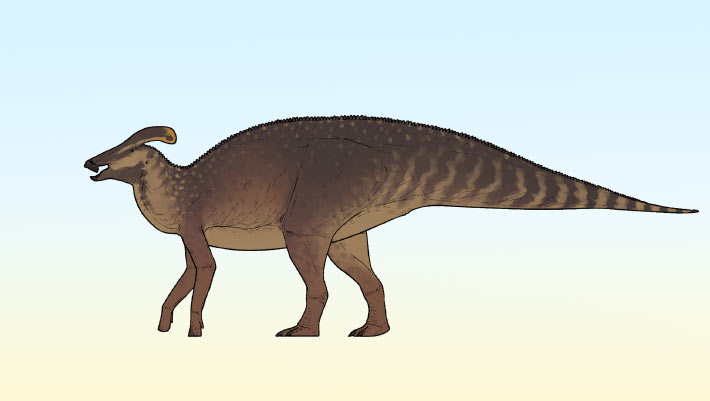
New Crested Dinosaur Species Identified in Canada
crest Canada Campanian Cretaceous Dinosauria Hadrosauridae dating new species
A new genus and species of lambeosaurine hadrosaurid dinosaur has been identified in southern Alberta, Canada, dating back 77 million years to the Campanian age of the Cretaceous period. The post New Crested Dinosaur Species Identified in Canada appeared first on Sci.News: Breaking Science News.
14/07/2026 sci-news
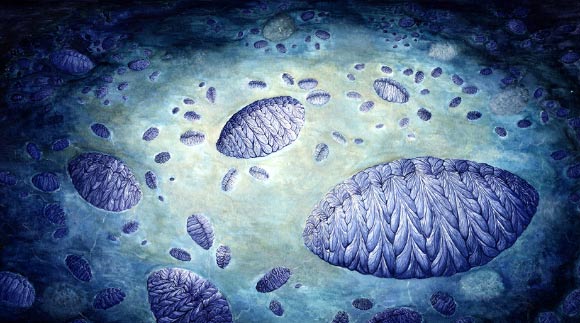
Earth’s Earliest Animals May Have Thrived Too Easily to Evolve
reproduction Ediacaran fossil dating evolution
Fossils from some of the oldest-known animals on Earth, dating from 574 million years ago (Ediacaran period), suggest that cloning, not competition, dominated the Ediacaran seas, slowing evolution until environmental stress helped drive the rise of sexual reproduction and a burst of biodiversity. The post Earth’s Earliest Animals May Have Thrived Too Easily to Evolve appeared first on Sci.News: Breaking Science News.
10/06/2026 sci-news
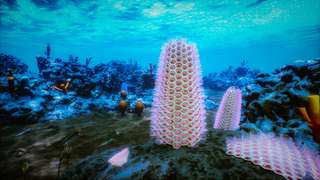
Une découverte en Chine bouscule l’histoire d’étranges animaux vieux de 520 millions d’années
A discovery in China shakes up the story of strange animals dating back 520 million years
China Cambrian fossil dating discovery
Discreet but omnipresent in today's oceans, bryozoans hide a much older history than previously thought. Exceptional fossils discovered in China show that 520 million years ago, these colonial animals were already complex structures, fully...
03/06/2026 futura-terre ⚙ Auto-translated
1 2 3