←

Jurassique

Intervalle géologique

117 image(s) · 38 Actualités

Voir la fiche

Galerie d'images

Muraenosaurus? Reedii, Sp. Nov. and Tricleidus? Laramiensis Knight, American Jurassic Plesiosaurs
Taxons Pantosaurus

Muraenosaurus? Reedii, Sp. Nov. and Tricleidus? Laramiensis Knight, American Jurassic Plesiosaurs

Maurice Jurassique Muraenosaurus Pantosaurus +2
Fossil samples – e.g. ‘primitive’ bony fish (1, 2), a skull of a temnospondyl ‘amphibian’ (probably a metoposauroid) in dorsal view (3), a skull of an archosaur of the crocodile lineage (probably a phytosaur) in palatal view (4), holotype of the “gliding reptile” Icarosaurus siefkeri [1] (5) and Atreipus-Grallator-type dinosaur tracks (bottom right) – from the Newark Supergroup, i.e. a series of mainly Late Triassic to Early Jurassic sedimentary rocks of eastern North America


↑ Edwin H. Colbert: A gliding reptile from the Triassic of New Jersey. American Museum Novitates, 2230. American Museum of Natural History, New York 1966, digitallibrary.amnh.org, cf. fig. 3 therein.
Taxons Atreipus

Fossil samples – e.g. ‘primitive’ bony fish (1, 2), a skull of a temnospondyl ‘amphibian’ (probably a metoposauroid) in dorsal view (3), a skull of an archosaur of the crocodile lineage (probably a phytosaur) in palatal view (4), holotype of the “gliding reptile” Icarosaurus siefkeri [1] (5) and Atreipus-Grallator-type dinosaur tracks (bottom right) – from the Newark Supergroup, i.e. a series of mainly Late Triassic to Early Jurassic sedimentary rocks of eastern North America ↑ Edwin H. Colbert: A gliding reptile from the Triassic of New Jersey. American Museum Novitates, 2230. American Museum of Natural History, New York 1966, digitallibrary.amnh.org, cf. fig. 3 therein.

musée Jurassique inférieur Jurassique Trias supérieur +9
Paddle of the British Jurassic pliosaurid plesiosaur Eardasaurus housed at the Oxford University Natural History Museum.
Taxons Peloneustes

Paddle of the British Jurassic pliosaurid plesiosaur Eardasaurus housed at the Oxford University Natural History Museum.

musée Jurassique Peloneustes Plesiosauria +1
Phylogenetic relationships, chronostratigraphic, and paleoecological implications of M. intrepidus. a Graphic illustrating temporal range of North American tyrannosauroids including species-level range prior to the discovery of M. intrepidus, extension of current range, and hypothesized range based on isolated teeth12. The current gap in the North American tyrannosauroid record spans from the Tithonian to the Aptian. Faunal composition of Late Cretaceous ecosystems was established between the Albian and Turonian, as recognized by the stratigraphic appearance of major clades (see refs. 7,12 and references therein). b generalized phylogenetic relationships of Tyrannosauroidea, showing the appearance of select traits related to cursoriality in tyrannosaurs that are newly optimized as a result of the discovery of M. intrepidus. Tree topology follows this study using the modified dataset of Carr and colleagues27. Coelurus and Tanycolagreus are grafted as basal tyrannosauroids following Brusatte and colleagues5. c Stratigraphic distribution of Allosauria in North America (incl. Megaraptora but see ref. 70 for alternative hypotheses regarding this clade) documents overlap with M. intrepidus in early Late Cretaceous ecosystems leading to (d) refined calibration on the origin of late diverging tyrannosauroids and clade-level faunal turnover within apex predator roles throughout the Late Jurassic–Late Cretaceous of North America. Colored polygons are stylized call-outs and are not intended to reflect two-dimensional data. Temporal data corresponding to this figure are available in Supplementary Table 5
Taxons Coelurus

Phylogenetic relationships, chronostratigraphic, and paleoecological implications of M. intrepidus. a Graphic illustrating temporal range of North American tyrannosauroids including species-level range prior to the discovery of M. intrepidus, extension of current range, and hypothesized range based on isolated teeth12. The current gap in the North American tyrannosauroid record spans from the Tithonian to the Aptian. Faunal composition of Late Cretaceous ecosystems was established between the Albian and Turonian, as recognized by the stratigraphic appearance of major clades (see refs. 7,12 and references therein). b generalized phylogenetic relationships of Tyrannosauroidea, showing the appearance of select traits related to cursoriality in tyrannosaurs that are newly optimized as a result of the discovery of M. intrepidus. Tree topology follows this study using the modified dataset of Carr and colleagues27. Coelurus and Tanycolagreus are grafted as basal tyrannosauroids following Brusatte and colleagues5. c Stratigraphic distribution of Allosauria in North America (incl. Megaraptora but see ref. 70 for alternative hypotheses regarding this clade) documents overlap with M. intrepidus in early Late Cretaceous ecosystems leading to (d) refined calibration on the origin of late diverging tyrannosauroids and clade-level faunal turnover within apex predator roles throughout the Late Jurassic–Late Cretaceous of North America. Colored polygons are stylized call-outs and are not intended to reflect two-dimensional data. Temporal data corresponding to this figure are available in Supplementary Table 5

prédateur Albien Aptien Crétacé +12
Aalenian GSSP (Lower-Middle Jurassic boundary). Golden spike ceremony: July, 28th 2016. Fuentelsaz, Guadalajara, Spain
Intervalles Aalenian

Aalenian GSSP (Lower-Middle Jurassic boundary). Golden spike ceremony: July, 28th 2016. Fuentelsaz, Guadalajara, Spain

Espagne Aalénien Jurassique Jurassique moyen
Laurasia during the closure of the Iapetus Ocean at 430 Ma.
Made using GPlates:  Citations:

Golonka, J. (2007), Late Triassic and Early Jurassic palaeogeography of the world, Palaeogeography, Palaeoclimatology, Palaeoecology, 244(1-4), 297-307.
Müller, R., M. Sdrolias, C. Gaina, and W. Roest (2008), Age, spreading rates, and spreading asymmetry of the world's ocean crust, Geochemistry, Geophysics, Geosystems, 9(Q04006), 19.
Seton, M., R. Müller, S. Zahirovic, C. Gaina, T. Torsvik, G. Shephard, A. Talsma, M. Gurnis, M. Turner, and M. Chandler (2012), Global continental and ocean basin reconstructions since 200 Ma, Earth-Science Reviews, 113(3-4), 212-270.
Torsvik, T., and R. Van de Voo (2002), Refining Gondwana and Pangea Palaeogeography: Estimates of Phanerozoic non dipole (octupole) fields, Geophysical Journal International, 151(3), 771-794.
Wright, N., S. Zahirovic, R. D. Müller, and M. Seton (2013), Towards community-driven, open-access paleogeographic reconstructions: integrating open-access paleogeographic and paleobiology data with plate tectonics, Biogeosciences, 10, 1529-1541
Intervalles Sheinwoodian

Laurasia during the closure of the Iapetus Ocean at 430 Ma. Made using GPlates: Citations: Golonka, J. (2007), Late Triassic and Early Jurassic palaeogeography of the world, Palaeogeography, Palaeoclimatology, Palaeoecology, 244(1-4), 297-307. Müller, R., M. Sdrolias, C. Gaina, and W. Roest (2008), Age, spreading rates, and spreading asymmetry of the world's ocean crust, Geochemistry, Geophysics, Geosystems, 9(Q04006), 19. Seton, M., R. Müller, S. Zahirovic, C. Gaina, T. Torsvik, G. Shephard, A. Talsma, M. Gurnis, M. Turner, and M. Chandler (2012), Global continental and ocean basin reconstructions since 200 Ma, Earth-Science Reviews, 113(3-4), 212-270. Torsvik, T., and R. Van de Voo (2002), Refining Gondwana and Pangea Palaeogeography: Estimates of Phanerozoic non dipole (octupole) fields, Geophysical Journal International, 151(3), 771-794. Wright, N., S. Zahirovic, R. D. Müller, and M. Seton (2013), Towards community-driven, open-access paleogeographic reconstructions: integrating open-access paleogeographic and paleobiology data with plate tectonics, Biogeosciences, 10, 1529-1541

Jurassique inférieur Jurassique Trias supérieur Phanérozoïque +3
Laurasia during the closure of the Iapetus Ocean at 430 Ma.
Made using GPlates:  Citations:

Golonka, J. (2007), Late Triassic and Early Jurassic palaeogeography of the world, Palaeogeography, Palaeoclimatology, Palaeoecology, 244(1-4), 297-307.
Müller, R., M. Sdrolias, C. Gaina, and W. Roest (2008), Age, spreading rates, and spreading asymmetry of the world's ocean crust, Geochemistry, Geophysics, Geosystems, 9(Q04006), 19.
Seton, M., R. Müller, S. Zahirovic, C. Gaina, T. Torsvik, G. Shephard, A. Talsma, M. Gurnis, M. Turner, and M. Chandler (2012), Global continental and ocean basin reconstructions since 200 Ma, Earth-Science Reviews, 113(3-4), 212-270.
Torsvik, T., and R. Van de Voo (2002), Refining Gondwana and Pangea Palaeogeography: Estimates of Phanerozoic non dipole (octupole) fields, Geophysical Journal International, 151(3), 771-794.
Wright, N., S. Zahirovic, R. D. Müller, and M. Seton (2013), Towards community-driven, open-access paleogeographic reconstructions: integrating open-access paleogeographic and paleobiology data with plate tectonics, Biogeosciences, 10, 1529-1541
Intervalles Homerian

Laurasia during the closure of the Iapetus Ocean at 430 Ma. Made using GPlates: Citations: Golonka, J. (2007), Late Triassic and Early Jurassic palaeogeography of the world, Palaeogeography, Palaeoclimatology, Palaeoecology, 244(1-4), 297-307. Müller, R., M. Sdrolias, C. Gaina, and W. Roest (2008), Age, spreading rates, and spreading asymmetry of the world's ocean crust, Geochemistry, Geophysics, Geosystems, 9(Q04006), 19. Seton, M., R. Müller, S. Zahirovic, C. Gaina, T. Torsvik, G. Shephard, A. Talsma, M. Gurnis, M. Turner, and M. Chandler (2012), Global continental and ocean basin reconstructions since 200 Ma, Earth-Science Reviews, 113(3-4), 212-270. Torsvik, T., and R. Van de Voo (2002), Refining Gondwana and Pangea Palaeogeography: Estimates of Phanerozoic non dipole (octupole) fields, Geophysical Journal International, 151(3), 771-794. Wright, N., S. Zahirovic, R. D. Müller, and M. Seton (2013), Towards community-driven, open-access paleogeographic reconstructions: integrating open-access paleogeographic and paleobiology data with plate tectonics, Biogeosciences, 10, 1529-1541

Jurassique inférieur Jurassique Trias supérieur Phanérozoïque +3
Flora and fauna from each of the twelve periods of the Phanerozoic. From top left: Cambrian, Ordovician, Silurian, Devonian, Carboniferous, Permian, Triassic, Jurassic, Cretaceous, Paleogene, Neogene, and Quaternary species.
Intervalles Phanerozoic

Flora and fauna from each of the twelve periods of the Phanerozoic. From top left: Cambrian, Ordovician, Silurian, Devonian, Carboniferous, Permian, Triassic, Jurassic, Cretaceous, Paleogene, Neogene, and Quaternary species.

Cambrien Carbonifère Crétacé Dévonien +9
Montanoceratops cerorhynchus (Brown & Schlaikjer, 1942) - fossil ceratopsian dinosaur skeleton from the Cretaceous of Montana, USA. (MOR 542, Museum of the Rockies, Bozeman, Montana, USA)
The species name is sometimes incorrectly spelled "cerorhynchos".  The original publication spells it "cerorhynchus".  The genus name is sometimes incorrectly spelled "Montanaceratops".
Ceratopsians are the "horned dinosaurs".  They were large, quadrupedal, herbivorous dinosaurs having a beaked skull and a frill - an extension of bone behind the skull that partially covered the neck.  Ceratopsian dinosaurs are known from the Jurassic and Cretaceous.  The last members of the group died out at the Cretaceous-Tertiary boundary, 65 million years ago.
This is a partial skeleton of a juvenile Montanoceratops, a ceratopsian from the near-latest Cretaceous of western North America.  This type of ceratopsian lacked facial horns.


From exhibit signage:
Sixty-eight million years ago, when the horned dinosaurs Triceratops and Torosaurus inhabited the coastal plain near the inland ocean, primitive "horned" dinosaurs named Montanoceratops lived in uplands near the young Rocky Mountains.  These little protoceratopsians fed on plants with slicing teeth and narrow beaks similar to their giant three-horned relatives.


Classification: Animalia, Chordata, Vertebrata, Reptilia, Archosauria, Dinosauria, Ornithischia, Marginocephalia, Ceratopsia, Leptoceratopsidae
Stratigraphy: St. Mary River Formation, Maastrichtian Stage, Upper Cretaceous
Locality: Little Rocky Coulee, north of the town of Cut Bank, eastern Glacier County, northwestern Montana, USA


Info. at:

en.wikipedia.org/wiki/Montanoceratops
Taxons Montanoceratops

Montanoceratops cerorhynchus (Brown & Schlaikjer, 1942) - fossil ceratopsian dinosaur skeleton from the Cretaceous of Montana, USA. (MOR 542, Museum of the Rockies, Bozeman, Montana, USA) The species name is sometimes incorrectly spelled "cerorhynchos". The original publication spells it "cerorhynchus". The genus name is sometimes incorrectly spelled "Montanaceratops". Ceratopsians are the "horned dinosaurs". They were large, quadrupedal, herbivorous dinosaurs having a beaked skull and a frill - an extension of bone behind the skull that partially covered the neck. Ceratopsian dinosaurs are known from the Jurassic and Cretaceous. The last members of the group died out at the Cretaceous-Tertiary boundary, 65 million years ago. This is a partial skeleton of a juvenile Montanoceratops, a ceratopsian from the near-latest Cretaceous of western North America. This type of ceratopsian lacked facial horns. From exhibit signage: Sixty-eight million years ago, when the horned dinosaurs Triceratops and Torosaurus inhabited the coastal plain near the inland ocean, primitive "horned" dinosaurs named Montanoceratops lived in uplands near the young Rocky Mountains. These little protoceratopsians fed on plants with slicing teeth and narrow beaks similar to their giant three-horned relatives. Classification: Animalia, Chordata, Vertebrata, Reptilia, Archosauria, Dinosauria, Ornithischia, Marginocephalia, Ceratopsia, Leptoceratopsidae Stratigraphy: St. Mary River Formation, Maastrichtian Stage, Upper Cretaceous Locality: Little Rocky Coulee, north of the town of Cut Bank, eastern Glacier County, northwestern Montana, USA Info. at: en.wikipedia.org/wiki/Montanoceratops

os musée États-Unis Crétacé +17
Lamplughsaura dharmarasensis, a basal sauropodomorph from the Lower Jurassic of India, after description by T.S. Kutty et al., 2007, pencil drawing, digital coloring
Taxons Lamplughsaura

Lamplughsaura dharmarasensis, a basal sauropodomorph from the Lower Jurassic of India, after description by T.S. Kutty et al., 2007, pencil drawing, digital coloring

description dessin Inde Jurassique +2
Sarcosaurus diagram of known material: reconstruction based on basal Ceratosaurs (such as Berberosaurus and Saltriovenator). The Skull was made to look more generic and less like more derived Ceratosaurs such as Ceratosaurus. "Liassaurus", referred to "cf. Sarcosaurus woodi" and is smaller than the holotype: material in light grey is preserved, but to what extent is uncertain as it is not figured.
References:
Carrano and Sampson (2004). "A review of coelophysoids (Dinosauria: Theropoda) from the Early Jurassic of Europe, with comments on the late history of the Coelophysoidea." N. Jb. Geol. Palaont. Mh., 2004(9): 537-558. (for figures of the material)
theropoddatabase.com/Coelophysoidea.htm#Sarcosauruswoodi (for measurements of "Liassaurus")

Allain, Ronan & Tykoski, Ronald & Aquesbi, Najat & Jalil, Nour-Eddine & Monbaron, Michel & Russell, Dale & Taquet, Philippe. (2007). An abelisauroid (Dinosauria: Theropoda) from the Early Jurassic of the High Atlas Mountains, Morocco, and the radiation of Ceratosaurs. Journal of Vertebrate Paleontology. 27. 10.1671/0272-4634(2007)27[610:AADTFT]2.0.CO;2. (for measurements for Berberosaurus)
Taxons Sarcosaurus

Sarcosaurus diagram of known material: reconstruction based on basal Ceratosaurs (such as Berberosaurus and Saltriovenator). The Skull was made to look more generic and less like more derived Ceratosaurs such as Ceratosaurus. "Liassaurus", referred to "cf. Sarcosaurus woodi" and is smaller than the holotype: material in light grey is preserved, but to what extent is uncertain as it is not figured. References: Carrano and Sampson (2004). "A review of coelophysoids (Dinosauria: Theropoda) from the Early Jurassic of Europe, with comments on the late history of the Coelophysoidea." N. Jb. Geol. Palaont. Mh., 2004(9): 537-558. (for figures of the material) theropoddatabase.com/Coelophysoidea.htm#Sarcosauruswoodi (for measurements of "Liassaurus") Allain, Ronan & Tykoski, Ronald & Aquesbi, Najat & Jalil, Nour-Eddine & Monbaron, Michel & Russell, Dale & Taquet, Philippe. (2007). An abelisauroid (Dinosauria: Theropoda) from the Early Jurassic of the High Atlas Mountains, Morocco, and the radiation of Ceratosaurs. Journal of Vertebrate Paleontology. 27. 10.1671/0272-4634(2007)27[610:AADTFT]2.0.CO;2. (for measurements for Berberosaurus)

Maroc Jurassique inférieur Jurassique holotype +8
Germanodactylus cristatus specimen SMNK PAL 6592. Germanodactylidae; Upper Jurassic, Eichstätt, Germany; Staatliches Museum für Naturkunde Karlsruhe, Germany.
Taxons Germanodactylus

Germanodactylus cristatus specimen SMNK PAL 6592. Germanodactylidae; Upper Jurassic, Eichstätt, Germany; Staatliches Museum für Naturkunde Karlsruhe, Germany.

musée Allemagne Jurassique spécimen +2
Left ilium of Stokesosaurus clevelandi, Madsen 1974 (UMNH VP 7473), Morrison Formation, Utah, USA, Late Jurassic (early Tithonian).
Taxons Stokesosaurus

Left ilium of Stokesosaurus clevelandi, Madsen 1974 (UMNH VP 7473), Morrison Formation, Utah, USA, Late Jurassic (early Tithonian).

États-Unis Morrison Jurassique Jurassique supérieur +3
Megapnosaurus is a coelophysid theropod dinosaur from the Early Jurassic Period of Africa. It was a lightly built bipedal carnivore that grew to just over 2 m long and 13 kg in body mass. Its close relation to Coelophysis has caused some confusion in classifying the genus - it had a slender build and curved S-shaped neck, but was more robust. Comparisons between the scleral rings of Megapnosaurus and modern birds and reptiles indicate that it may have been nocturnal.
Taxons Megapnosaurus

Megapnosaurus is a coelophysid theropod dinosaur from the Early Jurassic Period of Africa. It was a lightly built bipedal carnivore that grew to just over 2 m long and 13 kg in body mass. Its close relation to Coelophysis has caused some confusion in classifying the genus - it had a slender build and curved S-shaped neck, but was more robust. Comparisons between the scleral rings of Megapnosaurus and modern birds and reptiles indicate that it may have been nocturnal.

Jurassique inférieur Jurassique Coelophysidae Coelophysis +3
Photograph of Museo civico di scienze naturali di Bergamo (MCSNB) 2888, the holotype specimen of Eudimorphodon ranzii ZAMBELLI 1973, a basal pterosaur from the Norian (middle Upper Triassic) of the Italian Alps.[1]


↑ see fig. 8A in Silvio Renesto (2006): A reappraisal of the diversity and biogeographic significance of the Norian (Late Triassic) reptiles from the Calcare di Zorzino. In: Jerry D. Harris, Spencer G. Lucas, Justin A. Spielmann, Martin G. Lockley, Andrew R.C. Milner, James I. Kirkland (eds.): The Triassic-Jurassic Terrestrial Transition. New Mexico Museum of Natural History and Science Bulletin 37:445–456 (online)
Taxons Eudimorphodon

Photograph of Museo civico di scienze naturali di Bergamo (MCSNB) 2888, the holotype specimen of Eudimorphodon ranzii ZAMBELLI 1973, a basal pterosaur from the Norian (middle Upper Triassic) of the Italian Alps.[1] ↑ see fig. 8A in Silvio Renesto (2006): A reappraisal of the diversity and biogeographic significance of the Norian (Late Triassic) reptiles from the Calcare di Zorzino. In: Jerry D. Harris, Spencer G. Lucas, Justin A. Spielmann, Martin G. Lockley, Andrew R.C. Milner, James I. Kirkland (eds.): The Triassic-Jurassic Terrestrial Transition. New Mexico Museum of Natural History and Science Bulletin 37:445–456 (online)

musée Mexique Jurassique Trias supérieur +6
Brontosaurus excelsus in the Yale Peabody Museum of Natural History.
Brontosaurus excelsus
Inv no. YPM 1980 (holotype specimen of the species)
Discoverer William H. Reed 1879
Locality Como Bluff, Wyoming
Age Morrison Formatian, Jurassic period, 150 million years ago
Taxons Phytodinosauria

Brontosaurus excelsus in the Yale Peabody Museum of Natural History. Brontosaurus excelsus Inv no. YPM 1980 (holotype specimen of the species) Discoverer William H. Reed 1879 Locality Como Bluff, Wyoming Age Morrison Formatian, Jurassic period, 150 million years ago

musée Morrison Jurassique holotype +3
1 2 3 4 5 6 7 8

Actualités

Small Sauropod Dinosaur from Jurassic Period Discovered in India
Un petit dinosaure sauropode du Jurassique découvert en Inde
bassin Inde Jurassique Jurassique moyen Dinosauria partiel squelette
Des paléontologues indiens ont mis au jour un squelette partiel d’un petit dinosaure néosauropode jusqu’alors inconnu dans les roches du Jurassique moyen du bassin de Kachchh, dans le Gujarat. L'article Petit dinosaure sauropode de la période jurassique découvert en Inde apparaît en premier sur Sci.News : Breaking Science News.
21/07/2026 sci-news ⚙ Traduction automatique
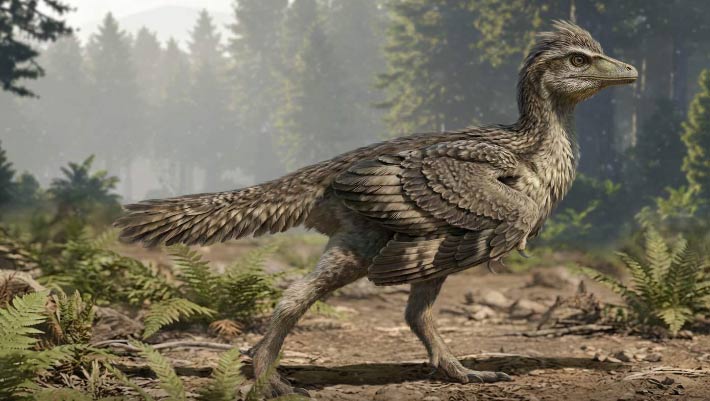
New Jurassic Fossil Reveals How Birds Lost Their Dinosaur Tails
Un nouveau fossile jurassique révèle comment les oiseaux ont perdu leur queue de dinosaure
Chine Jurassique fossile Dinosauria Zhengheornis oiseau
Des paléontologues chinois ont décrit un petit oiseau jurassique jusqu'alors inconnu dont la queue courte offre de nouvelles preuves de la façon dont les premiers oiseaux ont troqué leur longue queue semblable à celle d'un dinosaure contre le coccyx compact qui aide les oiseaux vivants à voler. L'article Un nouveau fossile du Jurassique révèle comment les oiseaux ont perdu leurs queues de dinosaures est apparu en premier sur Sci.News : Breaking Science News.
07/07/2026 sci-news ⚙ Traduction automatique
Yi: Beast of the Week
Yi : la bête de la semaine
Chine Jurassique Jurassique supérieur Dinosauria Yi évolution
 Cette semaine, nous allons découvrir un dinosaure si inhabituel qu'il a complètement changé ce que nous pensions savoir sur l'évolution des dinosaures.  Découvrez Yi qi ! (prononcé « EE-chee ») Yi était un petit dinosaure théropode qui vivait dans ce qui est aujourd'hui le Hebei, dans le nord-est de la Chine, à la fin du Jurassique, il y a environ 159 millions d'années.  Du museau à la queue, il ne mesurait qu'environ 30 cm de long et son envergure mesurait environ 60 cm de large.  Le genre est venu, "Yi" se traduit du mandarin par "aile" et
21/06/2026 prehistoricbeastoftheweek ⚙ Traduction automatique
On le croyait roi des océans au Jurassique : une vertèbre percée raconte un combat d’une violence extrême
os dent vertèbre chasse musée Jurassique fossile Ichthyosauria Ichthyosaurus Pliosaurus comportement
Oublié pendant plus d’un siècle dans les tiroirs d’un musée, un fossile refait aujourd’hui surface et raconte une scène de violence extrême dans les océans du Jurassique. Une vertèbre d’ichtyosaure, marquée par l’impact d’une dent brisée, révèle peut-être l’attaque d’un des plus redoutables...
17/06/2026 futura-terre
Un cétiosaure aurait-il pu quitter la plus longue piste de sauropode ?
Royaume-Uni Bathonien Jurassique Jurassique moyen empreintes Cetiosauria Dinosauria
Récemment, nous avons publié un article mettant en avant les recherches en cours sur la remarquable « autoroute des dinosaures » de l'Oxfordshire.  Une carrière de calcaire conserve les restes de nombreuses traces de dinosaures.  Les traces sont conservées dans des strates déposées au Jurassique moyen.  Les paléontologues estiment que les traces ont environ 166 millions d'années (stade faunique bathonien).  Dans une récente radio
14/06/2026 everythingdinosaur ⚙ Traduction automatique
1 2 3 4 5 6 7 8