Mexico

Country

18 image(s) · 13 News

Image gallery

Muzquizopteryx coahuilensis (Familyː Nyctosauridae) is a species of nyctosaurid pterodactyloid pterosaur from the Late Cretaceous period (early Coniacian stage) of what is now Coahuila, Mexico.
Taxa Muzquizopteryx

Muzquizopteryx coahuilensis (Familyː Nyctosauridae) is a species of nyctosaurid pterodactyloid pterosaur from the Late Cretaceous period (early Coniacian stage) of what is now Coahuila, Mexico.

Mexico Coniacian Cretaceous Late Cretaceous +3
Tyrannosauripus pillmorei, probable Tyrannosaurus footprint from w:Philmont Scout Ranch, New Mexico
Taxa Tyrannosauripodidae

Tyrannosauripus pillmorei, probable Tyrannosaurus footprint from w:Philmont Scout Ranch, New Mexico

Mexico Tyrannosauripodidae Tyrannosauripus Tyrannosaurus
Tyrannosauripus pillmorei, probable Tyrannosaurus footprint from w:Philmont Scout Ranch, New Mexico
Taxa Tyrannosauripus

Tyrannosauripus pillmorei, probable Tyrannosaurus footprint from w:Philmont Scout Ranch, New Mexico

Mexico Tyrannosauripodidae Tyrannosauripus Tyrannosaurus
Comparison of cranial features between closely related southern Laramidian taxa; (A), Akainacephalus johnsoni (UMNH VP 20202) from the Late Cretaceous Kaiparowits Formation of Utah; and (B), Nodocephalosaurus kirtlandensis (SMP VP-900) from the Late Cretaceous Kirtland Formation of New Mexico, in left lateral views. Various synapomorphies are shared with N. kirtlandensis (highlighted in black and white arrows) and includes “flaring nostrils”; enlarged, laterally projecting, loreal osteoderms that are situated directly dorsal to the external nares. Other synapomorphies include pyramid-shaped nasal and frontal osteoderms positioned on the dorsal regions of the skull. A number of significant differences have been observed between both specimens; in A. johnsoni, the anterior, and posterior supraorbital bosses form an enlarged element that is somewhat backswept, whereas in N. kirtlandensis, the posterior and anterior supraorbital bosses are clearly defined as individual osteoderms, and are much smaller in size. Additionally, the squamosal horn in Akainacephalus is very small but is prominent and tetrahedrally shaped in Nodocephalosaurus. The quadratojugal horn in Akainacephalus is massive, has a subtriangular morphology in lateral view and projects almost entirely ventral, whereas in Nodocephalosaurus, the quadratojugal horn is smaller and has a typical fin-shaped morphology. Study sites: asob, anterior supraorbital boss; ext naris, external naris; laca, lacrimal caputegulum; loca, loreal caputegulum; naca, nasal caputegulae; orb, orbit; psob, posterior supraorbital boss; qjh, quadratojugal horn; sqh, squamosal horn.
Taxa Nodocephalosaurus

Comparison of cranial features between closely related southern Laramidian taxa; (A), Akainacephalus johnsoni (UMNH VP 20202) from the Late Cretaceous Kaiparowits Formation of Utah; and (B), Nodocephalosaurus kirtlandensis (SMP VP-900) from the Late Cretaceous Kirtland Formation of New Mexico, in left lateral views. Various synapomorphies are shared with N. kirtlandensis (highlighted in black and white arrows) and includes “flaring nostrils”; enlarged, laterally projecting, loreal osteoderms that are situated directly dorsal to the external nares. Other synapomorphies include pyramid-shaped nasal and frontal osteoderms positioned on the dorsal regions of the skull. A number of significant differences have been observed between both specimens; in A. johnsoni, the anterior, and posterior supraorbital bosses form an enlarged element that is somewhat backswept, whereas in N. kirtlandensis, the posterior and anterior supraorbital bosses are clearly defined as individual osteoderms, and are much smaller in size. Additionally, the squamosal horn in Akainacephalus is very small but is prominent and tetrahedrally shaped in Nodocephalosaurus. The quadratojugal horn in Akainacephalus is massive, has a subtriangular morphology in lateral view and projects almost entirely ventral, whereas in Nodocephalosaurus, the quadratojugal horn is smaller and has a typical fin-shaped morphology. Study sites: asob, anterior supraorbital boss; ext naris, external naris; laca, lacrimal caputegulum; loca, loreal caputegulum; naca, nasal caputegulae; orb, orbit; psob, posterior supraorbital boss; qjh, quadratojugal horn; sqh, squamosal horn.

Mexico Kaiparowits Kirtland Cretaceous +7
Skeletal reconstruction of Ahshislepelta minor, a small ankylosaur from the Late Cretaceous Kirtland Formation of New Mexico. While originally recovered as an ankylosaurid related to Gastonia, later analyses favored a nodosaurid position which this is based on. Based on the holotype SMP VP-1930, consisting of fragmentary shoulder, forelimb, and vertebral elements as well as several osteoderms. Unknown material filled in using Niobrarasaurus, Pawpawsaurus, Silvisaurus, Sauropelta, and Borealopelta. Total length is approximately 4.9 m through the centra.
Notes: Osteoderm placement somewhat speculative, not all osteoderms and vertebral fragments are figured.

References: Burns & Sullivan, 2011.
Taxa Ahshislepelta

Skeletal reconstruction of Ahshislepelta minor, a small ankylosaur from the Late Cretaceous Kirtland Formation of New Mexico. While originally recovered as an ankylosaurid related to Gastonia, later analyses favored a nodosaurid position which this is based on. Based on the holotype SMP VP-1930, consisting of fragmentary shoulder, forelimb, and vertebral elements as well as several osteoderms. Unknown material filled in using Niobrarasaurus, Pawpawsaurus, Silvisaurus, Sauropelta, and Borealopelta. Total length is approximately 4.9 m through the centra. Notes: Osteoderm placement somewhat speculative, not all osteoderms and vertebral fragments are figured. References: Burns & Sullivan, 2011.

Mexico Kirtland Cretaceous Late Cretaceous +13
Eekaulostomus cuevasae gen. and sp. nov. from the Danian marine deposits of the Belisario Domínguez quarry, near Palenque, Chiapas, southeastern Mexico. 1, General view of IGM 4716, holotype and single specimen known. 2, Idealized line drawing of the same specimen.

Eekaulostomus cuevasae gen. and sp. nov. from the Danian marine deposits of the Belisario Domínguez quarry, near Palenque, Chiapas, southeastern Mexico. 1, General view of IGM 4716, holotype and single specimen known. 2, Idealized line drawing of the same specimen.

drawing Mexico Danian holotype +1
Sandstones of the lower Kirtland Formation (Late Campanian), outcropping near Coal Creek. New Mexico. Photo by Nick Longrich

Sandstones of the lower Kirtland Formation (Late Campanian), outcropping near Coal Creek. New Mexico. Photo by Nick Longrich

Mexico Kirtland Campanian formation
A fossil tree from the Coal Creek region, Fruitland Formation, latest Cretaceous (Late Campanian), San Juan Basin, New Mexico

A fossil tree from the Coal Creek region, Fruitland Formation, latest Cretaceous (Late Campanian), San Juan Basin, New Mexico

Mexico Fruitland Campanian Cretaceous +2
Photograph of the holotype skull of Titanoceratops ouranos, from the late Campanian aged Kirtland/Fruitland beds of New Mexico, USA. Photograph by Nick Longrich
Taxa Titanoceratops

Photograph of the holotype skull of Titanoceratops ouranos, from the late Campanian aged Kirtland/Fruitland beds of New Mexico, USA. Photograph by Nick Longrich

Mexico United States Fruitland Kirtland +4
Diagram featuring the holotype skull (ZPAL MgD-I/105) of Tylocephale gilmorei in left lateral view. Scale bar equals 5 cm (50 mm). Based on Maryańska & Osmólska, 1974,[1] and Sullivan, 2006.[2]
References

↑ (1974). "Pachycephalosauria, a new suborder of ornithischian dinosaurs". Palaeontologica Polonica (30): 45−102.

↑ (2006). "A taxonomic review of the Pachycephalosauridae (Dinosauria: Ornithischia)". New Mexico Museum of Natural History and Science Bulletin (35): 347–365.
Taxa Tylocephale

Diagram featuring the holotype skull (ZPAL MgD-I/105) of Tylocephale gilmorei in left lateral view. Scale bar equals 5 cm (50 mm). Based on Maryańska & Osmólska, 1974,[1] and Sullivan, 2006.[2] References ↑ (1974). "Pachycephalosauria, a new suborder of ornithischian dinosaurs". Palaeontologica Polonica (30): 45−102. ↑ (2006). "A taxonomic review of the Pachycephalosauridae (Dinosauria: Ornithischia)". New Mexico Museum of Natural History and Science Bulletin (35): 347–365.

scale museum Mexico holotype +6
Braincase of WSC 10058, holotype of Ornatops 
Braincase of Ornatops incantatus in digital 3D model in right lateral (A and C) and left lateral (D and F) views, with enlarged images of the right (B) and left (E) auditory regions.

Credit: McDonald AT, Wolfe DG, Freedman Fowler EA, Gates TA. 2021. A new brachylophosaurin (Dinosauria: Hadrosauridae) from the Upper Cretaceous Menefee Formation of New Mexico. PeerJ 9:e11084 https://doi.org/10.7717/peerj.11084
Taxa Ornatops

Braincase of WSC 10058, holotype of Ornatops Braincase of Ornatops incantatus in digital 3D model in right lateral (A and C) and left lateral (D and F) views, with enlarged images of the right (B) and left (E) auditory regions. Credit: McDonald AT, Wolfe DG, Freedman Fowler EA, Gates TA. 2021. A new brachylophosaurin (Dinosauria: Hadrosauridae) from the Upper Cretaceous Menefee Formation of New Mexico. PeerJ 9:e11084 https://doi.org/10.7717/peerj.11084

Mexico Cretaceous holotype Dinosauria +3
Reconstruction of the skull of Tlatolophus galorum by sculptor Samuel Nieves Tlapaya (El Alebrije Prehistórico). Displayed in the lobby of the hosting hotel of the 12th Latin American Congress of Paleontology, held in Puebla, Mexico, during the first week of March 2025.
Taxa Tlatolophus

Reconstruction of the skull of Tlatolophus galorum by sculptor Samuel Nieves Tlapaya (El Alebrije Prehistórico). Displayed in the lobby of the hosting hotel of the 12th Latin American Congress of Paleontology, held in Puebla, Mexico, during the first week of March 2025.

Mexico Tlatolophus skull
Plate XII(XIX).
Fig. 1. Coelophysis bauri COPE. Sacrum, consisting of three vertebrae and last dorsal vertebra. COPE’s original. Triassic, New Mexico. Preserved in American Museum of Natural History, New York. Nat. size, from a cast in Tübingen. a, right lateral view; b, left lateral view; c, ventral view.
Fig. 2. Thecodontosaurus skirtopodus SEELEY sp. Right humerus. Original in Vienna Hofmuseum (Coll. ADLER 1886). Upper Karroo, Cape Colony, South Africa. 1/2 nat. size, from a cast in Tübingen.
Fig. 3. Same. Ditto. Proximal end of a right humerus in posterior view. 1/2 nat. size (the lateral part is missing).
Fig. 4. Same. Ditto. Distal end of a left humerus in anterior view. 1/2 nat. size.
Fig. 5. Same. Ditto. Distal end of a left femur in posterior view. 1/2 nat. size.
Fig. 6. Same. Ditto. Proximal end of a left tibia, lateral view. 1/2 nat. size.
Fig. 7. Thecodontosaurus browni SEELEY sp. Left femur in posterior view. SEELEY’s original. From the Stormberg Beds of the Telle River near Aliwal North, Cape Colony, South Africa. (From casts in the British Museum and Tübingen.) 1/2 nat. size.

Fig. 8. Same. Ditto. Right femur, medial view.

Plate XII(XIX). Fig. 1. Coelophysis bauri COPE. Sacrum, consisting of three vertebrae and last dorsal vertebra. COPE’s original. Triassic, New Mexico. Preserved in American Museum of Natural History, New York. Nat. size, from a cast in Tübingen. a, right lateral view; b, left lateral view; c, ventral view. Fig. 2. Thecodontosaurus skirtopodus SEELEY sp. Right humerus. Original in Vienna Hofmuseum (Coll. ADLER 1886). Upper Karroo, Cape Colony, South Africa. 1/2 nat. size, from a cast in Tübingen. Fig. 3. Same. Ditto. Proximal end of a right humerus in posterior view. 1/2 nat. size (the lateral part is missing). Fig. 4. Same. Ditto. Distal end of a left humerus in anterior view. 1/2 nat. size. Fig. 5. Same. Ditto. Distal end of a left femur in posterior view. 1/2 nat. size. Fig. 6. Same. Ditto. Proximal end of a left tibia, lateral view. 1/2 nat. size. Fig. 7. Thecodontosaurus browni SEELEY sp. Left femur in posterior view. SEELEY’s original. From the Stormberg Beds of the Telle River near Aliwal North, Cape Colony, South Africa. (From casts in the British Museum and Tübingen.) 1/2 nat. size. Fig. 8. Same. Ditto. Right femur, medial view.

humerus vertebra museum Mexico +8
Muzquizopteryx coahuilensis (Familyː Nyctosauridae) is a species of nyctosaurid pterodactyloid pterosaur from the Late Cretaceous period (early Coniacian stage) of what is now Coahuila, Mexico.

Muzquizopteryx coahuilensis (Familyː Nyctosauridae) is a species of nyctosaurid pterodactyloid pterosaur from the Late Cretaceous period (early Coniacian stage) of what is now Coahuila, Mexico.

Mexico Coniacian Cretaceous Late Cretaceous +3
Tyrannosauripus pillmorei, probable Tyrannosaurus footprint from w:Philmont Scout Ranch, New Mexico

Tyrannosauripus pillmorei, probable Tyrannosaurus footprint from w:Philmont Scout Ranch, New Mexico

Mexico Tyrannosauripodidae Tyrannosauripus Tyrannosaurus
Comparison of cranial features between closely related southern Laramidian taxa; (A), Akainacephalus johnsoni (UMNH VP 20202) from the Late Cretaceous Kaiparowits Formation of Utah; and (B), Nodocephalosaurus kirtlandensis (SMP VP-900) from the Late Cretaceous Kirtland Formation of New Mexico, in left lateral views. Various synapomorphies are shared with N. kirtlandensis (highlighted in black and white arrows) and includes “flaring nostrils”; enlarged, laterally projecting, loreal osteoderms that are situated directly dorsal to the external nares. Other synapomorphies include pyramid-shaped nasal and frontal osteoderms positioned on the dorsal regions of the skull. A number of significant differences have been observed between both specimens; in A. johnsoni, the anterior, and posterior supraorbital bosses form an enlarged element that is somewhat backswept, whereas in N. kirtlandensis, the posterior and anterior supraorbital bosses are clearly defined as individual osteoderms, and are much smaller in size. Additionally, the squamosal horn in Akainacephalus is very small but is prominent and tetrahedrally shaped in Nodocephalosaurus. The quadratojugal horn in Akainacephalus is massive, has a subtriangular morphology in lateral view and projects almost entirely ventral, whereas in Nodocephalosaurus, the quadratojugal horn is smaller and has a typical fin-shaped morphology. Study sites: asob, anterior supraorbital boss; ext naris, external naris; laca, lacrimal caputegulum; loca, loreal caputegulum; naca, nasal caputegulae; orb, orbit; psob, posterior supraorbital boss; qjh, quadratojugal horn; sqh, squamosal horn.

Comparison of cranial features between closely related southern Laramidian taxa; (A), Akainacephalus johnsoni (UMNH VP 20202) from the Late Cretaceous Kaiparowits Formation of Utah; and (B), Nodocephalosaurus kirtlandensis (SMP VP-900) from the Late Cretaceous Kirtland Formation of New Mexico, in left lateral views. Various synapomorphies are shared with N. kirtlandensis (highlighted in black and white arrows) and includes “flaring nostrils”; enlarged, laterally projecting, loreal osteoderms that are situated directly dorsal to the external nares. Other synapomorphies include pyramid-shaped nasal and frontal osteoderms positioned on the dorsal regions of the skull. A number of significant differences have been observed between both specimens; in A. johnsoni, the anterior, and posterior supraorbital bosses form an enlarged element that is somewhat backswept, whereas in N. kirtlandensis, the posterior and anterior supraorbital bosses are clearly defined as individual osteoderms, and are much smaller in size. Additionally, the squamosal horn in Akainacephalus is very small but is prominent and tetrahedrally shaped in Nodocephalosaurus. The quadratojugal horn in Akainacephalus is massive, has a subtriangular morphology in lateral view and projects almost entirely ventral, whereas in Nodocephalosaurus, the quadratojugal horn is smaller and has a typical fin-shaped morphology. Study sites: asob, anterior supraorbital boss; ext naris, external naris; laca, lacrimal caputegulum; loca, loreal caputegulum; naca, nasal caputegulae; orb, orbit; psob, posterior supraorbital boss; qjh, quadratojugal horn; sqh, squamosal horn.

Mexico Kaiparowits Kirtland Cretaceous +6
1 2

News

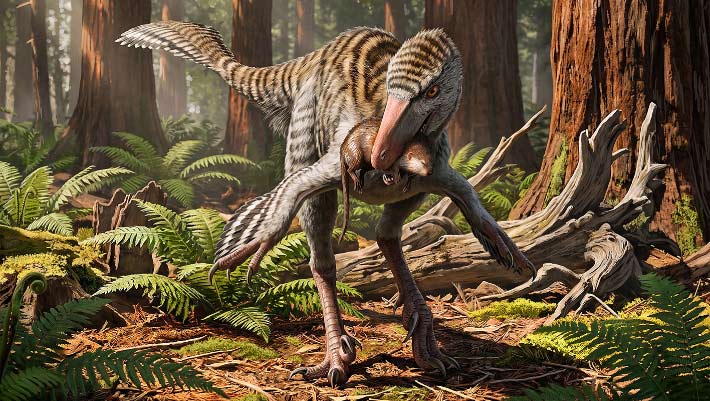
A New Genus of Troodontid Dinosaur from New Mexico
bone Mexico Campanian Cretaceous Late Cretaceous fossil Dinevenator Dinosauria Troodontidae new species skull
Palaeontologists have named a new species of theropod dinosaur from New Mexico. The dinosaur, Dinevenator robustus, lived around 73 million years ago (Campanian faunal stage of the Late Cretaceous). Researchers identified the dinosaur from a fossil skull bone (a frontal) found in north-western New Mexico. It represents a new genus and species of troodontid. Troodontids
13/08/2026 everythingdinosaur
New Troodontid Dinosaur Genus Identified from Fossil Bone Found Decades Ago in New Mexico
bone Mexico fossil Dinevenator Dinosauria Troodontidae bird
Paleontologists have described a new genus of small, bird-like dinosaur that lived in what is now New Mexico approximately 73 million years ago. The post New Troodontid Dinosaur Genus Identified from Fossil Bone Found Decades Ago in New Mexico appeared first on Sci.News: Breaking Science News.
07/08/2026 sci-news
A forgotten fossil just revealed a new Triassic predator from 210 million years ago
jaw predator prey Mexico Triassic fossil skull
A fossil overlooked for nearly 80 years has revealed a previously unknown crocodile relative that lived 210 million years ago in what is now New Mexico. Named Eosphorosuchus lacrimosa, the jackal-sized predator had a reinforced skull, powerful jaw muscles, and a short snout built for tackling larger prey.
30/07/2026 sciencedaily
Flowering Plants Were Already Thriving before Dinosaur-Killing Asteroid Hit
Mexico Cretaceous fossil Dinosauria extinction formation
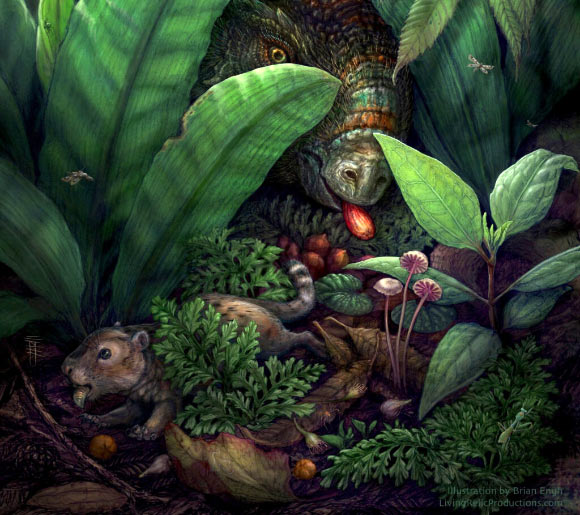
Fossils from the Jose Creek Formation in New Mexico reveal that angiosperms (flowering plants) had built dense, fruit-bearing forests nearly 75 million years ago -- nearly 9 million years before the end-Cretaceous mass extinction that killed the dinosaurs -- challenging a long-held evolutionary narrative about how they came to dominate the planet. The post Flowering Plants Were Already Thriving before Dinosaur-Killing Asteroid Hit appeared first on Sci.News: Breaking Science News.
29/06/2026 sci-news
New Species of Fossil Axolotl Unearthed in Mexico
Mexico fossil specimen discovery new species
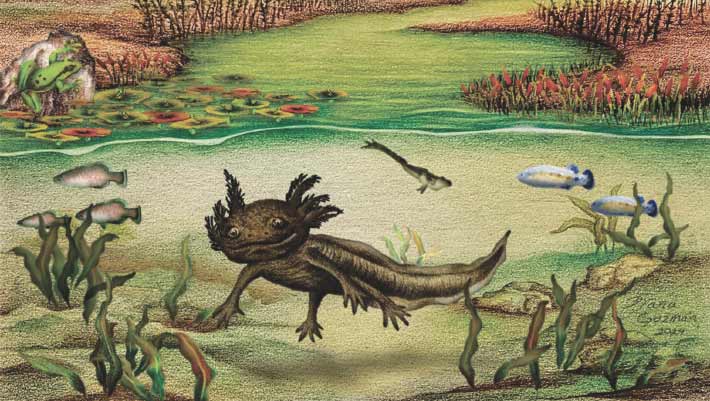
Paleontologists have identified a new species of the axolotl genus Ambystoma from several fossilized specimens found deep in the rocky outcrops of the Mexican state of Hidalgo. The post New Species of Fossil Axolotl Unearthed in Mexico appeared first on Sci.News: Breaking Science News.
02/06/2026 sci-news
1 2 3