←

Dinosauria

Taxon

251 image(s) · 248 Actualités

Voir la fiche

Galerie d'images

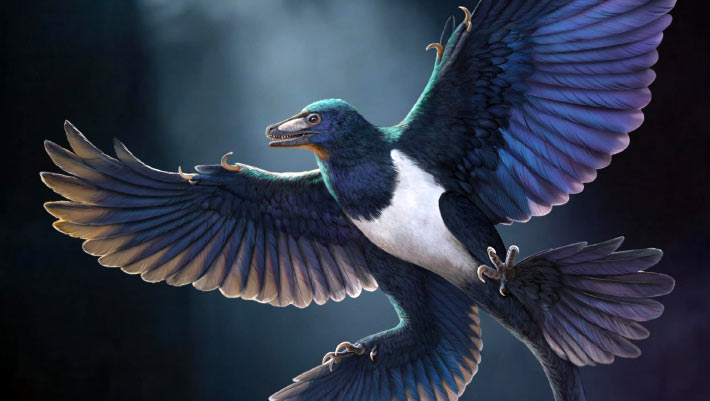
Montage of eight different representatives of coelurosaurian dinosaurs: (Clockwise from upper left) GIN 100/42 which may represent Citipati or a different oviraptorosaur, Sinosauropteryx prima, Nothronychus mckinleyi, Tyrannosaurus rex, Bambiraptor feinbergi, Passer domesticus, Struthiomimus altus, Microraptor gui. This is a collection of eight different works already found in Wikimedia Commons (see source field below).

Montage of eight different representatives of coelurosaurian dinosaurs: (Clockwise from upper left) GIN 100/42 which may represent Citipati or a different oviraptorosaur, Sinosauropteryx prima, Nothronychus mckinleyi, Tyrannosaurus rex, Bambiraptor feinbergi, Passer domesticus, Struthiomimus altus, Microraptor gui. This is a collection of eight different works already found in Wikimedia Commons (see source field below).

Bambiraptor Citipati Coelurosauria Dinosauria +6
Simplified cladogram of Dinosauria with the distribution of feathers according to the fossil record. Despite its more ancient origin, it
was only in maniraptoriformes that modern-type feathers (pennaceous feathers) have arisen (Based in Xu & Guo, 2009; Clarke,

2013; Godefroit et al., 2013; Han et al., 2014; Koshchowitz et al., 2014).

Simplified cladogram of Dinosauria with the distribution of feathers according to the fossil record. Despite its more ancient origin, it was only in maniraptoriformes that modern-type feathers (pennaceous feathers) have arisen (Based in Xu & Guo, 2009; Clarke, 2013; Godefroit et al., 2013; Han et al., 2014; Koshchowitz et al., 2014).

plume fossile Dinosauria Maniraptoriformes +1
Ареал карнозавров

Ареал карнозавров

Dinosauria Tetanurae
Reconstruction of the theropod dinosaur Tachiraptor admirabilis. Artwork created with graphite and colored pencils. Author: Edwin Chávez "Disfrasaurio".

Reconstruction of the theropod dinosaur Tachiraptor admirabilis. Artwork created with graphite and colored pencils. Author: Edwin Chávez "Disfrasaurio".

Averostra Dinosauria Tachiraptor
Ceratosaurus nasicornis reconstruction. Matches proportions shown in Gregory S. Paul (The Princeton Field Guide to Dinosaurs, 2010, p. 84)

Ceratosaurus nasicornis reconstruction. Matches proportions shown in Gregory S. Paul (The Princeton Field Guide to Dinosaurs, 2010, p. 84)

Averostra Ceratosauria Dinosauria
Sketch-drawing of the vertebrate faunal assemblage of the Lisowice site (modified from Niedźwiedzki)10. (a) Large, theropod-like predatory archosaur (Smok wawelski); (b) large temnospondyl amphibian (Cyclotosaurus sp.); (c) small predatory dinosaurs (Neotheropoda indet.); (d) temnospondyl amphibian (Gerrothorax sp.); (e) small basal crocodylomorph (Crocodylomorpha indet.); (f) small diapsid (Choristodere-like animal); (g) hybodont sharks (Polyacrodus and Hybodus); (h) coelacanth fish; (i) dipnoan fish (Ptychoceratodus sp.); (j) actinopterygian fish; (k) gigantic dicynodont; (l) dinosauriforms or early dinosaurs (Dinosauriformes indet. or Dinosauria indet.); (m) small lepidosauromorphs (Sphenodontia indet.); (n) pterosaurs (Pterosauria indet.); (o) early mammaliaform (Hallautherium sp.).

Sketch-drawing of the vertebrate faunal assemblage of the Lisowice site (modified from Niedźwiedzki)10. (a) Large, theropod-like predatory archosaur (Smok wawelski); (b) large temnospondyl amphibian (Cyclotosaurus sp.); (c) small predatory dinosaurs (Neotheropoda indet.); (d) temnospondyl amphibian (Gerrothorax sp.); (e) small basal crocodylomorph (Crocodylomorpha indet.); (f) small diapsid (Choristodere-like animal); (g) hybodont sharks (Polyacrodus and Hybodus); (h) coelacanth fish; (i) dipnoan fish (Ptychoceratodus sp.); (j) actinopterygian fish; (k) gigantic dicynodont; (l) dinosauriforms or early dinosaurs (Dinosauriformes indet. or Dinosauria indet.); (m) small lepidosauromorphs (Sphenodontia indet.); (n) pterosaurs (Pterosauria indet.); (o) early mammaliaform (Hallautherium sp.).

dessin Dinosauria Neotheropoda Pterosauria
Diagram made to illustrate the debate over the hands of theropod dinosaurs and their alleged descendants, the birds ( Aves ). In the last years, the difference between the hands of theropods and birds have been an important thing when it comes question the theory that birds evolved from dinosaurs, even though some scientists may could refute it. In the diagram, a Neotheropoda ( 1 ), basal tetanurae ( 2 ), a coelurosaurian ( 3 ), the bird (?)Archaeopteryx ( 4 ) and modern bird ( 5 ).
In 1997, birdexpert Alan Feduccia at University of North Carolina discovered that birds develop hands with the digits II, III and IV ( see The Cincinnati Enquirer, 25 - 10 - 1997 ). This is in contrast with the hands of tetanurae, which seems to have the digits I, II and III. This make it almost impossible for dinosaurs and birds to be closely related, according to Feduccia.
Since the discovery by Feduccia, scientific research have came up with a possible explanation to the mystery of the dinosaur - bird hand difference, called The frame shift hypothesis ( see http://scienceblogs.com/tetrapodzoology/2009/06/limusaurus_is_awesome.php ). This hypothesis is based on a discovery which shows that although bird embryos develop the fingers II, III and IV, the genes which is coding for the external appearance of the digits seems to be from the fingers I, II and III. Based on this, scientists belive this: when neotheropods evolved into tetanurae, the losed digit I ( not digit IV, as earlier suggested ). During this process, the genes which coded for how the digits should looks like ( the number of phalanges, for example ) became refurnished ( see the color spots in th upper section in the diagram to understan ). The discovery of Limusaurus has been said to support this theory ( see https://www.livescience.com/animals/090617-dinosaur-hands.html ).
One thing is that may can be used to refute that Limusaurus should support the Frame shift hypothesis is that Limusaurus was a ceratosaurian, and is dated to be much younger than the oldest tetanurae's.
Also, some tetanure´s may had 4 digits' like the Archaeornithomimus ( see number 4 in the diagram ) ( see also http://dml.cmnh.org/1998Oct/msg00443.html and the Allosaurus hand in the image here: http://upload.wikimedia.org/wikipedia/commons/6/69/Allosaurus-mounted.jpg ). If this is the digits I, II, III and IV. If so, it shows that tetanurae had the digits I, II and III, and not II, II and IV, like birds.
For more in this debate, see text section to my picture Raptor-Archaeopteryx-bird hands differens.JPG at http://commons.wikimedia.org/wiki/File:Raptor-Archaeopteryx-bird_hands_differens.JPG.

Diagram made to illustrate the debate over the hands of theropod dinosaurs and their alleged descendants, the birds ( Aves ). In the last years, the difference between the hands of theropods and birds have been an important thing when it comes question the theory that birds evolved from dinosaurs, even though some scientists may could refute it. In the diagram, a Neotheropoda ( 1 ), basal tetanurae ( 2 ), a coelurosaurian ( 3 ), the bird (?)Archaeopteryx ( 4 ) and modern bird ( 5 ). In 1997, birdexpert Alan Feduccia at University of North Carolina discovered that birds develop hands with the digits II, III and IV ( see The Cincinnati Enquirer, 25 - 10 - 1997 ). This is in contrast with the hands of tetanurae, which seems to have the digits I, II and III. This make it almost impossible for dinosaurs and birds to be closely related, according to Feduccia. Since the discovery by Feduccia, scientific research have came up with a possible explanation to the mystery of the dinosaur - bird hand difference, called The frame shift hypothesis ( see http://scienceblogs.com/tetrapodzoology/2009/06/limusaurus_is_awesome.php ). This hypothesis is based on a discovery which shows that although bird embryos develop the fingers II, III and IV, the genes which is coding for the external appearance of the digits seems to be from the fingers I, II and III. Based on this, scientists belive this: when neotheropods evolved into tetanurae, the losed digit I ( not digit IV, as earlier suggested ). During this process, the genes which coded for how the digits should looks like ( the number of phalanges, for example ) became refurnished ( see the color spots in th upper section in the diagram to understan ). The discovery of Limusaurus has been said to support this theory ( see https://www.livescience.com/animals/090617-dinosaur-hands.html ). One thing is that may can be used to refute that Limusaurus should support the Frame shift hypothesis is that Limusaurus was a ceratosaurian, and is dated to be much younger than the oldest tetanurae's. Also, some tetanure´s may had 4 digits' like the Archaeornithomimus ( see number 4 in the diagram ) ( see also http://dml.cmnh.org/1998Oct/msg00443.html and the Allosaurus hand in the image here: http://upload.wikimedia.org/wikipedia/commons/6/69/Allosaurus-mounted.jpg ). If this is the digits I, II, III and IV. If so, it shows that tetanurae had the digits I, II and III, and not II, II and IV, like birds. For more in this debate, see text section to my picture Raptor-Archaeopteryx-bird hands differens.JPG at http://commons.wikimedia.org/wiki/File:Raptor-Archaeopteryx-bird_hands_differens.JPG.

Archaeopteryx Coelurosauria Dinosauria Neotheropoda +3
Cladogram of amniotes. Based on File:Cladogram Amniota A.jpg

Cladogram of amniotes. Based on File:Cladogram Amniota A.jpg

Coelurosauria Dinosauria Maniraptora Ornithischia +2
Cladogram of the former "Reptilia" (red)

Cladogram of the former "Reptilia" (red)

Coelurosauria Dinosauria Maniraptora Ornithischia +2
Dinosaur art by me!

Dinosaur art by me!

Dinosauria
The Chicago specimen of Archaeopteryx (PA 830), a well-preserved fossil highlighting the transitional features between non-avian dinosaurs and birds, housed at the Field Museum of Natural History.

The Chicago specimen of Archaeopteryx (PA 830), a well-preserved fossil highlighting the transitional features between non-avian dinosaurs and birds, housed at the Field Museum of Natural History.

musée fossile spécimen Archaeopteryx +2
Life representation of Bicharracosaurus dionidei

Life representation of Bicharracosaurus dionidei

Bicharracosaurus Dinosauria
A badly drew sketch of Brontoholus (a placeholder for when an actual paleoart of Brontotholus is made.

A badly drew sketch of Brontoholus (a placeholder for when an actual paleoart of Brontotholus is made.

paléoart Brontotholus Dinosauria
Archeology center interior Svilajnac

Archeology center interior Svilajnac

Dinosauria
Apex Stegosaurus Reconstruction drawn Jan, 7, 2025 by Adam Treviño

Apex Stegosaurus Reconstruction drawn Jan, 7, 2025 by Adam Treviño

Dinosauria Stegosauria
Anteavis

Anteavis

Anteavis Dinosauria
1 2 3 4 5 6 7 8 9 10 11 12 13 14 15 16

Actualités

Une nouvelle recherche fournit des données sur la température corporelle du tyrannosaure
dent Dinosauria Tyrannosaurus isotope
Les scientifiques, en utilisant une méthode isotopique innovante, ont calculé la température corporelle du Tyrannosaurus rex.  Cette nouvelle recherche, publiée dans la revue "Science Advances", apporte un nouvel éclairage sur le "roi des lézards tyrans". Remarquablement, ce célèbre dinosaure carnivore avait une température corporelle comparable à la nôtre. Des chercheurs ont utilisé de l'émail dentaire fossilisé pour estimer le corps du T. rex
01/10/2026 everythingdinosaur ⚙ Traduction automatique
New Feathered Dinosaur Suggests Flight Evolved More Than Once among Birds’ Closest Relatives
Un nouveau dinosaure à plumes suggère que le vol a évolué plus d’une fois parmi les plus proches parents des oiseaux
vol Chine Dinosauria Norellraptor oiseau nouvelle espèce
Norellraptor barsboldi, une nouvelle espèce de petit dinosaure microraptorine provenant des lits rocheux vieux de 120 millions d'années de la province chinoise du Liaoning, remet en question l'idée selon laquelle les premiers aviateurs partageaient un modèle commun pour prendre leur envol. L'article Un nouveau dinosaure à plumes suggère que le vol a évolué plus d'une fois parmi les plus proches parents des oiseaux est apparu en premier sur Sci.News : Breaking Science News.
01/10/2026 sci-news ⚙ Traduction automatique
Un nouveau taxon Dicynodonte pourrait transformer la chronologie des origines des dinosaures
Tanzanie Trias fossile Dinosauria nouvelle espèce
Les scientifiques ont décrit une nouvelle espèce de dicynodonte à partir de fossiles découverts en Tanzanie. Ces fossiles pourraient aider les paléontologues à affiner la chronologie de l’origine des dinosaures. La nouvelle espèce a été nommée Dinodontosaurus isiyavamanda. Il vivait il y a environ 240 millions d’années pendant la période du Trias. Il est important de noter que le Dinodontosaure n’était pas un dinosaure.
29/09/2026 everythingdinosaur ⚙ Traduction automatique
Célébration des œuvres d'art animalières préhistoriques du début du XXe siècle
Allemagne Dinosauria
Nous vivons dans un âge d’or du paléoart, nous dit-on.  Au moins jusqu'à ce que les images générées par l'IA prennent complètement le dessus.  Chez Everything Dinosaur, nous créons une grande partie de notre propre contenu.  Cependant, nous faisons également de notre mieux pour soutenir les photographes, artistes et autres créateurs. Par exemple, lors d'un récent voyage en Allemagne
28/09/2026 everythingdinosaur ⚙ Traduction automatique
Garudimimus: Beast of the Week
Garudimimus : la bête de la semaine
Mongolie Crétacé Dinosauria Garudimimus oiseau évolution
Cette semaine, nous examinons un dinosaure à plumes qui nous aide à comprendre l'évolution de la famille des dinosaures « imitateurs d'oiseaux ».  Entrez Garudimimus brevipes ! Garudimimus était un dinosaure théropode qui vivait dans ce qui est aujourd'hui la Mongolie pendant la période du Crétacé, il y a entre 96 et 89 millions d'années.  Du bec à la queue, il mesurait environ 3,5 mètres de long et il aurait probablement été omnivore de son vivant.  Le nom du genre se traduit par « Garuda Mimic », en référence à Garuda, le
27/09/2026 prehistoricbeastoftheweek ⚙ Traduction automatique
1 2 3 4 5 6 7 8 9 10 11 12 13 14 15 16 17 18 19 20 21 22 23 24 25 26 27 28 29 30 31 32 33 34 35 36 37 38 39 40 41 42 43 44 45 46 47 48 49 50