Dinosauria

Taxon

285 image(s) · 193 Actualités

Voir la fiche

Galerie d'images

Close-up of the traumatic lesion observed in the right squamosal bone of Big John, a fossilized specimen of the dinosaur species Triceratops horridus. This image shows plaque-like deposition of reactive bone (white arrows) and lytic lesions (black arrows) on the surface around the lesion. These suggest that the lesion was surrounded by newly-formed bone and, therefore, had started to heal.
This image was originally published as Figure 1c in the following journal article:
Ruggero D’Anastasio, Jacopo Cilli, Flavio Bacchia, Federico Fanti, Giacomo Gobbo & Luigi Capasso (2022) Histological and chemical diagnosis of a combat lesion in Triceratops Scientific Reports, 12, 3941 (2022). DOI: 10.1038/s41598-022-08033-2
This article was published with the following license:
"This article is licensed under a Creative Commons Attribution 4.0 International License, which permits use, sharing, adaptation, distribution and reproduction in any medium or format, as long as you give appropriate credit to the original author(s) and the source, provide a link to the Creative Commons licence, and indicate if changes were made. The images or other third party material in this article are included in the article's Creative Commons licence, unless indicated otherwise in a credit line to the material. If material is not included in the article's Creative Commons licence and your intended use is not permitted by statutory regulation or exceeds the permitted use, you will need to obtain permission directly from the copyright holder. To view a copy of this licence, visit http://creativecommons.org/licenses/by/4.0/."

Figure 1c is published without a credit line and, therefore, falls under the article's CC BY 4.0 licence.

Close-up of the traumatic lesion observed in the right squamosal bone of Big John, a fossilized specimen of the dinosaur species Triceratops horridus. This image shows plaque-like deposition of reactive bone (white arrows) and lytic lesions (black arrows) on the surface around the lesion. These suggest that the lesion was surrounded by newly-formed bone and, therefore, had started to heal. This image was originally published as Figure 1c in the following journal article: Ruggero D’Anastasio, Jacopo Cilli, Flavio Bacchia, Federico Fanti, Giacomo Gobbo & Luigi Capasso (2022) Histological and chemical diagnosis of a combat lesion in Triceratops Scientific Reports, 12, 3941 (2022). DOI: 10.1038/s41598-022-08033-2 This article was published with the following license: "This article is licensed under a Creative Commons Attribution 4.0 International License, which permits use, sharing, adaptation, distribution and reproduction in any medium or format, as long as you give appropriate credit to the original author(s) and the source, provide a link to the Creative Commons licence, and indicate if changes were made. The images or other third party material in this article are included in the article's Creative Commons licence, unless indicated otherwise in a credit line to the material. If material is not included in the article's Creative Commons licence and your intended use is not permitted by statutory regulation or exceeds the permitted use, you will need to obtain permission directly from the copyright holder. To view a copy of this licence, visit http://creativecommons.org/licenses/by/4.0/." Figure 1c is published without a credit line and, therefore, falls under the article's CC BY 4.0 licence.

os reproduction spécimen Dinosauria +1
Shri rapax 3D skeletal reconstruction by Alex Pritchard of Dinosaur Skeletons.
Taxons Shri

Shri rapax 3D skeletal reconstruction by Alex Pritchard of Dinosaur Skeletons.

Dinosauria Shri squelette
Remake of the original picture of the Drzewica Formation. Terrestrial environment of the Pliensbachian-Toarcian boundary of Fennoscandinavia  Inland environment of the  Bornholm Coast, nearby the German realm of the Ciechocinek Formation. Includes
Ciechocinek Formation (Lower Toarcian, Bones) and Drzwica Formation (Latest Pliensbachian, Footprints) Fauna
Sorthat Formation environment, fluvial influenced mainland with Cheirolepidaceae and Bennetitales as dominant flora
Dinosaurs are based on material found on various locations of Northern Germany, and Footprints of the underliying Drzewica Formation at the Holy Cross Mountains, connected with Bornholm at the time.
Dinosaur Species appeared: 

Megalosauripus isp. Large Footprints (+65 cm) found on the Drzewica Formation. There is a dorsal vertebrae on the German Margin of the Ciechocinek Formation assigend to Megalosauria (Huene, 1966).
Gravisauria spp. representing the Grimmen Sauropod reported on 2014, as a taxon related with Tazoudasaurus. Barapasaurus-like footprints are know from the Drzewica Formation.
Coelophysoidea spp. based on coeval Anchisauripus tracks from the Holy Cross Mountains.
Basal Ornithischan, related to Eocursor, based on a crouching trace (Gerard Dariusz Gierlinski, Martin G. Lockley, Grzegorz Niedźwiedzki:2009).
Massospondylidae spp. based on Otozum-like tracks.

Remake of the original picture of the Drzewica Formation. Terrestrial environment of the Pliensbachian-Toarcian boundary of Fennoscandinavia Inland environment of the Bornholm Coast, nearby the German realm of the Ciechocinek Formation. Includes Ciechocinek Formation (Lower Toarcian, Bones) and Drzwica Formation (Latest Pliensbachian, Footprints) Fauna Sorthat Formation environment, fluvial influenced mainland with Cheirolepidaceae and Bennetitales as dominant flora Dinosaurs are based on material found on various locations of Northern Germany, and Footprints of the underliying Drzewica Formation at the Holy Cross Mountains, connected with Bornholm at the time. Dinosaur Species appeared: Megalosauripus isp. Large Footprints (+65 cm) found on the Drzewica Formation. There is a dorsal vertebrae on the German Margin of the Ciechocinek Formation assigend to Megalosauria (Huene, 1966). Gravisauria spp. representing the Grimmen Sauropod reported on 2014, as a taxon related with Tazoudasaurus. Barapasaurus-like footprints are know from the Drzewica Formation. Coelophysoidea spp. based on coeval Anchisauripus tracks from the Holy Cross Mountains. Basal Ornithischan, related to Eocursor, based on a crouching trace (Gerard Dariusz Gierlinski, Martin G. Lockley, Grzegorz Niedźwiedzki:2009). Massospondylidae spp. based on Otozum-like tracks.

os Allemagne Pliensbachien Toarcien +7
Fossil of Pinacosaurus, an ankylosaurian  dinosaur
Took the photo at Musee d'Histoire Naturelle, Brussels
Taxons Eopinacosaurus

Fossil of Pinacosaurus, an ankylosaurian dinosaur Took the photo at Musee d'Histoire Naturelle, Brussels

fossile Ankylosauria Dinosauria Eopinacosaurus +1
Tawa is an early theropod from the Late Triassic. The genus is named after the Hopi word for the Puebloan sun god. It was a bipedal carnivore, estimated around 2.5 m in length, and weighing about 15 kg. A basal theropod, Tawa shares physical characteristics with coelophysoids and herrerasaurids, and its discovery supports the theory that dinosaurs originated in the southern supercontinent of Gondwanna, before diversifying as Pangea split apart.

Tawa is an early theropod from the Late Triassic. The genus is named after the Hopi word for the Puebloan sun god. It was a bipedal carnivore, estimated around 2.5 m in length, and weighing about 15 kg. A basal theropod, Tawa shares physical characteristics with coelophysoids and herrerasaurids, and its discovery supports the theory that dinosaurs originated in the southern supercontinent of Gondwanna, before diversifying as Pangea split apart.

Trias supérieur Trias Dinosauria Herrerasauridae +2
This diagram illustrates how scientists believe the dinosaur group theropoda shall be classed in a  phylogenetic tree, besides Sauropoda and Pterosauria. The main reason of this diagram is to show groups or families which had respiratory system like birds. AS in the diagram is abbreviations for "Airsacs", and ASW means "AirSacs supported by immobile femur and a knee-driven Walk". BL means "Bellow lungs". 
Airsacs are known in many different theropods, as well as in birds, which most scientists believe are descendants of dinosaurus. Air sacs are found in the primitive Tawa hallae,[1] the abelisaurid Majungasaurus,[2] as well as Allosauroids like Aerosteon.[3] There is also evidence for respiratory systems like penguinss in Deinonychosaurians.[4] The primitive bird Archaeopteryx also had airsacs (Bonde and Christiansen, 2000).
It is very likely that Deinonychosaurians had airsacs. We don't know  whether Deinonychosauria had a walking/breathing system with immobile thighbones, ASW (like birds) or movable thighbones. However, some people suggsest coeluosaurs had the same type of leg movement as birds ("kneedriven walking").[5]
Bellow lungs are lungs like our own, which alternately is filled with air, and thereafter emptied, after which you take a new breath. This type of lungs exist in mammals, most reptiles, and most amphibians (although some frogs get their oxygen through the skin). There is no evidence for airsacs in Ornithischia, so the likely had bellow lungs.
References.=

↑ (see the video at http://www.nsf.gov/news/special_reports/tawa/)

↑ (Claessens & O'connor, 2006).

↑ Alcober O.A, Sereno P.C, Larsson H.C.E et.al (2008), "Evidence for Avian Intrathoracic Air Sacs in a New Predatory Dinosaur from Argentina", Public Library of Science Journals.

↑ http://www.stumbleupon.com/su/20q5Z4/news.bbc.co.uk/2/hi/science/nature/7081166.stm

↑ http://www.geol.umd.edu/~tholtz/G104/lectures/104coelur.html.

This diagram illustrates how scientists believe the dinosaur group theropoda shall be classed in a phylogenetic tree, besides Sauropoda and Pterosauria. The main reason of this diagram is to show groups or families which had respiratory system like birds. AS in the diagram is abbreviations for "Airsacs", and ASW means "AirSacs supported by immobile femur and a knee-driven Walk". BL means "Bellow lungs". Airsacs are known in many different theropods, as well as in birds, which most scientists believe are descendants of dinosaurus. Air sacs are found in the primitive Tawa hallae,[1] the abelisaurid Majungasaurus,[2] as well as Allosauroids like Aerosteon.[3] There is also evidence for respiratory systems like penguinss in Deinonychosaurians.[4] The primitive bird Archaeopteryx also had airsacs (Bonde and Christiansen, 2000). It is very likely that Deinonychosaurians had airsacs. We don't know whether Deinonychosauria had a walking/breathing system with immobile thighbones, ASW (like birds) or movable thighbones. However, some people suggsest coeluosaurs had the same type of leg movement as birds ("kneedriven walking").[5] Bellow lungs are lungs like our own, which alternately is filled with air, and thereafter emptied, after which you take a new breath. This type of lungs exist in mammals, most reptiles, and most amphibians (although some frogs get their oxygen through the skin). There is no evidence for airsacs in Ornithischia, so the likely had bellow lungs. References.= ↑ (see the video at http://www.nsf.gov/news/special_reports/tawa/) ↑ (Claessens & O'connor, 2006). ↑ Alcober O.A, Sereno P.C, Larsson H.C.E et.al (2008), "Evidence for Avian Intrathoracic Air Sacs in a New Predatory Dinosaur from Argentina", Public Library of Science Journals. ↑ http://www.stumbleupon.com/su/20q5Z4/news.bbc.co.uk/2/hi/science/nature/7081166.stm ↑ http://www.geol.umd.edu/~tholtz/G104/lectures/104coelur.html.

Abelisauridae Aerosteon Archaeopteryx Deinonychosauria +7
cast of Quetzalcoatlus northropi humerus 03 - Pterosaurs Flight in the Age of Dinosaurs

cast of Quetzalcoatlus northropi humerus 03 - Pterosaurs Flight in the Age of Dinosaurs

humérus vol États-Unis moulage +3
cast of Quetzalcoatlus northropi humerus 02 - Pterosaurs Flight in the Age of Dinosaurs

cast of Quetzalcoatlus northropi humerus 02 - Pterosaurs Flight in the Age of Dinosaurs

humérus vol États-Unis moulage +3
Cast of Quetzalcoatlus northropi humerus 01 - Pterosaurs Flight in the Age of Dinosaurs

Cast of Quetzalcoatlus northropi humerus 01 - Pterosaurs Flight in the Age of Dinosaurs

humérus vol moulage Dinosauria +2
Sue - Tyrannosaurus Rex Dinosaur - Field Museum of Natural History, Chicago by Joy of Museums, for more information, see: www.joyofmuseums.com

Sue - Tyrannosaurus Rex Dinosaur - Field Museum of Natural History, Chicago by Joy of Museums, for more information, see: www.joyofmuseums.com

musée Dinosauria Tyrannosaurus
Sue - Tyrannosaurus Rex Dinosaur - Field Museum of Natural History, Chicago by Joy of Museums, for more information, see: www.joyofmuseums.com

Sue - Tyrannosaurus Rex Dinosaur - Field Museum of Natural History, Chicago by Joy of Museums, for more information, see: www.joyofmuseums.com

musée Dinosauria Tyrannosaurus
Dinosaur sand sculptures at the Sand Sculpting Australia "Dinostory" exhibit held at Frankston, Victoria, Australia 2008/2009.The sculpture was the created with the combined efforts of an international team of sand sculpting artists: 
Karen Fralich (Canada) - children playing in foreground;
Peter Bignell (Tasmania, Australia) - Triceratops skull and logo;
Martijn Rijerse (Netherlands) - Tyrannosaurus rex scene;
Jino van Bruissenen and Christina Mija (NSW, Australia) - background panel.

Dinosaur sand sculptures at the Sand Sculpting Australia "Dinostory" exhibit held at Frankston, Victoria, Australia 2008/2009.The sculpture was the created with the combined efforts of an international team of sand sculpting artists: Karen Fralich (Canada) - children playing in foreground; Peter Bignell (Tasmania, Australia) - Triceratops skull and logo; Martijn Rijerse (Netherlands) - Tyrannosaurus rex scene; Jino van Bruissenen and Christina Mija (NSW, Australia) - background panel.

Australie Canada Pays-Bas Dinosauria +3
Margolies, John,, photographer.
Dinosaur World, Tyrannosaurus Rex head detail, Eureka Springs, Arkansas
1994.
1 photograph : color transparency ; 35 mm (slide format).
Notes:

Title, date and keywords based on information provided by the photographer.

Margolies categories: Assorted attractions themselves; roadside attractions.
Purchase; John Margolies 2007 (DLC/PP-2007:125).
Credit line: John Margolies Roadside America photograph archive (1972-2008), Library of Congress, Prints and Photographs Division.
Please use digital image: original slide is kept in cold storage for preservation.
Forms part of: John Margolies Roadside America photograph archive (1972-2008).
Subjects:

Amusement parks--1990-2000.

Dinosaurs--1990-2000.
United States--Arkansas--Eureka Springs.
Format: Slides--1990-2000.--Color
Rights Info: No known restrictions on publication. For more information, see "John Margolies Roadside America Photograph Archive - Rights and Restrictions Information" www.loc.gov/rr/print/res/723_marg.html
Repository: Library of Congress, Prints and Photographs Division, Washington, D.C. 20540 USA, hdl.loc.gov/loc.pnp/pp.print
Part Of: Margolies, John John Margolies Roadside America photograph archive (DLC)  2010650110
General information about the John Margolies Roadside America photograph archive is available at hdl.loc.gov/loc.pnp/pp.mrg
Higher resolution image is available (Persistent URL): hdl.loc.gov/loc.pnp/mrg.00272

Call Number: LC-MA05- 272

Margolies, John,, photographer. Dinosaur World, Tyrannosaurus Rex head detail, Eureka Springs, Arkansas 1994. 1 photograph : color transparency ; 35 mm (slide format). Notes: Title, date and keywords based on information provided by the photographer. Margolies categories: Assorted attractions themselves; roadside attractions. Purchase; John Margolies 2007 (DLC/PP-2007:125). Credit line: John Margolies Roadside America photograph archive (1972-2008), Library of Congress, Prints and Photographs Division. Please use digital image: original slide is kept in cold storage for preservation. Forms part of: John Margolies Roadside America photograph archive (1972-2008). Subjects: Amusement parks--1990-2000. Dinosaurs--1990-2000. United States--Arkansas--Eureka Springs. Format: Slides--1990-2000.--Color Rights Info: No known restrictions on publication. For more information, see "John Margolies Roadside America Photograph Archive - Rights and Restrictions Information" www.loc.gov/rr/print/res/723_marg.html Repository: Library of Congress, Prints and Photographs Division, Washington, D.C. 20540 USA, hdl.loc.gov/loc.pnp/pp.print Part Of: Margolies, John John Margolies Roadside America photograph archive (DLC) 2010650110 General information about the John Margolies Roadside America photograph archive is available at hdl.loc.gov/loc.pnp/pp.mrg Higher resolution image is available (Persistent URL): hdl.loc.gov/loc.pnp/mrg.00272 Call Number: LC-MA05- 272

États-Unis Dinosauria Tyrannosaurus
Life restoration of Tanycolagreus topwilsoni.
Based on Figure 2.16 of "New small theropod from the Upper Jurassic Morrison Formation of Wyoming" by Kenneth Carpenter, Clifford Miles, and Karen Cloward (The Carnivorous Dinosaurs pp. 23-48, Indiana University Press).

Life restoration of Tanycolagreus topwilsoni. Based on Figure 2.16 of "New small theropod from the Upper Jurassic Morrison Formation of Wyoming" by Kenneth Carpenter, Clifford Miles, and Karen Cloward (The Carnivorous Dinosaurs pp. 23-48, Indiana University Press).

Morrison Jurassique Coeluridae Dinosauria +2
A tooth tip from the theropod dinosaur Nuthetes destructor from the Lulworth Formation, England

A tooth tip from the theropod dinosaur Nuthetes destructor from the Lulworth Formation, England

dent Coeluridae Dinosauria Nuthetes +1
Pencil drawing of Coelurus, a coelurosaurian dinosaur that lived from the Late Jurassic period (North America).

Pencil drawing of Coelurus, a coelurosaurian dinosaur that lived from the Late Jurassic period (North America).

dessin Jurassique Jurassique supérieur Coeluria +3
1 2 3 4 5 6 7 8 9 10 11 12 13 14 15 16 17 18

Actualités

Why Were There No Tiny Non-Avian Dinosaurs? Mammals May Have Been to Blame
Pourquoi n’y avait-il pas de petits dinosaures non aviaires ? Les mammifères pourraient être à blâmer
écologie prédateur reproduction Dinosauria évolution mammifères
Les dinosaures ont évolué pour devenir certains des plus grands animaux ayant jamais foulé la Terre, mais un nouveau modèle mathématique suggère que les premiers mammifères les auraient chassés des niches écologiques réservées aux plus petites créatures. Cet article, intitulé « Pourquoi n'y avait-il pas de minuscules dinosaures non aviens ? Les mammifères en seraient-ils responsables ? », a été initialement publié sur Sci.News: Breaking Science News.
10/08/2026 sci-news ⚙ Traduction automatique
Un fossile de reptile vieux de 240 millions d'années révèle un chapitre perdu avant les dinosaures et les crocodiles
prédateur Brésil Trias fossile Dinosauria évolution autres reptiles
Un reptile vieux de 240 millions d'années découvert au Brésil révèle à quoi ressemblait l'évolution juste avant l'avènement des dinosaures et des crocodiles. Le petit prédateur avait des pattes inhabituellement positionnées qui lui permettaient peut-être de se déplacer plus efficacement que de nombreux reptiles antérieurs. Ses proches parents étaient auparavant connus principalement sur d’autres continents, ce qui suggère que ces animaux anciens se sont répandus beaucoup plus loin dans le monde du Trias que les scientifiques ne le pensaient.
10/08/2026 sciencedaily ⚙ Traduction automatique
Les dinosaures sont devenus des géants – alors pourquoi ne sont-ils jamais devenus minuscules ?
écologie croissance Dinosauria évolution mammifères
Les dinosaures ont conquis la terre à des tailles énormes, mais étrangement, ils n'ont presque jamais évolué pour devenir de véritables animaux minuscules. De nouvelles recherches suggèrent que la physiologie à elle seule ne peut pas expliquer cette extrémité miniature manquante du spectre des dinosaures et que les premiers mammifères pourraient en être en partie responsables. Alors que les dinosaures empêchaient les mammifères de devenir grands, les petits mammifères pourraient leur rendre la pareille en occupant des niches écologiques qui auraient autrement pu accueillir des dinosaures de la taille d'une souris.
09/08/2026 sciencedaily ⚙ Traduction automatique
Un magnifique dinosaure en origami présenté à Everything Dinosaur
Dinosauria
Everything Dinosaur soutenir la créativité des fans d'animaux préhistoriques est un objectif clé de l'entreprise.  Nous rencontrons tellement de personnes talentueuses et extraordinaires et nous faisons tout ce que nous pouvons pour les encourager à poursuivre leurs rêves.  Par exemple, lors de la DinoCon le mois dernier, Sue et moi avons reçu un magnifique dinosaure en origami. UN
08/08/2026 everythingdinosaur ⚙ Traduction automatique
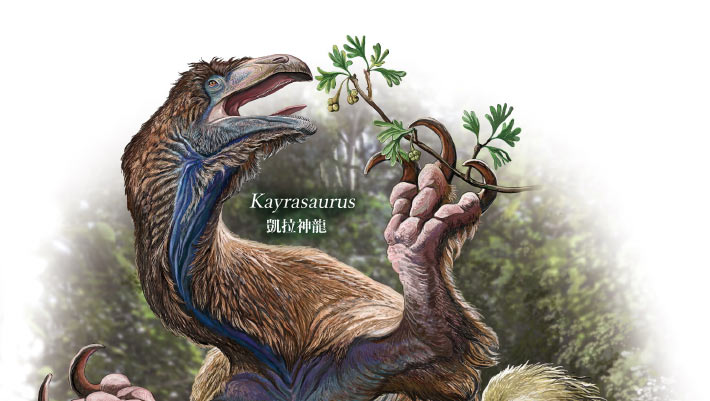
New Troodontid Dinosaur Genus Identified from Fossil Bone Found Decades Ago in New Mexico
Un nouveau genre de dinosaure troodontidé identifié à partir d'un os fossile découvert il y a plusieurs décennies au Nouveau-Mexique
os Mexique fossile Dinevenator Dinosauria Troodontidae oiseau
Les paléontologues ont décrit un nouveau genre de petit dinosaure ressemblant à un oiseau qui vivait dans ce qui est aujourd'hui le Nouveau-Mexique il y a environ 73 millions d'années. L'article Nouveau genre de dinosaures troodontidés identifié à partir d'os fossiles trouvés il y a des décennies au Nouveau-Mexique est apparu en premier sur Sci.News : Breaking Science News.
07/08/2026 sci-news ⚙ Traduction automatique
1 2 3 4 5 6 7 8 9 10 11 12 13 14 15 16 17 18 19 20 21 22 23 24 25 26 27 28 29 30 31 32 33 34 35 36 37 38 39