←

Dinosauria

Taxon

300 image(s) · 316 Actualités

Voir la fiche

Galerie d'images

Mounted skeleton of Pinacosaurus specimen MPC 100/1305 with skull cast of Saichania. Central Museum of Mongolian Dinosaurs.
Taxons Pinacosaurus

Mounted skeleton of Pinacosaurus specimen MPC 100/1305 with skull cast of Saichania. Central Museum of Mongolian Dinosaurs.

musée Belgique moulage spécimen +5
Fossil of Pterosaur, an extinct flying dinosaur, at the ceiling of the Scientific Experiments Center in Sazova Park, Rskişehir, Turkey.

Fossil of Pterosaur, an extinct flying dinosaur, at the ceiling of the Scientific Experiments Center in Sazova Park, Rskişehir, Turkey.

Turquie fossile Dinosauria Pteranodontes +1
Tongnanlong is a large mamenchisaurid sauropod dinosaur that lived in the Late Jurassic period of what is now China. Typical of mamenchisaurids, it had an extremely long neck, even by sauropod standards. Tongnanlong grew to approximately 25 m in length and weighed 20-30 t, making it one of the largest mamenchisaurids.
Taxons Tongnanlong

Tongnanlong is a large mamenchisaurid sauropod dinosaur that lived in the Late Jurassic period of what is now China. Typical of mamenchisaurids, it had an extremely long neck, even by sauropod standards. Tongnanlong grew to approximately 25 m in length and weighed 20-30 t, making it one of the largest mamenchisaurids.

Chine Jurassique Jurassique supérieur Dinosauria +2
Wudingloong is the earliest diverging, and oldest sauropodomorph dinosaur known from East Asia. Typical of basal sauropodomorphs, or "prosauropods," it was a bipedal herbivore with a long neck. Wudingloong was a fairly small prosauropod at approximately 4 m in length, and weighing around 400 kg.
Taxons Wudingloong

Wudingloong is the earliest diverging, and oldest sauropodomorph dinosaur known from East Asia. Typical of basal sauropodomorphs, or "prosauropods," it was a bipedal herbivore with a long neck. Wudingloong was a fairly small prosauropod at approximately 4 m in length, and weighing around 400 kg.

Dinosauria Wudingloong
Restoration of Analong chuanjieensis, a sauropod dinosaur from the Middle Jurassic of China
Taxons Analong

Restoration of Analong chuanjieensis, a sauropod dinosaur from the Middle Jurassic of China

Chine Jurassique Jurassique moyen Analong +1
A hypothetical form of Traukutitan, a sauropod dinosaur
Taxons Traukutitan

A hypothetical form of Traukutitan, a sauropod dinosaur

Dinosauria Traukutitan
Oviraptorian dinosaur
Taxons Shixinggia

Oviraptorian dinosaur

Dinosauria Shixinggia
Comptonatus is an iguanodontid ornithopod dinosaur that lived about 125 million years ago, in the Early Cretaceous of what is now Europe. It was a medium sized herbivore at about 7 m in length, and weighed around 1 t in body mass. Fossilized footprints found near the original specimen indicate that Comptonatus was likely a herding animal. Comparisons between Comptonatus and other iguanodontids that lived around the same time and region show a high rate of diversity. This indicates there may have been pressure for speedy evolutionary adaptation in the region, or perhaps a high volume of migration.
Taxons Comptonatus

Comptonatus is an iguanodontid ornithopod dinosaur that lived about 125 million years ago, in the Early Cretaceous of what is now Europe. It was a medium sized herbivore at about 7 m in length, and weighed around 1 t in body mass. Fossilized footprints found near the original specimen indicate that Comptonatus was likely a herding animal. Comparisons between Comptonatus and other iguanodontids that lived around the same time and region show a high rate of diversity. This indicates there may have been pressure for speedy evolutionary adaptation in the region, or perhaps a high volume of migration.

migration Crétacé Crétacé inférieur spécimen +3
Rinconraptor is a medium-sized megaraptoran theropod dinosaur, growing to approximately 7 m in total body length. It was a bipedal carnivore with proportionately long arms, each ending in three long claws. An enigmatic group, Rinconraptor's discovery helped to reinforce the idea that megaraptorans were closely related to tyrannosaurs.
Taxons Rinconraptor

Rinconraptor is a medium-sized megaraptoran theropod dinosaur, growing to approximately 7 m in total body length. It was a bipedal carnivore with proportionately long arms, each ending in three long claws. An enigmatic group, Rinconraptor's discovery helped to reinforce the idea that megaraptorans were closely related to tyrannosaurs.

griffe Dinosauria Megaraptora Rinconraptor +1
Dinosaur National Monument is a United States National Monument located on the southeast flank of the Uinta Mountains on the border between Colorado and Utah at the confluence of the Green and Yampa Rivers. Although most of the monument area is in Moffat County, Colorado, the Dinosaur Quarry is located in Utah just to the north of the town of Jensen, Utah.
The nearest communities are Jensen, Utah, and Dinosaur, Colorado. The park contains over 800 paleontological sites and has fossils of dinosaurs including Allosaurus, Deinonychus, Abydosaurus (a nearly complete skull, lower jaws and first four neck vertebrae of the specimen DINO 16488 found here at the base of the Mussentuchit Member of the Cedar Mountain Formation is the holotype for the description) and various long-neck, long-tail sauropods. It was declared a National Monument on October 4, 1915.
The rock layer enclosing the fossils is a sandstone and conglomerate bed of alluvial or river bed origin known as the Morrison Formation from the Jurassic Period some 150 million years old. The dinosaurs and other ancient animals were carried by the river system which eventually entombed their remains in Utah.
The pile of sediments were later buried and lithified into solid rock. The layers of rock were later uplifted and tilted to their present angle by the mountain building forces that formed the Uintas during the Laramide orogeny. The relentless forces of erosion exposed the layers at the surface to be found by paleontologists.
The dinosaur fossil beds (bone beds) were discovered in 1909 by Earl Douglass, a paleontologist working and collecting for the Carnegie Museum of Natural History. He and his crews excavated thousands of fossils and shipped them back to the museum in Pittsburgh, Pennsylvania for study and display. President Woodrow Wilson proclaimed the dinosaur beds as Dinosaur National Monument in 1915. The monument boundaries were expanded in 1938 from the original 80-acre (320,000 m2) tract surrounding the dinosaur quarry in Utah, to its present extent of over 200,000 acres (800 km²) in Utah and Colorado, encompassing the spectacular river canyons of the Green and Yampa.
Though lesser-known than the fossil beds, the petroglyphs in Dinosaur National Monument are another treasure the monument holds. Due to problems with vandals, many of the sites are not listed on area maps.
The "Wall of Bones" located within the Dinosaur Quarry building in the park consists of a steeply tilted (67° from horizontal) rock layer which contains hundreds of dinosaur fossils. The enclosing rock has been chipped away to reveal the fossil bones intact for public viewing. In July 2006, the Quarry Visitor Center was closed due to structural problems that since 1957 had plagued the building because it was built on unstable clay. The decision was made to build a new facility elsewhere in the monument to house the visitor center and administrative functions, making it easier to resolve the structural problems of the quarry building while still retaining a portion of the historic Mission 66 era exhibit hall. It was announced in April 2009 that Dinosaur National Monument would receive $13.1 million to refurbish and reopen the gallery as part of the Obama administration's $750 billion stimulus plan. The Park Service successfully rebuilt the Quarry Exhibit Hall, supporting its weight on 70-foot steel micropile columns that extend to the bedrock below the unstable clay. The Dinosaur Quarry was reopened in Fall 2011.
en.wikipedia.org/wiki/Dinosaur_National_Monument

en.wikipedia.org/wiki/Wikipedia:Text_of_Creative_Commons_...
Taxons Abydosaurus

Dinosaur National Monument is a United States National Monument located on the southeast flank of the Uinta Mountains on the border between Colorado and Utah at the confluence of the Green and Yampa Rivers. Although most of the monument area is in Moffat County, Colorado, the Dinosaur Quarry is located in Utah just to the north of the town of Jensen, Utah. The nearest communities are Jensen, Utah, and Dinosaur, Colorado. The park contains over 800 paleontological sites and has fossils of dinosaurs including Allosaurus, Deinonychus, Abydosaurus (a nearly complete skull, lower jaws and first four neck vertebrae of the specimen DINO 16488 found here at the base of the Mussentuchit Member of the Cedar Mountain Formation is the holotype for the description) and various long-neck, long-tail sauropods. It was declared a National Monument on October 4, 1915. The rock layer enclosing the fossils is a sandstone and conglomerate bed of alluvial or river bed origin known as the Morrison Formation from the Jurassic Period some 150 million years old. The dinosaurs and other ancient animals were carried by the river system which eventually entombed their remains in Utah. The pile of sediments were later buried and lithified into solid rock. The layers of rock were later uplifted and tilted to their present angle by the mountain building forces that formed the Uintas during the Laramide orogeny. The relentless forces of erosion exposed the layers at the surface to be found by paleontologists. The dinosaur fossil beds (bone beds) were discovered in 1909 by Earl Douglass, a paleontologist working and collecting for the Carnegie Museum of Natural History. He and his crews excavated thousands of fossils and shipped them back to the museum in Pittsburgh, Pennsylvania for study and display. President Woodrow Wilson proclaimed the dinosaur beds as Dinosaur National Monument in 1915. The monument boundaries were expanded in 1938 from the original 80-acre (320,000 m2) tract surrounding the dinosaur quarry in Utah, to its present extent of over 200,000 acres (800 km²) in Utah and Colorado, encompassing the spectacular river canyons of the Green and Yampa. Though lesser-known than the fossil beds, the petroglyphs in Dinosaur National Monument are another treasure the monument holds. Due to problems with vandals, many of the sites are not listed on area maps. The "Wall of Bones" located within the Dinosaur Quarry building in the park consists of a steeply tilted (67° from horizontal) rock layer which contains hundreds of dinosaur fossils. The enclosing rock has been chipped away to reveal the fossil bones intact for public viewing. In July 2006, the Quarry Visitor Center was closed due to structural problems that since 1957 had plagued the building because it was built on unstable clay. The decision was made to build a new facility elsewhere in the monument to house the visitor center and administrative functions, making it easier to resolve the structural problems of the quarry building while still retaining a portion of the historic Mission 66 era exhibit hall. It was announced in April 2009 that Dinosaur National Monument would receive $13.1 million to refurbish and reopen the gallery as part of the Obama administration's $750 billion stimulus plan. The Park Service successfully rebuilt the Quarry Exhibit Hall, supporting its weight on 70-foot steel micropile columns that extend to the bedrock below the unstable clay. The Dinosaur Quarry was reopened in Fall 2011. en.wikipedia.org/wiki/Dinosaur_National_Monument en.wikipedia.org/wiki/Wikipedia:Text_of_Creative_Commons_...

os description musée États-Unis +13
Сравнение размеров человека и крупнейших известных представителей основных клад динозавров.
Размер основан на:
Supersaurus     : Lovelace, David M.; Hartman, Scott A.; Wahl, William R. (2007). "Morphology of a specimen of Supersaurus (Dinosauria, Sauropoda) from the Morrison Formation of Wyoming, and a re-evaluation of diplodocid phylogeny" Arquivos do Museu Nacional. 65 (4): 527–544.
Spinosaurus     :
Ibrahim, Nizar; Sereno, Paul C.; Dal Sasso, Cristiano; Maganuco, Simone; Fabri, Matteo; Martill, David M.; Zouhri, Samir; Myhrvold, Nathan; Lurino, Dawid A. (2014). "Semiaquatic adaptations in a giant predatory dinosaur". Science. 345 (6204): 1613–6 "Semiaquatic adaptations in a giant predatory dinosaur"
Shantungosaurus     :  
Zhao, X.; Li, D.; Han, G.; Hao, H.; Liu, F.; Li, L.; Fang, X. (2007). "Zhuchengosaurus maximus from Shandong Province". Acta Geoscientia Sinica
Triceratops     :
Paul, G. S. (2010). The Princeton Field Guide to Dinosaurs. 
Stegosaurus     :
Holtz, Thomas R. Jr. (2012) Dinosaurs: The Most Complete, Up-to-Date Encyclopedia for Dinosaur Lovers of All Ages,Winter 2011 Appendix
Благодарности:
Scott A. Hartman - (http://www.skeletaldrawing.com/)
randomdinos - https://www.deviantart.com/randomdinos
Hai Xing, Jordan C. Mallon, Margaret L. Currie Fig. 2 (doi:10.1371/journal.pone.0175253.g002) in: Supplementary cranial description of the types of Edmontosaurus regalis (Ornithischia: Hadrosauridae), with comments on the phylogenetics and biogeography of Hadrosaurinae. PLoS ONE 12(4):e0175253, doi:10.1371/journal.pone.0175253
Franoys (https://www.deviantart.com/franoys/art/Spinosaurus-aegyptiacus-skeletal-FSAC-kk-11888--706404751)

Slate Weasel (https://commons.wikimedia.org/wiki/User:Slate_Weasel)

Сравнение размеров человека и крупнейших известных представителей основных клад динозавров. Размер основан на: Supersaurus     : Lovelace, David M.; Hartman, Scott A.; Wahl, William R. (2007). "Morphology of a specimen of Supersaurus (Dinosauria, Sauropoda) from the Morrison Formation of Wyoming, and a re-evaluation of diplodocid phylogeny" Arquivos do Museu Nacional. 65 (4): 527–544. Spinosaurus     : Ibrahim, Nizar; Sereno, Paul C.; Dal Sasso, Cristiano; Maganuco, Simone; Fabri, Matteo; Martill, David M.; Zouhri, Samir; Myhrvold, Nathan; Lurino, Dawid A. (2014). "Semiaquatic adaptations in a giant predatory dinosaur". Science. 345 (6204): 1613–6 "Semiaquatic adaptations in a giant predatory dinosaur" Shantungosaurus     : Zhao, X.; Li, D.; Han, G.; Hao, H.; Liu, F.; Li, L.; Fang, X. (2007). "Zhuchengosaurus maximus from Shandong Province". Acta Geoscientia Sinica Triceratops     : Paul, G. S. (2010). The Princeton Field Guide to Dinosaurs. Stegosaurus     : Holtz, Thomas R. Jr. (2012) Dinosaurs: The Most Complete, Up-to-Date Encyclopedia for Dinosaur Lovers of All Ages,Winter 2011 Appendix Благодарности: Scott A. Hartman - (http://www.skeletaldrawing.com/) randomdinos - https://www.deviantart.com/randomdinos Hai Xing, Jordan C. Mallon, Margaret L. Currie Fig. 2 (doi:10.1371/journal.pone.0175253.g002) in: Supplementary cranial description of the types of Edmontosaurus regalis (Ornithischia: Hadrosauridae), with comments on the phylogenetics and biogeography of Hadrosaurinae. PLoS ONE 12(4):e0175253, doi:10.1371/journal.pone.0175253 Franoys (https://www.deviantart.com/franoys/art/Spinosaurus-aegyptiacus-skeletal-FSAC-kk-11888--706404751) Slate Weasel (https://commons.wikimedia.org/wiki/User:Slate_Weasel)

description Jordanie Morrison spécimen +15
Scale diagram of the largest known dinosaurs (length and mass) of five major clades:
  Sauropoda (Argentinosaurus huinculensis)
  Ornithopoda (Shantungosaurus giganteus)
  Theropoda (Spinosaurus aegyptiacus)
  Thyreophora (Stegosaurus ungulatus)
  Marginocephalia (Triceratops prorsus)
Compared in size with a human. Each grid section represents 1 square meter. Scale based on Paul 2010[1]</ref> and Carpenter 2006.[2]

Scale diagram of the largest known dinosaurs (length and mass) of five major clades:   Sauropoda (Argentinosaurus huinculensis)   Ornithopoda (Shantungosaurus giganteus)   Theropoda (Spinosaurus aegyptiacus)   Thyreophora (Stegosaurus ungulatus)   Marginocephalia (Triceratops prorsus) Compared in size with a human. Each grid section represents 1 square meter. Scale based on Paul 2010[1]</ref> and Carpenter 2006.[2]

écaille Argentinosauria Dinosauria Marginocephalia +8
Comparison of Dinosaurs size (scale diagram), featuring Argentinosaurus (36 meters), Spinosaurus (18 meters), Shantungosaurus (15 meters), Stegosaurus (9-10 meters) and Triceratops (9 meters).
Based on drawings by Nobu Tamura ( https://commons.wikimedia.org/wiki/File:Triceratops_BW.jpg, https://commons.wikimedia.org/wiki/File:Spinosaurus_BW2.png, https://commons.wikimedia.org/wiki/File:Stegosaurus_BW.jpg, https://commons.wikimedia.org/wiki/File:Shantungosaurus-v4.jpg ) and Zachi Evenor ( https://commons.wikimedia.org/wiki/File:Argentinosaurus-ZE-001.png ).

Comparison of Dinosaurs size (scale diagram), featuring Argentinosaurus (36 meters), Spinosaurus (18 meters), Shantungosaurus (15 meters), Stegosaurus (9-10 meters) and Triceratops (9 meters). Based on drawings by Nobu Tamura ( https://commons.wikimedia.org/wiki/File:Triceratops_BW.jpg, https://commons.wikimedia.org/wiki/File:Spinosaurus_BW2.png, https://commons.wikimedia.org/wiki/File:Stegosaurus_BW.jpg, https://commons.wikimedia.org/wiki/File:Shantungosaurus-v4.jpg ) and Zachi Evenor ( https://commons.wikimedia.org/wiki/File:Argentinosaurus-ZE-001.png ).

écaille dessin Argentinosauria Dinosauria +4
Comparison of Dinosaurs size (scale diagram), featuring Argentinosaurus (36 meters), Spinosaurus (18 meters), Edmontosaurus (12 meters), Stegosaurus (10 meters) and Triceratops (9 meters).
Based on drawings by Nobu Tamura ( https://commons.wikimedia.org/wiki/File:Triceratops_BW.jpg , https://commons.wikimedia.org/wiki/File:Spinosaurus_BW2.png , https://commons.wikimedia.org/wiki/File:Stegosaurus_BW.jpg , https://commons.wikimedia.org/wiki/File:Anatotitan_BW.jpg ) and Zachi Evenor ( https://commons.wikimedia.org/wiki/File:Argentinosaurus-ZE-001.png ).

Comparison of Dinosaurs size (scale diagram), featuring Argentinosaurus (36 meters), Spinosaurus (18 meters), Edmontosaurus (12 meters), Stegosaurus (10 meters) and Triceratops (9 meters). Based on drawings by Nobu Tamura ( https://commons.wikimedia.org/wiki/File:Triceratops_BW.jpg , https://commons.wikimedia.org/wiki/File:Spinosaurus_BW2.png , https://commons.wikimedia.org/wiki/File:Stegosaurus_BW.jpg , https://commons.wikimedia.org/wiki/File:Anatotitan_BW.jpg ) and Zachi Evenor ( https://commons.wikimedia.org/wiki/File:Argentinosaurus-ZE-001.png ).

écaille dessin Anatotitan Argentinosauria +5
Cladogram showing the definition of the clade Dinosauria

Cladogram showing the definition of the clade Dinosauria

Dinosauria Stegosauria
Raiyoli Dinosaur Fossil Park Gujarat - Jurassic Park and Dinasoure Museum in Raiyoli-Balsinor India

Raiyoli Dinosaur Fossil Park Gujarat - Jurassic Park and Dinasoure Museum in Raiyoli-Balsinor India

musée Inde Jurassique fossile +2
1 2 3 4 5 6 7 8 9 10 11 12 13 14 15 16 17 18 19

Actualités

Cet étrange dinosaure géant pourrait changer ce que nous savons sur les titans du Jurassique
Argentine Jurassique fossile Bicharracosaurus Brachiosauria Brachiosauridae Dinosauria Diplodocia évolution
Un étrange nouveau dinosaure géant découvert en Argentine donne aux paléontologues un nouveau regard sur l'évolution des titans du Jurassique dans l'hémisphère sud. Bicharracosaurus dionidei s'étendait sur environ 20 mètres de long et présentait un étrange mélange de caractéristiques observées chez les parents du Diplodocus et du Brachiosaurus. Les scientifiques pensent qu’il pourrait s’agir du premier brachiosaure du Jurassique connu d’Amérique du Sud, contribuant ainsi à combler une lacune majeure dans les archives fossiles de dinosaures.
12/05/2026 sciencedaily ⚙ Traduction automatique
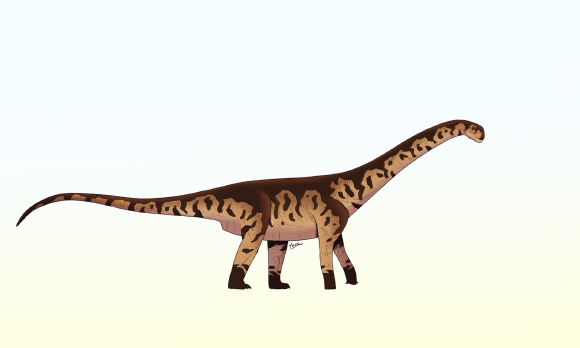
New Species of Giant Long-Necked Dinosaur Identified in Argentina
Une nouvelle espèce de dinosaure géant à long cou identifiée en Argentine
Argentine fossile Dinosauria Macronaria nouvelle espèce
Les fossiles découverts dans un ranch isolé en Argentine appartiennent à un nouveau genre et à une nouvelle espèce de dinosaure sauropode macronaire, selon une équipe internationale de paléontologues dirigée par la Ludwig-Maximilians-Universität München. L'article Nouvelle espèce de dinosaure géant à long cou identifié en Argentine apparaît en premier sur Sci.News : Breaking Science News.
11/05/2026 sci-news ⚙ Traduction automatique
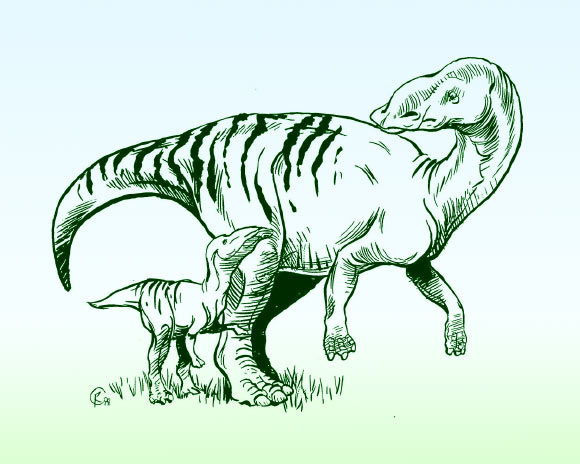
Dinosaurs May Have Fed Their Young a Special Diet, Study Suggests
Les dinosaures auraient pu nourrir leurs petits avec un régime spécial, selon une étude
dent juvénile Dinosauria Hadrosauria Maiasaura étude
Une analyse de l'usure des dents fossilisées du dinosaure hadrosaure Maiasaura peeblesorum indique que leurs juvéniles pourraient avoir mangé des aliments plus mous et plus nutritifs que les adultes, ce qui fait allusion à des soins parentaux avancés chez les dinosaures. L'article Les dinosaures pourraient avoir nourri leurs petits avec un régime spécial, suggère une étude, apparaît en premier sur Sci.News : Breaking Science News.
11/05/2026 sci-news ⚙ Traduction automatique
Un nouveau dinosaure carnivore du Trias identifié à Ghost Ranch
États-Unis Trias supérieur Trias fossile spécimen Coelophysis Dinosauria Ptychotherates nouvelle espèce crâne
Des chercheurs de Virginia Tech (Virginie, États-Unis) ont identifié une nouvelle espèce de dinosaure du Trias supérieur.  Le dinosaure a été nommé Ptychotherates bucculentus.  Ce nouveau taxon de dinosaure carnivore a été érigé sur la base de l'examen détaillé d'un fossile de crâne incomplet, bien conservé mais mélangé (numéro de spécimen CM 31368).  Le crâne provient de la Coelophysis de renommée mondiale
11/05/2026 everythingdinosaur ⚙ Traduction automatique
Vues exclusives du modèle CollectA Deluxe Magnapaulia
écaille Dinosauria Magnapaulia
La brève période de beau temps nous a permis de prendre quelques photos du modèle CollectA Deluxe Magnapaulia à l'extérieur.  Ce splendide chiffre a été introduit plus tôt cette année.  Il s'agit d'une maquette à l'échelle 1:60 de la lambéosaurine géante Magnapaulia laticaudus.  Il s’avère déjà populaire auprès des collectionneurs de modèles de dinosaures. Le CollectA Deluxe à l'échelle 1:60
10/05/2026 everythingdinosaur ⚙ Traduction automatique
1 2 3 4 5 6 7 8 9 10 11 12 13 14 15 16 17 18 19 20 21 22 23 24 25 26 27 28 29 30 31 32 33 34 35 36 37 38 39 40 41 42 43 44 45 46 47 48 49 50 51 52 53 54 55 56 57 58 59 60 61 62 63 64