Mosasaurus

Taxon

13 image(s) · 10 News

View page

Image gallery

Fossil of Mosasaurus, an extinct mosasaur, reconstruction of the Mosasaurus of Bemelen. Took the photo at Natural History Museum of Maastricht
Taxa Mosasaurus

Fossil of Mosasaurus, an extinct mosasaur, reconstruction of the Mosasaurus of Bemelen. Took the photo at Natural History Museum of Maastricht

museum fossil Mosasaurus
Mosasaurus skeleton; Maastricht Natural History Museum, The Netherlands.
Taxa Mosasaurini

Mosasaurus skeleton; Maastricht Natural History Museum, The Netherlands.

museum Netherlands Mosasaurini Mosasaurus +1
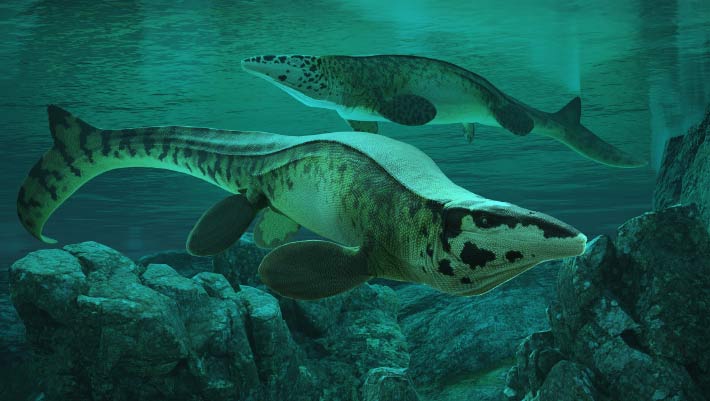
Life restoration of the mosasaurine mosasaurid Eremiasaurus, with unknown portions and soft tissues based primarily on Prognathodon and supplemented with Mosasaurus where needed.
References
Leblanc, A.R.H.; Caldwell, M.W.; Bardet, N. (2012). "A new mosasaurine from the Maastrichtian (Upper Cretaceous) phosphates of Morocco and its implications for mosasaurine systematics". Journal of Vertebrate Paleontology 32 (1): 82–104.
Lindgren, J.; Kaddumi, H.; Polcyn, M. (2013). "Soft tissue preservation in a fossil marine lizard with a bilobed tail fin". Nature Communications 4: 2423. DOI:10.1038/ncomms3423.
Konishi, T.; Brinkman, D.; Massare, J.A.; Caldwell, M.W. (2011). "New exceptional specimens of Prognathodon overtoni (Squamata, Mosasauridae) from the upper Campanian of Alberta, Canada, and the systematics and ecology of the genus". Journal of Vertebrate Paleontology 31 (5): 1026–1046.
Russell, D.A. (1967). "Systematics and morphology of American mosasaurs". Bulletin of the Peabody Museum of Natural History 23: 1–241.

Life restoration of the mosasaurine mosasaurid Eremiasaurus, with unknown portions and soft tissues based primarily on Prognathodon and supplemented with Mosasaurus where needed. References Leblanc, A.R.H.; Caldwell, M.W.; Bardet, N. (2012). "A new mosasaurine from the Maastrichtian (Upper Cretaceous) phosphates of Morocco and its implications for mosasaurine systematics". Journal of Vertebrate Paleontology 32 (1): 82–104. Lindgren, J.; Kaddumi, H.; Polcyn, M. (2013). "Soft tissue preservation in a fossil marine lizard with a bilobed tail fin". Nature Communications 4: 2423. DOI:10.1038/ncomms3423. Konishi, T.; Brinkman, D.; Massare, J.A.; Caldwell, M.W. (2011). "New exceptional specimens of Prognathodon overtoni (Squamata, Mosasauridae) from the upper Campanian of Alberta, Canada, and the systematics and ecology of the genus". Journal of Vertebrate Paleontology 31 (5): 1026–1046. Russell, D.A. (1967). "Systematics and morphology of American mosasaurs". Bulletin of the Peabody Museum of Natural History 23: 1–241.

tissue ecology museum Canada +11
Mosasaurus skeleton; Maastricht Natural History Museum, The Netherlands.
Taxa Plotosaurini

Mosasaurus skeleton; Maastricht Natural History Museum, The Netherlands.

museum Netherlands Mosasaurini Mosasaurus +2
dent de Globidens aegyptiacus. La couronne dentaire montre bien le mode "broyeur" de ce Mosasaure.

dent de Globidens aegyptiacus. La couronne dentaire montre bien le mode "broyeur" de ce Mosasaure.

tooth Globidens Igdamanosaurus Mosasaurus
dent de Globidens aegyptiacus. La couronne dentaire montre bien le mode "broyeur" chez ce Mosasaure. A noter la cavité, vide, d'une dent de remplacement.

dent de Globidens aegyptiacus. La couronne dentaire montre bien le mode "broyeur" chez ce Mosasaure. A noter la cavité, vide, d'une dent de remplacement.

tooth Globidens Igdamanosaurus Mosasaurus
dent de Globidens aegyptiacus. La couronne dentaire montre bien le mode "broyeur" chez ce Mosasaure.

dent de Globidens aegyptiacus. La couronne dentaire montre bien le mode "broyeur" chez ce Mosasaure.

tooth Globidens Igdamanosaurus Mosasaurus
dent de Globidens aegyptiacus et dent de Mosasaurus beaugei montrant les cavités de la dent de remplacement

dent de Globidens aegyptiacus et dent de Mosasaurus beaugei montrant les cavités de la dent de remplacement

tooth Globidens Igdamanosaurus Mosasaurus
dent de Globidens aegyptiacus et dent de Mosasaurus beaugei montrant les cavités de la dent de remplacement
Taxa Igdamanosaurus

dent de Globidens aegyptiacus et dent de Mosasaurus beaugei montrant les cavités de la dent de remplacement

tooth Globidens Igdamanosaurus Mosasaurus
Fossil of Mosasaurus, an extinct mosasaur, reconstruction of the Mosasaurus of Bemelen. Took the photo at Natural History Museum of Maastricht

Fossil of Mosasaurus, an extinct mosasaur, reconstruction of the Mosasaurus of Bemelen. Took the photo at Natural History Museum of Maastricht

museum fossil Moanasaurus Mosasaurus
Crâne de mosasaure d'espèce Platecarpus tympaniticus (squamates, mosasaures).
Provenance : Smoky Hill Chalk, Kansas (aux Etats-Unis).
Date : Crétacé supérieur, période du Campanien, 88 millions d'années avant notre ère.
Collections du Muséum national d'histoire naturelle de Paris (France).
Exposé à l'occasion de l'exposition "Un T-Rex à Paris" au Muséum national d'histoire naturelle de Paris (France) du 6 juin au 2 septembre 2018.

Légende du fossile dans cette exposition : "Les mosasaures ne sont pas des dinosaures mais des reptiles marins, très répandus à la fin du Crétacé. Certains genres comme Globidens et Halisaurus sont connus aussi bien aux Etats-Unis qu'au Maroc. Ces animaux étaient d'excellents nageurs, capables de traverser l'Atlantique."

Crâne de mosasaure d'espèce Platecarpus tympaniticus (squamates, mosasaures). Provenance : Smoky Hill Chalk, Kansas (aux Etats-Unis). Date : Crétacé supérieur, période du Campanien, 88 millions d'années avant notre ère. Collections du Muséum national d'histoire naturelle de Paris (France). Exposé à l'occasion de l'exposition "Un T-Rex à Paris" au Muséum national d'histoire naturelle de Paris (France) du 6 juin au 2 septembre 2018. Légende du fossile dans cette exposition : "Les mosasaures ne sont pas des dinosaures mais des reptiles marins, très répandus à la fin du Crétacé. Certains genres comme Globidens et Halisaurus sont connus aussi bien aux Etats-Unis qu'au Maroc. Ces animaux étaient d'excellents nageurs, capables de traverser l'Atlantique."

France Morocco Campanian Cretaceous +8
Life restoration of the mosasaurine mosasaurid Eremiasaurus, with unknown portions and soft tissues based primarily on Prognathodon and supplemented with Mosasaurus where needed.
References
Leblanc, A.R.H.; Caldwell, M.W.; Bardet, N. (2012). "A new mosasaurine from the Maastrichtian (Upper Cretaceous) phosphates of Morocco and its implications for mosasaurine systematics". Journal of Vertebrate Paleontology 32 (1): 82–104.
Lindgren, J.; Kaddumi, H.; Polcyn, M. (2013). "Soft tissue preservation in a fossil marine lizard with a bilobed tail fin". Nature Communications 4: 2423. DOI:10.1038/ncomms3423.
Konishi, T.; Brinkman, D.; Massare, J.A.; Caldwell, M.W. (2011). "New exceptional specimens of Prognathodon overtoni (Squamata, Mosasauridae) from the upper Campanian of Alberta, Canada, and the systematics and ecology of the genus". Journal of Vertebrate Paleontology 31 (5): 1026–1046.
Russell, D.A. (1967). "Systematics and morphology of American mosasaurs". Bulletin of the Peabody Museum of Natural History 23: 1–241.
Taxa Eremiasaurus

Life restoration of the mosasaurine mosasaurid Eremiasaurus, with unknown portions and soft tissues based primarily on Prognathodon and supplemented with Mosasaurus where needed. References Leblanc, A.R.H.; Caldwell, M.W.; Bardet, N. (2012). "A new mosasaurine from the Maastrichtian (Upper Cretaceous) phosphates of Morocco and its implications for mosasaurine systematics". Journal of Vertebrate Paleontology 32 (1): 82–104. Lindgren, J.; Kaddumi, H.; Polcyn, M. (2013). "Soft tissue preservation in a fossil marine lizard with a bilobed tail fin". Nature Communications 4: 2423. DOI:10.1038/ncomms3423. Konishi, T.; Brinkman, D.; Massare, J.A.; Caldwell, M.W. (2011). "New exceptional specimens of Prognathodon overtoni (Squamata, Mosasauridae) from the upper Campanian of Alberta, Canada, and the systematics and ecology of the genus". Journal of Vertebrate Paleontology 31 (5): 1026–1046. Russell, D.A. (1967). "Systematics and morphology of American mosasaurs". Bulletin of the Peabody Museum of Natural History 23: 1–241.

tissue ecology museum Canada +11
Fossil of Mosasaurus, an extinct mosasaur, reconstruction of the Mosasaurus of Bemelen. Took the photo at Natural History Museum of Maastricht

Fossil of Mosasaurus, an extinct mosasaur, reconstruction of the Mosasaurus of Bemelen. Took the photo at Natural History Museum of Maastricht

museum fossil Mosasaurus

News

New Species of Enormous Mosasaur is Described
predator Campanian Cretaceous Late Cretaceous fossil Mosasaurus Tylosaurus new species
A newly named giant Tylosaurus species has been named by researchers.  The new species of Tylosaurus has been erected based on fossils found in northern Texas. This enormous predator ruled the ancient seas around 80 million years ago (Campanian faunal stage of the Late Cretaceous).  The scientific paper was published in the Bulletin of the American
26/05/2026 everythingdinosaur
Scientists discover giant sea predator Tylosaurus rex that terrorized ancient oceans
predator fossil Mosasaurus Tylosaurus discovery evolution
A colossal new sea predator named Tylosaurus rex has been identified from fossils found in Texas, revealing a brutal 43-foot-long hunter that ruled ancient oceans 80 million years ago. The discovery not only introduces one of the biggest mosasaurs ever known, but also shakes up long-standing ideas about how these marine reptiles evolved.
23/05/2026 sciencedaily
‘T. rex’ Mosasaur Ruled the Seas 80 Million Years Ago
tooth Mosasaurus Tylosaurus new species
Paleontologists have described a gigantic new species of mosasaur -- stretching up to 13.2 m (43 feet) long and armed with serrated teeth -- and given it an unexpected name: T. rex (short for Tylosaurus rex). The post ‘T. rex’ Mosasaur Ruled the Seas 80 Million Years Ago appeared first on Sci.News: Breaking Science News.
21/05/2026 sci-news
Giant sea monsters lived in rivers at the end of the dinosaur age
tooth feeding predator Dinosauria Mosasaurus isotope
Giant mosasaurs, once thought to be strictly ocean-dwelling predators, may have spent their final chapter prowling freshwater rivers alongside dinosaurs and crocodiles. A massive tooth found in North Dakota, analyzed using chemical isotope techniques, reveals that some mosasaurs adapted to river systems as seas gradually freshened near the end of the age of dinosaurs. These enormous reptiles, possibly as long as a bus, appear to have hunted near the surface, perhaps even feeding on drowned dinos
15/12/2025 sciencedaily
Episode 171: Freshwater Mosasaurs
Hell Creek Mosasaurus formation
We dip into the freshwaters of the Hell Creek Formation. Oh dear
12/12/2025 palaeocast
1 2