←

fossile

Nature du spécimen

248 image(s) · 265 Actualités

Galerie d'images

Fossil specimen, CM 11422, of Nyctosaurus gracilis
Taxons Nyctosauridae

Fossil specimen, CM 11422, of Nyctosaurus gracilis

fossile spécimen Nyctosauridae Nyctosaurus
Fossil specimen, CM 11422, of Nyctosaurus gracilis
Taxons Nyctosauridae

Fossil specimen, CM 11422, of Nyctosaurus gracilis

fossile spécimen Nyctosauridae Nyctosaurus
Fossil specimen, CM 11422, of Nyctosaurus gracilis
Taxons Nyctosaurus

Fossil specimen, CM 11422, of Nyctosaurus gracilis

fossile spécimen Nyctosauridae Nyctosaurus
Cast of a Scaphognathus crassirostris, a kind of pterosaur. On display as part of the exhibit "Pterosaurs: Flight in the Age of Dinosaurs" at the Cleveland Natural History Museum in Cleveland, Ohio, in the United States.
This animal lived about 150 million years ago. This fossil was found in the Solnhofen formation in Germany. This is a cast; the fossil itself is held by the Institute of Geology and Paleontology at the University of Bonn.
Taxons Scaphognathus

Cast of a Scaphognathus crassirostris, a kind of pterosaur. On display as part of the exhibit "Pterosaurs: Flight in the Age of Dinosaurs" at the Cleveland Natural History Museum in Cleveland, Ohio, in the United States. This animal lived about 150 million years ago. This fossil was found in the Solnhofen formation in Germany. This is a cast; the fossil itself is held by the Institute of Geology and Paleontology at the University of Bonn.

vol musée Allemagne États-Unis +7
A diagram of the dromaeosaurid dinosaur Pyroraptor olympius with selected fossil elements that can be reliably scaled using measurements given by Allain & Taquet (2000) to produce a realistic estimate of the taxon's size and proportions in life. This silhouette is based on the supposition of the missing elements of Pyroraptor's skeleton having fairly generalized dromaeosaurid proportions.
Taxons Pyroraptor

A diagram of the dromaeosaurid dinosaur Pyroraptor olympius with selected fossil elements that can be reliably scaled using measurements given by Allain & Taquet (2000) to produce a realistic estimate of the taxon's size and proportions in life. This silhouette is based on the supposition of the missing elements of Pyroraptor's skeleton having fairly generalized dromaeosaurid proportions.

fossile Dinosauria Dromaeosauridae Pyroraptor +1
Fossil of Coloborhynchus, an extinct pterosaur- Took the photo at Naturalis museum, Leiden

Fossil of Coloborhynchus, an extinct pterosaur- Took the photo at Naturalis museum, Leiden

musée fossile Coloborhynchus Maaradactylus +1
Sinornithosaurus millenii fossil displayed in Hong Kong Science Museum
Taxons Sinornithosaurus

Sinornithosaurus millenii fossil displayed in Hong Kong Science Museum

musée fossile Sinornithosaurus
Jinfengopteryx elegans fossil displayed in Hong Kong Science Museum
Taxons Jinfengopteryginae

Jinfengopteryx elegans fossil displayed in Hong Kong Science Museum

musée fossile Jinfengopteryginae Jinfengopteryx
Jinfengopteryx elegans fossil displayed in Hong Kong Science Museum
Taxons Jinfengopteryx

Jinfengopteryx elegans fossil displayed in Hong Kong Science Museum

musée fossile Jinfengopteryginae Jinfengopteryx
Fossil skeleton of Guaibasaurus, a basal Saurischian dinosaur genus
Taxons Guaibasauridae

Fossil skeleton of Guaibasaurus, a basal Saurischian dinosaur genus

fossile Dinosauria Guaibasauridae Guaibasaurus +2
Fossil of Romeosaurus, an extinct reptile - Took the picture at Museo Paleontologico di Sant'Anna d'Alfaedo
Taxons Yaguarasaurinae

Fossil of Romeosaurus, an extinct reptile - Took the picture at Museo Paleontologico di Sant'Anna d'Alfaedo

fossile Romeosaurus Yaguarasaurinae
Fossil of Romeosaurus, an extinct reptile - Took the picture at Museo Paleontologico di Sant'Anna d'Alfaedo
Taxons Romeosaurus

Fossil of Romeosaurus, an extinct reptile - Took the picture at Museo Paleontologico di Sant'Anna d'Alfaedo

fossile Romeosaurus Yaguarasaurinae
Fossil of Quetzalcoatlus, an extinct pterosaur- Took the photo at Senckenberg Museum of Frankfurt
Taxons Quetzalcoatlus

Fossil of Quetzalcoatlus, an extinct pterosaur- Took the photo at Senckenberg Museum of Frankfurt

musée fossile Pterosauria Quetzalcoatlus
A restoration of Rinconsaurus compared to a human ,

•  Based proportionally on fossil elements and skeletal reconstruction featured in the Rinconsaurus description,[1] with missing parts based on other titanosaur reconstructions. The remains of Rinconsaurus represent two adults and a juvenile all of which are incomplete; some of the proportions shown here, such as the neck, limb lengths, and skull shape are not certain.
•  Osteroderms are not yet known in Rinconsaurus.  The osteoderms shown here are based loosely on Mendozasaurus.[2] Osteoderms are known from at least 10 titanosaur genera spread across the family tree but it's not clear if all titanosaurs had them.[3] Titanosaur osteoderms are rare and their layout and position on the body are not certain. [4]
•  The colours and patterns, as with the majority of reconstructions of prehistoric creatures, are speculative.
•  Human silhouette approximately 180 cm tall.

NOTE: I often update my images. If you want to have any of my images on a website, please (if possible) don’t host/save it to the website server. I’d prefer it if the image's Wikimedia URL is used. This means that if I update an image, it will be updated on the site as well.  Thanks.   


References


↑ Coria, Jorge; B.J.G. Riga (2003). "Rinconsaurus caudamirus gen. et sp nov., a new titanosaurid (Dinosauria, Sauropoda) from the Late Cretaceous of Patagonia, Argentina". Revista Geologica de Chile 30 (2): 333–353. ISSN 0716-0208. Retrieved on 2007-05-21.

↑   González Riga B (2003) A new titanosaur (Dinosauria, Sauropoda) from the Upper Cretaceous of Mendoza, Argentina. Ameghiniana 40 (2) 

↑  Carrano, M.T. and D’Emic, M.D.  2015 'Osteoderms of the titanosaur sauropod dinosaur Alamosaurus sanjuanensis Gilmore, 1922'. Journal of Vertebrate Paleontology.

↑    Vidal D, Ortega F, Sanz JL (2014) Titanosaur Osteoderms from the Upper Cretaceous of Lo Hueco (Spain) and Their Implications on the Armor of Laurasian Titanosaurs. PLoS ONE 9(8): e102488. doi:10.1371/journal.pone.0102488
Taxons Rinconsauria

A restoration of Rinconsaurus compared to a human , • Based proportionally on fossil elements and skeletal reconstruction featured in the Rinconsaurus description,[1] with missing parts based on other titanosaur reconstructions. The remains of Rinconsaurus represent two adults and a juvenile all of which are incomplete; some of the proportions shown here, such as the neck, limb lengths, and skull shape are not certain. • Osteroderms are not yet known in Rinconsaurus. The osteoderms shown here are based loosely on Mendozasaurus.[2] Osteoderms are known from at least 10 titanosaur genera spread across the family tree but it's not clear if all titanosaurs had them.[3] Titanosaur osteoderms are rare and their layout and position on the body are not certain. [4] • The colours and patterns, as with the majority of reconstructions of prehistoric creatures, are speculative. • Human silhouette approximately 180 cm tall. NOTE: I often update my images. If you want to have any of my images on a website, please (if possible) don’t host/save it to the website server. I’d prefer it if the image's Wikimedia URL is used. This means that if I update an image, it will be updated on the site as well. Thanks. References ↑ Coria, Jorge; B.J.G. Riga (2003). "Rinconsaurus caudamirus gen. et sp nov., a new titanosaurid (Dinosauria, Sauropoda) from the Late Cretaceous of Patagonia, Argentina". Revista Geologica de Chile 30 (2): 333–353. ISSN 0716-0208. Retrieved on 2007-05-21. ↑ González Riga B (2003) A new titanosaur (Dinosauria, Sauropoda) from the Upper Cretaceous of Mendoza, Argentina. Ameghiniana 40 (2) ↑ Carrano, M.T. and D’Emic, M.D. 2015 'Osteoderms of the titanosaur sauropod dinosaur Alamosaurus sanjuanensis Gilmore, 1922'. Journal of Vertebrate Paleontology. ↑ Vidal D, Ortega F, Sanz JL (2014) Titanosaur Osteoderms from the Upper Cretaceous of Lo Hueco (Spain) and Their Implications on the Armor of Laurasian Titanosaurs. PLoS ONE 9(8): e102488. doi:10.1371/journal.pone.0102488

armure membre description Argentine +14
A restoration of Rinconsaurus compared to a human ,

•  Based proportionally on fossil elements and skeletal reconstruction featured in the Rinconsaurus description,[1] with missing parts based on other titanosaur reconstructions. The remains of Rinconsaurus represent two adults and a juvenile all of which are incomplete; some of the proportions shown here, such as the neck, limb lengths, and skull shape are not certain.
•  Osteroderms are not yet known in Rinconsaurus.  The osteoderms shown here are based loosely on Mendozasaurus.[2] Osteoderms are known from at least 10 titanosaur genera spread across the family tree but it's not clear if all titanosaurs had them.[3] Titanosaur osteoderms are rare and their layout and position on the body are not certain. [4]
•  The colours and patterns, as with the majority of reconstructions of prehistoric creatures, are speculative.
•  Human silhouette approximately 180 cm tall.

NOTE: I often update my images. If you want to have any of my images on a website, please (if possible) don’t host/save it to the website server. I’d prefer it if the image's Wikimedia URL is used. This means that if I update an image, it will be updated on the site as well.  Thanks.   


References


↑ Coria, Jorge; B.J.G. Riga (2003). "Rinconsaurus caudamirus gen. et sp nov., a new titanosaurid (Dinosauria, Sauropoda) from the Late Cretaceous of Patagonia, Argentina". Revista Geologica de Chile 30 (2): 333–353. ISSN 0716-0208. Retrieved on 2007-05-21.

↑   González Riga B (2003) A new titanosaur (Dinosauria, Sauropoda) from the Upper Cretaceous of Mendoza, Argentina. Ameghiniana 40 (2) 

↑  Carrano, M.T. and D’Emic, M.D.  2015 'Osteoderms of the titanosaur sauropod dinosaur Alamosaurus sanjuanensis Gilmore, 1922'. Journal of Vertebrate Paleontology.

↑    Vidal D, Ortega F, Sanz JL (2014) Titanosaur Osteoderms from the Upper Cretaceous of Lo Hueco (Spain) and Their Implications on the Armor of Laurasian Titanosaurs. PLoS ONE 9(8): e102488. doi:10.1371/journal.pone.0102488
Taxons Rinconsaurus

A restoration of Rinconsaurus compared to a human , • Based proportionally on fossil elements and skeletal reconstruction featured in the Rinconsaurus description,[1] with missing parts based on other titanosaur reconstructions. The remains of Rinconsaurus represent two adults and a juvenile all of which are incomplete; some of the proportions shown here, such as the neck, limb lengths, and skull shape are not certain. • Osteroderms are not yet known in Rinconsaurus. The osteoderms shown here are based loosely on Mendozasaurus.[2] Osteoderms are known from at least 10 titanosaur genera spread across the family tree but it's not clear if all titanosaurs had them.[3] Titanosaur osteoderms are rare and their layout and position on the body are not certain. [4] • The colours and patterns, as with the majority of reconstructions of prehistoric creatures, are speculative. • Human silhouette approximately 180 cm tall. NOTE: I often update my images. If you want to have any of my images on a website, please (if possible) don’t host/save it to the website server. I’d prefer it if the image's Wikimedia URL is used. This means that if I update an image, it will be updated on the site as well. Thanks. References ↑ Coria, Jorge; B.J.G. Riga (2003). "Rinconsaurus caudamirus gen. et sp nov., a new titanosaurid (Dinosauria, Sauropoda) from the Late Cretaceous of Patagonia, Argentina". Revista Geologica de Chile 30 (2): 333–353. ISSN 0716-0208. Retrieved on 2007-05-21. ↑ González Riga B (2003) A new titanosaur (Dinosauria, Sauropoda) from the Upper Cretaceous of Mendoza, Argentina. Ameghiniana 40 (2) ↑ Carrano, M.T. and D’Emic, M.D. 2015 'Osteoderms of the titanosaur sauropod dinosaur Alamosaurus sanjuanensis Gilmore, 1922'. Journal of Vertebrate Paleontology. ↑ Vidal D, Ortega F, Sanz JL (2014) Titanosaur Osteoderms from the Upper Cretaceous of Lo Hueco (Spain) and Their Implications on the Armor of Laurasian Titanosaurs. PLoS ONE 9(8): e102488. doi:10.1371/journal.pone.0102488

armure membre description Argentine +14
fossil placodont
Taxons Cyamodontidae

fossil placodont

fossile Cyamodontidae Cyamodus Placodontia
1 2 3 4 5 6 7 8 9 10 11 12 13 14 15 16

Actualités

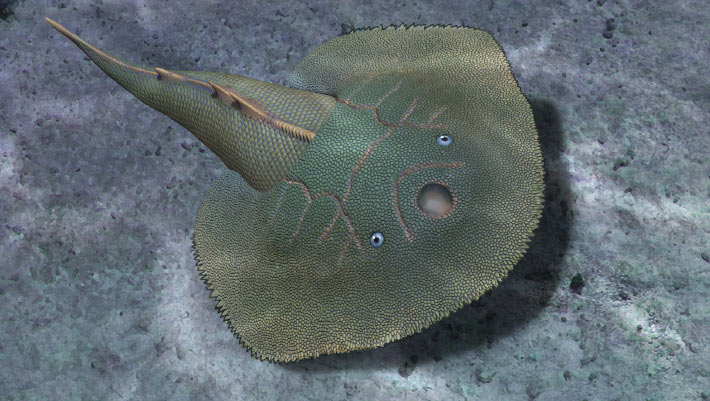
Fossil Armored Fish from China Bridges Primitive and Advanced Jawless Lineages
Des poissons blindés fossiles de Chine relient les lignées primitives et avancées sans mâchoire
Chine Dévonien Dévonien inférieur fossile poisson
Les paléontologues ont décrit un nouveau genre et une nouvelle espèce de poisson galeaspid polybranchiaspiforme du Dévonien inférieur du Yunnan, en Chine. L'article Les poissons blindés fossiles de Chine relient les lignées primitives et avancées sans mâchoire est apparu en premier sur Sci.News : Breaking Science News.
13/10/2026 sci-news ⚙ Traduction automatique
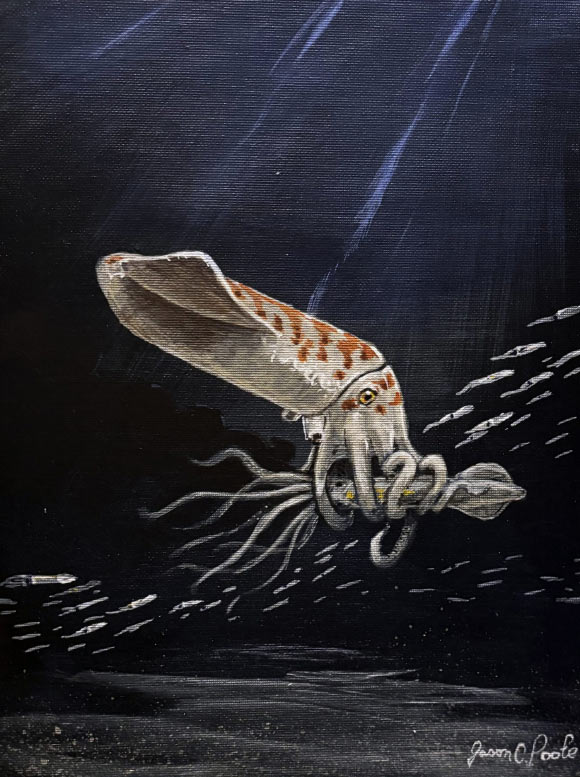
Peculiar New Species of Belemnite Unearthed in Wyoming
Une nouvelle espèce particulière de bélemnite découverte dans le Wyoming
États-Unis fossile nouvelle espèce
Une nouvelle espèce de bélemnite – un parent disparu de la seiche et du calmar d’aujourd’hui – a été identifiée à partir de deux fossiles en forme de balle trouvés dans le Wyoming, aux États-Unis. L'article De nouvelles espèces particulières de bélemnite découvertes dans le Wyoming sont apparus en premier sur Sci.News : Breaking Science News.
12/10/2026 sci-news ⚙ Traduction automatique
Un magnifique fossile de mammifère du Jurassique révèle une percée évolutive
alimentation Chine Jurassique fossile évolution mammifères squelette
Les scientifiques ont décrit un remarquable fossile de mammifère du Jurassique provenant de Chine qui fournit de nouvelles informations sur l'évolution des mammifères. L'animal vieux de 165 millions d'années, nommé Megacauda sungei, a été adapté à la vie aquatique. De plus, son squelette exceptionnellement préservé révèle des preuves importantes concernant l’évolution de l’alimentation et de la déglutition des mammifères. L'équipe de recherche internationale, dirigée par des scientifiques
09/10/2026 everythingdinosaur ⚙ Traduction automatique
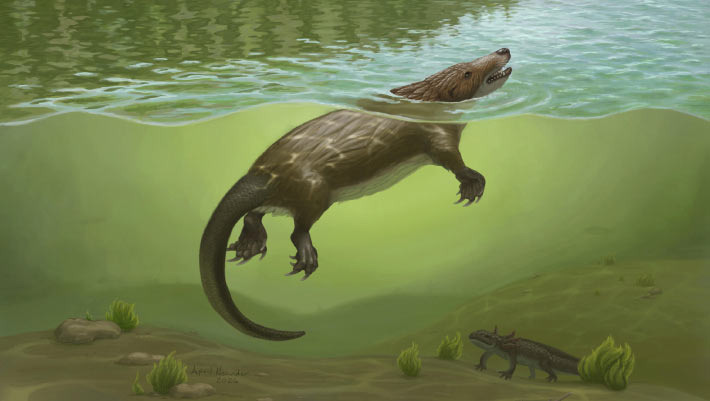
Jurassic Fossil Shows Mammal-Like Throat Evolved Far Earlier Than Thought
Un fossile jurassique montre qu'une gorge semblable à un mammifère a évolué bien plus tôt qu'on ne le pensait
Chine Mongolie Jurassique fossile
Megacauda sungei, un mammifère à fourrure de la taille d'une loutre qui vivait dans ce qui est aujourd'hui la Mongolie intérieure, en Chine, il y a environ 165 millions d'années, était semi-aquatique, nageant et se nourrissant dans l'eau, avec un mode de vie analogue à celui de l'ornithorynque vivant. L'article Un fossile du Jurassique montre qu'une gorge semblable à celle d'un mammifère a évolué bien plus tôt que prévu apparaît en premier sur Sci.News : Breaking Science News.
08/10/2026 sci-news ⚙ Traduction automatique
Des scientifiques ont découvert l'Homo erectus 200 000 ans plus tôt que prévu
Afrique du Sud fossile évolution crâne
De nouveaux fossiles d’Afrique du Sud remodèlent l’histoire des débuts de l’évolution humaine. Les chercheurs ont décrit 18 fossiles d'hominidés de la grotte de Drimolen, y compris un fragment de crâne d'Homo erectus adulte daté d'environ 2 millions d'années, confirmant la preuve que l'espèce est apparue en Afrique australe environ 200 000 ans plus tôt qu'on ne le pensait depuis longtemps. Les découvertes révèlent également que Paranthropus Robustus, qui vivait aux côtés d'Homo erectus, développait progressivement des dents encore plus grandes et des muscles masticateurs plus forts.
08/10/2026 sciencedaily ⚙ Traduction automatique
1 2 3 4 5 6 7 8 9 10 11 12 13 14 15 16 17 18 19 20 21 22 23 24 25 26 27 28 29 30 31 32 33 34 35 36 37 38 39 40 41 42 43 44 45 46 47 48 49 50 51 52 53