←

fossile

Nature du spécimen

226 image(s) · 215 Actualités

Galerie d'images

A cast of BYU 9025, the holotype fossil of the sauropod dinosaur Supersaurus, a giant scapulocoracoid measuring 2.4m long.
• The source photo was taken at the Dinosaur Journey Musuem.
• Notes regarding the file; This image was edited and extracted from the original seen here. [1] The Photoshop CC lens correction profile and a 'perspective warp' correction were applied.
Taxons Supersaurus

A cast of BYU 9025, the holotype fossil of the sauropod dinosaur Supersaurus, a giant scapulocoracoid measuring 2.4m long. • The source photo was taken at the Dinosaur Journey Musuem. • Notes regarding the file; This image was edited and extracted from the original seen here. [1] The Photoshop CC lens correction profile and a 'perspective warp' correction were applied.

moulage fossile holotype Dinosauria +1
Saurexallopus, a four toed dinosaur or bird trace fossil (jr syn Exallopus
Taxons Saurexallopus

Saurexallopus, a four toed dinosaur or bird trace fossil (jr syn Exallopus

fossile Dinosauria Exallopus Saurexallopus +1
Fossil samples – e.g. ‘primitive’ bony fish (1, 2), a skull of a temnospondyl ‘amphibian’ (probably a metoposauroid) in dorsal view (3), a skull of an archosaur of the crocodile lineage (probably a phytosaur) in palatal view (4), holotype of the “gliding reptile” Icarosaurus siefkeri [1] (5) and Atreipus-Grallator-type dinosaur tracks (bottom right) – from the Newark Supergroup, i.e. a series of mainly Late Triassic to Early Jurassic sedimentary rocks of eastern North America


↑ Edwin H. Colbert: A gliding reptile from the Triassic of New Jersey. American Museum Novitates, 2230. American Museum of Natural History, New York 1966, digitallibrary.amnh.org, cf. fig. 3 therein.
Taxons Atreipus

Fossil samples – e.g. ‘primitive’ bony fish (1, 2), a skull of a temnospondyl ‘amphibian’ (probably a metoposauroid) in dorsal view (3), a skull of an archosaur of the crocodile lineage (probably a phytosaur) in palatal view (4), holotype of the “gliding reptile” Icarosaurus siefkeri [1] (5) and Atreipus-Grallator-type dinosaur tracks (bottom right) – from the Newark Supergroup, i.e. a series of mainly Late Triassic to Early Jurassic sedimentary rocks of eastern North America ↑ Edwin H. Colbert: A gliding reptile from the Triassic of New Jersey. American Museum Novitates, 2230. American Museum of Natural History, New York 1966, digitallibrary.amnh.org, cf. fig. 3 therein.

musée Jurassique inférieur Jurassique Trias supérieur +9
Archaeopteryx lithographica, specimen displayed at the Museum für Naturkunde in Berlin. (This image shows the original fossil - not a cast.)
Taxons Archaeopteryx

Archaeopteryx lithographica, specimen displayed at the Museum für Naturkunde in Berlin. (This image shows the original fossil - not a cast.)

musée moulage fossile spécimen +1
Vertebrae of Gualicho shinyae from the fossil collection of the Museo patagónico de ciencias naturales Juan Carlos Salgado, General Roca, Río Negro. Scale as size reference.

Vertebrae of Gualicho shinyae from the fossil collection of the Museo patagónico de ciencias naturales Juan Carlos Salgado, General Roca, Río Negro. Scale as size reference.

écaille fossile Gualicho
Fossil skull of Luskhan

Fossil skull of Luskhan

fossile Luskhan crâne
Chert & phosphorite in the Permian of Wyoming, USA.
The Permian-aged Phosphoria Formation has a significant component of phosphorite, a scarce, phosphate-rich sedimentary rock.  This material is mined in southern Idaho as a source of phosphorus for the fertilizer industry, the fireworks industry, and other uses.
Phosphorites are generally considered to have >15-20% phosphate content.  Texturally, phosphorites can be obviously granular, with fossil fragments or oolites or peloids or lithic fragments, or they can be composed of extremely fine-grained, phosphate-rich mud.  Compositionally, the phosphate component in phosphorites is principally a mix of apatite minerals: chlorapatite (Ca5(PO4)3Cl), fluorapatite (Ca5(PO4)3F), hydroxyapatite (Ca5(PO4)3OH)), and carbonate fluorapatite (Ca10(PO4,CO3)6F2-3).
Phosphorites are generally marine sedimentary rocks.  They range in age from Precambrian to Holocene.  In modern oceans, they tend to occur along the eastern margins of some ocean basins where deep-water upwelling occurs under areas of high biologic productivity.
Stratigraphy: Rex Chert Member over Meade Peak Member, Phosphoria Formation, Roadian Stage to Wordian Stage, lower Guadalupian Series, mid-Permian

Locality: roadcut on the northern side of Route 26/Route 89 at the town of Astoria Hot Springs, Snake River Canyon, southern Teton County, northwestern Wyoming, USA

Chert & phosphorite in the Permian of Wyoming, USA. The Permian-aged Phosphoria Formation has a significant component of phosphorite, a scarce, phosphate-rich sedimentary rock. This material is mined in southern Idaho as a source of phosphorus for the fertilizer industry, the fireworks industry, and other uses. Phosphorites are generally considered to have >15-20% phosphate content. Texturally, phosphorites can be obviously granular, with fossil fragments or oolites or peloids or lithic fragments, or they can be composed of extremely fine-grained, phosphate-rich mud. Compositionally, the phosphate component in phosphorites is principally a mix of apatite minerals: chlorapatite (Ca5(PO4)3Cl), fluorapatite (Ca5(PO4)3F), hydroxyapatite (Ca5(PO4)3OH)), and carbonate fluorapatite (Ca10(PO4,CO3)6F2-3). Phosphorites are generally marine sedimentary rocks. They range in age from Precambrian to Holocene. In modern oceans, they tend to occur along the eastern margins of some ocean basins where deep-water upwelling occurs under areas of high biologic productivity. Stratigraphy: Rex Chert Member over Meade Peak Member, Phosphoria Formation, Roadian Stage to Wordian Stage, lower Guadalupian Series, mid-Permian Locality: roadcut on the northern side of Route 26/Route 89 at the town of Astoria Hot Springs, Snake River Canyon, southern Teton County, northwestern Wyoming, USA

États-Unis Guadalupien Holocène Permien +5
Elasmobranchs teeth from the Thanetian phosphatic serie of Jebel Dyr (Algerian-Tunisian border area); 14. Nebrius bequaerti; 15. Archaeomanta priemi; 16. Burnhamia daviesi; 17. Ginglymostoma subafricanum; 18. Myliobatis sulcidens; 21. Hemiscyllium daimeriesi; 23. Squatiscyllium nigeriensis. a: labial; b: lingual; c: lateral; d: occlusal; e: oral; f: basilar views.

Elasmobranchs teeth from the Thanetian phosphatic serie of Jebel Dyr (Algerian-Tunisian border area); 14. Nebrius bequaerti; 15. Archaeomanta priemi; 16. Burnhamia daviesi; 17. Ginglymostoma subafricanum; 18. Myliobatis sulcidens; 21. Hemiscyllium daimeriesi; 23. Squatiscyllium nigeriensis. a: labial; b: lingual; c: lateral; d: occlusal; e: oral; f: basilar views.

Thanétien fossile poisson géologie
Elasmobranchs teeth from the Thanetian phosphatic serie of Jebel Dyr (Algerian-Tunisian border area); 7. Brachycarcharias lerichei; 8. Anomotodon novus; 9. Mustelus biddlei 10. Brachycarcharias lerichei; 11. Mennerotodus sp; 12. Abdounia beaugei; 13. Galeorhinus mesetaensis. a: labial; b: lingual; c: lateral views.

Elasmobranchs teeth from the Thanetian phosphatic serie of Jebel Dyr (Algerian-Tunisian border area); 7. Brachycarcharias lerichei; 8. Anomotodon novus; 9. Mustelus biddlei 10. Brachycarcharias lerichei; 11. Mennerotodus sp; 12. Abdounia beaugei; 13. Galeorhinus mesetaensis. a: labial; b: lingual; c: lateral views.

Thanétien fossile poisson géologie
Elasmobranchs teeth from the Thanetian phosphatic serie of Jebel Dyr (Algerian-Tunisian border area); 1. Abdounia beaugei; 2. Palaoegaleus vincenti; 3. Galeorhinus mesetaensis; 4. Delpitoscyllium africanum; 5. Squatina prima; 6. Brachycarcharias lerichei. a: labial; b: lingual; c: lateral; d: occlusal views.

Elasmobranchs teeth from the Thanetian phosphatic serie of Jebel Dyr (Algerian-Tunisian border area); 1. Abdounia beaugei; 2. Palaoegaleus vincenti; 3. Galeorhinus mesetaensis; 4. Delpitoscyllium africanum; 5. Squatina prima; 6. Brachycarcharias lerichei. a: labial; b: lingual; c: lateral; d: occlusal views.

Thanétien fossile poisson géologie
Elasmobranchs teeth and vertebrae from the Thanetian phosphatic serie of Jebel Dyr (Algerian-Tunisian border area); 23. Raja sp.; 24. Heterodontus sp.; 25. Dasyatis hexagonalis; 26. Abdounia beaugei; 27. Physogaleus secundus; 28. Carcharias hopei; 29-30. Cretalamna appendiculata; 31. Brachycarcharias lerichei; 32. Isurolamna affinis; 33-36. Sectioned fossil vertebral centrum of sharks. a: labial; b: lingual; c: lateral; d: occlusal; e: oral views.
Intervalles Thanetian

Elasmobranchs teeth and vertebrae from the Thanetian phosphatic serie of Jebel Dyr (Algerian-Tunisian border area); 23. Raja sp.; 24. Heterodontus sp.; 25. Dasyatis hexagonalis; 26. Abdounia beaugei; 27. Physogaleus secundus; 28. Carcharias hopei; 29-30. Cretalamna appendiculata; 31. Brachycarcharias lerichei; 32. Isurolamna affinis; 33-36. Sectioned fossil vertebral centrum of sharks. a: labial; b: lingual; c: lateral; d: occlusal; e: oral views.

Thanétien fossile poisson géologie
The Pectinida fossil Neithea in Lower Santonian bioclastic limestone. Found near Les Âges in the commune of Saint-Crépin-de-Richemont, Dordogne, France.
Intervalles Santonian

The Pectinida fossil Neithea in Lower Santonian bioclastic limestone. Found near Les Âges in the commune of Saint-Crépin-de-Richemont, Dordogne, France.

France Santonien fossile
Crommium angustatum Grateloup, 1827 fossil snail shell (apical view) from the Oligocene of France. (42 mm across at its widest)
Of all the molluscs, the gastropods (snails) have made the most ecological adaptations.  They can be found in almost all fundamental environments: marine, freshwater, terrestrial.  Most gastropods live in the ocean, and have a single, asymmetrically coiled, external shell of calcium carbonate (CaCO3 - usually aragonite).  The hard calcareous shell is the most easily fossilized part of the gastropod.  The soft parts of a snail (the “slug” portion) include a well developed head having eyes, tentacles, and a mouth, and a well developed, strong, muscular foot used principally for locomotion.  The shell is carried upright on the snail’s back, or is partially dragged behind.  When threatened by a predator, many snails can retract their soft parts into the shell’s interior for protection.
Many fossil snails in the Paleozoic rock record are often not well preserved, or are preserved as internal molds.  The original aragonite of many gastropod shells is not stable on geologic time scales, and often recrystallizes or dissolves completely away.  Fossil snail shells in Mesozoic and Cenozoic rocks are usually better preserved.
Classification: Animalia, Mollusca, Gastropoda, Naticoidea, Ampullinidae
Age: Rupelian Stage (Stampian Stage), Lower Oligocene

Locality: Gaas, Landes Department, Aquitaine, southwestern France

Crommium angustatum Grateloup, 1827 fossil snail shell (apical view) from the Oligocene of France. (42 mm across at its widest) Of all the molluscs, the gastropods (snails) have made the most ecological adaptations. They can be found in almost all fundamental environments: marine, freshwater, terrestrial. Most gastropods live in the ocean, and have a single, asymmetrically coiled, external shell of calcium carbonate (CaCO3 - usually aragonite). The hard calcareous shell is the most easily fossilized part of the gastropod. The soft parts of a snail (the “slug” portion) include a well developed head having eyes, tentacles, and a mouth, and a well developed, strong, muscular foot used principally for locomotion. The shell is carried upright on the snail’s back, or is partially dragged behind. When threatened by a predator, many snails can retract their soft parts into the shell’s interior for protection. Many fossil snails in the Paleozoic rock record are often not well preserved, or are preserved as internal molds. The original aragonite of many gastropod shells is not stable on geologic time scales, and often recrystallizes or dissolves completely away. Fossil snail shells in Mesozoic and Cenozoic rocks are usually better preserved. Classification: Animalia, Mollusca, Gastropoda, Naticoidea, Ampullinidae Age: Rupelian Stage (Stampian Stage), Lower Oligocene Locality: Gaas, Landes Department, Aquitaine, southwestern France

écaille locomotion prédateur France +6
Crommium angustatum Grateloup, 1827 fossil snail shell (apical view) from the Oligocene of France. (42 mm across at its widest)
Of all the molluscs, the gastropods (snails) have made the most ecological adaptations.  They can be found in almost all fundamental environments: marine, freshwater, terrestrial.  Most gastropods live in the ocean, and have a single, asymmetrically coiled, external shell of calcium carbonate (CaCO3 - usually aragonite).  The hard calcareous shell is the most easily fossilized part of the gastropod.  The soft parts of a snail (the “slug” portion) include a well developed head having eyes, tentacles, and a mouth, and a well developed, strong, muscular foot used principally for locomotion.  The shell is carried upright on the snail’s back, or is partially dragged behind.  When threatened by a predator, many snails can retract their soft parts into the shell’s interior for protection.
Many fossil snails in the Paleozoic rock record are often not well preserved, or are preserved as internal molds.  The original aragonite of many gastropod shells is not stable on geologic time scales, and often recrystallizes or dissolves completely away.  Fossil snail shells in Mesozoic and Cenozoic rocks are usually better preserved.
Classification: Animalia, Mollusca, Gastropoda, Naticoidea, Ampullinidae
Age: Rupelian Stage (Stampian Stage), Lower Oligocene

Locality: Gaas, Landes Department, Aquitaine, southwestern France

Crommium angustatum Grateloup, 1827 fossil snail shell (apical view) from the Oligocene of France. (42 mm across at its widest) Of all the molluscs, the gastropods (snails) have made the most ecological adaptations. They can be found in almost all fundamental environments: marine, freshwater, terrestrial. Most gastropods live in the ocean, and have a single, asymmetrically coiled, external shell of calcium carbonate (CaCO3 - usually aragonite). The hard calcareous shell is the most easily fossilized part of the gastropod. The soft parts of a snail (the “slug” portion) include a well developed head having eyes, tentacles, and a mouth, and a well developed, strong, muscular foot used principally for locomotion. The shell is carried upright on the snail’s back, or is partially dragged behind. When threatened by a predator, many snails can retract their soft parts into the shell’s interior for protection. Many fossil snails in the Paleozoic rock record are often not well preserved, or are preserved as internal molds. The original aragonite of many gastropod shells is not stable on geologic time scales, and often recrystallizes or dissolves completely away. Fossil snail shells in Mesozoic and Cenozoic rocks are usually better preserved. Classification: Animalia, Mollusca, Gastropoda, Naticoidea, Ampullinidae Age: Rupelian Stage (Stampian Stage), Lower Oligocene Locality: Gaas, Landes Department, Aquitaine, southwestern France

écaille locomotion prédateur France +6
Crommium angustatum Grateloup, 1827 fossil snail shell (abapertural view) from the Oligocene of France. (57 mm tall)
Of all the molluscs, the gastropods (snails) have made the most ecological adaptations.  They can be found in almost all fundamental environments: marine, freshwater, terrestrial.  Most gastropods live in the ocean, and have a single, asymmetrically coiled, external shell of calcium carbonate (CaCO3 - usually aragonite).  The hard calcareous shell is the most easily fossilized part of the gastropod.  The soft parts of a snail (the “slug” portion) include a well developed head having eyes, tentacles, and a mouth, and a well developed, strong, muscular foot used principally for locomotion.  The shell is carried upright on the snail’s back, or is partially dragged behind.  When threatened by a predator, many snails can retract their soft parts into the shell’s interior for protection.
Many fossil snails in the Paleozoic rock record are often not well preserved, or are preserved as internal molds.  The original aragonite of many gastropod shells is not stable on geologic time scales, and often recrystallizes or dissolves completely away.  Fossil snail shells in Mesozoic and Cenozoic rocks are usually better preserved.
Classification: Animalia, Mollusca, Gastropoda, Naticoidea, Ampullinidae
Age: Rupelian Stage (Stampian Stage), Lower Oligocene

Locality: Gaas, Landes Department, Aquitaine, southwestern France

Crommium angustatum Grateloup, 1827 fossil snail shell (abapertural view) from the Oligocene of France. (57 mm tall) Of all the molluscs, the gastropods (snails) have made the most ecological adaptations. They can be found in almost all fundamental environments: marine, freshwater, terrestrial. Most gastropods live in the ocean, and have a single, asymmetrically coiled, external shell of calcium carbonate (CaCO3 - usually aragonite). The hard calcareous shell is the most easily fossilized part of the gastropod. The soft parts of a snail (the “slug” portion) include a well developed head having eyes, tentacles, and a mouth, and a well developed, strong, muscular foot used principally for locomotion. The shell is carried upright on the snail’s back, or is partially dragged behind. When threatened by a predator, many snails can retract their soft parts into the shell’s interior for protection. Many fossil snails in the Paleozoic rock record are often not well preserved, or are preserved as internal molds. The original aragonite of many gastropod shells is not stable on geologic time scales, and often recrystallizes or dissolves completely away. Fossil snail shells in Mesozoic and Cenozoic rocks are usually better preserved. Classification: Animalia, Mollusca, Gastropoda, Naticoidea, Ampullinidae Age: Rupelian Stage (Stampian Stage), Lower Oligocene Locality: Gaas, Landes Department, Aquitaine, southwestern France

écaille locomotion prédateur France +6
Permineralized Jurassic fern rhizome from Korsaröd (Sweden) of Osmundastrum pulchellum. It has preserved Nuclei and Chromosomes, a fine subcellular detail has rarely been documented in fossils. It´s Rooted in DNA content was used to extrapolate relative genome, finding relationships with extant Osmundastrum cinnamomeum, and confirmed a monophyletic Osmunda. Osmundastrum pulchellum is one of the earliest fossil Osmundastrum rhizomes known so far, and the first of its kind from the Mesozoic of Europe. Its impressive preservation has lead to know even the biotic interactions with the Plant. It also has recovered the only know case know to preserve the ongoing mitosis processes in plant cells via calcification from volcanic hydrothermal brine.

Permineralized Jurassic fern rhizome from Korsaröd (Sweden) of Osmundastrum pulchellum. It has preserved Nuclei and Chromosomes, a fine subcellular detail has rarely been documented in fossils. It´s Rooted in DNA content was used to extrapolate relative genome, finding relationships with extant Osmundastrum cinnamomeum, and confirmed a monophyletic Osmunda. Osmundastrum pulchellum is one of the earliest fossil Osmundastrum rhizomes known so far, and the first of its kind from the Mesozoic of Europe. Its impressive preservation has lead to know even the biotic interactions with the Plant. It also has recovered the only know case know to preserve the ongoing mitosis processes in plant cells via calcification from volcanic hydrothermal brine.

ADN Suède Jurassique Mésozoïque +1
1 2 3 4 5 6 7 8 9 10 11 12 13 14 15

Actualités

Incroyables gouttes de pluie du Permien – Un moment éphémère préservé pendant 275 millions d’années
musée Permien fossile Dinosauria
Les fossiles peuvent conserver des preuves d'événements extraordinaires. Cependant, les traces les plus banales du passé s’avèrent parfois tout aussi remarquables. Les membres de l'équipe Everything Dinosaur ont récemment visité le Museum für Naturkunde Berlin. Là, ils ont photographié d’exquises empreintes de gouttes de pluie du Permien conservées dans le grès. Un record de précipitations datant d’il y a 275 millions d’années. Les gouttes d'eau individuelles ont laissé des traces,
03/09/2026 everythingdinosaur ⚙ Traduction automatique
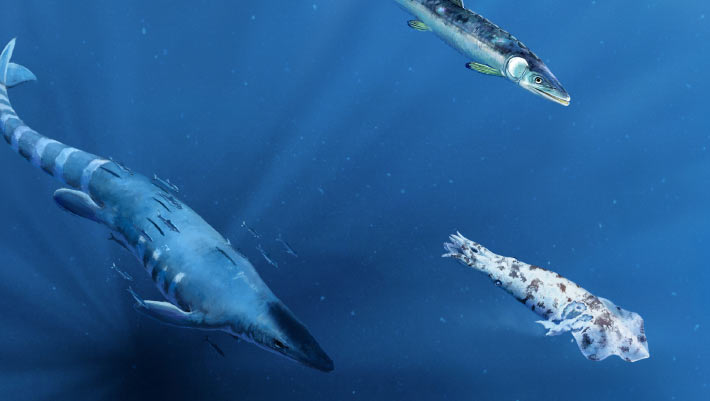
Fossil of Giant Squid-Like Creature from Cretaceous Period Bears Marks of Deadly Attack
Un fossile d'une créature ressemblant à un calmar géant de la période du Crétacé porte des marques d'attaque mortelle
Canada Crétacé fossile squelette
Des paléontologues étudiant un fossile découvert dans le sud du Manitoba, au Canada, ont identifié ce qu'ils pensent être deux marques de morsure sur le squelette interne de l'ancien céphalopode géant Enchoteuthis. L'article Un fossile d'une créature ressemblant à un calmar géant de la période du Crétacé porte des marques d'attaque mortelle est apparu en premier sur Sci.News : Breaking Science News.
01/09/2026 sci-news ⚙ Traduction automatique
Les pieds fossiles pourraient induire les scientifiques en erreur sur l’évolution humaine
fossile découverte évolution
Les singes sauvages d'Afrique de l'Ouest peuvent grimper sur des troncs d'arbres verticaux en utilisant la flexibilité de leurs pieds que les scientifiques ne soupçonnaient pas. Cette découverte remet en question une hypothèse clé sur l’apparence du dernier ancêtre commun des humains et des chimpanzés et sur la manière dont il s’est déplacé.
31/08/2026 sciencedaily-paleo ⚙ Traduction automatique
Incroyable découverte d’un dinosaure blindé – le premier ankylosaure définitif du Japon
Japon Crétacé fossile Ankylosauria Dinosauria Nodosauridae découverte
Un nouveau genre et une nouvelle espèce de dinosaure cuirassé ont été nommés à partir de fossiles trouvés au Japon. Nipponopelta yezoensis représente le premier ankylosaure japonais officiellement nommé. De plus, cette découverte fournit des informations importantes sur la dispersion des nodosauridés au cours du Crétacé. Le nouveau dinosaure a été nommé et décrit par une équipe internationale de paléontologues. La recherche
30/08/2026 everythingdinosaur ⚙ Traduction automatique
Découverte remarquable de fossiles de coelacanthes carbonifères dans le Yorkshire
Carbonifère fossile découverte
Un remarquable fossile de cœlacanthe de Roundhay Park a été découvert à Leeds. Le fossile a environ 320 millions d'années. Elle date du Carbonifère. En outre, les experts estiment qu’il s’agit du cœlacanthe fossile le plus ancien jamais découvert dans le Yorkshire. Le géologue Ru Smith de la Yorkshire Geological Society a fait la découverte plus tôt cette année. Il a trouvé un bien conservé
27/08/2026 everythingdinosaur ⚙ Traduction automatique
1 2 3 4 5 6 7 8 9 10 11 12 13 14 15 16 17 18 19 20 21 22 23 24 25 26 27 28 29 30 31 32 33 34 35 36 37 38 39 40 41 42 43