←

fossile

Nature du spécimen

226 image(s) · 215 Actualités

Galerie d'images

A cast of BYU 9025, the holotype fossil of the sauropod dinosaur Supersaurus, a giant scapulocoracoid measuring 2.4m long.
• The source photo was taken at the Dinosaur Journey Musuem.
• Notes regarding the file; This image was edited and extracted from the original seen here. [1] The Photoshop CC lens correction profile and a 'perspective warp' correction were applied.
Taxons Supersaurus

A cast of BYU 9025, the holotype fossil of the sauropod dinosaur Supersaurus, a giant scapulocoracoid measuring 2.4m long. • The source photo was taken at the Dinosaur Journey Musuem. • Notes regarding the file; This image was edited and extracted from the original seen here. [1] The Photoshop CC lens correction profile and a 'perspective warp' correction were applied.

moulage fossile holotype Dinosauria +1
Saurexallopus, a four toed dinosaur or bird trace fossil (jr syn Exallopus
Taxons Saurexallopus

Saurexallopus, a four toed dinosaur or bird trace fossil (jr syn Exallopus

fossile Dinosauria Exallopus Saurexallopus +1
Fossil samples – e.g. ‘primitive’ bony fish (1, 2), a skull of a temnospondyl ‘amphibian’ (probably a metoposauroid) in dorsal view (3), a skull of an archosaur of the crocodile lineage (probably a phytosaur) in palatal view (4), holotype of the “gliding reptile” Icarosaurus siefkeri [1] (5) and Atreipus-Grallator-type dinosaur tracks (bottom right) – from the Newark Supergroup, i.e. a series of mainly Late Triassic to Early Jurassic sedimentary rocks of eastern North America


↑ Edwin H. Colbert: A gliding reptile from the Triassic of New Jersey. American Museum Novitates, 2230. American Museum of Natural History, New York 1966, digitallibrary.amnh.org, cf. fig. 3 therein.
Taxons Atreipus

Fossil samples – e.g. ‘primitive’ bony fish (1, 2), a skull of a temnospondyl ‘amphibian’ (probably a metoposauroid) in dorsal view (3), a skull of an archosaur of the crocodile lineage (probably a phytosaur) in palatal view (4), holotype of the “gliding reptile” Icarosaurus siefkeri [1] (5) and Atreipus-Grallator-type dinosaur tracks (bottom right) – from the Newark Supergroup, i.e. a series of mainly Late Triassic to Early Jurassic sedimentary rocks of eastern North America ↑ Edwin H. Colbert: A gliding reptile from the Triassic of New Jersey. American Museum Novitates, 2230. American Museum of Natural History, New York 1966, digitallibrary.amnh.org, cf. fig. 3 therein.

musée Jurassique inférieur Jurassique Trias supérieur +9
Archaeopteryx lithographica, specimen displayed at the Museum für Naturkunde in Berlin. (This image shows the original fossil - not a cast.)
Taxons Archaeopteryx

Archaeopteryx lithographica, specimen displayed at the Museum für Naturkunde in Berlin. (This image shows the original fossil - not a cast.)

musée moulage fossile spécimen +1
Vertebrae of Gualicho shinyae from the fossil collection of the Museo patagónico de ciencias naturales Juan Carlos Salgado, General Roca, Río Negro. Scale as size reference.

Vertebrae of Gualicho shinyae from the fossil collection of the Museo patagónico de ciencias naturales Juan Carlos Salgado, General Roca, Río Negro. Scale as size reference.

écaille fossile Gualicho
Fossil skull of Luskhan

Fossil skull of Luskhan

fossile Luskhan crâne
Chert & phosphorite in the Permian of Wyoming, USA.
The Permian-aged Phosphoria Formation has a significant component of phosphorite, a scarce, phosphate-rich sedimentary rock.  This material is mined in southern Idaho as a source of phosphorus for the fertilizer industry, the fireworks industry, and other uses.
Phosphorites are generally considered to have >15-20% phosphate content.  Texturally, phosphorites can be obviously granular, with fossil fragments or oolites or peloids or lithic fragments, or they can be composed of extremely fine-grained, phosphate-rich mud.  Compositionally, the phosphate component in phosphorites is principally a mix of apatite minerals: chlorapatite (Ca5(PO4)3Cl), fluorapatite (Ca5(PO4)3F), hydroxyapatite (Ca5(PO4)3OH)), and carbonate fluorapatite (Ca10(PO4,CO3)6F2-3).
Phosphorites are generally marine sedimentary rocks.  They range in age from Precambrian to Holocene.  In modern oceans, they tend to occur along the eastern margins of some ocean basins where deep-water upwelling occurs under areas of high biologic productivity.
Stratigraphy: Rex Chert Member over Meade Peak Member, Phosphoria Formation, Roadian Stage to Wordian Stage, lower Guadalupian Series, mid-Permian

Locality: roadcut on the northern side of Route 26/Route 89 at the town of Astoria Hot Springs, Snake River Canyon, southern Teton County, northwestern Wyoming, USA

Chert & phosphorite in the Permian of Wyoming, USA. The Permian-aged Phosphoria Formation has a significant component of phosphorite, a scarce, phosphate-rich sedimentary rock. This material is mined in southern Idaho as a source of phosphorus for the fertilizer industry, the fireworks industry, and other uses. Phosphorites are generally considered to have >15-20% phosphate content. Texturally, phosphorites can be obviously granular, with fossil fragments or oolites or peloids or lithic fragments, or they can be composed of extremely fine-grained, phosphate-rich mud. Compositionally, the phosphate component in phosphorites is principally a mix of apatite minerals: chlorapatite (Ca5(PO4)3Cl), fluorapatite (Ca5(PO4)3F), hydroxyapatite (Ca5(PO4)3OH)), and carbonate fluorapatite (Ca10(PO4,CO3)6F2-3). Phosphorites are generally marine sedimentary rocks. They range in age from Precambrian to Holocene. In modern oceans, they tend to occur along the eastern margins of some ocean basins where deep-water upwelling occurs under areas of high biologic productivity. Stratigraphy: Rex Chert Member over Meade Peak Member, Phosphoria Formation, Roadian Stage to Wordian Stage, lower Guadalupian Series, mid-Permian Locality: roadcut on the northern side of Route 26/Route 89 at the town of Astoria Hot Springs, Snake River Canyon, southern Teton County, northwestern Wyoming, USA

États-Unis Guadalupien Holocène Permien +5
Elasmobranchs teeth from the Thanetian phosphatic serie of Jebel Dyr (Algerian-Tunisian border area); 14. Nebrius bequaerti; 15. Archaeomanta priemi; 16. Burnhamia daviesi; 17. Ginglymostoma subafricanum; 18. Myliobatis sulcidens; 21. Hemiscyllium daimeriesi; 23. Squatiscyllium nigeriensis. a: labial; b: lingual; c: lateral; d: occlusal; e: oral; f: basilar views.

Elasmobranchs teeth from the Thanetian phosphatic serie of Jebel Dyr (Algerian-Tunisian border area); 14. Nebrius bequaerti; 15. Archaeomanta priemi; 16. Burnhamia daviesi; 17. Ginglymostoma subafricanum; 18. Myliobatis sulcidens; 21. Hemiscyllium daimeriesi; 23. Squatiscyllium nigeriensis. a: labial; b: lingual; c: lateral; d: occlusal; e: oral; f: basilar views.

Thanétien fossile poisson géologie
Elasmobranchs teeth from the Thanetian phosphatic serie of Jebel Dyr (Algerian-Tunisian border area); 7. Brachycarcharias lerichei; 8. Anomotodon novus; 9. Mustelus biddlei 10. Brachycarcharias lerichei; 11. Mennerotodus sp; 12. Abdounia beaugei; 13. Galeorhinus mesetaensis. a: labial; b: lingual; c: lateral views.

Elasmobranchs teeth from the Thanetian phosphatic serie of Jebel Dyr (Algerian-Tunisian border area); 7. Brachycarcharias lerichei; 8. Anomotodon novus; 9. Mustelus biddlei 10. Brachycarcharias lerichei; 11. Mennerotodus sp; 12. Abdounia beaugei; 13. Galeorhinus mesetaensis. a: labial; b: lingual; c: lateral views.

Thanétien fossile poisson géologie
Elasmobranchs teeth from the Thanetian phosphatic serie of Jebel Dyr (Algerian-Tunisian border area); 1. Abdounia beaugei; 2. Palaoegaleus vincenti; 3. Galeorhinus mesetaensis; 4. Delpitoscyllium africanum; 5. Squatina prima; 6. Brachycarcharias lerichei. a: labial; b: lingual; c: lateral; d: occlusal views.

Elasmobranchs teeth from the Thanetian phosphatic serie of Jebel Dyr (Algerian-Tunisian border area); 1. Abdounia beaugei; 2. Palaoegaleus vincenti; 3. Galeorhinus mesetaensis; 4. Delpitoscyllium africanum; 5. Squatina prima; 6. Brachycarcharias lerichei. a: labial; b: lingual; c: lateral; d: occlusal views.

Thanétien fossile poisson géologie
Elasmobranchs teeth and vertebrae from the Thanetian phosphatic serie of Jebel Dyr (Algerian-Tunisian border area); 23. Raja sp.; 24. Heterodontus sp.; 25. Dasyatis hexagonalis; 26. Abdounia beaugei; 27. Physogaleus secundus; 28. Carcharias hopei; 29-30. Cretalamna appendiculata; 31. Brachycarcharias lerichei; 32. Isurolamna affinis; 33-36. Sectioned fossil vertebral centrum of sharks. a: labial; b: lingual; c: lateral; d: occlusal; e: oral views.
Intervalles Thanetian

Elasmobranchs teeth and vertebrae from the Thanetian phosphatic serie of Jebel Dyr (Algerian-Tunisian border area); 23. Raja sp.; 24. Heterodontus sp.; 25. Dasyatis hexagonalis; 26. Abdounia beaugei; 27. Physogaleus secundus; 28. Carcharias hopei; 29-30. Cretalamna appendiculata; 31. Brachycarcharias lerichei; 32. Isurolamna affinis; 33-36. Sectioned fossil vertebral centrum of sharks. a: labial; b: lingual; c: lateral; d: occlusal; e: oral views.

Thanétien fossile poisson géologie
The Pectinida fossil Neithea in Lower Santonian bioclastic limestone. Found near Les Âges in the commune of Saint-Crépin-de-Richemont, Dordogne, France.
Intervalles Santonian

The Pectinida fossil Neithea in Lower Santonian bioclastic limestone. Found near Les Âges in the commune of Saint-Crépin-de-Richemont, Dordogne, France.

France Santonien fossile
Crommium angustatum Grateloup, 1827 fossil snail shell (apical view) from the Oligocene of France. (42 mm across at its widest)
Of all the molluscs, the gastropods (snails) have made the most ecological adaptations.  They can be found in almost all fundamental environments: marine, freshwater, terrestrial.  Most gastropods live in the ocean, and have a single, asymmetrically coiled, external shell of calcium carbonate (CaCO3 - usually aragonite).  The hard calcareous shell is the most easily fossilized part of the gastropod.  The soft parts of a snail (the “slug” portion) include a well developed head having eyes, tentacles, and a mouth, and a well developed, strong, muscular foot used principally for locomotion.  The shell is carried upright on the snail’s back, or is partially dragged behind.  When threatened by a predator, many snails can retract their soft parts into the shell’s interior for protection.
Many fossil snails in the Paleozoic rock record are often not well preserved, or are preserved as internal molds.  The original aragonite of many gastropod shells is not stable on geologic time scales, and often recrystallizes or dissolves completely away.  Fossil snail shells in Mesozoic and Cenozoic rocks are usually better preserved.
Classification: Animalia, Mollusca, Gastropoda, Naticoidea, Ampullinidae
Age: Rupelian Stage (Stampian Stage), Lower Oligocene

Locality: Gaas, Landes Department, Aquitaine, southwestern France

Crommium angustatum Grateloup, 1827 fossil snail shell (apical view) from the Oligocene of France. (42 mm across at its widest) Of all the molluscs, the gastropods (snails) have made the most ecological adaptations. They can be found in almost all fundamental environments: marine, freshwater, terrestrial. Most gastropods live in the ocean, and have a single, asymmetrically coiled, external shell of calcium carbonate (CaCO3 - usually aragonite). The hard calcareous shell is the most easily fossilized part of the gastropod. The soft parts of a snail (the “slug” portion) include a well developed head having eyes, tentacles, and a mouth, and a well developed, strong, muscular foot used principally for locomotion. The shell is carried upright on the snail’s back, or is partially dragged behind. When threatened by a predator, many snails can retract their soft parts into the shell’s interior for protection. Many fossil snails in the Paleozoic rock record are often not well preserved, or are preserved as internal molds. The original aragonite of many gastropod shells is not stable on geologic time scales, and often recrystallizes or dissolves completely away. Fossil snail shells in Mesozoic and Cenozoic rocks are usually better preserved. Classification: Animalia, Mollusca, Gastropoda, Naticoidea, Ampullinidae Age: Rupelian Stage (Stampian Stage), Lower Oligocene Locality: Gaas, Landes Department, Aquitaine, southwestern France

écaille locomotion prédateur France +6
Crommium angustatum Grateloup, 1827 fossil snail shell (apical view) from the Oligocene of France. (42 mm across at its widest)
Of all the molluscs, the gastropods (snails) have made the most ecological adaptations.  They can be found in almost all fundamental environments: marine, freshwater, terrestrial.  Most gastropods live in the ocean, and have a single, asymmetrically coiled, external shell of calcium carbonate (CaCO3 - usually aragonite).  The hard calcareous shell is the most easily fossilized part of the gastropod.  The soft parts of a snail (the “slug” portion) include a well developed head having eyes, tentacles, and a mouth, and a well developed, strong, muscular foot used principally for locomotion.  The shell is carried upright on the snail’s back, or is partially dragged behind.  When threatened by a predator, many snails can retract their soft parts into the shell’s interior for protection.
Many fossil snails in the Paleozoic rock record are often not well preserved, or are preserved as internal molds.  The original aragonite of many gastropod shells is not stable on geologic time scales, and often recrystallizes or dissolves completely away.  Fossil snail shells in Mesozoic and Cenozoic rocks are usually better preserved.
Classification: Animalia, Mollusca, Gastropoda, Naticoidea, Ampullinidae
Age: Rupelian Stage (Stampian Stage), Lower Oligocene

Locality: Gaas, Landes Department, Aquitaine, southwestern France

Crommium angustatum Grateloup, 1827 fossil snail shell (apical view) from the Oligocene of France. (42 mm across at its widest) Of all the molluscs, the gastropods (snails) have made the most ecological adaptations. They can be found in almost all fundamental environments: marine, freshwater, terrestrial. Most gastropods live in the ocean, and have a single, asymmetrically coiled, external shell of calcium carbonate (CaCO3 - usually aragonite). The hard calcareous shell is the most easily fossilized part of the gastropod. The soft parts of a snail (the “slug” portion) include a well developed head having eyes, tentacles, and a mouth, and a well developed, strong, muscular foot used principally for locomotion. The shell is carried upright on the snail’s back, or is partially dragged behind. When threatened by a predator, many snails can retract their soft parts into the shell’s interior for protection. Many fossil snails in the Paleozoic rock record are often not well preserved, or are preserved as internal molds. The original aragonite of many gastropod shells is not stable on geologic time scales, and often recrystallizes or dissolves completely away. Fossil snail shells in Mesozoic and Cenozoic rocks are usually better preserved. Classification: Animalia, Mollusca, Gastropoda, Naticoidea, Ampullinidae Age: Rupelian Stage (Stampian Stage), Lower Oligocene Locality: Gaas, Landes Department, Aquitaine, southwestern France

écaille locomotion prédateur France +6
Crommium angustatum Grateloup, 1827 fossil snail shell (abapertural view) from the Oligocene of France. (57 mm tall)
Of all the molluscs, the gastropods (snails) have made the most ecological adaptations.  They can be found in almost all fundamental environments: marine, freshwater, terrestrial.  Most gastropods live in the ocean, and have a single, asymmetrically coiled, external shell of calcium carbonate (CaCO3 - usually aragonite).  The hard calcareous shell is the most easily fossilized part of the gastropod.  The soft parts of a snail (the “slug” portion) include a well developed head having eyes, tentacles, and a mouth, and a well developed, strong, muscular foot used principally for locomotion.  The shell is carried upright on the snail’s back, or is partially dragged behind.  When threatened by a predator, many snails can retract their soft parts into the shell’s interior for protection.
Many fossil snails in the Paleozoic rock record are often not well preserved, or are preserved as internal molds.  The original aragonite of many gastropod shells is not stable on geologic time scales, and often recrystallizes or dissolves completely away.  Fossil snail shells in Mesozoic and Cenozoic rocks are usually better preserved.
Classification: Animalia, Mollusca, Gastropoda, Naticoidea, Ampullinidae
Age: Rupelian Stage (Stampian Stage), Lower Oligocene

Locality: Gaas, Landes Department, Aquitaine, southwestern France

Crommium angustatum Grateloup, 1827 fossil snail shell (abapertural view) from the Oligocene of France. (57 mm tall) Of all the molluscs, the gastropods (snails) have made the most ecological adaptations. They can be found in almost all fundamental environments: marine, freshwater, terrestrial. Most gastropods live in the ocean, and have a single, asymmetrically coiled, external shell of calcium carbonate (CaCO3 - usually aragonite). The hard calcareous shell is the most easily fossilized part of the gastropod. The soft parts of a snail (the “slug” portion) include a well developed head having eyes, tentacles, and a mouth, and a well developed, strong, muscular foot used principally for locomotion. The shell is carried upright on the snail’s back, or is partially dragged behind. When threatened by a predator, many snails can retract their soft parts into the shell’s interior for protection. Many fossil snails in the Paleozoic rock record are often not well preserved, or are preserved as internal molds. The original aragonite of many gastropod shells is not stable on geologic time scales, and often recrystallizes or dissolves completely away. Fossil snail shells in Mesozoic and Cenozoic rocks are usually better preserved. Classification: Animalia, Mollusca, Gastropoda, Naticoidea, Ampullinidae Age: Rupelian Stage (Stampian Stage), Lower Oligocene Locality: Gaas, Landes Department, Aquitaine, southwestern France

écaille locomotion prédateur France +6
Permineralized Jurassic fern rhizome from Korsaröd (Sweden) of Osmundastrum pulchellum. It has preserved Nuclei and Chromosomes, a fine subcellular detail has rarely been documented in fossils. It´s Rooted in DNA content was used to extrapolate relative genome, finding relationships with extant Osmundastrum cinnamomeum, and confirmed a monophyletic Osmunda. Osmundastrum pulchellum is one of the earliest fossil Osmundastrum rhizomes known so far, and the first of its kind from the Mesozoic of Europe. Its impressive preservation has lead to know even the biotic interactions with the Plant. It also has recovered the only know case know to preserve the ongoing mitosis processes in plant cells via calcification from volcanic hydrothermal brine.

Permineralized Jurassic fern rhizome from Korsaröd (Sweden) of Osmundastrum pulchellum. It has preserved Nuclei and Chromosomes, a fine subcellular detail has rarely been documented in fossils. It´s Rooted in DNA content was used to extrapolate relative genome, finding relationships with extant Osmundastrum cinnamomeum, and confirmed a monophyletic Osmunda. Osmundastrum pulchellum is one of the earliest fossil Osmundastrum rhizomes known so far, and the first of its kind from the Mesozoic of Europe. Its impressive preservation has lead to know even the biotic interactions with the Plant. It also has recovered the only know case know to preserve the ongoing mitosis processes in plant cells via calcification from volcanic hydrothermal brine.

ADN Suède Jurassique Mésozoïque +1
1 2 3 4 5 6 7 8 9 10 11 12 13 14 15

Actualités

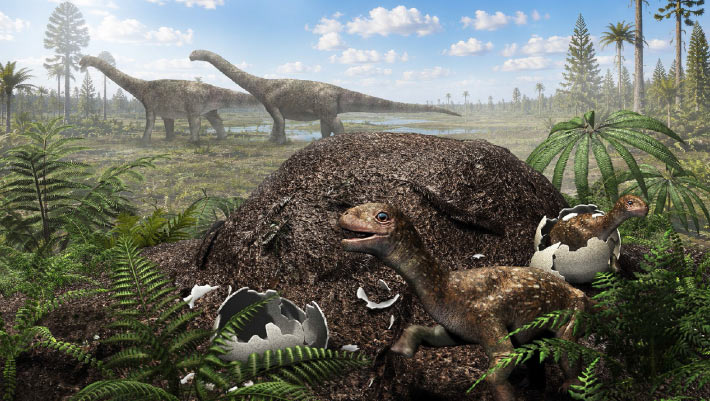
Titanosaurs Nested Far South of Equator, Fossil Eggshells Reveal
Des coquilles d'œufs fossiles révèlent que les titanosaures nichaient très au sud de l'équateur
nid Argentine Équateur fossile Dinosauria Titanosauria
Des paléontologues travaillant en Patagonie, en Argentine, ont découvert des coquilles d'œufs fossilisées qui poussent l'aire de nidification connue des dinosaures plus loin dans l'hémisphère sud que ce qui avait été documenté auparavant. L'article Titanosaures nichés à l'extrême sud de l'équateur, des coquilles d'œufs fossiles révélées sont apparus en premier sur Sci.News : Breaking Science News.
23/09/2026 sci-news ⚙ Traduction automatique
Des scientifiques découvrent le premier diplodocus jamais découvert en dehors de l'Amérique du Nord
os Espagne Jurassique Jurassique supérieur fossile Dinosauria Diplodocia
Un fossile de dinosaure vieux de 150 millions d'années provenant d'Espagne a été identifié comme le premier Diplodocus confirmé jamais découvert en dehors de l'Amérique du Nord. Le sauropode géant mesurait environ 25 mètres de long et était suffisamment bien conservé pour que les chercheurs puissent associer les caractéristiques distinctives de ses os de la queue au célèbre genre. Son apparition inattendue en Europe suggère que les dinosaures se déplaçaient entre les continents à la fin du Jurassique, peut-être via des connexions terrestres temporaires.
19/09/2026 sciencedaily ⚙ Traduction automatique
Sur l'origine de ma première espèce : Dinodontosaurus isiyavamanda
fossile Dinosauria nouvelle espèce
Je ne peux pas imaginer à quel point mon enfant de 9 ans aurait été ravi si je lui avais dit qu’il allait dévoiler au monde une nouvelle espèce fossile, sans parler de celle qui renseigne sur les plus anciens dinosaures. Moi aussi, j'ai 25 ans, je suis plutôt content du travail, mais pour être honnête, ce n'est pas du frisson ou de la joie que [&hellip
18/09/2026 palaeocast ⚙ Traduction automatique
Une découverte passionnante de fossiles fournit la première preuve définitive de Diplodocus en Europe
vertèbre Espagne fossile Dinosauria Diplodocia Diplodocus découverte étude
La découverte de Diplodocus en Europe a été confirmée suite à l'étude de fossiles de sauropodes de l'est de l'Espagne. Quatorze vertèbres caudales et plusieurs chevrons de Teruel ont été attribués au genre emblématique Diplodocus. Il s'agit de la première preuve définitive de l'existence de ce célèbre dinosaure en dehors de l'Amérique du Nord. Les fossiles proviennent du site de La Tejería
17/09/2026 everythingdinosaur ⚙ Traduction automatique
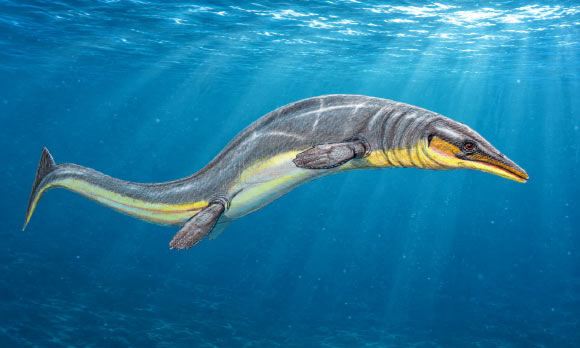
Paleontologists Uncover New Mosasaur Species in Egypt’s Western Desert
Des paléontologues découvrent de nouvelles espèces de mosasaures dans le désert occidental d’Égypte
Égypte Crétacé fossile Dinosauria Halisaurus
Les paléontologues ont décrit une espèce jusqu'alors inconnue de mosasaure – un groupe de reptiles marins disparus qui patrouillaient dans les mers du Crétacé aux côtés des dinosaures terrestres – sur la base de fossiles découverts dans l'oasis de Dakhla en Égypte. L’article Des paléontologues découvrent de nouvelles espèces de mosasaures dans le désert occidental égyptien est apparu en premier sur Sci.News : Breaking Science News.
16/09/2026 sci-news ⚙ Traduction automatique
1 2 3 4 5 6 7 8 9 10 11 12 13 14 15 16 17 18 19 20 21 22 23 24 25 26 27 28 29 30 31 32 33 34 35 36 37 38 39 40 41 42 43