Chine

Pays

87 image(s) · 28 Actualités

Galerie d'images

Paratype skull of Hamipterus tianshanensis on display at the Paleozoological Museum of China.
Taxons Hamipterus

Paratype skull of Hamipterus tianshanensis on display at the Paleozoological Museum of China.

musée Chine Hamipteridae Hamipterus +1
Paratype skull of Hamipterus tianshanensis on display at the Paleozoological Museum of China.
Taxons Hamipteridae

Paratype skull of Hamipterus tianshanensis on display at the Paleozoological Museum of China.

musée Chine Hamipteridae Hamipterus +1
Fossil skeleton of Qianichthyosaurus zhoui on display at the Geological Museum of China.
Taxons Qianichthyosaurus

Fossil skeleton of Qianichthyosaurus zhoui on display at the Geological Museum of China.

musée Chine fossile Qianichthyosaurus +1
Skeleton of '"Gyposaurus" sinensis on display at the Geological Museum of China.
Taxons Gyposaurus

Skeleton of '"Gyposaurus" sinensis on display at the Geological Museum of China.

musée Chine Gyposaurus squelette
Reversed-impression footptints (ichnites) of Jialingpus yuechiensis, on display at the Paleozoological Museum of China.
Taxons Jialingpus

Reversed-impression footptints (ichnites) of Jialingpus yuechiensis, on display at the Paleozoological Museum of China.

musée Chine Ichnites Jialingpus
Reconstruction of skeleton; Lower Cretaceous (120 mio. Years); Jungar Basin, China.
Taxons Dsungaripterus

Reconstruction of skeleton; Lower Cretaceous (120 mio. Years); Jungar Basin, China.

Chine Crétacé Dsungaripteridae Dsungaripterus +1
Dinosaur eggs (Dendroolithus sp.) from Kaoguo Formation, Henan, China, on display at the San Diego County Fair, California, USA.
Taxons Dendroolithus

Dinosaur eggs (Dendroolithus sp.) from Kaoguo Formation, Henan, China, on display at the San Diego County Fair, California, USA.

Chine États-Unis Dendroolithidae Dendroolithus +2
Dinosaur eggs (Dendroolithus sp.) from Kaoguo Formation, Henan, China, on display at the San Diego County Fair, California, USA.
Taxons Dendroolithidae

Dinosaur eggs (Dendroolithus sp.) from Kaoguo Formation, Henan, China, on display at the San Diego County Fair, California, USA.

Chine États-Unis Dendroolithidae Dendroolithus +2
Holotype skeleton (IVPP V15) of Lufengosaurus huenei on display at the Paleozoological Museum of China.
Taxons Lufengosaurus

Holotype skeleton (IVPP V15) of Lufengosaurus huenei on display at the Paleozoological Museum of China.

musée Chine holotype Lufengosaurus +1
Spheroolithus fossil dinosaur eggs, from China. Exhibit in the Academy of Natural Sciences, 1900 Benjamin Franklin Parkway, Philadelphia, Pennsylvania, USA. Photography was permitted in this area of the museum without restrictions.
Taxons Spheroolithus

Spheroolithus fossil dinosaur eggs, from China. Exhibit in the Academy of Natural Sciences, 1900 Benjamin Franklin Parkway, Philadelphia, Pennsylvania, USA. Photography was permitted in this area of the museum without restrictions.

musée Chine États-Unis fossile +4
Spheroolithus fossil dinosaur eggs, from China. Exhibit in the Academy of Natural Sciences, 1900 Benjamin Franklin Parkway, Philadelphia, Pennsylvania, USA. Photography was permitted in this area of the museum without restrictions.
Taxons Paraspheroolithus

Spheroolithus fossil dinosaur eggs, from China. Exhibit in the Academy of Natural Sciences, 1900 Benjamin Franklin Parkway, Philadelphia, Pennsylvania, USA. Photography was permitted in this area of the museum without restrictions.

musée Chine États-Unis fossile +4
Spheroolithus fossil dinosaur eggs, from China. Exhibit in the Academy of Natural Sciences, 1900 Benjamin Franklin Parkway, Philadelphia, Pennsylvania, USA. Photography was permitted in this area of the museum without restrictions.
Taxons Spheroolithidae

Spheroolithus fossil dinosaur eggs, from China. Exhibit in the Academy of Natural Sciences, 1900 Benjamin Franklin Parkway, Philadelphia, Pennsylvania, USA. Photography was permitted in this area of the museum without restrictions.

musée Chine États-Unis fossile +4
Prismatoolithus tiantaiensis eggs (IVPP V16515) on display at the Paleozoological Museum of China.
Taxons Prismatoolithus

Prismatoolithus tiantaiensis eggs (IVPP V16515) on display at the Paleozoological Museum of China.

musée Chine Prismatoolithidae Prismatoolithus
Prismatoolithus tiantaiensis eggs (IVPP V16515) on display at the Paleozoological Museum of China.
Taxons Prismatoolithus

Prismatoolithus tiantaiensis eggs (IVPP V16515) on display at the Paleozoological Museum of China.

musée Chine Prismatoolithidae Prismatoolithus
Prismatoolithus tiantaiensis eggs (IVPP V16515) on display at the Paleozoological Museum of China.
Taxons Prismatoolithidae

Prismatoolithus tiantaiensis eggs (IVPP V16515) on display at the Paleozoological Museum of China.

musée Chine Prismatoolithidae Prismatoolithus
Sinosauropteryx fossil, from our trip to Hohhot, Inner Mongolia, China for National Day Holiday 2007.

This is the Inner Mongolia Museum, the biggest museum in the region.
Taxons Sinosauropteryx

Sinosauropteryx fossil, from our trip to Hohhot, Inner Mongolia, China for National Day Holiday 2007. This is the Inner Mongolia Museum, the biggest museum in the region.

musée Chine Mongolie fossile +3
1 2 3 4 5 6

Actualités

Ancient Sea Creature Pushes Back Origins of Spider Fangs to 518 Million Years Ago
Une ancienne créature marine repousse les origines des crocs d’araignées il y a 518 millions d’années
mâchoire prédateur Chine Cambrien évolution
Urokodia aequalis, un prédateur marin du début du Cambrien du biote de Chengjiang en Chine, préserve les premières traces connues de chélicères - des structures en forme de pinces qui ont ensuite évolué pour devenir les crocs des araignées et les pinces des scorpions. L'article Une ancienne créature marine repousse les origines des crocs d'araignées il y a 518 millions d'années est apparu en premier sur Sci.News : Breaking Science News.
01/07/2026 sci-news ⚙ Traduction automatique
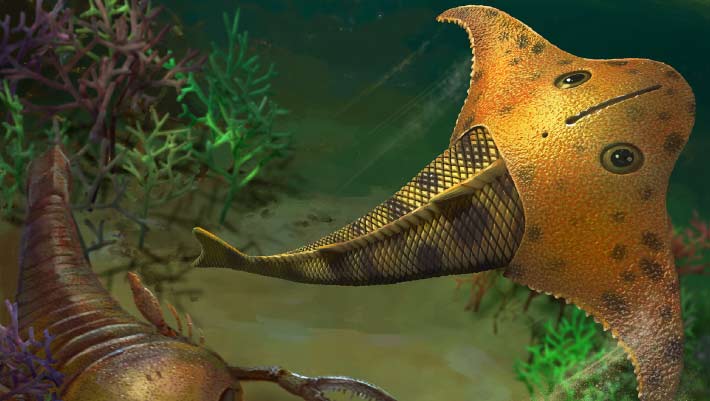
New Feathered Dinosaur from China Had Peacock-Like Tail
Un nouveau dinosaure à plumes de Chine avait une queue semblable à celle d'un paon
plume Chine Crétacé Crétacé inférieur Dinosauria oiseau évolution nouvelle espèce
Un nouveau genre et une nouvelle espèce de dinosaure pennaraptoran à quatre ailes du Crétacé inférieur du nord de la Chine ajoutent une autre tournure à l'histoire de l'évolution des oiseaux à partir de leurs ancêtres dinosaures. L'article Un nouveau dinosaure à plumes de Chine avait une queue semblable à un paon est apparu en premier sur Sci.News : Breaking Science News.
23/06/2026 sci-news ⚙ Traduction automatique
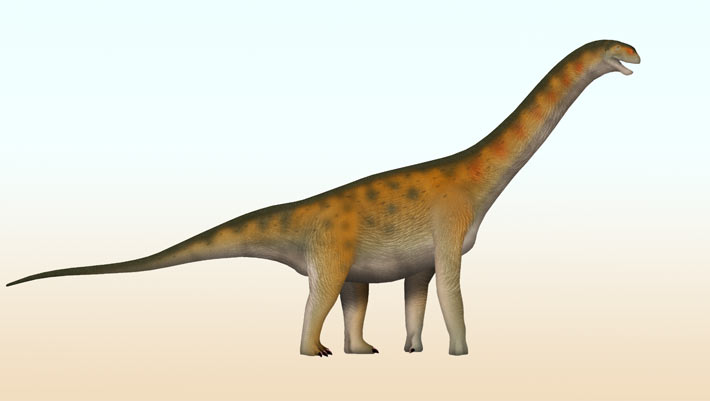
Ce dinosaure à quatre ailes aurait terrorisé les premiers oiseaux de la Terre
os plume prédateur Chine Dinosauria Velociraptor oiseau
Un dinosaure à plumes récemment découvert appelé Jian changmaensis pourrait être le prédateur disparu responsable de mystérieux tas d'os d'oiseaux préhistoriques écrasés en Chine. Le planeur à quatre ailes, un proche cousin du vélociraptor, aide à révéler comment les lève-tôt et leurs parents dinosaures partageaient le même paysage ancien.
23/06/2026 sciencedaily ⚙ Traduction automatique
Yi: Beast of the Week
Yi : la bête de la semaine
Chine Jurassique Jurassique supérieur Dinosauria Yi évolution
 Cette semaine, nous allons découvrir un dinosaure si inhabituel qu'il a complètement changé ce que nous pensions savoir sur l'évolution des dinosaures.  Découvrez Yi qi ! (prononcé « EE-chee ») Yi était un petit dinosaure théropode qui vivait dans ce qui est aujourd'hui le Hebei, dans le nord-est de la Chine, à la fin du Jurassique, il y a environ 159 millions d'années.  Du museau à la queue, il ne mesurait qu'environ 30 cm de long et son envergure mesurait environ 60 cm de large.  Le genre est venu, "Yi" se traduit du mandarin par "aile" et
21/06/2026 prehistoricbeastoftheweek ⚙ Traduction automatique
Fossils from Chinese Cave Fill Crucial Gap in History of Gigantopithecus blacki
Des fossiles provenant d'une grotte chinoise comblent une lacune cruciale dans l'histoire du Gigantopithecus blacki
dent Chine fossile origine humaine mammifères
Au fond d'une grotte calcaire du sud de la Chine, des paléontologues ont découvert un assemblage de treize dents fossilisées appartenant à Gigantopithecus blacki, la plus grande espèce de primate jamais connue. L'article Les fossiles des grottes chinoises comblent une lacune cruciale dans l'histoire de Gigantopithecus blacki apparaît en premier sur Sci.News : Breaking Science News.
15/06/2026 sci-news ⚙ Traduction automatique
1 2 3 4 5 6