Chine

Pays

87 image(s) · 28 Actualités

Galerie d'images

Paratype skull of Hamipterus tianshanensis on display at the Paleozoological Museum of China.
Taxons Hamipterus

Paratype skull of Hamipterus tianshanensis on display at the Paleozoological Museum of China.

musée Chine Hamipteridae Hamipterus +1
Paratype skull of Hamipterus tianshanensis on display at the Paleozoological Museum of China.
Taxons Hamipteridae

Paratype skull of Hamipterus tianshanensis on display at the Paleozoological Museum of China.

musée Chine Hamipteridae Hamipterus +1
Fossil skeleton of Qianichthyosaurus zhoui on display at the Geological Museum of China.
Taxons Qianichthyosaurus

Fossil skeleton of Qianichthyosaurus zhoui on display at the Geological Museum of China.

musée Chine fossile Qianichthyosaurus +1
Skeleton of '"Gyposaurus" sinensis on display at the Geological Museum of China.
Taxons Gyposaurus

Skeleton of '"Gyposaurus" sinensis on display at the Geological Museum of China.

musée Chine Gyposaurus squelette
Reversed-impression footptints (ichnites) of Jialingpus yuechiensis, on display at the Paleozoological Museum of China.
Taxons Jialingpus

Reversed-impression footptints (ichnites) of Jialingpus yuechiensis, on display at the Paleozoological Museum of China.

musée Chine Ichnites Jialingpus
Reconstruction of skeleton; Lower Cretaceous (120 mio. Years); Jungar Basin, China.
Taxons Dsungaripterus

Reconstruction of skeleton; Lower Cretaceous (120 mio. Years); Jungar Basin, China.

Chine Crétacé Dsungaripteridae Dsungaripterus +1
Dinosaur eggs (Dendroolithus sp.) from Kaoguo Formation, Henan, China, on display at the San Diego County Fair, California, USA.
Taxons Dendroolithus

Dinosaur eggs (Dendroolithus sp.) from Kaoguo Formation, Henan, China, on display at the San Diego County Fair, California, USA.

Chine États-Unis Dendroolithidae Dendroolithus +2
Dinosaur eggs (Dendroolithus sp.) from Kaoguo Formation, Henan, China, on display at the San Diego County Fair, California, USA.
Taxons Dendroolithidae

Dinosaur eggs (Dendroolithus sp.) from Kaoguo Formation, Henan, China, on display at the San Diego County Fair, California, USA.

Chine États-Unis Dendroolithidae Dendroolithus +2
Holotype skeleton (IVPP V15) of Lufengosaurus huenei on display at the Paleozoological Museum of China.
Taxons Lufengosaurus

Holotype skeleton (IVPP V15) of Lufengosaurus huenei on display at the Paleozoological Museum of China.

musée Chine holotype Lufengosaurus +1
Spheroolithus fossil dinosaur eggs, from China. Exhibit in the Academy of Natural Sciences, 1900 Benjamin Franklin Parkway, Philadelphia, Pennsylvania, USA. Photography was permitted in this area of the museum without restrictions.
Taxons Spheroolithus

Spheroolithus fossil dinosaur eggs, from China. Exhibit in the Academy of Natural Sciences, 1900 Benjamin Franklin Parkway, Philadelphia, Pennsylvania, USA. Photography was permitted in this area of the museum without restrictions.

musée Chine États-Unis fossile +4
Spheroolithus fossil dinosaur eggs, from China. Exhibit in the Academy of Natural Sciences, 1900 Benjamin Franklin Parkway, Philadelphia, Pennsylvania, USA. Photography was permitted in this area of the museum without restrictions.
Taxons Paraspheroolithus

Spheroolithus fossil dinosaur eggs, from China. Exhibit in the Academy of Natural Sciences, 1900 Benjamin Franklin Parkway, Philadelphia, Pennsylvania, USA. Photography was permitted in this area of the museum without restrictions.

musée Chine États-Unis fossile +4
Spheroolithus fossil dinosaur eggs, from China. Exhibit in the Academy of Natural Sciences, 1900 Benjamin Franklin Parkway, Philadelphia, Pennsylvania, USA. Photography was permitted in this area of the museum without restrictions.
Taxons Spheroolithidae

Spheroolithus fossil dinosaur eggs, from China. Exhibit in the Academy of Natural Sciences, 1900 Benjamin Franklin Parkway, Philadelphia, Pennsylvania, USA. Photography was permitted in this area of the museum without restrictions.

musée Chine États-Unis fossile +4
Prismatoolithus tiantaiensis eggs (IVPP V16515) on display at the Paleozoological Museum of China.
Taxons Prismatoolithus

Prismatoolithus tiantaiensis eggs (IVPP V16515) on display at the Paleozoological Museum of China.

musée Chine Prismatoolithidae Prismatoolithus
Prismatoolithus tiantaiensis eggs (IVPP V16515) on display at the Paleozoological Museum of China.
Taxons Prismatoolithus

Prismatoolithus tiantaiensis eggs (IVPP V16515) on display at the Paleozoological Museum of China.

musée Chine Prismatoolithidae Prismatoolithus
Prismatoolithus tiantaiensis eggs (IVPP V16515) on display at the Paleozoological Museum of China.
Taxons Prismatoolithidae

Prismatoolithus tiantaiensis eggs (IVPP V16515) on display at the Paleozoological Museum of China.

musée Chine Prismatoolithidae Prismatoolithus
Sinosauropteryx fossil, from our trip to Hohhot, Inner Mongolia, China for National Day Holiday 2007.

This is the Inner Mongolia Museum, the biggest museum in the region.
Taxons Sinosauropteryx

Sinosauropteryx fossil, from our trip to Hohhot, Inner Mongolia, China for National Day Holiday 2007. This is the Inner Mongolia Museum, the biggest museum in the region.

musée Chine Mongolie fossile +3
1 2 3 4 5 6

Actualités

520-Million-Year-Old Fossil from China Fills Gap in Evolutionary History of Cephalopods
Un fossile chinois vieux de 520 millions d’années comble une lacune dans l’histoire évolutive des céphalopodes
Chine Cambrien fossile évolution
Les paléontologues ont identifié le plus ancien céphalopode connu équipé d'un siphoncle - une extension tubulaire du manteau trouvée chez les céphalopodes à coquille - remontant les archives fossiles de cette caractéristique clé de l'évolution au Cambrien inférieur, il y a environ 520 millions d'années. L'article Un fossile chinois vieux de 520 millions d'années comble une lacune dans l'histoire évolutive des céphalopodes est apparu en premier sur Sci.News : Breaking Science News.
30/07/2026 sci-news ⚙ Traduction automatique
C’est une découverte exceptionnelle : cet ambre est si vieux qu'il a été fabriqué avant que le moindre animal ne marche sur la Terre ferme !
Chine découverte
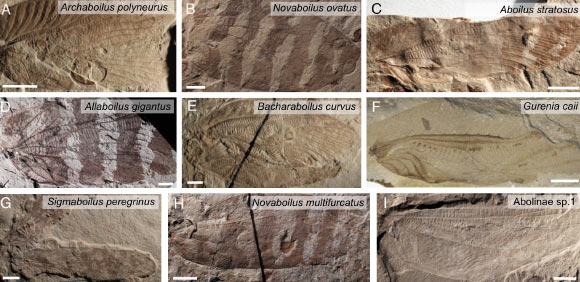
Ils cherchaient du charbon et ont découvert un trésor bien plus ancien : de minuscules fragments d’ambre vieux de 385 millions d’années. Cette trouvaille inattendue en Chine repousse de plusieurs dizaines de millions d’années l’apparition connue de la résine fossilisée et révèle que les plantes...
21/07/2026 futura-terre
L’ADN ancien révèle un secret effrayant dans la ville chinoise de Shimao, vieille de 4 000 ans
ADN Chine génétique
L’ADN ancien de la vaste colonie chinoise de Shimao, vieille de 4 000 ans, révèle comment a été organisée l’une des premières sociétés complexes d’Asie de l’Est. Les chercheurs ont découvert que ses habitants descendaient en grande partie des communautés agricoles locales du fleuve Jaune, mais qu'ils avaient également des liens génétiques avec des populations éloignées du sud et des steppes, ce qui indique des contacts préhistoriques étendus.
21/07/2026 sciencedaily-paleo ⚙ Traduction automatique
385-Million-Year-Old Amber Found in China
De l'ambre vieux de 385 millions d'années découvert en Chine
Chine Dévonien Dévonien Dévonien moyen géologie
Des paléontologues chinois ont découvert ce qu'ils disent être les premiers morceaux d'ambre confirmés jamais découverts, une résine fossilisée vieille d'environ 385 millions d'années (époque du Dévonien moyen) qui est antérieure d'environ 65 millions d'années au précédent détenteur du record. L'article Ambre vieux de 385 millions d'années découvert en Chine est apparu en premier sur Sci.News : Breaking Science News.
17/07/2026 sci-news ⚙ Traduction automatique
New Jurassic Fossil Reveals How Birds Lost Their Dinosaur Tails
Un nouveau fossile jurassique révèle comment les oiseaux ont perdu leur queue de dinosaure
Chine Jurassique fossile Dinosauria Zhengheornis oiseau
Des paléontologues chinois ont décrit un petit oiseau jurassique jusqu'alors inconnu dont la queue courte offre de nouvelles preuves de la façon dont les premiers oiseaux ont troqué leur longue queue semblable à celle d'un dinosaure contre le coccyx compact qui aide les oiseaux vivants à voler. L'article Un nouveau fossile du Jurassique révèle comment les oiseaux ont perdu leurs queues de dinosaures est apparu en premier sur Sci.News : Breaking Science News.
07/07/2026 sci-news ⚙ Traduction automatique
1 2 3 4 5 6