Chine

Pays

75 image(s) · 18 Actualités

Galerie d'images

Skull of troodontid theropod Xixiasaurus henanensis gen. et sp. nov. (HGM 41HIII−0201; holotype), lower–middle Majiacun Formation (Upper Cretaceous: Coniacian–Campanian), Henan Province, China; in dorsal (A); lateral (B), and ventral (C) views.

Note that this version of the image does not include the interpretative lines of the version in the paper.
Taxons Xixiasaurus

Skull of troodontid theropod Xixiasaurus henanensis gen. et sp. nov. (HGM 41HIII−0201; holotype), lower–middle Majiacun Formation (Upper Cretaceous: Coniacian–Campanian), Henan Province, China; in dorsal (A); lateral (B), and ventral (C) views. Note that this version of the image does not include the interpretative lines of the version in the paper.

Chine Campanien Coniacien Crétacé +5
Holotype specimen (IVPP V15471) of Epidexipteryx hui on display at the Paleozoological Museum of China.
Taxons Epidexipteryx

Holotype specimen (IVPP V15471) of Epidexipteryx hui on display at the Paleozoological Museum of China.

musée Chine holotype spécimen +1
Holotype of Protarchaeopteryx robusta on display at the Geological Museum of China.
Taxons Protarchaeopteryx

Holotype of Protarchaeopteryx robusta on display at the Geological Museum of China.

musée Chine holotype Protarchaeopteryx
Forearm and hand of Machairasaurus leptorhynchos Longrich et al. 2010 (Dinosauria: Theropoda: Oviraptoridae: Ingeniinae) from the Late Cretaceous Djadokhta Formation beds of Bayan Mandahu, Inner Mongolia, China. Digital photography and editing by Nick Longrich
Taxons Machairasaurus

Forearm and hand of Machairasaurus leptorhynchos Longrich et al. 2010 (Dinosauria: Theropoda: Oviraptoridae: Ingeniinae) from the Late Cretaceous Djadokhta Formation beds of Bayan Mandahu, Inner Mongolia, China. Digital photography and editing by Nick Longrich

Chine Mongolie Djadokhta Crétacé +8
A reconstruction of Aorun, a small coelurosaurian theropod from the Middle Jurassic China.
Taxons Aorun

A reconstruction of Aorun, a small coelurosaurian theropod from the Middle Jurassic China.

Chine Jurassique Jurassique moyen Aorun +1
Holotype of Shenzhousaurus orientalis on display at the Geological Museum of China.
Taxons Shenzhousaurus

Holotype of Shenzhousaurus orientalis on display at the Geological Museum of China.

musée Chine holotype Shenzhousaurus
Holotype skull of Wannanosaurus yansiensis on display at the Paleozoological Museum of China.
Taxons Wannanosaurus

Holotype skull of Wannanosaurus yansiensis on display at the Paleozoological Museum of China.

musée Chine holotype Wannanosaurus +1
The hadrosaurid dinosaur Wulagasaurus dongi gen. et sp. nov. from the Upper Cretaceous Yuliangze Formation at the Wulaga quarry, China.

A. Holotype GMH W184, right dentary in lateral (A1) and medial (A2) views. B. GMH W217, right dentary in lateral (B1) and medial (B2) views.
Taxons Wulagasaurus

The hadrosaurid dinosaur Wulagasaurus dongi gen. et sp. nov. from the Upper Cretaceous Yuliangze Formation at the Wulaga quarry, China. A. Holotype GMH W184, right dentary in lateral (A1) and medial (A2) views. B. GMH W217, right dentary in lateral (B1) and medial (B2) views.

Chine Crétacé holotype Dinosauria +3
Changmiania liaoningensis, an ornithopod dinosaur from the Lower Cretaceous of Lujiatun (Liaoning Province, China).
(A) Holotype PMOL AD00114 in dorsal view; (B) anterior part of the holotype PMOL AD00114 in caudolateral view; (C) referred specimen PMOL LFV022 in dorsal view. Red arrows indicate the emplacement of the gastrolith clusters.
Taxons Changmiania

Changmiania liaoningensis, an ornithopod dinosaur from the Lower Cretaceous of Lujiatun (Liaoning Province, China). (A) Holotype PMOL AD00114 in dorsal view; (B) anterior part of the holotype PMOL AD00114 in caudolateral view; (C) referred specimen PMOL LFV022 in dorsal view. Red arrows indicate the emplacement of the gastrolith clusters.

Chine Crétacé holotype spécimen +2
Partial skeleton of the heterodontosaurid Tianyulong confuciusi from the Lower Cretaceous Jehol Group of China. Partial skeleton mainly in right lateral view (IVPP V17090). Enlargements of subsequent figures are shown in red. Scale bar equals 10 cm.
Taxons Tianyulong

Partial skeleton of the heterodontosaurid Tianyulong confuciusi from the Lower Cretaceous Jehol Group of China. Partial skeleton mainly in right lateral view (IVPP V17090). Enlargements of subsequent figures are shown in red. Scale bar equals 10 cm.

écaille Chine Crétacé Heterodontosauridae +3
Youngoolithus xiaguanensis nest on display at the Paleozoological Museum of China.
Taxons Youngoolithus

Youngoolithus xiaguanensis nest on display at the Paleozoological Museum of China.

nid musée Chine Youngoolithidae +1
Youngoolithus xiaguanensis nest on display at the Paleozoological Museum of China.
Taxons Youngoolithidae

Youngoolithus xiaguanensis nest on display at the Paleozoological Museum of China.

nid musée Chine Youngoolithidae +1
Figure 1: Reconstruction of the skull of Bellusaurus sui from the Middle-Late Jurassic Shishugou Formation of Xinjiang, China.
This reconstruction is a composite based on isolated holotypic and referred material. (A) Right lateral view. (B) Dorsal view. Holotypic elements are indicated in blue and referred elements are in green.
Taxons Bellusaurus

Figure 1: Reconstruction of the skull of Bellusaurus sui from the Middle-Late Jurassic Shishugou Formation of Xinjiang, China. This reconstruction is a composite based on isolated holotypic and referred material. (A) Right lateral view. (B) Dorsal view. Holotypic elements are indicated in blue and referred elements are in green.

Chine Jurassique Jurassique supérieur Bellusaurus +2
Chuanjiesaurus fossil in China Science and Technology Museum. The other two smaller suites of fossils are Lufengosaurus and Dilophosaurus.
Taxons Chuanjiesaurus

Chuanjiesaurus fossil in China Science and Technology Museum. The other two smaller suites of fossils are Lufengosaurus and Dilophosaurus.

musée Chine fossile Chuanjiesaurus +2
Jiangxititan a titanosaurian sauropod from the Late Cretaceous of China. Typical for a sauropod, it had a long neck and stood on four pillar-like legs to support its massive body. Jiangxititan is a member of the Lognkosauria, which include some of the largest dinosaurs known, and is one of the few from mainland Asia. The discovery of Jiangxititan demonstrates the presence of both early-diverging and late-diverging titanosauriform sauropods in that area during the Late Cretaceous.
Taxons Jiangxititan

Jiangxititan a titanosaurian sauropod from the Late Cretaceous of China. Typical for a sauropod, it had a long neck and stood on four pillar-like legs to support its massive body. Jiangxititan is a member of the Lognkosauria, which include some of the largest dinosaurs known, and is one of the few from mainland Asia. The discovery of Jiangxititan demonstrates the presence of both early-diverging and late-diverging titanosauriform sauropods in that area during the Late Cretaceous.

Chine Crétacé Crétacé supérieur Dinosauria +5
Restoration of Dongbeititan dongi from the Early Cretaceous of China
Taxons Dongbeititan

Restoration of Dongbeititan dongi from the Early Cretaceous of China

Chine Crétacé Crétacé inférieur Dongbeititan
1 2 3 4 5

Actualités

Description d'un nouveau dinosaure à quatre ailes en provenance de Chine
plume membre description Chine Crétacé Crétacé inférieur fossile Dinosauria Jian Microraptorinae nouvelle espèce partiel
Les paléontologues ont décrit une nouvelle espèce de théropode microraptorine du nord-ouest de la Chine. Nommé Jian changmaensis, ce petit dinosaure à plumes planait probablement sur quatre ailes. Le fossile fournit de nouvelles informations sur les écosystèmes du Crétacé inférieur et étend l’aire de répartition connue des Microraptorinae. Le matériau fossile est constitué d'une ceinture pectorale gauche partielle articulée et d'un membre antérieur. Il
08/06/2026 everythingdinosaur ⚙ Traduction automatique
Les scientifiques pensaient les Denisoviens introuvables : cette découverte spectaculaire change désormais tout
os ADN Chine découverte Homo sapiens origine humaine crâne
Pendant quinze ans, les Denisoviens n'ont eu ni visage ni contour. Juste de l'ADN extrait d'un fragment d'os sibérien grand comme un ongle. En 2025, un crâne exceptionnel découvert en Chine a tout changé. Homo longi, surnommé l'Homme dragon, donne enfin un visage à ce groupe humain fantôme. 
06/06/2026 futura-terre
Un vrai cauchemar volant : des chercheurs ont découvert un « dragon » préhistorique avec 4 ailes qui terrorisait les premiers oiseaux !
plume chasse Chine Crétacé fossile Dinosauria Jian oiseau étude
Les raptors, dinosaures à plumes du Crétacé, ne pouvaient pas voler malgré leur lien étroit avec les oiseaux. Une nouvelle étude menée sur un site fossilifère en Chine révèle toutefois que certains d’entre eux auraient été capables de planer et de chasser les premiers oiseaux.
05/06/2026 futura-terre
New Microraptorine Dinosaur Discovered in China
Un nouveau dinosaure microraptorine découvert en Chine
Chine Crétacé Crétacé inférieur spécimen Dinosauria Jian Microraptorinae oiseau
Jian changmaensis est le premier dinosaure non aviaire découvert sur un site paléontologique ayant livré plus de 100 spécimens d'oiseaux du Crétacé inférieur. L'article Un nouveau dinosaure microraptorine découvert en Chine est apparu en premier sur Sci.News : Breaking Science News.
04/06/2026 sci-news ⚙ Traduction automatique
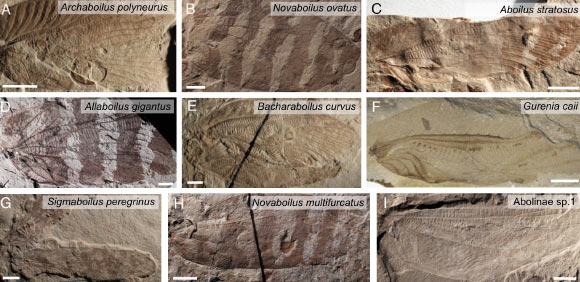
Une découverte en Chine bouscule l’histoire d’étranges animaux vieux de 520 millions d’années
Chine Cambrien fossile datation découverte
Discrets mais omniprésents dans les océans actuels, les bryozoaires cachent une histoire bien plus ancienne qu’on ne le pensait. Des fossiles exceptionnels découverts en Chine montrent qu’il y a 520 millions d’années, ces animaux coloniaux étaient déjà des structures complexes, pleinement...
03/06/2026 futura-terre
1 2 3 4