←

Chine

Pays

82 image(s) · 38 Actualités

Galerie d'images

Skull of troodontid theropod Xixiasaurus henanensis gen. et sp. nov. (HGM 41HIII−0201; holotype), lower–middle Majiacun Formation (Upper Cretaceous: Coniacian–Campanian), Henan Province, China; in dorsal (A); lateral (B), and ventral (C) views.

Note that this version of the image does not include the interpretative lines of the version in the paper.
Taxons Xixiasaurus

Skull of troodontid theropod Xixiasaurus henanensis gen. et sp. nov. (HGM 41HIII−0201; holotype), lower–middle Majiacun Formation (Upper Cretaceous: Coniacian–Campanian), Henan Province, China; in dorsal (A); lateral (B), and ventral (C) views. Note that this version of the image does not include the interpretative lines of the version in the paper.

Chine Campanien Coniacien Crétacé +5
Holotype skull of Wannanosaurus yansiensis on display at the Paleozoological Museum of China.
Taxons Wannanosaurus

Holotype skull of Wannanosaurus yansiensis on display at the Paleozoological Museum of China.

musée Chine holotype Wannanosaurus +1
Restoration of Zhuchengtitan zangjiazhuangensis from the Late Cretaceous of China
Taxons Zhuchengtitan

Restoration of Zhuchengtitan zangjiazhuangensis from the Late Cretaceous of China

Chine Crétacé Crétacé supérieur Zhuchengtitan
Holotype of Haopterus gracilis on display at the Paleozoological Museum of China.
Taxons Haopterus

Holotype of Haopterus gracilis on display at the Paleozoological Museum of China.

musée Chine holotype Haopterus +1
Holotype of Shenzhousaurus orientalis on display at the Geological Museum of China.
Taxons Shenzhousaurus

Holotype of Shenzhousaurus orientalis on display at the Geological Museum of China.

musée Chine holotype Shenzhousaurus
Holotype specimen (IVPP V15471) of Epidexipteryx hui on display at the Paleozoological Museum of China.
Taxons Epidexipteryx

Holotype specimen (IVPP V15471) of Epidexipteryx hui on display at the Paleozoological Museum of China.

musée Chine holotype spécimen +1
Holotype of Protarchaeopteryx robusta on display at the Geological Museum of China.
Taxons Protarchaeopteryx

Holotype of Protarchaeopteryx robusta on display at the Geological Museum of China.

musée Chine holotype Protarchaeopteryx
Tongnanlong is a large mamenchisaurid sauropod dinosaur that lived in the Late Jurassic period of what is now China. Typical of mamenchisaurids, it had an extremely long neck, even by sauropod standards. Tongnanlong grew to approximately 25 m in length and weighed 20-30 t, making it one of the largest mamenchisaurids.
Taxons Tongnanlong

Tongnanlong is a large mamenchisaurid sauropod dinosaur that lived in the Late Jurassic period of what is now China. Typical of mamenchisaurids, it had an extremely long neck, even by sauropod standards. Tongnanlong grew to approximately 25 m in length and weighed 20-30 t, making it one of the largest mamenchisaurids.

Chine Jurassique Jurassique supérieur Dinosauria +2
Sinocyamodus xinpuensis.

www.tynhm.com/china/
Taxons Sinocyamodus

Sinocyamodus xinpuensis. www.tynhm.com/china/

Chine Sinocyamodus
Paratype skull of Hamipterus tianshanensis on display at the Paleozoological Museum of China.
Taxons Hamipteridae

Paratype skull of Hamipterus tianshanensis on display at the Paleozoological Museum of China.

musée Chine Hamipteridae Hamipterus +1
Paratype skull of Hamipterus tianshanensis on display at the Paleozoological Museum of China.
Taxons Hamipterus

Paratype skull of Hamipterus tianshanensis on display at the Paleozoological Museum of China.

musée Chine Hamipteridae Hamipterus +1
Replica dorsal holotype vertebrae of Liubangosaurus hei at the National Natural History Museum of China.
Taxons Liubangosaurus

Replica dorsal holotype vertebrae of Liubangosaurus hei at the National Natural History Museum of China.

musée Chine holotype Liubangosaurus
Jiangxititan a titanosaurian sauropod from the Late Cretaceous of China. Typical for a sauropod, it had a long neck and stood on four pillar-like legs to support its massive body. Jiangxititan is a member of the Lognkosauria, which include some of the largest dinosaurs known, and is one of the few from mainland Asia. The discovery of Jiangxititan demonstrates the presence of both early-diverging and late-diverging titanosauriform sauropods in that area during the Late Cretaceous.
Taxons Jiangxititan

Jiangxititan a titanosaurian sauropod from the Late Cretaceous of China. Typical for a sauropod, it had a long neck and stood on four pillar-like legs to support its massive body. Jiangxititan is a member of the Lognkosauria, which include some of the largest dinosaurs known, and is one of the few from mainland Asia. The discovery of Jiangxititan demonstrates the presence of both early-diverging and late-diverging titanosauriform sauropods in that area during the Late Cretaceous.

Chine Crétacé Crétacé supérieur Dinosauria +5
Holotype skull (IVPP V17083) of Guidraco venator on display at the Paleozoological Museum of China.
Taxons Guidraco

Holotype skull (IVPP V17083) of Guidraco venator on display at the Paleozoological Museum of China.

musée Chine holotype Guidraco +1
Restoration of Dongbeititan dongi from the Early Cretaceous of China
Taxons Dongbeititan

Restoration of Dongbeititan dongi from the Early Cretaceous of China

Chine Crétacé Crétacé inférieur Dongbeititan
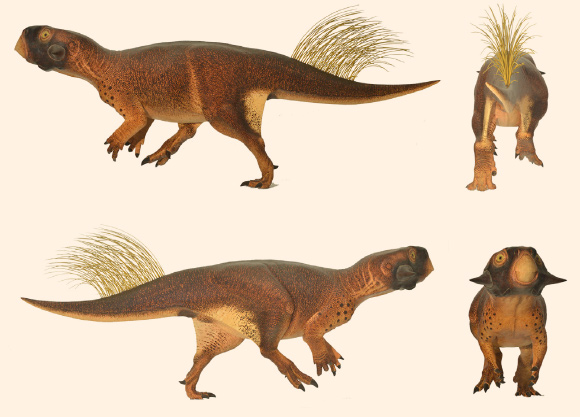
A reconstruction of Aorun, a small coelurosaurian theropod from the Middle Jurassic China.
Taxons Aorun

A reconstruction of Aorun, a small coelurosaurian theropod from the Middle Jurassic China.

Chine Jurassique Jurassique moyen Aorun +1
1 2 3 4 5 6

Actualités

Des dents vieilles de 400 000 ans révèlent un lien caché dans l'évolution humaine
protéine Chine évolution
Des dents d'Homo erectus de Chine vieilles de plus de 400 000 ans pourraient révéler un lien surprenant entre cette ancienne espèce humaine, les Dénisoviens, et certains peuples modernes. Les scientifiques ont découvert des mutations protéiques suggérant que plusieurs populations d'Homo erectus d'Asie de l'Est appartenaient au même groupe évolutif, y compris une mutation précédemment associée aux Dénisoviens. Cette variante est peut-être passée de l’Homo erectus aux Dénisoviens et a finalement atteint les populations modernes d’Asie du Sud-Est et d’Océanie.
10/09/2026 sciencedaily ⚙ Traduction automatique
115-Million-Year-Old Dinosaur Fossil Recovered from Deep Drill Core in China
Un fossile de dinosaure vieux de 115 millions d'années récupéré dans une carotte de forage profonde en Chine
Chine Mongolie Crétacé Crétacé inférieur fossile Dinosauria formation
Les scientifiques ont identifié le premier fossile de dinosaure dans une partie occidentale isolée de la formation Bayan Gobi, en Mongolie intérieure chinoise, étendant ainsi la répartition géographique connue des fossiles de dinosaures dans cette importante unité rocheuse du Crétacé inférieur. L'article Un fossile de dinosaure vieux de 115 millions d'années récupéré dans une carotte de forage profonde en Chine est apparu en premier sur Sci.News : Breaking Science News.
07/09/2026 sci-news ⚙ Traduction automatique
Un remarquable fossile de reptile marin du Trias préserve les organes internes
Chine Trias fossile spécimen anatomie squelette
Les scientifiques ont décrit un fossile exceptionnel du reptile marin du Trias au long cou, Austronaga minuta. Le spécimen vient de Chine et a environ 245 millions d’années. Remarquablement, une grande partie du système digestif de l’animal a été préservée. Le fossile presque complet offre aux scientifiques une vue sans précédent du squelette et de l’anatomie interne d’un archosauromorphe.
26/08/2026 everythingdinosaur ⚙ Traduction automatique
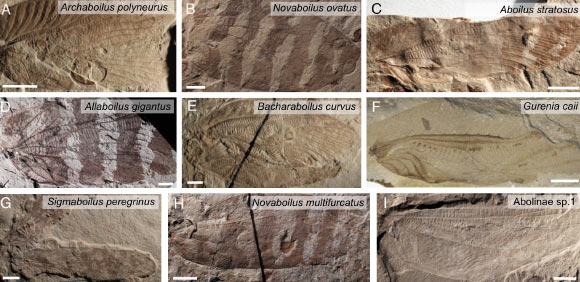
Scientists Reconstruct Sound of Jurassic Insects
Des scientifiques reconstituent le bruit des insectes du Jurassique
Chine Jurassique insecte
À l’aide de lasers, de modèles informatiques et de l’IA, les chercheurs ont reconstitué les cris de grillons et de katydidés modernes, vieux de 165 millions d’années, à partir de fragments d’ailes fossilisés trouvés en Chine. L'article Des scientifiques reconstruisent le son des insectes jurassiques est apparu en premier sur Sci.News : Breaking Science News.
25/08/2026 sci-news ⚙ Traduction automatique
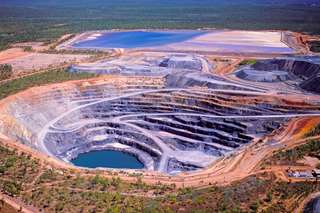
Un gisement d'uranium dans un désert chinois relance la course mondiale à l'énergie nucléaire
Chine découverte
Le désert d'Ordos révèle un trésor énergétique sans précédent. Une découverte colossale de 30 millions de tonnes d'uranium bouleverse l'équilibre énergétique mondial. Comment cette ressource stratégique transformera-t-elle l'avenir de la Chine et les dynamiques internationales du nucléaire ? 
25/08/2026 futura-terre
1 2 3 4 5 6 7 8