←

Chine

Pays

82 image(s) · 38 Actualités

Galerie d'images

Skull of troodontid theropod Xixiasaurus henanensis gen. et sp. nov. (HGM 41HIII−0201; holotype), lower–middle Majiacun Formation (Upper Cretaceous: Coniacian–Campanian), Henan Province, China; in dorsal (A); lateral (B), and ventral (C) views.

Note that this version of the image does not include the interpretative lines of the version in the paper.
Taxons Xixiasaurus

Skull of troodontid theropod Xixiasaurus henanensis gen. et sp. nov. (HGM 41HIII−0201; holotype), lower–middle Majiacun Formation (Upper Cretaceous: Coniacian–Campanian), Henan Province, China; in dorsal (A); lateral (B), and ventral (C) views. Note that this version of the image does not include the interpretative lines of the version in the paper.

Chine Campanien Coniacien Crétacé +5
Holotype skull of Wannanosaurus yansiensis on display at the Paleozoological Museum of China.
Taxons Wannanosaurus

Holotype skull of Wannanosaurus yansiensis on display at the Paleozoological Museum of China.

musée Chine holotype Wannanosaurus +1
Restoration of Zhuchengtitan zangjiazhuangensis from the Late Cretaceous of China
Taxons Zhuchengtitan

Restoration of Zhuchengtitan zangjiazhuangensis from the Late Cretaceous of China

Chine Crétacé Crétacé supérieur Zhuchengtitan
Holotype of Haopterus gracilis on display at the Paleozoological Museum of China.
Taxons Haopterus

Holotype of Haopterus gracilis on display at the Paleozoological Museum of China.

musée Chine holotype Haopterus +1
Holotype of Shenzhousaurus orientalis on display at the Geological Museum of China.
Taxons Shenzhousaurus

Holotype of Shenzhousaurus orientalis on display at the Geological Museum of China.

musée Chine holotype Shenzhousaurus
Holotype specimen (IVPP V15471) of Epidexipteryx hui on display at the Paleozoological Museum of China.
Taxons Epidexipteryx

Holotype specimen (IVPP V15471) of Epidexipteryx hui on display at the Paleozoological Museum of China.

musée Chine holotype spécimen +1
Holotype of Protarchaeopteryx robusta on display at the Geological Museum of China.
Taxons Protarchaeopteryx

Holotype of Protarchaeopteryx robusta on display at the Geological Museum of China.

musée Chine holotype Protarchaeopteryx
Tongnanlong is a large mamenchisaurid sauropod dinosaur that lived in the Late Jurassic period of what is now China. Typical of mamenchisaurids, it had an extremely long neck, even by sauropod standards. Tongnanlong grew to approximately 25 m in length and weighed 20-30 t, making it one of the largest mamenchisaurids.
Taxons Tongnanlong

Tongnanlong is a large mamenchisaurid sauropod dinosaur that lived in the Late Jurassic period of what is now China. Typical of mamenchisaurids, it had an extremely long neck, even by sauropod standards. Tongnanlong grew to approximately 25 m in length and weighed 20-30 t, making it one of the largest mamenchisaurids.

Chine Jurassique Jurassique supérieur Dinosauria +2
Sinocyamodus xinpuensis.

www.tynhm.com/china/
Taxons Sinocyamodus

Sinocyamodus xinpuensis. www.tynhm.com/china/

Chine Sinocyamodus
Paratype skull of Hamipterus tianshanensis on display at the Paleozoological Museum of China.
Taxons Hamipteridae

Paratype skull of Hamipterus tianshanensis on display at the Paleozoological Museum of China.

musée Chine Hamipteridae Hamipterus +1
Paratype skull of Hamipterus tianshanensis on display at the Paleozoological Museum of China.
Taxons Hamipterus

Paratype skull of Hamipterus tianshanensis on display at the Paleozoological Museum of China.

musée Chine Hamipteridae Hamipterus +1
Replica dorsal holotype vertebrae of Liubangosaurus hei at the National Natural History Museum of China.
Taxons Liubangosaurus

Replica dorsal holotype vertebrae of Liubangosaurus hei at the National Natural History Museum of China.

musée Chine holotype Liubangosaurus
Jiangxititan a titanosaurian sauropod from the Late Cretaceous of China. Typical for a sauropod, it had a long neck and stood on four pillar-like legs to support its massive body. Jiangxititan is a member of the Lognkosauria, which include some of the largest dinosaurs known, and is one of the few from mainland Asia. The discovery of Jiangxititan demonstrates the presence of both early-diverging and late-diverging titanosauriform sauropods in that area during the Late Cretaceous.
Taxons Jiangxititan

Jiangxititan a titanosaurian sauropod from the Late Cretaceous of China. Typical for a sauropod, it had a long neck and stood on four pillar-like legs to support its massive body. Jiangxititan is a member of the Lognkosauria, which include some of the largest dinosaurs known, and is one of the few from mainland Asia. The discovery of Jiangxititan demonstrates the presence of both early-diverging and late-diverging titanosauriform sauropods in that area during the Late Cretaceous.

Chine Crétacé Crétacé supérieur Dinosauria +5
Holotype skull (IVPP V17083) of Guidraco venator on display at the Paleozoological Museum of China.
Taxons Guidraco

Holotype skull (IVPP V17083) of Guidraco venator on display at the Paleozoological Museum of China.

musée Chine holotype Guidraco +1
Restoration of Dongbeititan dongi from the Early Cretaceous of China
Taxons Dongbeititan

Restoration of Dongbeititan dongi from the Early Cretaceous of China

Chine Crétacé Crétacé inférieur Dongbeititan
A reconstruction of Aorun, a small coelurosaurian theropod from the Middle Jurassic China.
Taxons Aorun

A reconstruction of Aorun, a small coelurosaurian theropod from the Middle Jurassic China.

Chine Jurassique Jurassique moyen Aorun +1
1 2 3 4 5 6

Actualités

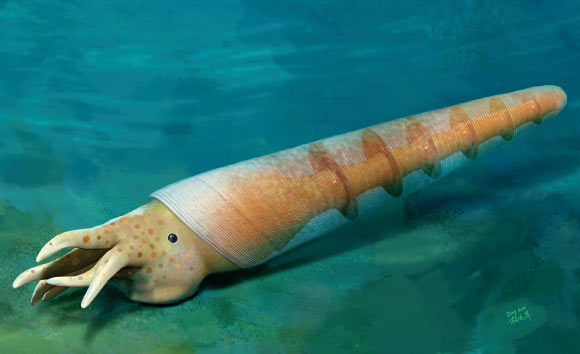
520-Million-Year-Old Fossil from China Fills Gap in Evolutionary History of Cephalopods
Un fossile chinois vieux de 520 millions d’années comble une lacune dans l’histoire évolutive des céphalopodes
Chine Cambrien fossile évolution
Les paléontologues ont identifié le plus ancien céphalopode connu équipé d'un siphoncle - une extension tubulaire du manteau trouvée chez les céphalopodes à coquille - remontant les archives fossiles de cette caractéristique clé de l'évolution au Cambrien inférieur, il y a environ 520 millions d'années. L'article Un fossile chinois vieux de 520 millions d'années comble une lacune dans l'histoire évolutive des céphalopodes est apparu en premier sur Sci.News : Breaking Science News.
30/07/2026 sci-news ⚙ Traduction automatique
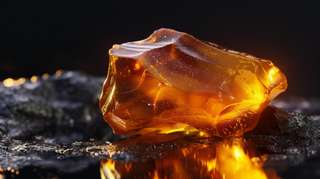
C’est une découverte exceptionnelle : cet ambre est si vieux qu'il a été fabriqué avant que le moindre animal ne marche sur la Terre ferme !
Chine découverte
Ils cherchaient du charbon et ont découvert un trésor bien plus ancien : de minuscules fragments d’ambre vieux de 385 millions d’années. Cette trouvaille inattendue en Chine repousse de plusieurs dizaines de millions d’années l’apparition connue de la résine fossilisée et révèle que les plantes...
21/07/2026 futura-terre
L’ADN ancien révèle un secret effrayant dans la ville chinoise de Shimao, vieille de 4 000 ans
ADN Chine génétique
L’ADN ancien de la vaste colonie chinoise de Shimao, vieille de 4 000 ans, révèle comment a été organisée l’une des premières sociétés complexes d’Asie de l’Est. Les chercheurs ont découvert que ses habitants descendaient en grande partie des communautés agricoles locales du fleuve Jaune, mais qu'ils avaient également des liens génétiques avec des populations éloignées du sud et des steppes, ce qui indique des contacts préhistoriques étendus.
21/07/2026 sciencedaily-paleo ⚙ Traduction automatique
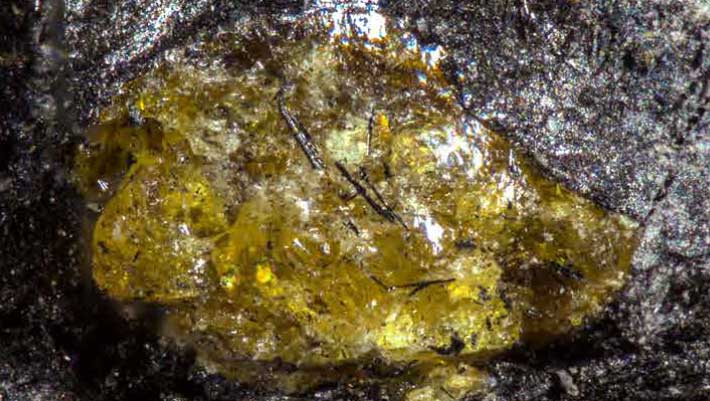
385-Million-Year-Old Amber Found in China
De l'ambre vieux de 385 millions d'années découvert en Chine
Chine Dévonien Dévonien Dévonien moyen géologie
Des paléontologues chinois ont découvert ce qu'ils disent être les premiers morceaux d'ambre confirmés jamais découverts, une résine fossilisée vieille d'environ 385 millions d'années (époque du Dévonien moyen) qui est antérieure d'environ 65 millions d'années au précédent détenteur du record. L'article Ambre vieux de 385 millions d'années découvert en Chine est apparu en premier sur Sci.News : Breaking Science News.
17/07/2026 sci-news ⚙ Traduction automatique
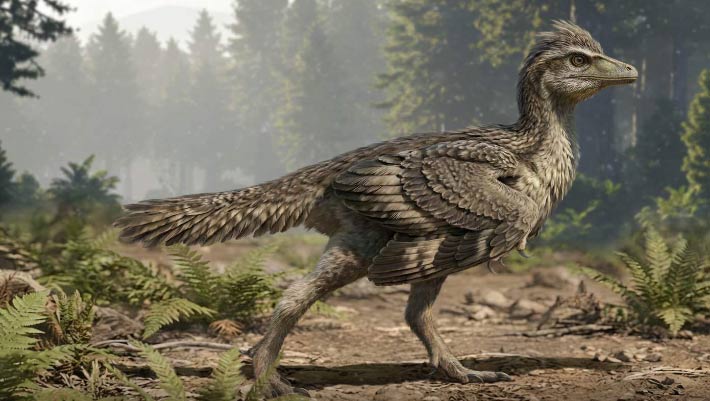
New Jurassic Fossil Reveals How Birds Lost Their Dinosaur Tails
Un nouveau fossile jurassique révèle comment les oiseaux ont perdu leur queue de dinosaure
Chine Jurassique fossile Dinosauria Zhengheornis oiseau
Des paléontologues chinois ont décrit un petit oiseau jurassique jusqu'alors inconnu dont la queue courte offre de nouvelles preuves de la façon dont les premiers oiseaux ont troqué leur longue queue semblable à celle d'un dinosaure contre le coccyx compact qui aide les oiseaux vivants à voler. L'article Un nouveau fossile du Jurassique révèle comment les oiseaux ont perdu leurs queues de dinosaures est apparu en premier sur Sci.News : Breaking Science News.
07/07/2026 sci-news ⚙ Traduction automatique
1 2 3 4 5 6 7 8