←

Chine

Pays

82 image(s) · 38 Actualités

Galerie d'images

Skull of troodontid theropod Xixiasaurus henanensis gen. et sp. nov. (HGM 41HIII−0201; holotype), lower–middle Majiacun Formation (Upper Cretaceous: Coniacian–Campanian), Henan Province, China; in dorsal (A); lateral (B), and ventral (C) views.

Note that this version of the image does not include the interpretative lines of the version in the paper.
Taxons Xixiasaurus

Skull of troodontid theropod Xixiasaurus henanensis gen. et sp. nov. (HGM 41HIII−0201; holotype), lower–middle Majiacun Formation (Upper Cretaceous: Coniacian–Campanian), Henan Province, China; in dorsal (A); lateral (B), and ventral (C) views. Note that this version of the image does not include the interpretative lines of the version in the paper.

Chine Campanien Coniacien Crétacé +5
Holotype skull of Wannanosaurus yansiensis on display at the Paleozoological Museum of China.
Taxons Wannanosaurus

Holotype skull of Wannanosaurus yansiensis on display at the Paleozoological Museum of China.

musée Chine holotype Wannanosaurus +1
Restoration of Zhuchengtitan zangjiazhuangensis from the Late Cretaceous of China
Taxons Zhuchengtitan

Restoration of Zhuchengtitan zangjiazhuangensis from the Late Cretaceous of China

Chine Crétacé Crétacé supérieur Zhuchengtitan
Holotype of Haopterus gracilis on display at the Paleozoological Museum of China.
Taxons Haopterus

Holotype of Haopterus gracilis on display at the Paleozoological Museum of China.

musée Chine holotype Haopterus +1
Holotype of Shenzhousaurus orientalis on display at the Geological Museum of China.
Taxons Shenzhousaurus

Holotype of Shenzhousaurus orientalis on display at the Geological Museum of China.

musée Chine holotype Shenzhousaurus
Holotype specimen (IVPP V15471) of Epidexipteryx hui on display at the Paleozoological Museum of China.
Taxons Epidexipteryx

Holotype specimen (IVPP V15471) of Epidexipteryx hui on display at the Paleozoological Museum of China.

musée Chine holotype spécimen +1
Holotype of Protarchaeopteryx robusta on display at the Geological Museum of China.
Taxons Protarchaeopteryx

Holotype of Protarchaeopteryx robusta on display at the Geological Museum of China.

musée Chine holotype Protarchaeopteryx
Tongnanlong is a large mamenchisaurid sauropod dinosaur that lived in the Late Jurassic period of what is now China. Typical of mamenchisaurids, it had an extremely long neck, even by sauropod standards. Tongnanlong grew to approximately 25 m in length and weighed 20-30 t, making it one of the largest mamenchisaurids.
Taxons Tongnanlong

Tongnanlong is a large mamenchisaurid sauropod dinosaur that lived in the Late Jurassic period of what is now China. Typical of mamenchisaurids, it had an extremely long neck, even by sauropod standards. Tongnanlong grew to approximately 25 m in length and weighed 20-30 t, making it one of the largest mamenchisaurids.

Chine Jurassique Jurassique supérieur Dinosauria +2
Sinocyamodus xinpuensis.

www.tynhm.com/china/
Taxons Sinocyamodus

Sinocyamodus xinpuensis. www.tynhm.com/china/

Chine Sinocyamodus
Paratype skull of Hamipterus tianshanensis on display at the Paleozoological Museum of China.
Taxons Hamipteridae

Paratype skull of Hamipterus tianshanensis on display at the Paleozoological Museum of China.

musée Chine Hamipteridae Hamipterus +1
Paratype skull of Hamipterus tianshanensis on display at the Paleozoological Museum of China.
Taxons Hamipterus

Paratype skull of Hamipterus tianshanensis on display at the Paleozoological Museum of China.

musée Chine Hamipteridae Hamipterus +1
Replica dorsal holotype vertebrae of Liubangosaurus hei at the National Natural History Museum of China.
Taxons Liubangosaurus

Replica dorsal holotype vertebrae of Liubangosaurus hei at the National Natural History Museum of China.

musée Chine holotype Liubangosaurus
Jiangxititan a titanosaurian sauropod from the Late Cretaceous of China. Typical for a sauropod, it had a long neck and stood on four pillar-like legs to support its massive body. Jiangxititan is a member of the Lognkosauria, which include some of the largest dinosaurs known, and is one of the few from mainland Asia. The discovery of Jiangxititan demonstrates the presence of both early-diverging and late-diverging titanosauriform sauropods in that area during the Late Cretaceous.
Taxons Jiangxititan

Jiangxititan a titanosaurian sauropod from the Late Cretaceous of China. Typical for a sauropod, it had a long neck and stood on four pillar-like legs to support its massive body. Jiangxititan is a member of the Lognkosauria, which include some of the largest dinosaurs known, and is one of the few from mainland Asia. The discovery of Jiangxititan demonstrates the presence of both early-diverging and late-diverging titanosauriform sauropods in that area during the Late Cretaceous.

Chine Crétacé Crétacé supérieur Dinosauria +5
Holotype skull (IVPP V17083) of Guidraco venator on display at the Paleozoological Museum of China.
Taxons Guidraco

Holotype skull (IVPP V17083) of Guidraco venator on display at the Paleozoological Museum of China.

musée Chine holotype Guidraco +1
Restoration of Dongbeititan dongi from the Early Cretaceous of China
Taxons Dongbeititan

Restoration of Dongbeititan dongi from the Early Cretaceous of China

Chine Crétacé Crétacé inférieur Dongbeititan
A reconstruction of Aorun, a small coelurosaurian theropod from the Middle Jurassic China.
Taxons Aorun

A reconstruction of Aorun, a small coelurosaurian theropod from the Middle Jurassic China.

Chine Jurassique Jurassique moyen Aorun +1
1 2 3 4 5 6

Actualités

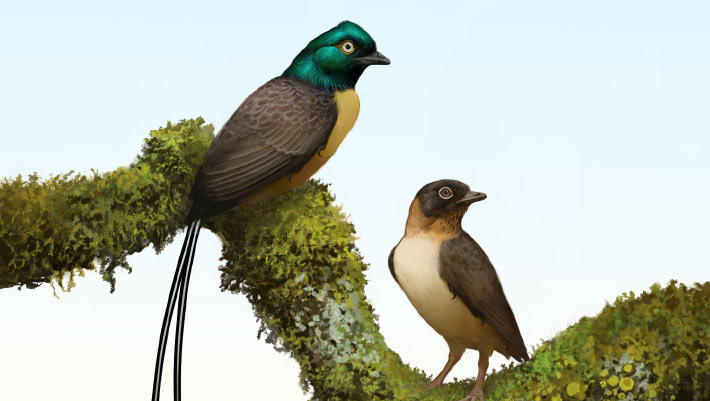
Cretaceous Bird from China Had Pair of Tail Feathers Twice as Long as Its Body
Un oiseau du Crétacé de Chine avait une paire de plumes de queue deux fois plus longues que son corps
plume Chine Crétacé oiseau
Nommée Plumadraco bankoorum, l'espèce d'oiseau énantiornithine nouvellement décrite vivait dans ce qui est aujourd'hui le nord-est de la Chine pendant la période du Crétacé, il y a environ 121 millions d'années. L'article Un oiseau du Crétacé de Chine avait une paire de plumes de queue deux fois plus longues que son corps est apparu en premier sur Sci.News : Breaking Science News.
28/05/2026 sci-news ⚙ Traduction automatique
Gongshuilong: Beast of the Week
Gongshuilong : Bête de la semaine
os Chine Crétacé Crétacé supérieur Gongshuilong Hadrosauria
 Aujourd'hui, nous examinons un hadrosaure récemment décrit avec un look unique, Gongshuilong fanwei ! Gongshuilong vivait dans ce qui est aujourd'hui l'est de la Chine, à la fin du Crétacé, il y a entre 68 et 66 millions d'années.  Du bec à la queue, il mesurait environ 7 m de long et aurait été un herbivore de son vivant.  Le nom du genre se traduit du mandarin par "Dragon de la rivière Gong" en référence à la rivière Gong près de l'endroit où ses os ont été découverts. Reconstruction de la vie de Gongshuilong à l'aquarelle b
10/05/2026 prehistoricbeastoftheweek ⚙ Traduction automatique
En Chine, les humains de la période glaciaire ont fabriqué des outils en pierre étonnamment avancés il y a 146 000 ans
os Chine découverte
Des scientifiques chinois ont découvert que les anciens humains fabriquaient des outils en pierre étonnamment avancés au cours d'une dure période glaciaire, il y a 146 000 ans. Les outils, créés par Homo juluensis, témoignent d'une planification minutieuse et d'une réflexion complexe plutôt que d'un simple taillage de pierres. Les chercheurs ont daté le site à l’aide de minuscules cristaux de calcite contenus dans des os d’animaux, révélant que les outils sont beaucoup plus anciens que prévu. Cette découverte remet en question l’idée selon laquelle la créativité humaine ne prospère que dans les périodes faciles et prospères.
09/05/2026 sciencedaily-paleo ⚙ Traduction automatique
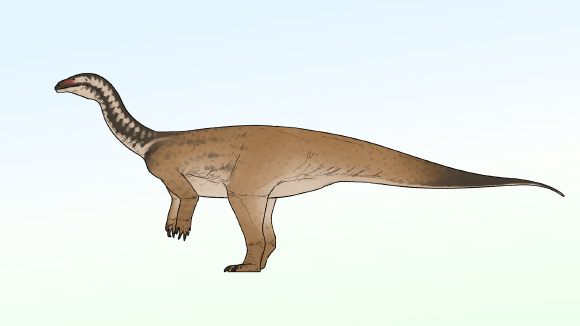
Early Sauropodomorph Dinosaur Unearthed in China
Un dinosaure sauropodomorphe découvert en Chine
Chine Jurassique inférieur Jurassique Dinosauria Massopoda nouvelle espèce partiel squelette
Un nouveau genre et une nouvelle espèce de sauropodomorphe massopodan qui vivaient au début du Jurassique ont été identifiés à partir d'un squelette partiel découvert dans le sud-ouest de la Chine. L'article Les premiers dinosaures sauropodomorphes découverts en Chine est apparu en premier sur Sci.News : Breaking Science News.
04/05/2026 sci-news ⚙ Traduction automatique
Des fossiles de poissons vieux de 400 millions d'années révèlent comment la vie a commencé à s'installer sur terre
Australie Chine fossile formation crâne
Les scientifiques ont découvert de nouveaux indices sur certains des premiers poissons de la Terre, mettant ainsi en lumière les origines anciennes des vertébrés qui ont fini par s’installer sur terre. En réanalysant de mystérieux fossiles de la célèbre formation australienne Gogo et en étudiant un crâne de poisson-poumon récemment reconstruit, vieux de 410 millions d'années et provenant de Chine, les chercheurs révèlent comment ces créatures primitives ont évolué.
12/03/2026 sciencedaily ⚙ Traduction automatique
1 2 3 4 5 6 7 8