Chine

Pays

75 image(s) · 18 Actualités

Galerie d'images

Jeholornis prima skeleton (IVPP V13350) on display at the Paleozoological Museum of China.
Taxons Jeholornithiformes

Jeholornis prima skeleton (IVPP V13350) on display at the Paleozoological Museum of China.

musée Chine Jeholornithidae Jeholornithiformes +2
Jeholornis prima skeleton (IVPP V13350) on display at the Paleozoological Museum of China.
Taxons Jeholornithidae

Jeholornis prima skeleton (IVPP V13350) on display at the Paleozoological Museum of China.

musée Chine Jeholornithidae Jeholornithiformes +2
Elangatoolithidae fossil dinosaur eggs, from China. Exhibit in the Academy of Natural Sciences, 1900 Benjamin Franklin Parkway, Philadelphia, Pennsylvania, USA. Photography was permitted in this area of the museum without restrictions.
Taxons Elongatoolithidae

Elangatoolithidae fossil dinosaur eggs, from China. Exhibit in the Academy of Natural Sciences, 1900 Benjamin Franklin Parkway, Philadelphia, Pennsylvania, USA. Photography was permitted in this area of the museum without restrictions.

musée Chine États-Unis fossile +2
Sinocyamodus xinpuensis.

www.tynhm.com/china/
Taxons Sinocyamodus

Sinocyamodus xinpuensis. www.tynhm.com/china/

Chine Sinocyamodus
Jeholopterus ningchengensus Wang, Zhou, Zhang, and Xu, 2002, IVPP V 12705, Lower Yixian Formation (Early Cretaceous), China.
Taxons Jeholopterus

Jeholopterus ningchengensus Wang, Zhou, Zhang, and Xu, 2002, IVPP V 12705, Lower Yixian Formation (Early Cretaceous), China.

Chine Yixian Crétacé Crétacé inférieur +2
Holotype skeleton of Wukongopterus lii on display at the Paleozoological Museum of China.
Taxons Wukongopterus

Holotype skeleton of Wukongopterus lii on display at the Paleozoological Museum of China.

musée Chine holotype Wukongopterus +1
New wing skeleton of Forfexopterus (SDUST-V1003) from Jiufotang Formation of Early Cretaceous Jehol Biota in Jianchang, western Liaoning, northeastern China. Abbreviations: ca, carpus; co, coracoid portion; hu, humerus; mc, metacarpals I–IV; mdI–III, manual digits I–III; pt, pteroid; ra, radius; sc, scapular portion; ul, ulna; wp1–4, wing phalanges 1–4.
Taxons Forfexopterus

New wing skeleton of Forfexopterus (SDUST-V1003) from Jiufotang Formation of Early Cretaceous Jehol Biota in Jianchang, western Liaoning, northeastern China. Abbreviations: ca, carpus; co, coracoid portion; hu, humerus; mc, metacarpals I–IV; mdI–III, manual digits I–III; pt, pteroid; ra, radius; sc, scapular portion; ul, ulna; wp1–4, wing phalanges 1–4.

humérus Chine Jiufotang Crétacé +4
Holotype of Haopterus gracilis on display at the Paleozoological Museum of China.
Taxons Haopterus

Holotype of Haopterus gracilis on display at the Paleozoological Museum of China.

musée Chine holotype Haopterus +1
Holotype skull (IVPP V17083) of Guidraco venator on display at the Paleozoological Museum of China.
Taxons Guidraco

Holotype skull (IVPP V17083) of Guidraco venator on display at the Paleozoological Museum of China.

musée Chine holotype Guidraco +1
Ningchengopterus liuae, early Cretaceous of China. digital.
Taxons Ningchengopterus

Ningchengopterus liuae, early Cretaceous of China. digital.

Chine Crétacé Crétacé inférieur Ningchengopterus +1
Life restoration of Kryptodrakon progenitor, a pterosaur that lived in western China 160 mya
Taxons Kryptodrakon

Life restoration of Kryptodrakon progenitor, a pterosaur that lived in western China 160 mya

Chine Kryptodrakon Pterosauria
Reconstructed skull of the holotype and only specimen of Leshansaurus qianweiensis based on the possibly related megalosaurid Dubreuillosaurus valesdunensis. Scale bar is 10cm, image is 10px/cm. Cranial anatomy from figures in Fei et al. (2009) "A new carnosaur from the Late Jurassic of Qianwei, Sichuan, China". White bones are figured, light grey bones are unfigured and minimally described.
Taxons Leshansaurus

Reconstructed skull of the holotype and only specimen of Leshansaurus qianweiensis based on the possibly related megalosaurid Dubreuillosaurus valesdunensis. Scale bar is 10cm, image is 10px/cm. Cranial anatomy from figures in Fei et al. (2009) "A new carnosaur from the Late Jurassic of Qianwei, Sichuan, China". White bones are figured, light grey bones are unfigured and minimally described.

os écaille Chine Jurassique +9
Left maxilla (A) and left dentary (B) of carcharodontosaurid theropod Kelmayisaurus petrolicus Dong, 1973 (IVPP V 4022, China, Lianmugin For−
mation, Lower Cretaceous). Photographs in lateral (A1, B1), medial (A2, B2), ventral (A3), and dorsal (B3) views. Scale bars 5 cm. Designation “d” refers to

dentary tooth, designation “m” refers to maxillary tooth position. Dorsal view of dentary shows tooth row only.
Taxons Kelmayisaurus

Left maxilla (A) and left dentary (B) of carcharodontosaurid theropod Kelmayisaurus petrolicus Dong, 1973 (IVPP V 4022, China, Lianmugin For− mation, Lower Cretaceous). Photographs in lateral (A1, B1), medial (A2, B2), ventral (A3), and dorsal (B3) views. Scale bars 5 cm. Designation “d” refers to dentary tooth, designation “m” refers to maxillary tooth position. Dorsal view of dentary shows tooth row only.

écaille dent Chine Crétacé +2
Aurornis xui, a basal member of Avialae from northern China, which lived 160 mya
Taxons Aurornis

Aurornis xui, a basal member of Avialae from northern China, which lived 160 mya

Chine Aurornis Avialae
en.wikipedia.org/wiki/Tianyuraptor

www.tynhm.com/china/
Taxons Tianyuraptor

en.wikipedia.org/wiki/Tianyuraptor www.tynhm.com/china/

Chine Tianyuraptor
Diagram featuring the holotype (BNMNH-PV030) skull of the troodontid Papiliovenator neimengguensis, from the Bayan Mandahu Formation. Abbreviations: a, angular; d, dentary; f, frontal; j, jugal; l, lacrimal; m, maxilla; n, nasal; p, parietal; q, quadrate;  s, surangular;  sp, splenial.[1]
References

↑  (2022). "A new troodontid from the Upper Cretaceous Gobi Basin of inner Mongolia, China". Cretaceous Research 130: Article 105052. DOI:10.1016/j.cretres.2021.105052.
Taxons Papiliovenator

Diagram featuring the holotype (BNMNH-PV030) skull of the troodontid Papiliovenator neimengguensis, from the Bayan Mandahu Formation. Abbreviations: a, angular; d, dentary; f, frontal; j, jugal; l, lacrimal; m, maxilla; n, nasal; p, parietal; q, quadrate; s, surangular; sp, splenial.[1] References ↑ (2022). "A new troodontid from the Upper Cretaceous Gobi Basin of inner Mongolia, China". Cretaceous Research 130: Article 105052. DOI:10.1016/j.cretres.2021.105052.

Chine Mongolie Crétacé holotype +4
1 2 3 4 5

Actualités

Cretaceous Bird from China Had Pair of Tail Feathers Twice as Long as Its Body
Un oiseau du Crétacé de Chine avait une paire de plumes de queue deux fois plus longues que son corps
plume Chine Crétacé oiseau
Nommée Plumadraco bankoorum, l'espèce d'oiseau énantiornithine nouvellement décrite vivait dans ce qui est aujourd'hui le nord-est de la Chine pendant la période du Crétacé, il y a environ 121 millions d'années. L'article Un oiseau du Crétacé de Chine avait une paire de plumes de queue deux fois plus longues que son corps est apparu en premier sur Sci.News : Breaking Science News.
28/05/2026 sci-news ⚙ Traduction automatique
Gongshuilong: Beast of the Week
Gongshuilong : Bête de la semaine
os Chine Crétacé Crétacé supérieur Gongshuilong Hadrosauria
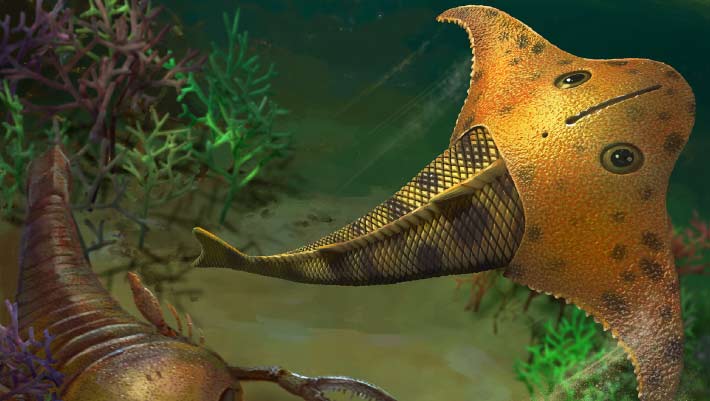
 Aujourd'hui, nous examinons un hadrosaure récemment décrit avec un look unique, Gongshuilong fanwei ! Gongshuilong vivait dans ce qui est aujourd'hui l'est de la Chine, à la fin du Crétacé, il y a entre 68 et 66 millions d'années.  Du bec à la queue, il mesurait environ 7 m de long et aurait été un herbivore de son vivant.  Le nom du genre se traduit du mandarin par "Dragon de la rivière Gong" en référence à la rivière Gong près de l'endroit où ses os ont été découverts. Reconstruction de la vie de Gongshuilong à l'aquarelle b
10/05/2026 prehistoricbeastoftheweek ⚙ Traduction automatique
En Chine, les humains de la période glaciaire ont fabriqué des outils en pierre étonnamment avancés il y a 146 000 ans
os Chine découverte
Des scientifiques chinois ont découvert que les anciens humains fabriquaient des outils en pierre étonnamment avancés au cours d'une dure période glaciaire, il y a 146 000 ans. Les outils, créés par Homo juluensis, témoignent d'une planification minutieuse et d'une réflexion complexe plutôt que d'un simple taillage de pierres. Les chercheurs ont daté le site à l’aide de minuscules cristaux de calcite contenus dans des os d’animaux, révélant que les outils sont beaucoup plus anciens que prévu. Cette découverte remet en question l’idée selon laquelle la créativité humaine ne prospère que dans les périodes faciles et prospères.
09/05/2026 sciencedaily-paleo ⚙ Traduction automatique
Early Sauropodomorph Dinosaur Unearthed in China
Un dinosaure sauropodomorphe découvert en Chine
Chine Jurassique inférieur Jurassique Dinosauria Massopoda nouvelle espèce partiel squelette
Un nouveau genre et une nouvelle espèce de sauropodomorphe massopodan qui vivaient au début du Jurassique ont été identifiés à partir d'un squelette partiel découvert dans le sud-ouest de la Chine. L'article Les premiers dinosaures sauropodomorphes découverts en Chine est apparu en premier sur Sci.News : Breaking Science News.
04/05/2026 sci-news ⚙ Traduction automatique
Des fossiles de poissons vieux de 400 millions d'années révèlent comment la vie a commencé à s'installer sur terre
Australie Chine fossile formation crâne
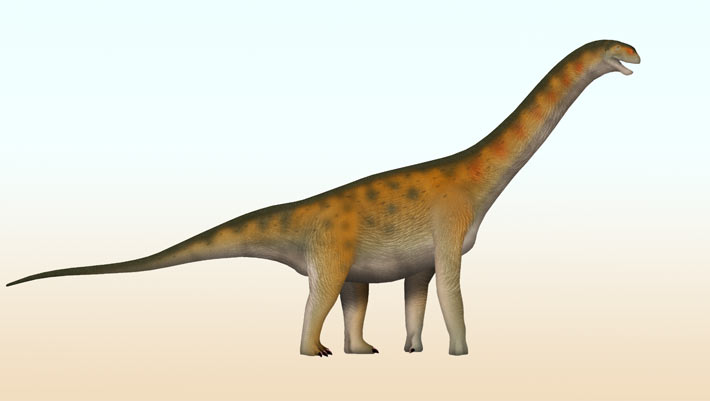
Les scientifiques ont découvert de nouveaux indices sur certains des premiers poissons de la Terre, mettant ainsi en lumière les origines anciennes des vertébrés qui ont fini par s’installer sur terre. En réanalysant de mystérieux fossiles de la célèbre formation australienne Gogo et en étudiant un crâne de poisson-poumon récemment reconstruit, vieux de 410 millions d'années et provenant de Chine, les chercheurs révèlent comment ces créatures primitives ont évolué.
12/03/2026 sciencedaily ⚙ Traduction automatique
1 2 3 4