←

Dinosauria

Taxon

251 image(s) · 248 Actualités

Voir la fiche

Galerie d'images

Dinosaur art by me!

Dinosaur art by me!

Dinosauria
A scientifically accurate reconstruction of the dinosaur Spinosaurus aegyptiacus.

A scientifically accurate reconstruction of the dinosaur Spinosaurus aegyptiacus.

Dinosauria Spinosauria
Close-up of the traumatic lesion observed in the right squamosal bone of Big John, a fossilized specimen of the dinosaur species Triceratops horridus. This image shows plaque-like deposition of reactive bone (white arrows) and lytic lesions (black arrows) on the surface around the lesion. These suggest that the lesion was surrounded by newly-formed bone and, therefore, had started to heal.
This image was originally published as Figure 1c in the following journal article:
Ruggero D’Anastasio, Jacopo Cilli, Flavio Bacchia, Federico Fanti, Giacomo Gobbo & Luigi Capasso (2022) Histological and chemical diagnosis of a combat lesion in Triceratops Scientific Reports, 12, 3941 (2022). DOI: 10.1038/s41598-022-08033-2
This article was published with the following license:
"This article is licensed under a Creative Commons Attribution 4.0 International License, which permits use, sharing, adaptation, distribution and reproduction in any medium or format, as long as you give appropriate credit to the original author(s) and the source, provide a link to the Creative Commons licence, and indicate if changes were made. The images or other third party material in this article are included in the article's Creative Commons licence, unless indicated otherwise in a credit line to the material. If material is not included in the article's Creative Commons licence and your intended use is not permitted by statutory regulation or exceeds the permitted use, you will need to obtain permission directly from the copyright holder. To view a copy of this licence, visit http://creativecommons.org/licenses/by/4.0/."

Figure 1c is published without a credit line and, therefore, falls under the article's CC BY 4.0 licence.

Close-up of the traumatic lesion observed in the right squamosal bone of Big John, a fossilized specimen of the dinosaur species Triceratops horridus. This image shows plaque-like deposition of reactive bone (white arrows) and lytic lesions (black arrows) on the surface around the lesion. These suggest that the lesion was surrounded by newly-formed bone and, therefore, had started to heal. This image was originally published as Figure 1c in the following journal article: Ruggero D’Anastasio, Jacopo Cilli, Flavio Bacchia, Federico Fanti, Giacomo Gobbo & Luigi Capasso (2022) Histological and chemical diagnosis of a combat lesion in Triceratops Scientific Reports, 12, 3941 (2022). DOI: 10.1038/s41598-022-08033-2 This article was published with the following license: "This article is licensed under a Creative Commons Attribution 4.0 International License, which permits use, sharing, adaptation, distribution and reproduction in any medium or format, as long as you give appropriate credit to the original author(s) and the source, provide a link to the Creative Commons licence, and indicate if changes were made. The images or other third party material in this article are included in the article's Creative Commons licence, unless indicated otherwise in a credit line to the material. If material is not included in the article's Creative Commons licence and your intended use is not permitted by statutory regulation or exceeds the permitted use, you will need to obtain permission directly from the copyright holder. To view a copy of this licence, visit http://creativecommons.org/licenses/by/4.0/." Figure 1c is published without a credit line and, therefore, falls under the article's CC BY 4.0 licence.

os reproduction spécimen Dinosauria +1
Tawa is an early theropod from the Late Triassic. The genus is named after the Hopi word for the Puebloan sun god. It was a bipedal carnivore, estimated around 2.5 m in length, and weighing about 15 kg. A basal theropod, Tawa shares physical characteristics with coelophysoids and herrerasaurids, and its discovery supports the theory that dinosaurs originated in the southern supercontinent of Gondwanna, before diversifying as Pangea split apart.

Tawa is an early theropod from the Late Triassic. The genus is named after the Hopi word for the Puebloan sun god. It was a bipedal carnivore, estimated around 2.5 m in length, and weighing about 15 kg. A basal theropod, Tawa shares physical characteristics with coelophysoids and herrerasaurids, and its discovery supports the theory that dinosaurs originated in the southern supercontinent of Gondwanna, before diversifying as Pangea split apart.

Trias supérieur Trias Dinosauria Herrerasauridae +2
This diagram illustrates how scientists believe the dinosaur group theropoda shall be classed in a  phylogenetic tree, besides Sauropoda and Pterosauria. The main reason of this diagram is to show groups or families which had respiratory system like birds. AS in the diagram is abbreviations for "Airsacs", and ASW means "AirSacs supported by immobile femur and a knee-driven Walk". BL means "Bellow lungs". 
Airsacs are known in many different theropods, as well as in birds, which most scientists believe are descendants of dinosaurus. Air sacs are found in the primitive Tawa hallae,[1] the abelisaurid Majungasaurus,[2] as well as Allosauroids like Aerosteon.[3] There is also evidence for respiratory systems like penguinss in Deinonychosaurians.[4] The primitive bird Archaeopteryx also had airsacs (Bonde and Christiansen, 2000).
It is very likely that Deinonychosaurians had airsacs. We don't know  whether Deinonychosauria had a walking/breathing system with immobile thighbones, ASW (like birds) or movable thighbones. However, some people suggsest coeluosaurs had the same type of leg movement as birds ("kneedriven walking").[5]
Bellow lungs are lungs like our own, which alternately is filled with air, and thereafter emptied, after which you take a new breath. This type of lungs exist in mammals, most reptiles, and most amphibians (although some frogs get their oxygen through the skin). There is no evidence for airsacs in Ornithischia, so the likely had bellow lungs.
References.=

↑ (see the video at http://www.nsf.gov/news/special_reports/tawa/)

↑ (Claessens & O'connor, 2006).

↑ Alcober O.A, Sereno P.C, Larsson H.C.E et.al (2008), "Evidence for Avian Intrathoracic Air Sacs in a New Predatory Dinosaur from Argentina", Public Library of Science Journals.

↑ http://www.stumbleupon.com/su/20q5Z4/news.bbc.co.uk/2/hi/science/nature/7081166.stm

↑ http://www.geol.umd.edu/~tholtz/G104/lectures/104coelur.html.

This diagram illustrates how scientists believe the dinosaur group theropoda shall be classed in a phylogenetic tree, besides Sauropoda and Pterosauria. The main reason of this diagram is to show groups or families which had respiratory system like birds. AS in the diagram is abbreviations for "Airsacs", and ASW means "AirSacs supported by immobile femur and a knee-driven Walk". BL means "Bellow lungs". Airsacs are known in many different theropods, as well as in birds, which most scientists believe are descendants of dinosaurus. Air sacs are found in the primitive Tawa hallae,[1] the abelisaurid Majungasaurus,[2] as well as Allosauroids like Aerosteon.[3] There is also evidence for respiratory systems like penguinss in Deinonychosaurians.[4] The primitive bird Archaeopteryx also had airsacs (Bonde and Christiansen, 2000). It is very likely that Deinonychosaurians had airsacs. We don't know whether Deinonychosauria had a walking/breathing system with immobile thighbones, ASW (like birds) or movable thighbones. However, some people suggsest coeluosaurs had the same type of leg movement as birds ("kneedriven walking").[5] Bellow lungs are lungs like our own, which alternately is filled with air, and thereafter emptied, after which you take a new breath. This type of lungs exist in mammals, most reptiles, and most amphibians (although some frogs get their oxygen through the skin). There is no evidence for airsacs in Ornithischia, so the likely had bellow lungs. References.= ↑ (see the video at http://www.nsf.gov/news/special_reports/tawa/) ↑ (Claessens & O'connor, 2006). ↑ Alcober O.A, Sereno P.C, Larsson H.C.E et.al (2008), "Evidence for Avian Intrathoracic Air Sacs in a New Predatory Dinosaur from Argentina", Public Library of Science Journals. ↑ http://www.stumbleupon.com/su/20q5Z4/news.bbc.co.uk/2/hi/science/nature/7081166.stm ↑ http://www.geol.umd.edu/~tholtz/G104/lectures/104coelur.html.

Abelisauridae Aerosteon Archaeopteryx Deinonychosauria +7
cast of Quetzalcoatlus northropi humerus 03 - Pterosaurs Flight in the Age of Dinosaurs

cast of Quetzalcoatlus northropi humerus 03 - Pterosaurs Flight in the Age of Dinosaurs

humérus vol États-Unis moulage +3
cast of Quetzalcoatlus northropi humerus 02 - Pterosaurs Flight in the Age of Dinosaurs

cast of Quetzalcoatlus northropi humerus 02 - Pterosaurs Flight in the Age of Dinosaurs

humérus vol États-Unis moulage +3
Cast of Quetzalcoatlus northropi humerus 01 - Pterosaurs Flight in the Age of Dinosaurs

Cast of Quetzalcoatlus northropi humerus 01 - Pterosaurs Flight in the Age of Dinosaurs

humérus vol moulage Dinosauria +2
Sue - Tyrannosaurus Rex Dinosaur - Field Museum of Natural History, Chicago by Joy of Museums, for more information, see: www.joyofmuseums.com

Sue - Tyrannosaurus Rex Dinosaur - Field Museum of Natural History, Chicago by Joy of Museums, for more information, see: www.joyofmuseums.com

musée Dinosauria Tyrannosaurus
Sue - Tyrannosaurus Rex Dinosaur - Field Museum of Natural History, Chicago by Joy of Museums, for more information, see: www.joyofmuseums.com

Sue - Tyrannosaurus Rex Dinosaur - Field Museum of Natural History, Chicago by Joy of Museums, for more information, see: www.joyofmuseums.com

musée Dinosauria Tyrannosaurus
Dinosaur sand sculptures at the Sand Sculpting Australia "Dinostory" exhibit held at Frankston, Victoria, Australia 2008/2009.The sculpture was the created with the combined efforts of an international team of sand sculpting artists: 
Karen Fralich (Canada) - children playing in foreground;
Peter Bignell (Tasmania, Australia) - Triceratops skull and logo;
Martijn Rijerse (Netherlands) - Tyrannosaurus rex scene;
Jino van Bruissenen and Christina Mija (NSW, Australia) - background panel.

Dinosaur sand sculptures at the Sand Sculpting Australia "Dinostory" exhibit held at Frankston, Victoria, Australia 2008/2009.The sculpture was the created with the combined efforts of an international team of sand sculpting artists: Karen Fralich (Canada) - children playing in foreground; Peter Bignell (Tasmania, Australia) - Triceratops skull and logo; Martijn Rijerse (Netherlands) - Tyrannosaurus rex scene; Jino van Bruissenen and Christina Mija (NSW, Australia) - background panel.

Australie Canada Pays-Bas Dinosauria +3
Margolies, John,, photographer.
Dinosaur World, Tyrannosaurus Rex head detail, Eureka Springs, Arkansas
1994.
1 photograph : color transparency ; 35 mm (slide format).
Notes:

Title, date and keywords based on information provided by the photographer.

Margolies categories: Assorted attractions themselves; roadside attractions.
Purchase; John Margolies 2007 (DLC/PP-2007:125).
Credit line: John Margolies Roadside America photograph archive (1972-2008), Library of Congress, Prints and Photographs Division.
Please use digital image: original slide is kept in cold storage for preservation.
Forms part of: John Margolies Roadside America photograph archive (1972-2008).
Subjects:

Amusement parks--1990-2000.

Dinosaurs--1990-2000.
United States--Arkansas--Eureka Springs.
Format: Slides--1990-2000.--Color
Rights Info: No known restrictions on publication. For more information, see "John Margolies Roadside America Photograph Archive - Rights and Restrictions Information" www.loc.gov/rr/print/res/723_marg.html
Repository: Library of Congress, Prints and Photographs Division, Washington, D.C. 20540 USA, hdl.loc.gov/loc.pnp/pp.print
Part Of: Margolies, John John Margolies Roadside America photograph archive (DLC)  2010650110
General information about the John Margolies Roadside America photograph archive is available at hdl.loc.gov/loc.pnp/pp.mrg
Higher resolution image is available (Persistent URL): hdl.loc.gov/loc.pnp/mrg.00272

Call Number: LC-MA05- 272

Margolies, John,, photographer. Dinosaur World, Tyrannosaurus Rex head detail, Eureka Springs, Arkansas 1994. 1 photograph : color transparency ; 35 mm (slide format). Notes: Title, date and keywords based on information provided by the photographer. Margolies categories: Assorted attractions themselves; roadside attractions. Purchase; John Margolies 2007 (DLC/PP-2007:125). Credit line: John Margolies Roadside America photograph archive (1972-2008), Library of Congress, Prints and Photographs Division. Please use digital image: original slide is kept in cold storage for preservation. Forms part of: John Margolies Roadside America photograph archive (1972-2008). Subjects: Amusement parks--1990-2000. Dinosaurs--1990-2000. United States--Arkansas--Eureka Springs. Format: Slides--1990-2000.--Color Rights Info: No known restrictions on publication. For more information, see "John Margolies Roadside America Photograph Archive - Rights and Restrictions Information" www.loc.gov/rr/print/res/723_marg.html Repository: Library of Congress, Prints and Photographs Division, Washington, D.C. 20540 USA, hdl.loc.gov/loc.pnp/pp.print Part Of: Margolies, John John Margolies Roadside America photograph archive (DLC) 2010650110 General information about the John Margolies Roadside America photograph archive is available at hdl.loc.gov/loc.pnp/pp.mrg Higher resolution image is available (Persistent URL): hdl.loc.gov/loc.pnp/mrg.00272 Call Number: LC-MA05- 272

États-Unis Dinosauria Tyrannosaurus
Life restoration of Tanycolagreus topwilsoni.
Based on Figure 2.16 of "New small theropod from the Upper Jurassic Morrison Formation of Wyoming" by Kenneth Carpenter, Clifford Miles, and Karen Cloward (The Carnivorous Dinosaurs pp. 23-48, Indiana University Press).

Life restoration of Tanycolagreus topwilsoni. Based on Figure 2.16 of "New small theropod from the Upper Jurassic Morrison Formation of Wyoming" by Kenneth Carpenter, Clifford Miles, and Karen Cloward (The Carnivorous Dinosaurs pp. 23-48, Indiana University Press).

Morrison Jurassique Coeluridae Dinosauria +2
A tooth tip from the theropod dinosaur Nuthetes destructor from the Lulworth Formation, England

A tooth tip from the theropod dinosaur Nuthetes destructor from the Lulworth Formation, England

dent Coeluridae Dinosauria Nuthetes +1
Pencil drawing of Coelurus, a coelurosaurian dinosaur that lived from the Late Jurassic period (North America).

Pencil drawing of Coelurus, a coelurosaurian dinosaur that lived from the Late Jurassic period (North America).

dessin Jurassique Jurassique supérieur Coeluria +3
Photo montage of several representatives members of the clade Dracohors (dinosaurs and their extinct relatives):
Asilisaurus
Borealopelta
Triceratops
Giganotosaurus
Taxons Paleodinosauria

Photo montage of several representatives members of the clade Dracohors (dinosaurs and their extinct relatives): Asilisaurus Borealopelta Triceratops Giganotosaurus

Asilisaurus Borealopelta Dinosauria Giganotosaurus +2
1 2 3 4 5 6 7 8 9 10 11 12 13 14 15 16

Actualités

Un voyage inspirant en paléontologie avec Jessica Lippincott
description Jurassique fossile Dinosauria étude
La paléontologue Jessica Lippincott n'a pas grandi en planifiant une carrière dans l'étude des fossiles. En fait, son remarquable voyage en paléontologie a commencé presque par hasard. Everything Dinosaur a récemment rendu compte de la description scientifique de la bélemnite jurassique inhabituelle et volumineuse Wyoteuthis linsterorum. Jessica était l'une des chercheuses impliquées dans l'étude. C'est pourquoi nous avons demandé à l'organisme basé au Wyoming
14/09/2026 everythingdinosaur ⚙ Traduction automatique
Muttaburrasaurus: Beast of the Week
Muttaburrasaurus : Bête de la semaine
Australie Crétacé fossile Dinosauria Muttaburrasaurus
 Cette semaine, nous allons découvrir un mystérieux dinosaure herbivore qui habitait autrefois l'Australie.  Entrez Muttaburrasaurus langdoni ! Muttaburrasaurus était un dinosaure herbivore qui vivait dans ce qui est aujourd'hui le nord de l'Australie pendant la période du Crétacé précoce et moyen, il y a entre 103 et 113 millions d'années.  Du museau à la queue, il mesurait environ 7 mètres de long.  Son nom se traduit par "Muttaburra Reptile/Lizard" en référence à la partie du Queensland en Australie où l'on trouve ses fossiles.
13/09/2026 prehistoricbeastoftheweek ⚙ Traduction automatique
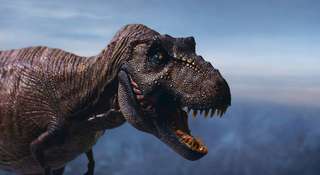
Le T. rex n’était pas qu’une brute : son cerveau aurait pu lui permettre de résoudre des problèmes et même d’utiliser des outils
Dinosauria Tyrannosaurus
Un tyrannosaure aussi malin qu'un babouin, capable d'utiliser des outils et de transmettre des savoirs : l'hypothèse a fait le tour du monde en 2023. Une équipe internationale l'a passée au crible, aboutissant à une estimation dix fois inférieure. Le débat porte moins sur les dinosaures que sur...
12/09/2026 futura-terre
Achetez des modèles de dinosaures en ligne : cinq conseils essentiels pour les collectionneurs
Dinosauria étude
Il n'a jamais été aussi simple d'acheter des modèles de dinosaures en ligne. Cependant, avec autant de figurines d’animaux préhistoriques disponibles, comment les collectionneurs et les fans de dinosaures peuvent-ils choisir judicieusement ? Voici cinq points utiles à considérer. (1) Regardez attentivement le modèle. Tout d'abord, étudiez les photographies de la figurine réelle. Vérifiez la pose, la palette de couleurs et le niveau de détail.
12/09/2026 everythingdinosaur ⚙ Traduction automatique
Une plume vieille de 66 millions d'années dans les crottes de dinosaures pourrait révéler pourquoi les oiseaux ont survécu à l'astéroïde
plume Dinosauria oiseau
Une plume découverte dans des crottes de dinosaures fossilisés vieilles de 66 millions d’années pourrait aider à expliquer pourquoi les oiseaux modernes ont survécu à la catastrophe de l’astéroïde. L’oiseau disparu dont il est issu avait des plumes isolantes plus primitives, ce qui suggère qu’un plumage supérieur aurait pu aider les ancêtres des oiseaux vivants à supporter l’impact mortel de l’hiver.
11/09/2026 sciencedaily ⚙ Traduction automatique
1 2 3 4 5 6 7 8 9 10 11 12 13 14 15 16 17 18 19 20 21 22 23 24 25 26 27 28 29 30 31 32 33 34 35 36 37 38 39 40 41 42 43 44 45 46 47 48 49 50