spécimen

Nature du spécimen

228 image(s) · 18 Actualités

Galerie d'images

Pterodactylus compressirostris, holotype NHMUK PV 39410 (Cenomanian / Turonian, Chalk Formation). A–D proposed lectotype, fragment of the mandibular symphysis A left lateral view B respective line drawing C dorsal view D respective line drawing. E–H referred specimen, portion of the rostrum E left lateral view F respective line drawing G ventral view H respective line drawing. Abbreviations: ch – choanae, d – dentary, m – maxillae, naof – nasoantorbital fenestra, pl – palatine, pm – premaxillae, prid – palatal ridge, sul– sulcus. Arrows indicate alveoli or teeth. Scale bar = 10 mm. Photos courtesy of The Natural History Museum.
Taxons Lonchodectidae

Pterodactylus compressirostris, holotype NHMUK PV 39410 (Cenomanian / Turonian, Chalk Formation). A–D proposed lectotype, fragment of the mandibular symphysis A left lateral view B respective line drawing C dorsal view D respective line drawing. E–H referred specimen, portion of the rostrum E left lateral view F respective line drawing G ventral view H respective line drawing. Abbreviations: ch – choanae, d – dentary, m – maxillae, naof – nasoantorbital fenestra, pl – palatine, pm – premaxillae, prid – palatal ridge, sul– sulcus. Arrows indicate alveoli or teeth. Scale bar = 10 mm. Photos courtesy of The Natural History Museum.

écaille dessin musée Cénomanien +6
Most components of the holotype specimen of Beipiaosaurus inexpectus, IVPP V 11559. Derived from Supplementary Figure 1 in the source.
Taxons Beipiaosaurus

Most components of the holotype specimen of Beipiaosaurus inexpectus, IVPP V 11559. Derived from Supplementary Figure 1 in the source.

holotype spécimen Beipiaosaurus
Fossil specimen (IVPP V17903) of Corpulentapus lilasia on display at the Paleozoological Museum of China.
Taxons Corpulentapus

Fossil specimen (IVPP V17903) of Corpulentapus lilasia on display at the Paleozoological Museum of China.

musée Chine fossile spécimen +1
Mimodactylus libanensis gen. et sp. nov. (a) Photo and drawing of the complete specimen. (b) Close up of scapula and coracoid. (c) Detail of the wrist, showing the relation of the pteroid and the carpus. (d) Detail of the humerus. Scale-bars, a: 50 mm; b-d: 10 mm. Abbreviations. car: carpus; cdv: caudal vertebrae; cor: coracoid; cra: cranium; cs: cristospine; cv: cervical vertebrae; d: dentary; dcar: distal carpals; dpc: deltopectoral crest; dri: dorsal ribs; dv: dorsal vertebrae; fe: femur; hu: humerus; man: mandible; mcI-III: first to third metacarpals; mcIV: wing metacarpal; mtar: metatarsals; pcar: proximal carpals; ph1d4: first wing phalanx; ph2d4: second wing phalanx; ph3d4: third wing phalanx; ph4d4: fourth wing phalanx; ppu: prepubis; ptd: pteroid; ra: radius; sca: scapula; sri: sacral ribs; stp: sternal plate; sym: mandibular symphysis; tar: tarsus; te: teeth; ti: tibia; ul: ulna; the abbreviations ‘l’ and ‘r’ represents respectively left and right.
Taxons Mimodactylidae

Mimodactylus libanensis gen. et sp. nov. (a) Photo and drawing of the complete specimen. (b) Close up of scapula and coracoid. (c) Detail of the wrist, showing the relation of the pteroid and the carpus. (d) Detail of the humerus. Scale-bars, a: 50 mm; b-d: 10 mm. Abbreviations. car: carpus; cdv: caudal vertebrae; cor: coracoid; cra: cranium; cs: cristospine; cv: cervical vertebrae; d: dentary; dcar: distal carpals; dpc: deltopectoral crest; dri: dorsal ribs; dv: dorsal vertebrae; fe: femur; hu: humerus; man: mandible; mcI-III: first to third metacarpals; mcIV: wing metacarpal; mtar: metatarsals; pcar: proximal carpals; ph1d4: first wing phalanx; ph2d4: second wing phalanx; ph3d4: third wing phalanx; ph4d4: fourth wing phalanx; ppu: prepubis; ptd: pteroid; ra: radius; sca: scapula; sri: sacral ribs; stp: sternal plate; sym: mandibular symphysis; tar: tarsus; te: teeth; ti: tibia; ul: ulna; the abbreviations ‘l’ and ‘r’ represents respectively left and right.

crête humérus écaille dessin +3
Overview of the preserved parts of MPCA Pv 377, a specimen of Alnashetri cerropoliciensis, prior to disarticulation during preparation.
Taxons Alnashetri

Overview of the preserved parts of MPCA Pv 377, a specimen of Alnashetri cerropoliciensis, prior to disarticulation during preparation.

spécimen Alnashetri
Brasileodactylus araripensis, holotype (MN 4804-V) in A, right lateral and B, dorsal view; C, interpretative drawing in dorsal view; referred specimen (SMNS 55414) in C, right lateral and D, dorsal view in D, dorsal and E, right lateral view.
Taxons Brasileodactylus

Brasileodactylus araripensis, holotype (MN 4804-V) in A, right lateral and B, dorsal view; C, interpretative drawing in dorsal view; referred specimen (SMNS 55414) in C, right lateral and D, dorsal view in D, dorsal and E, right lateral view.

dessin holotype spécimen Brasileodactylus
Figure 1, 1a. Outer and oral aspects of the imperfect dentary bone of Sarcolestes Leedsi, from the Oxford Clay of Peterborough. 2/3 nat size. s = symphysis. Figure 1b. A single tooth of the former. 3/1 nat size. Figure 2, 2a. Outer aspect and quadratic cavity of the hinder region of the same jaw. 2/3 nat size. Figure 3. A single tooth of Priodontognathus Phillipsi, 3/1 nat size, shown for purposes of comparison. Specimen in the Woodwardian Museum, Cambridge.
Taxons Sarcolestes

Figure 1, 1a. Outer and oral aspects of the imperfect dentary bone of Sarcolestes Leedsi, from the Oxford Clay of Peterborough. 2/3 nat size. s = symphysis. Figure 1b. A single tooth of the former. 3/1 nat size. Figure 2, 2a. Outer aspect and quadratic cavity of the hinder region of the same jaw. 2/3 nat size. Figure 3. A single tooth of Priodontognathus Phillipsi, 3/1 nat size, shown for purposes of comparison. Specimen in the Woodwardian Museum, Cambridge.

os dent musée Oxford Clay +3
Diagram depicting the currently named Dinosauria from the Late Cretaceous Allen Formation of Argentina. Dinosaur taxa:
Aeolosaurus sp. → Salitral Moreno locality, Río Negro Province.[1] Length = 15 meters.[2]
Austroraptor cabazai → Santa Rosa Basin locality, Río Negro Province.[3][4] Length = 6 meters.[2]
Bonapartenykus ultimus → Salitral Ojo de Agua locality, Río Negro Province.[5] Length = 2.5 meters.[5]
Bonapartesaurus rionegrensis → Salitral Moreno locality, Río Negro Province.[6] Length = ∼6 meters.[1]
Bonatitan reigi → Salitral de Santa Rosa locality, Río Negro Province.[7] Length = Extrapolated after relatives.
 Kelumapusaura machi → Cerro Matadero locality, Río Negro Province.[8] 9 meters.[8]
Lamarqueavis australis → Cerro Tortugas locality, Río Negro Province.[9] Length = ∼House sparrow-sized.[9]
Lapampasaurus cholinoi → Islas Malvinas locality, La Pampa Province.[10] Length = ∼7 meters.[2]
Limenavis patagonica → Salitral Moreno locality, Río Negro Province.[11] Length = Extrapolated after relatives.
Menucocelsior arriagadai → Salitral Ojo de Agua locality, Río Negro Province.
Niebla antiqua → Cerro Matadero locality, Río Negro Province.[12] Length = 4.5 meters.[12]
Panamericansaurus schroederi → Bodega Familia Schroeder locality, Neuquén Province.[13] Length = 11 meters.[2]
Patagopelta cristata → Salitral Moreno locality, Río Negro Province.
Quilmesaurus curriei → Salitral Ojo de Agua locality, Río Negro Province.[14] Length = 5.3 meters.[12]
Rocasaurus muniozi → Salitral Moreno locality, Río Negro Province.[15] Length = Extrapolated after relatives.
Excluded taxa: 

Willinakaqe salitralensis is considered a nomen dubium,[16] and its paratype has been reassigned to Bonapartesaurus rionegrensis.[6]
Laplatasaurus araukanicus has been restricted to its lectotype which hails from the Anacleto Formation.[17]
Abelisaurus comahuensis could either belong to the Allen or Anacleto formations.[12]
Pellegrinisaurus powelli could either belong to the Allen or Anacleto formations.[18][19]
References

↑  (2013). "The titanosaur sauropods from the late Campanian-early Maastrichtian Allen Formation of Salitral Moreno, Río Negro, Argentina". Acta Palaeontologica Polonica 58 (2): 269–284. DOI:10.4202/app.2011.0055.

↑ a b c (2007)  Dinosaurs: The Most Complete, Up-to-Date Encyclopedia for Dinosaur Lovers of All Ages, Random House  ISBN:  9780375824197.  Genus List for Holtz 2012  Weight Information

↑ (2008). "A bizarre Cretaceous theropod dinosaur from Patagonia and the evolution of Gondwanan dromaeosaurids". Proceedings of the Royal Society B: Biological Sciences 276 (1659): 1101–7. DOI:10.1098/rspb.2008.1554. ISSN 1471-2954.

↑  (2012). "A New Specimen of Austroraptor cabazai Novas, Pol, Canale, Porfiri and Calvo, 2008 (Dinosauria, Theropoda, Unenlagiidae) from the Latest Cretaceous (Maastrichtian) of Río Negro, Argentina". Ameghiniana 49 (4): 662–667. DOI:10.5710/AMGH.30.8.2012.574.

↑ a b Federico L. Agnolin (2012). "New alvarezsaurid (Dinosauria, Theropoda) from uppermost Cretaceous of north-western Patagonia with associated eggs". Cretaceous Research 35: 33–56. DOI:10.1016/j.cretres.2011.11.014.

↑ a b  (2017). "Bonapartesaurus rionegrensis, a new hadrosaurine dinosaur from South America: implications for phylogenetic and biogeographic relations with North America". Journal of Vertebrate Paleontology 37 (2): 1–16. DOI:10.1080/02724634.2017.1289381.

↑ Salgado L., Gallina P.A. and Paulina Carabajal A. 2014. "Redescription of Bonatitan reigi (Sauropoda: Titanosauria), from the Campanian–Maastrichtian of the Río Negro Province (Argentina)". Historical Biology: An International Journal of Paleobiology 27(5): 525-548

↑ a b  (2022). "A new hadrosaurid (Dinosauria: Ornithischia) from the Late Cretaceous of northern Patagonia and the radiation of South American hadrosaurids". Journal of Systematic Palaeontology. DOI:10.1080/14772019.2021.2020917.

↑ a b (2010). "[https://pdfs.semanticscholar.org/f6f4/c6eb05d224719916c0b20634f54dfeb37d3f.pdf An avian coracoid from the Upper
Cretaceous of Patagonia, Argentina]". Studia Geologica Salmanticensia 46 (2): 99-119. ISSN 0211-8327.

↑ Rodolfo A. Coria, Bernardo González Riga and Silvio Casadío (2012). "Un nuevo hadrosáurido (Dinosauria, Ornithopoda) de la Formación Allen, provincia de La Pampa, Argentina". Ameghiniana 49 (4): 552–572.

↑ Clarke and Chiappe, 2001. A new carinate bird from the Late Cretaceous of Patagonia (Argentina). American Museum Novitates. 3323, 1-23.

↑ a b c d (in English) Aranciaga Rolando, Mauro (2020). "A new medium-sized abelisaurid (Theropoda, Dinosauria) from the late cretaceous (Maastrichtian) Allen Formation of Northern Patagonia, Argentina". Journal of South American Earth Sciences: 102915. DOI:10.1016/j.jsames.2020.102915. ISSN 0895-9811.

↑ (2010). "Panamericansaurus schroederi gen. nov. sp. nov. Un nuevo Sauropoda (Titanosauridae-Aeolosaurini) de la Provincia del Neuquén, Cretácico Superior de Patagonia, Argentina". Brazilian Geographical Journal: Geosciences and Humanities research medium 1: 100–115.

↑ Coria, R.A. (2001) "A new theropod from the Late Cretaceous of Patagonia" in Tanke, Darren H., ed.    Mesozoic Vertebrate Life, Life of the Past, Indiana University Press, pp. 3–9  ISBN:  978-0-253-33907-2. 

↑ Salgado, L. and C. Azpilicueta. 2000. Un nuevo saltasaurino (Sauropoda, Titanosauridae) de la provincia de Río Negro (Formacíon Allen, Cretácico Superior), Patagonia, Argentina archive copy at the Wayback Machine. Ameghiniana 37 (3):259-264.

↑  (2016). "Revisiting the hadrosaurid diversity of the Allen Fm.: Re-evaluation of the taxonomic validity of Willinakaqe salitralensis (Ornithopoda, Hadrosauridae) from Salitral Moreno, Río Negro Province, Argentina". Ameghiniana 53 (2): 231–237. DOI:10.5710/AMGH.25.09.2015.2943.

↑ Pablo A. Gallina & Alejandro Otero (2015) Reassessment of Laplatasaurus araukanicus (SAUROPODA: TITANOSAURIA), from the Late Cretaceous of Patagonia, Argentina. Ameghiniana 52 (5):487–501. doi:10.5710/AMGH.08.06.2015.2911.

↑ (1996). "Pellegrinisaurus powelli nov. gen. et sp. (Sauropoda, Titanosauridae) from the Upper Cretaceous of Lago Pellegrini, Northwestern Patagonia, Argentina". Ameghiniana 33 (4): 355–365. ISSN 1851-8044.

↑ Heredia, S., & Salgado, L. (2014). Posición estratigráfica de los estratos supracretácicos portadores de dinosaurios en Lago Pellegrini, Patagonia septentrional, Argentina. Ameghiniana, 36(2), 229-234.
Taxons Menucocelsior

Diagram depicting the currently named Dinosauria from the Late Cretaceous Allen Formation of Argentina. Dinosaur taxa: Aeolosaurus sp. → Salitral Moreno locality, Río Negro Province.[1] Length = 15 meters.[2] Austroraptor cabazai → Santa Rosa Basin locality, Río Negro Province.[3][4] Length = 6 meters.[2] Bonapartenykus ultimus → Salitral Ojo de Agua locality, Río Negro Province.[5] Length = 2.5 meters.[5] Bonapartesaurus rionegrensis → Salitral Moreno locality, Río Negro Province.[6] Length = ∼6 meters.[1] Bonatitan reigi → Salitral de Santa Rosa locality, Río Negro Province.[7] Length = Extrapolated after relatives. Kelumapusaura machi → Cerro Matadero locality, Río Negro Province.[8] 9 meters.[8] Lamarqueavis australis → Cerro Tortugas locality, Río Negro Province.[9] Length = ∼House sparrow-sized.[9] Lapampasaurus cholinoi → Islas Malvinas locality, La Pampa Province.[10] Length = ∼7 meters.[2] Limenavis patagonica → Salitral Moreno locality, Río Negro Province.[11] Length = Extrapolated after relatives. Menucocelsior arriagadai → Salitral Ojo de Agua locality, Río Negro Province. Niebla antiqua → Cerro Matadero locality, Río Negro Province.[12] Length = 4.5 meters.[12] Panamericansaurus schroederi → Bodega Familia Schroeder locality, Neuquén Province.[13] Length = 11 meters.[2] Patagopelta cristata → Salitral Moreno locality, Río Negro Province. Quilmesaurus curriei → Salitral Ojo de Agua locality, Río Negro Province.[14] Length = 5.3 meters.[12] Rocasaurus muniozi → Salitral Moreno locality, Río Negro Province.[15] Length = Extrapolated after relatives. Excluded taxa: Willinakaqe salitralensis is considered a nomen dubium,[16] and its paratype has been reassigned to Bonapartesaurus rionegrensis.[6] Laplatasaurus araukanicus has been restricted to its lectotype which hails from the Anacleto Formation.[17] Abelisaurus comahuensis could either belong to the Allen or Anacleto formations.[12] Pellegrinisaurus powelli could either belong to the Allen or Anacleto formations.[18][19] References ↑ (2013). "The titanosaur sauropods from the late Campanian-early Maastrichtian Allen Formation of Salitral Moreno, Río Negro, Argentina". Acta Palaeontologica Polonica 58 (2): 269–284. DOI:10.4202/app.2011.0055. ↑ a b c (2007) Dinosaurs: The Most Complete, Up-to-Date Encyclopedia for Dinosaur Lovers of All Ages, Random House ISBN: 9780375824197. Genus List for Holtz 2012 Weight Information ↑ (2008). "A bizarre Cretaceous theropod dinosaur from Patagonia and the evolution of Gondwanan dromaeosaurids". Proceedings of the Royal Society B: Biological Sciences 276 (1659): 1101–7. DOI:10.1098/rspb.2008.1554. ISSN 1471-2954. ↑ (2012). "A New Specimen of Austroraptor cabazai Novas, Pol, Canale, Porfiri and Calvo, 2008 (Dinosauria, Theropoda, Unenlagiidae) from the Latest Cretaceous (Maastrichtian) of Río Negro, Argentina". Ameghiniana 49 (4): 662–667. DOI:10.5710/AMGH.30.8.2012.574. ↑ a b Federico L. Agnolin (2012). "New alvarezsaurid (Dinosauria, Theropoda) from uppermost Cretaceous of north-western Patagonia with associated eggs". Cretaceous Research 35: 33–56. DOI:10.1016/j.cretres.2011.11.014. ↑ a b (2017). "Bonapartesaurus rionegrensis, a new hadrosaurine dinosaur from South America: implications for phylogenetic and biogeographic relations with North America". Journal of Vertebrate Paleontology 37 (2): 1–16. DOI:10.1080/02724634.2017.1289381. ↑ Salgado L., Gallina P.A. and Paulina Carabajal A. 2014. "Redescription of Bonatitan reigi (Sauropoda: Titanosauria), from the Campanian–Maastrichtian of the Río Negro Province (Argentina)". Historical Biology: An International Journal of Paleobiology 27(5): 525-548 ↑ a b (2022). "A new hadrosaurid (Dinosauria: Ornithischia) from the Late Cretaceous of northern Patagonia and the radiation of South American hadrosaurids". Journal of Systematic Palaeontology. DOI:10.1080/14772019.2021.2020917. ↑ a b (2010). "[https://pdfs.semanticscholar.org/f6f4/c6eb05d224719916c0b20634f54dfeb37d3f.pdf An avian coracoid from the Upper Cretaceous of Patagonia, Argentina]". Studia Geologica Salmanticensia 46 (2): 99-119. ISSN 0211-8327. ↑ Rodolfo A. Coria, Bernardo González Riga and Silvio Casadío (2012). "Un nuevo hadrosáurido (Dinosauria, Ornithopoda) de la Formación Allen, provincia de La Pampa, Argentina". Ameghiniana 49 (4): 552–572. ↑ Clarke and Chiappe, 2001. A new carinate bird from the Late Cretaceous of Patagonia (Argentina). American Museum Novitates. 3323, 1-23. ↑ a b c d (in English) Aranciaga Rolando, Mauro (2020). "A new medium-sized abelisaurid (Theropoda, Dinosauria) from the late cretaceous (Maastrichtian) Allen Formation of Northern Patagonia, Argentina". Journal of South American Earth Sciences: 102915. DOI:10.1016/j.jsames.2020.102915. ISSN 0895-9811. ↑ (2010). "Panamericansaurus schroederi gen. nov. sp. nov. Un nuevo Sauropoda (Titanosauridae-Aeolosaurini) de la Provincia del Neuquén, Cretácico Superior de Patagonia, Argentina". Brazilian Geographical Journal: Geosciences and Humanities research medium 1: 100–115. ↑ Coria, R.A. (2001) "A new theropod from the Late Cretaceous of Patagonia" in Tanke, Darren H., ed. Mesozoic Vertebrate Life, Life of the Past, Indiana University Press, pp. 3–9 ISBN: 978-0-253-33907-2. ↑ Salgado, L. and C. Azpilicueta. 2000. Un nuevo saltasaurino (Sauropoda, Titanosauridae) de la provincia de Río Negro (Formacíon Allen, Cretácico Superior), Patagonia, Argentina archive copy at the Wayback Machine. Ameghiniana 37 (3):259-264. ↑ (2016). "Revisiting the hadrosaurid diversity of the Allen Fm.: Re-evaluation of the taxonomic validity of Willinakaqe salitralensis (Ornithopoda, Hadrosauridae) from Salitral Moreno, Río Negro Province, Argentina". Ameghiniana 53 (2): 231–237. DOI:10.5710/AMGH.25.09.2015.2943. ↑ Pablo A. Gallina & Alejandro Otero (2015) Reassessment of Laplatasaurus araukanicus (SAUROPODA: TITANOSAURIA), from the Late Cretaceous of Patagonia, Argentina. Ameghiniana 52 (5):487–501. doi:10.5710/AMGH.08.06.2015.2911. ↑ (1996). "Pellegrinisaurus powelli nov. gen. et sp. (Sauropoda, Titanosauridae) from the Upper Cretaceous of Lago Pellegrini, Northwestern Patagonia, Argentina". Ameghiniana 33 (4): 355–365. ISSN 1851-8044. ↑ Heredia, S., & Salgado, L. (2014). Posición estratigráfica de los estratos supracretácicos portadores de dinosaurios en Lago Pellegrini, Patagonia septentrional, Argentina. Ameghiniana, 36(2), 229-234.

musée Argentine Allen Anacleto +39
Holotype specimen (GMV2128) of Dendrorhynchoides curvidentatus on display at the Geological Museum of China.
Taxons Dendrorhynchoides

Holotype specimen (GMV2128) of Dendrorhynchoides curvidentatus on display at the Geological Museum of China.

musée Chine holotype spécimen +1
Figure 1: Geographic provenance and speculative reconstruction of the gigantic titanosaurian sauropod dinosaur Notocolossus gonzalezparejasi gen. et sp. nov.
(a) Type locality of Notocolossus (indicated by star) in southern-most Mendoza Province, Argentina. (b) Reconstructed skeleton and body silhouette in right lateral view, with preserved elements of the holotype (UNCUYO-LD 301) in light green and those of the referred specimen (UNCUYO-LD 302) in orange. Scale bar, 1 m. (All images were hand drawn by the senior author [B.J.G.R.] and subsequently edited using Adobe Illustrator software.)
Taxons Notocolossus

Figure 1: Geographic provenance and speculative reconstruction of the gigantic titanosaurian sauropod dinosaur Notocolossus gonzalezparejasi gen. et sp. nov. (a) Type locality of Notocolossus (indicated by star) in southern-most Mendoza Province, Argentina. (b) Reconstructed skeleton and body silhouette in right lateral view, with preserved elements of the holotype (UNCUYO-LD 301) in light green and those of the referred specimen (UNCUYO-LD 302) in orange. Scale bar, 1 m. (All images were hand drawn by the senior author [B.J.G.R.] and subsequently edited using Adobe Illustrator software.)

écaille Argentine holotype spécimen +4
Cast of the skull of Parapsicephalus purdoni (specimen AMNH 1694) in the American Museum of Natural History.
Taxons Parapsicephalus

Cast of the skull of Parapsicephalus purdoni (specimen AMNH 1694) in the American Museum of Natural History.

musée moulage spécimen Parapsicephalus +1
Fossil specimen of Anchiornis huxleyi on display at the Beijing Museum of Natural History.
Taxons Anchiornis

Fossil specimen of Anchiornis huxleyi on display at the Beijing Museum of Natural History.

musée fossile spécimen Anchiornis
Holotype specimen of Pterodactylus suevicus (now classified as Cycnorhamphus), specimen number GPIT 80 (example 53 of Wellnhofer 1970)
Taxons Cycnorhamphus

Holotype specimen of Pterodactylus suevicus (now classified as Cycnorhamphus), specimen number GPIT 80 (example 53 of Wellnhofer 1970)

holotype spécimen Cycnorhamphus Gallodactylidae +2
Holotype specimen of Pterodactylus suevicus (now classified as Cycnorhamphus), specimen number GPIT 80 (example 53 of Wellnhofer 1970)
Taxons Gallodactylidae

Holotype specimen of Pterodactylus suevicus (now classified as Cycnorhamphus), specimen number GPIT 80 (example 53 of Wellnhofer 1970)

holotype spécimen Cycnorhamphus Gallodactylidae +2
Fossil specimen of early Cretaceous pterosaur Sinopterus dongi, which is collected from Chaoyang, Liaoning, China. The specimen (BMNHC Ph773) is a collection of Beijing Museum of Natural History and was on display in the National Museum of Natural Science (Taichung, Taiwan) during a special exhibition.
Taxons Sinopterus

Fossil specimen of early Cretaceous pterosaur Sinopterus dongi, which is collected from Chaoyang, Liaoning, China. The specimen (BMNHC Ph773) is a collection of Beijing Museum of Natural History and was on display in the National Museum of Natural Science (Taichung, Taiwan) during a special exhibition.

musée Chine Taïwan Crétacé +5
Fossil specimen, CM 11422, of Nyctosaurus gracilis
Taxons Nyctosauridae

Fossil specimen, CM 11422, of Nyctosaurus gracilis

fossile spécimen Nyctosauridae Nyctosaurus
1 2 3 4 5 6 7 8 9 10 11 12 13 14 15

Actualités

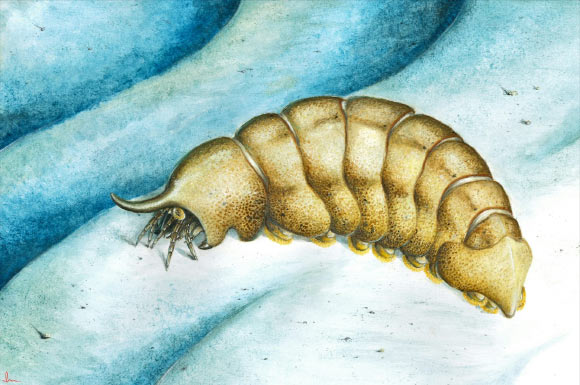
Cette petite griffe dans un fossile vieux de 500 millions d'années vient de réécrire l'origine des araignées
griffe Cambrien fossile spécimen
Ce qui a commencé comme un nettoyage de routine des fossiles s'est transformé en une surprise scientifique majeure lorsque des chercheurs ont découvert une petite griffe dans un spécimen vieux de 500 millions d'années, là où aucune griffe ne devrait exister. Ce détail a révélé Megachelicerax cousteaui, le plus ancien parent connu des araignées, repoussant les origines de ce groupe de 20 millions d'années. Le fossile montre que les principales caractéristiques des araignées et des limules modernes étaient déjà apparues lors de l'explosion cambrienne.
03/04/2026 sciencedaily ⚙ Traduction automatique
Haolong: Beast of the Week
Haolong : Bête de la semaine
Chine Crétacé Crétacé inférieur juvénile spécimen Dinosauria Haolong
 Cette semaine, nous allons découvrir un dinosaure nouvellement décrit qui est si unique qu'il change complètement ce que nous pensions savoir sur la peau des dinosaures !  Entrez Haolong Dongi ! Haolong était un dinosaure herbivore qui vivait dans ce qui est aujourd'hui le Liaoning, en Chine, au début du Crétacé, il y a environ 112,5 millions d'années.  Le seul spécimen enregistré mesure environ 8 pieds (2,45 m) du bec à la queue, mais il était juvénile lorsqu'il est mort, l'espèce a donc probablement grandi.  Le nom du genre se traduit du chinois par "S
08/03/2026 prehistoricbeastoftheweek ⚙ Traduction automatique
Il a fallu 40 ans au T. rex pour atteindre sa taille réelle, selon une étude
os croissance prédateur spécimen Tyrannosaurus étude
Le Tyrannosaurus rex a peut-être mis beaucoup plus de temps à grandir que les scientifiques ne le pensaient autrefois. En analysant les anneaux de croissance des os fossilisés des pattes de 17 spécimens de tyrannosaures et en utilisant de nouvelles méthodes statistiques, les chercheurs ont découvert que le célèbre prédateur avait probablement mis environ 40 ans pour atteindre sa taille maximale, soit environ huit tonnes, au lieu des 25 ans précédemment estimés.
05/03/2026 sciencedaily ⚙ Traduction automatique
Parasaurolophus: Beast of the Week
Parasaurolophus : Bête de la semaine
crête Crétacé Crétacé supérieur spécimen Canardia Dinosauria Parasaurolophus
Cette semaine, nous allons nous intéresser à un dinosaure à bec de canard très populaire.  Dites bonjour à Parasaurolophus !  Le parasaurolophus était un herbivore qui vivait dans ce qui est aujourd'hui l'Amérique du Nord à la fin du Crétacé, il y a environ 77 à 73 millions d'années.  Le parasaurolophus mesurait environ 9,1 mètres de long du bec à la queue, mais certains spécimens incomplets montrent qu'ils étaient un peu plus grands.  Parasaurolophus est surtout connu pour sa longue crête incurvée qui s'est développée à l'arrière de sa tête, givi
21/12/2025 prehistoricbeastoftheweek ⚙ Traduction automatique
Cet os rare résout enfin le mystère du Nanotyrannus
os croissance musée fossile spécimen Nanotyrannus Tyrannosaurus découverte
Les scientifiques ont confirmé que Nanotyrannus était une espèce mature et non un jeune T. rex. Un examen microscopique de son os hyoïde a fourni la preuve clé, correspondant aux signaux de croissance observés dans les spécimens connus de T. rex. Cette découverte suggère un écosystème de tyrannosaures plus riche et plus compétitif qu’on ne le pensait auparavant. Il montre également comment les fossiles de musée et les analyses de pointe peuvent réécrire l’histoire préhistorique.
09/12/2025 sciencedaily ⚙ Traduction automatique
1 2 3 4