←

spécimen

Nature du spécimen

204 image(s) · 23 Actualités

Galerie d'images

Norellraptor is a microraptorian dinosaur known from a specimen with exceptionally well-preserved feathers. Its discovery supports evidence that gliding and flight-related traits evolved independently in multiple dinosaur groups. Norellraptor had long feathers on its arms and legs, typical of microraptorians, resulting in a four-winged body plan.
Taxons Norellraptor

Norellraptor is a microraptorian dinosaur known from a specimen with exceptionally well-preserved feathers. Its discovery supports evidence that gliding and flight-related traits evolved independently in multiple dinosaur groups. Norellraptor had long feathers on its arms and legs, typical of microraptorians, resulting in a four-winged body plan.

plume vol spécimen Dinosauria +2
Specimens of Galleonosaurus dorisae n. gen. n. sp. from the Flat Rocks Sandstone in the upper Barremian, Wonthaggi Formation, Gippsland Basin, southeastern Australia: (1–2) holotype (NMV P229196), left maxilla in lateral (1) and medial (2) views; (3) NMV P208178, left maxilla in lateral view; (4) NMV P212845, left maxilla in lateral view; (5) NMV P209977, left maxilla in lateral view; (6) NMV P186440, left maxilla in lateral view; (7) NMV 208113, right maxillary tooth in labial view. Scale bars = 10 mm (1–6); 1 mm (7).
Taxons Galleonosaurus

Specimens of Galleonosaurus dorisae n. gen. n. sp. from the Flat Rocks Sandstone in the upper Barremian, Wonthaggi Formation, Gippsland Basin, southeastern Australia: (1–2) holotype (NMV P229196), left maxilla in lateral (1) and medial (2) views; (3) NMV P208178, left maxilla in lateral view; (4) NMV P212845, left maxilla in lateral view; (5) NMV P209977, left maxilla in lateral view; (6) NMV P186440, left maxilla in lateral view; (7) NMV 208113, right maxillary tooth in labial view. Scale bars = 10 mm (1–6); 1 mm (7).

écaille dent Australie Barrémien +4
Mounted specimen of Archaeornithomimus asiaticus on display at the Paleozoological Museum of China.
Taxons Archaeornithomimus

Mounted specimen of Archaeornithomimus asiaticus on display at the Paleozoological Museum of China.

musée Chine spécimen Archaeornithomimus
Figure 4: Savannasaurus elliottorum gen. et sp. nov., holotype specimen AODF 660. (a–e) Dorsal vertebrae (left lateral view). (f) Sacrum (ventral view). (g,h) Caudal vertebrae (left lateral view). (i) Left coracoid (lateral view). (j) Right sternal plate (ventral view). (k) Left radius (posterior view). (l) Right metacarpal III (anterior view). (m) Left astragalus (anterior view). (n) Coossified right and left pubes (anterior view). A number of ribs were preserved but have been omitted for clarity. Scale bar = 500 mm. [N.b.: the right sternal plate is misidentified [1] and is actually a left sternal plate.]
Taxons Savannasaurus

Figure 4: Savannasaurus elliottorum gen. et sp. nov., holotype specimen AODF 660. (a–e) Dorsal vertebrae (left lateral view). (f) Sacrum (ventral view). (g,h) Caudal vertebrae (left lateral view). (i) Left coracoid (lateral view). (j) Right sternal plate (ventral view). (k) Left radius (posterior view). (l) Right metacarpal III (anterior view). (m) Left astragalus (anterior view). (n) Coossified right and left pubes (anterior view). A number of ribs were preserved but have been omitted for clarity. Scale bar = 500 mm. [N.b.: the right sternal plate is misidentified [1] and is actually a left sternal plate.]

écaille holotype spécimen Savannasaurus
Azhdarcho sp., ZIN PH 56/43, distal fragment of a right ulna in proximal (a), ventral (b), posterior (c), dorsal (d), anterior (e), and distal (f, stereopair) views. This specimen is from the Tyulkili locality in the northeastern Aral Sea region of Kazakhstan; Zhirkindek Formation, Upper Cretaceous (upper Turonian – Coniacian). Abbreviations: das, dorsal articulation surface; ft, groove for flexor tendon; tub, tuberculum; vf, ventral fovea. Scale bar is 10 mm.
Taxons Azhdarcho

Azhdarcho sp., ZIN PH 56/43, distal fragment of a right ulna in proximal (a), ventral (b), posterior (c), dorsal (d), anterior (e), and distal (f, stereopair) views. This specimen is from the Tyulkili locality in the northeastern Aral Sea region of Kazakhstan; Zhirkindek Formation, Upper Cretaceous (upper Turonian – Coniacian). Abbreviations: das, dorsal articulation surface; ft, groove for flexor tendon; tub, tuberculum; vf, ventral fovea. Scale bar is 10 mm.

écaille Kazakhstan Coniacien Crétacé +4
Various fossils pertaining to the holotype of the Triassic ichthyosaur Toretocnemus californicus. This image is derived from plate 24 in Merriam (1903), done by an uncredited artist. The arrangement of the individual figures has been modified from the original.
Original description:
Toretocnemus californicus n. gen. and sp.
Figures reproduced natural size from the type specimen.

Fig. 1. — Inferior side of right posterior limb. t, tibia.
Fig. 2. — Right anterior limb. r, radius.
Fig. 3.— Pelvic arch.
Fig. 4. — Middle dorsal vertebrae and a rib from the same region.
Taxons Toretocnemus

Various fossils pertaining to the holotype of the Triassic ichthyosaur Toretocnemus californicus. This image is derived from plate 24 in Merriam (1903), done by an uncredited artist. The arrangement of the individual figures has been modified from the original. Original description: Toretocnemus californicus n. gen. and sp. Figures reproduced natural size from the type specimen. Fig. 1. — Inferior side of right posterior limb. t, tibia. Fig. 2. — Right anterior limb. r, radius. Fig. 3.— Pelvic arch. Fig. 4. — Middle dorsal vertebrae and a rib from the same region.

membre description Trias fossile +6
Fossil specimen RTMP 82.19.23 - A lacrimal, postorbitals, squamosals, frontals, parietals, and braincase referred to Latenivenatrix mcmasterae, but formerly assigned to Stenonychosaurus inequalis (=Troodon inequalis). Described by 

Currie, 1985. "Cranial anatomy of Stenonychosaurus inequalis (Saurischia, Theropoda) and its bearing on the origin of birds." Canadian Journal of Earth Sciences, 22(1), 643-658.
5d-dinosaur-camp-day2-20120802-15.jpg
Taxons Latenivenatrix

Fossil specimen RTMP 82.19.23 - A lacrimal, postorbitals, squamosals, frontals, parietals, and braincase referred to Latenivenatrix mcmasterae, but formerly assigned to Stenonychosaurus inequalis (=Troodon inequalis). Described by Currie, 1985. "Cranial anatomy of Stenonychosaurus inequalis (Saurischia, Theropoda) and its bearing on the origin of birds." Canadian Journal of Earth Sciences, 22(1), 643-658. 5d-dinosaur-camp-day2-20120802-15.jpg

Canada fossile spécimen Dinosauria +7
"Eric", a near-complete opalized specimen of the plesiosaur Umoonasaurus at the Australian Museum
Taxons Umoonasaurus

"Eric", a near-complete opalized specimen of the plesiosaur Umoonasaurus at the Australian Museum

musée spécimen Plesiosauria Umoonasaurus
Rhomboid distal nasal process of the crest of Tsintaosaurus spinorhinus.

A. Partial distal nasal process of IVPP V725 in right lateral view. B. Lateral view of composite skull (reversed). C. partial premaxillonasal complex of IVPP V829 in right lateral view. D. Line drawing of (C) showing nasal-premaxilla articulation, and the displacement (arrow) experienced by the distal nasal process relative to its articular position. E. Mounted holotype skull (IVPP V725) of T. spinorhinus in left lateral view (reversed). F. Partial right distal nasal process (although catalogued as IVPP V725, this element corresponds to a different specimen than the type; reversed).
Taxons Tsintaosaurus

Rhomboid distal nasal process of the crest of Tsintaosaurus spinorhinus. A. Partial distal nasal process of IVPP V725 in right lateral view. B. Lateral view of composite skull (reversed). C. partial premaxillonasal complex of IVPP V829 in right lateral view. D. Line drawing of (C) showing nasal-premaxilla articulation, and the displacement (arrow) experienced by the distal nasal process relative to its articular position. E. Mounted holotype skull (IVPP V725) of T. spinorhinus in left lateral view (reversed). F. Partial right distal nasal process (although catalogued as IVPP V725, this element corresponds to a different specimen than the type; reversed).

crête dessin holotype spécimen +3
Germanodactylus cristatus specimen SMNK PAL 6592. Germanodactylidae; Upper Jurassic, Eichstätt, Germany; Staatliches Museum für Naturkunde Karlsruhe, Germany.
Taxons Germanodactylus

Germanodactylus cristatus specimen SMNK PAL 6592. Germanodactylidae; Upper Jurassic, Eichstätt, Germany; Staatliches Museum für Naturkunde Karlsruhe, Germany.

musée Allemagne Jurassique spécimen +2
Foraminacephale brevis (formerly Stegoceras and Prenocephale) type specimen CMN 1423.
Taxons Foraminacephale

Foraminacephale brevis (formerly Stegoceras and Prenocephale) type specimen CMN 1423.

spécimen Foraminacephale Othnielia Prenocephale +1
Holotype specimen (NHMUK PV R1822) of the coloborhynchine anhanguerid Coloborhynchus.
Taxons Coloborhynchus

Holotype specimen (NHMUK PV R1822) of the coloborhynchine anhanguerid Coloborhynchus.

holotype spécimen Anhangueridae Coloborhynchus
Figure 24: Reconstruction of Kwanasaurus williamparkeri.
(A) Skeletal reconstruction with elements based on individuals of varied sizes, all scaled under the assumption that Kwanasaurus is proportioned similarly to Silesaurus. (B) Life reconstruction. Scale bars = 10 cm, given for probable largest specimen (DMNH EPV.34579) and one of the smallest specimens (DMNH EPV.63139).
Taxons Kwanasaurus

Figure 24: Reconstruction of Kwanasaurus williamparkeri. (A) Skeletal reconstruction with elements based on individuals of varied sizes, all scaled under the assumption that Kwanasaurus is proportioned similarly to Silesaurus. (B) Life reconstruction. Scale bars = 10 cm, given for probable largest specimen (DMNH EPV.34579) and one of the smallest specimens (DMNH EPV.63139).

écaille spécimen Kwanasaurus Silesaurus
Fossil specimen BSP 1935.I.24 (Ctenochasma elegans), an extinct pterosaur
Taxons Ctenochasma

Fossil specimen BSP 1935.I.24 (Ctenochasma elegans), an extinct pterosaur

fossile spécimen Ctenochasma Pterodactylus +1
Skull cast of Anchiceratops ornatus (original specimen: TMP 1983.001.0001) on display at the University of Michigan Museum of Natural History.
Taxons Anchiceratops

Skull cast of Anchiceratops ornatus (original specimen: TMP 1983.001.0001) on display at the University of Michigan Museum of Natural History.

musée moulage spécimen Anchiceratops +1
Tooth of cf. Zapsalis, with close up of denticles. Specimen UALVP 49582 from the Milk River Formation.
Taxons Zapsalis

Tooth of cf. Zapsalis, with close up of denticles. Specimen UALVP 49582 from the Milk River Formation.

dent Milk River spécimen Zapsalis +1
1 2 3 4 5 6 7 8 9 10 11 12 13

Actualités

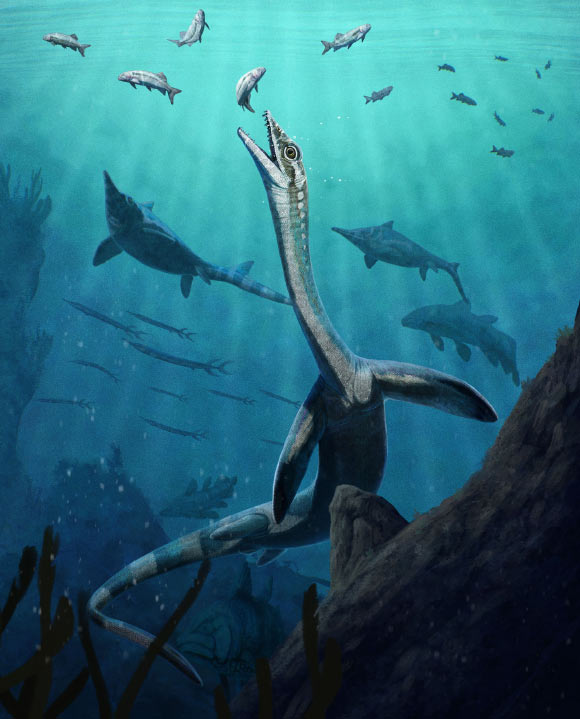
244-Million-Year-Old Fossil Preserves Earliest Reptilian Digestive System
Un fossile vieux de 244 millions d’années préserve le premier système digestif reptilien
Chine Trias fossile spécimen
Un spécimen superbement conservé d'Austronaga minuta, un petit reptile marin au long cou du Trias chinois, contient un estomac, un foie et des intestins fossilisés, offrant aux paléontologues leur plus ancien aperçu détaillé de la façon dont les premiers reptiles digéraient la nourriture. L'article Un fossile vieux de 244 millions d'années préserve le premier système digestif reptilien est apparu en premier sur Sci.News : Breaking Science News.
04/08/2026 sci-news ⚙ Traduction automatique
Un nouveau projet de recherche sur les collections coloniales examine des spécimens de musée du Togo et du Ghana
musée Ghana Togo spécimen étude
Un nouveau projet de recherche sur les collections coloniales a été lancé avec la participation de plusieurs grands musées berlinois. Les chercheurs étudieront les origines et l’histoire d’importantes collections d’histoire naturelle et culturelles rassemblées pendant la période coloniale allemande. Pour la première fois, des institutions berlinoises travaillent ensemble pour étudier les collections liées à l'ancienne colonie allemande du Togo. À
04/07/2026 everythingdinosaur ⚙ Traduction automatique
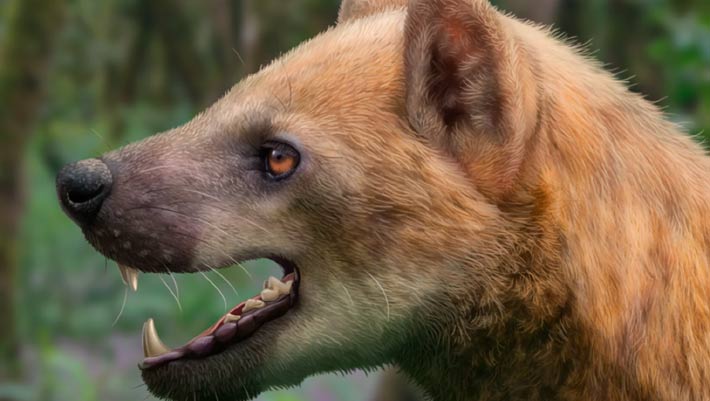
New Species of Ancient Bear-Dog Identified in Spain
Nouvelle espèce d'ancien chien-ours identifiée en Espagne
bassin Espagne fossile spécimen mammifères nouvelle espèce
Les paléontologues ont identifié une espèce jusqu'alors inconnue d'amphicyonidés - la famille éteinte de mammifères carnivores communément connue sous le nom de chiens-ours - à partir de deux spécimens découverts sur un riche site fossile du bassin du Vallès-Penedès, près de Barcelone, en Espagne. L'article Nouvelle espèce d'ancien chien-ours identifié en Espagne est apparu en premier sur Sci.News : Breaking Science News.
11/06/2026 sci-news ⚙ Traduction automatique
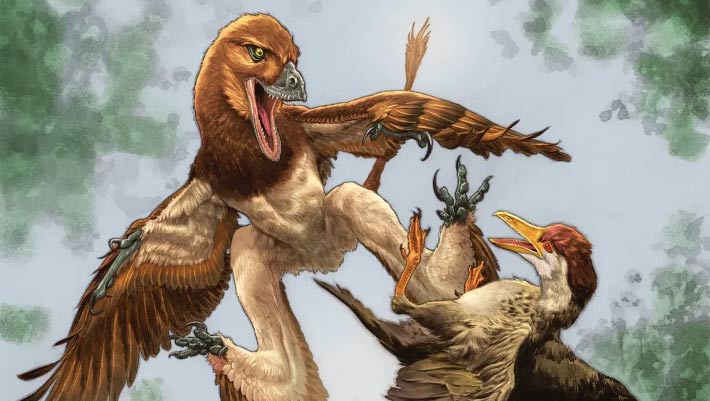
New Microraptorine Dinosaur Discovered in China
Un nouveau dinosaure microraptorine découvert en Chine
Chine Crétacé Crétacé inférieur spécimen Dinosauria Jian Microraptorinae oiseau
Jian changmaensis est le premier dinosaure non aviaire découvert sur un site paléontologique ayant livré plus de 100 spécimens d'oiseaux du Crétacé inférieur. L'article Un nouveau dinosaure microraptorine découvert en Chine est apparu en premier sur Sci.News : Breaking Science News.
04/06/2026 sci-news ⚙ Traduction automatique
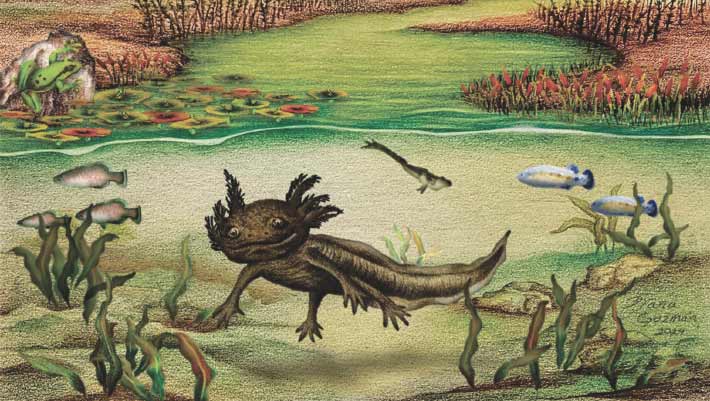
New Species of Fossil Axolotl Unearthed in Mexico
De nouvelles espèces d’axolotl fossiles découvertes au Mexique
Mexique fossile spécimen découverte nouvelle espèce
Les paléontologues ont identifié une nouvelle espèce du genre axolotl Ambystoma à partir de plusieurs spécimens fossilisés trouvés au fond des affleurements rocheux de l'État mexicain d'Hidalgo. L'article De nouvelles espèces d'axolotl fossiles découvertes au Mexique sont apparus en premier sur Sci.News : Breaking Science News.
02/06/2026 sci-news ⚙ Traduction automatique
1 2 3 4 5