←

squelette

Type de vue

162 image(s) · 26 Actualités

Galerie d'images

Collage of four ceratopsids, clockwise from top left: Titanoceratops, Styracosaurus, Triceratops and Utahceratops. These files are already on Commons with their respective licenses. This montage was made for the article Ceratopsidae on Wikipedia.
File:Titanoceratops.jpg
File:Torosaurus, is it? (20752673005).jpg
File:Triceratops Skeleton Senckenberg.jpg
File:Utahceratops gettyi 1 salt lake city.jpg
Taxons Pachyrhinosauridae

Collage of four ceratopsids, clockwise from top left: Titanoceratops, Styracosaurus, Triceratops and Utahceratops. These files are already on Commons with their respective licenses. This montage was made for the article Ceratopsidae on Wikipedia. File:Titanoceratops.jpg File:Torosaurus, is it? (20752673005).jpg File:Triceratops Skeleton Senckenberg.jpg File:Utahceratops gettyi 1 salt lake city.jpg

Ceratopsidae Pachyrhinosauridae Styracosaurus Titanoceratops +4
Plesioplatecarpus planifrons mounted skeleton in the Rocky Mountain Dinosaur Resource Center in Woodland Park, Colorado
Taxons Mosasauridae

Plesioplatecarpus planifrons mounted skeleton in the Rocky Mountain Dinosaur Resource Center in Woodland Park, Colorado

Dinosauria Mosasauridae Plesioplatecarpus Plioplatecarpini +2
Plesioplatecarpus planifrons mounted skeleton in the Rocky Mountain Dinosaur Resource Center in Woodland Park, Colorado
Taxons Russellosaurina

Plesioplatecarpus planifrons mounted skeleton in the Rocky Mountain Dinosaur Resource Center in Woodland Park, Colorado

Dinosauria Mosasauridae Plesioplatecarpus Plioplatecarpini +2
Entire skeleton of Jidapterus edentus (RCPS-030366CY) preserved in a slab mostly in right lateral view.

Abbreviations: aa, the atlas-axis complex; bo, basioccipital; br, braincase; cve, cervical vertebrae; cv3, the third cervical vertebra; cv8, the eighth cervical vertebra; ds, dentaries; dv, dorsal vertebra; dve, dorsal vertebrae; ep, epiphysis; j, jugal; lc, left carpus; lf, left femur; li, left ilium; lis, left ischium; lm, left manual digits; lp, left pubis; lpe, left pes; lpt, left pteroid; lr, left radius; lsc, left scapula-coracoid; lt, left tibia; lta, left tarsus; lu, left ulna; lwmc, left wing metacarpal; lwp1–4; left wing phalanges 1–4; p, pterygoid; pp, postacetabular process of the right ilium; q, quadrate; rc, right carpus; rh, right humerus; rf, right femur; rfi, right fibula; ribs, ribs; ris, right ischium; rm, right manual digits; rmcI, right metacarpal I; rp, right pubis; rpe, right pes; rpt, right pteroid; rr, right radius; rsc, right scapula-coracoid; rt, right tibia; ru, right ulna; rwmc, right wing metacarpal; rwp1–4, right wing phalanges 1–4; rostrum, rostrum; st, sternum; sv, sacral vertebra; sve, sacral vertebrae. Gray shaded areas bound by solid lines indicate preserved bones, dashed lines indicate bones with margins discerned by impression, and lack of lines indicate missing bone or displacement along cracks in the slab.
Taxons Jidapterus

Entire skeleton of Jidapterus edentus (RCPS-030366CY) preserved in a slab mostly in right lateral view. Abbreviations: aa, the atlas-axis complex; bo, basioccipital; br, braincase; cve, cervical vertebrae; cv3, the third cervical vertebra; cv8, the eighth cervical vertebra; ds, dentaries; dv, dorsal vertebra; dve, dorsal vertebrae; ep, epiphysis; j, jugal; lc, left carpus; lf, left femur; li, left ilium; lis, left ischium; lm, left manual digits; lp, left pubis; lpe, left pes; lpt, left pteroid; lr, left radius; lsc, left scapula-coracoid; lt, left tibia; lta, left tarsus; lu, left ulna; lwmc, left wing metacarpal; lwp1–4; left wing phalanges 1–4; p, pterygoid; pp, postacetabular process of the right ilium; q, quadrate; rc, right carpus; rh, right humerus; rf, right femur; rfi, right fibula; ribs, ribs; ris, right ischium; rm, right manual digits; rmcI, right metacarpal I; rp, right pubis; rpe, right pes; rpt, right pteroid; rr, right radius; rsc, right scapula-coracoid; rt, right tibia; ru, right ulna; rwmc, right wing metacarpal; rwp1–4, right wing phalanges 1–4; rostrum, rostrum; st, sternum; sv, sacral vertebra; sve, sacral vertebrae. Gray shaded areas bound by solid lines indicate preserved bones, dashed lines indicate bones with margins discerned by impression, and lack of lines indicate missing bone or displacement along cracks in the slab.

os humérus vertèbre Chaoyangopteridae +3
Entire skeleton of Jidapterus edentus (RCPS-030366CY) preserved in a slab mostly in right lateral view.

Abbreviations: aa, the atlas-axis complex; bo, basioccipital; br, braincase; cve, cervical vertebrae; cv3, the third cervical vertebra; cv8, the eighth cervical vertebra; ds, dentaries; dv, dorsal vertebra; dve, dorsal vertebrae; ep, epiphysis; j, jugal; lc, left carpus; lf, left femur; li, left ilium; lis, left ischium; lm, left manual digits; lp, left pubis; lpe, left pes; lpt, left pteroid; lr, left radius; lsc, left scapula-coracoid; lt, left tibia; lta, left tarsus; lu, left ulna; lwmc, left wing metacarpal; lwp1–4; left wing phalanges 1–4; p, pterygoid; pp, postacetabular process of the right ilium; q, quadrate; rc, right carpus; rh, right humerus; rf, right femur; rfi, right fibula; ribs, ribs; ris, right ischium; rm, right manual digits; rmcI, right metacarpal I; rp, right pubis; rpe, right pes; rpt, right pteroid; rr, right radius; rsc, right scapula-coracoid; rt, right tibia; ru, right ulna; rwmc, right wing metacarpal; rwp1–4, right wing phalanges 1–4; rostrum, rostrum; st, sternum; sv, sacral vertebra; sve, sacral vertebrae. Gray shaded areas bound by solid lines indicate preserved bones, dashed lines indicate bones with margins discerned by impression, and lack of lines indicate missing bone or displacement along cracks in the slab.
Taxons Chaoyangopteridae

Entire skeleton of Jidapterus edentus (RCPS-030366CY) preserved in a slab mostly in right lateral view. Abbreviations: aa, the atlas-axis complex; bo, basioccipital; br, braincase; cve, cervical vertebrae; cv3, the third cervical vertebra; cv8, the eighth cervical vertebra; ds, dentaries; dv, dorsal vertebra; dve, dorsal vertebrae; ep, epiphysis; j, jugal; lc, left carpus; lf, left femur; li, left ilium; lis, left ischium; lm, left manual digits; lp, left pubis; lpe, left pes; lpt, left pteroid; lr, left radius; lsc, left scapula-coracoid; lt, left tibia; lta, left tarsus; lu, left ulna; lwmc, left wing metacarpal; lwp1–4; left wing phalanges 1–4; p, pterygoid; pp, postacetabular process of the right ilium; q, quadrate; rc, right carpus; rh, right humerus; rf, right femur; rfi, right fibula; ribs, ribs; ris, right ischium; rm, right manual digits; rmcI, right metacarpal I; rp, right pubis; rpe, right pes; rpt, right pteroid; rr, right radius; rsc, right scapula-coracoid; rt, right tibia; ru, right ulna; rwmc, right wing metacarpal; rwp1–4, right wing phalanges 1–4; rostrum, rostrum; st, sternum; sv, sacral vertebra; sve, sacral vertebrae. Gray shaded areas bound by solid lines indicate preserved bones, dashed lines indicate bones with margins discerned by impression, and lack of lines indicate missing bone or displacement along cracks in the slab.

os humérus vertèbre Chaoyangopteridae +3
Entire skeleton of Jidapterus edentus (RCPS-030366CY) preserved in a slab mostly in right lateral view.

Abbreviations: aa, the atlas-axis complex; bo, basioccipital; br, braincase; cve, cervical vertebrae; cv3, the third cervical vertebra; cv8, the eighth cervical vertebra; ds, dentaries; dv, dorsal vertebra; dve, dorsal vertebrae; ep, epiphysis; j, jugal; lc, left carpus; lf, left femur; li, left ilium; lis, left ischium; lm, left manual digits; lp, left pubis; lpe, left pes; lpt, left pteroid; lr, left radius; lsc, left scapula-coracoid; lt, left tibia; lta, left tarsus; lu, left ulna; lwmc, left wing metacarpal; lwp1–4; left wing phalanges 1–4; p, pterygoid; pp, postacetabular process of the right ilium; q, quadrate; rc, right carpus; rh, right humerus; rf, right femur; rfi, right fibula; ribs, ribs; ris, right ischium; rm, right manual digits; rmcI, right metacarpal I; rp, right pubis; rpe, right pes; rpt, right pteroid; rr, right radius; rsc, right scapula-coracoid; rt, right tibia; ru, right ulna; rwmc, right wing metacarpal; rwp1–4, right wing phalanges 1–4; rostrum, rostrum; st, sternum; sv, sacral vertebra; sve, sacral vertebrae. Gray shaded areas bound by solid lines indicate preserved bones, dashed lines indicate bones with margins discerned by impression, and lack of lines indicate missing bone or displacement along cracks in the slab.
Taxons Chaoyangopterinae

Entire skeleton of Jidapterus edentus (RCPS-030366CY) preserved in a slab mostly in right lateral view. Abbreviations: aa, the atlas-axis complex; bo, basioccipital; br, braincase; cve, cervical vertebrae; cv3, the third cervical vertebra; cv8, the eighth cervical vertebra; ds, dentaries; dv, dorsal vertebra; dve, dorsal vertebrae; ep, epiphysis; j, jugal; lc, left carpus; lf, left femur; li, left ilium; lis, left ischium; lm, left manual digits; lp, left pubis; lpe, left pes; lpt, left pteroid; lr, left radius; lsc, left scapula-coracoid; lt, left tibia; lta, left tarsus; lu, left ulna; lwmc, left wing metacarpal; lwp1–4; left wing phalanges 1–4; p, pterygoid; pp, postacetabular process of the right ilium; q, quadrate; rc, right carpus; rh, right humerus; rf, right femur; rfi, right fibula; ribs, ribs; ris, right ischium; rm, right manual digits; rmcI, right metacarpal I; rp, right pubis; rpe, right pes; rpt, right pteroid; rr, right radius; rsc, right scapula-coracoid; rt, right tibia; ru, right ulna; rwmc, right wing metacarpal; rwp1–4, right wing phalanges 1–4; rostrum, rostrum; st, sternum; sv, sacral vertebra; sve, sacral vertebrae. Gray shaded areas bound by solid lines indicate preserved bones, dashed lines indicate bones with margins discerned by impression, and lack of lines indicate missing bone or displacement along cracks in the slab.

os humérus vertèbre Chaoyangopteridae +3
Reconstructed skeleton of Zuul

Reconstructed skeleton of Zuul

Zuul squelette
Herbivorous dinosaur found in the Al-khoudh area.  This dinosaur is similar to the Zalmoxes and Rhabdodon dinosaurs.  The skeleton in the Bait Al Baranda Museum was assembled from bones borrowed from several museums.

Herbivorous dinosaur found in the Al-khoudh area. This dinosaur is similar to the Zalmoxes and Rhabdodon dinosaurs. The skeleton in the Bait Al Baranda Museum was assembled from bones borrowed from several museums.

os musée Dinosauria Mochlodon +3
Rates of skeletal character evolution in the skull and postcranial skeleton of hadrosauroids. Cladograms illustrate the results from branch likelihood tests for two morphological partitions: skull (cranium and mandible) (A) and postcranial skeleton (B). In both cladograms, results from the branch likelihood tests are summarized on a strict consensus tree derived from four separately analyzed MPTs, each with 100 dating replicates (a total of 400 Hedman-dated phylogenies). Pie charts on branches illustrate the proportion of dating replicates that showed significantly high rates (red), slow rates (blue), or nonsignificant average rates (white). No pie charts are plotted on branches that showed nonsignificant rates in 100% of dating replicates. Branches that showed high rates (red) in more than 50% of dating replicates are doubled in length. See the Supplementary Material for Hedman-based results plotted separately for each MPT (Supplementary Fig. S2) and for results using the MBL dating method (Supplementary Fig. S3). Silhouettes were created by Scott Hartman and were downloaded from http://phylopic.org (Creative Commons license CC BY 3.0).

Rates of skeletal character evolution in the skull and postcranial skeleton of hadrosauroids. Cladograms illustrate the results from branch likelihood tests for two morphological partitions: skull (cranium and mandible) (A) and postcranial skeleton (B). In both cladograms, results from the branch likelihood tests are summarized on a strict consensus tree derived from four separately analyzed MPTs, each with 100 dating replicates (a total of 400 Hedman-dated phylogenies). Pie charts on branches illustrate the proportion of dating replicates that showed significantly high rates (red), slow rates (blue), or nonsignificant average rates (white). No pie charts are plotted on branches that showed nonsignificant rates in 100% of dating replicates. Branches that showed high rates (red) in more than 50% of dating replicates are doubled in length. See the Supplementary Material for Hedman-based results plotted separately for each MPT (Supplementary Fig. S2) and for results using the MBL dating method (Supplementary Fig. S3). Silhouettes were created by Scott Hartman and were downloaded from http://phylopic.org (Creative Commons license CC BY 3.0).

Protohadros datation évolution squelette +1
Life restoration of the German Jurassic ichthyosaur Suevoleviathan disinteger. The dorsal and caudal fins are loosely based on those of Stenopterygius.
References
Maisch, M.W. (2020). "The best-preserved skeleton of Suevoleviathan integer (Bronn, 1844)(Reptilia: Ichthyosauria) from the lower Jurassic of south-western Germany, with a discussion of the genus". Neues Jahrbuch für Geologie und Paläontologie, Abhandlungen 297 (2): 153–172.
Maisch, M.W. (1998). "A new ichthyosaur genus from the Posidonia Shale (Lower Toarcian, Jurassic) of Holzmaden, SW-Germany with comments on the phylogeny of post-Triassic ichthyosaurs". Neues Jahrbuch für Geologie und Paläontologie-Abhandlungen 209 (1): 47–78.
Taxons Suevoleviathan

Life restoration of the German Jurassic ichthyosaur Suevoleviathan disinteger. The dorsal and caudal fins are loosely based on those of Stenopterygius. References Maisch, M.W. (2020). "The best-preserved skeleton of Suevoleviathan integer (Bronn, 1844)(Reptilia: Ichthyosauria) from the lower Jurassic of south-western Germany, with a discussion of the genus". Neues Jahrbuch für Geologie und Paläontologie, Abhandlungen 297 (2): 153–172. Maisch, M.W. (1998). "A new ichthyosaur genus from the Posidonia Shale (Lower Toarcian, Jurassic) of Holzmaden, SW-Germany with comments on the phylogeny of post-Triassic ichthyosaurs". Neues Jahrbuch für Geologie und Paläontologie-Abhandlungen 209 (1): 47–78.

Allemagne Posidonia Shale Jurassique Toarcien +6
Skeleton of Tuarangisaurus at the Museo Argentino de Ciencias Naturales Bernardino Rivadavia

Skeleton of Tuarangisaurus at the Museo Argentino de Ciencias Naturales Bernardino Rivadavia

Tuarangisaurus squelette
Tuarangisaurus cabazai skeleton restoration, Copenhagen
Taxons Tuarangisaurus

Tuarangisaurus cabazai skeleton restoration, Copenhagen

Tuarangisaurus squelette
MRF 319, a partial oviraptorosaurian skeleton referred to Anzu wyliei. 
(A) Skeletal reconstruction in left lateral view, with preserved bones in gray and bones represented in other Anzu specimens in white (hatching indicates heavily reconstructed portions of the ilia of CM 78001). Middle-posterior (ninth?) cervical vertebra in (B) anterior, (C) left lateral, and (D) dorsal views. Posterior (11th?) cervical vertebra in (E) anterior, (F) left lateral, and (G) dorsal views. Posterior (12th?) cervical vertebra in (H) anterior, (I) left lateral, and (J) dorsal views. Anteroposteriorly crushed left radius in lateral (K) and anterior (L) views. Mediolaterally crushed left ulna in lateral (M) and anterior (N) views. (O) Partial left scapulocoracoid in lateral view. Dorsal rib in anterior (P) and posterior (Q) views. Abbreviations: acr, acromial process; cr, cervical rib; dip, distal processes; pat, pathology; pf, pneumatic fossa. Scale bars = 50 cm in A; 1 cm in B–Q.

MRF 319, a partial oviraptorosaurian skeleton referred to Anzu wyliei. (A) Skeletal reconstruction in left lateral view, with preserved bones in gray and bones represented in other Anzu specimens in white (hatching indicates heavily reconstructed portions of the ilia of CM 78001). Middle-posterior (ninth?) cervical vertebra in (B) anterior, (C) left lateral, and (D) dorsal views. Posterior (11th?) cervical vertebra in (E) anterior, (F) left lateral, and (G) dorsal views. Posterior (12th?) cervical vertebra in (H) anterior, (I) left lateral, and (J) dorsal views. Anteroposteriorly crushed left radius in lateral (K) and anterior (L) views. Mediolaterally crushed left ulna in lateral (M) and anterior (N) views. (O) Partial left scapulocoracoid in lateral view. Dorsal rib in anterior (P) and posterior (Q) views. Abbreviations: acr, acromial process; cr, cervical rib; dip, distal processes; pat, pathology; pf, pneumatic fossa. Scale bars = 50 cm in A; 1 cm in B–Q.

os écaille vertèbre pathologie +5
MRF 319, a partial oviraptorosaurian skeleton referred to Anzu wyliei. Skeletal reconstruction in left lateral view, with preserved bones in gray and bones represented in other Anzu specimens in white (hatching indicates heavily reconstructed portions of the ilia. Scale bar = 50 cm (19.7 in)

MRF 319, a partial oviraptorosaurian skeleton referred to Anzu wyliei. Skeletal reconstruction in left lateral view, with preserved bones in gray and bones represented in other Anzu specimens in white (hatching indicates heavily reconstructed portions of the ilia. Scale bar = 50 cm (19.7 in)

os écaille spécimen Anzu +3
Restored skeleton of Anzu wyliei (previously labelled as a specimen of Chirostenotes)

Restored skeleton of Anzu wyliei (previously labelled as a specimen of Chirostenotes)

États-Unis spécimen Anzu Chirostenotes +1
Restored skeleton of Anzu wyliei (previously labelled as a specimen of Chirostenotes)

Restored skeleton of Anzu wyliei (previously labelled as a specimen of Chirostenotes)

États-Unis spécimen Anzu Chirostenotes +1
1 2 3 4 5 6 7 8 9 10 11

Actualités

Une côte cassée du plus grand T. rex du monde cache un secret vieux de 66 millions d'années
os métabolisme pathologie fossile Dinosauria Tyrannosaurus squelette
Une côte cassée de Scotty, le plus grand squelette connu de T. rex, contient un extraordinaire réseau fossilisé de vaisseaux sanguins formés pendant la guérison du dinosaure. Les scientifiques ont utilisé l’imagerie neutronique et les rayons X pour examiner l’intérieur de l’os vieux de 66 millions d’années sans l’endommager, révélant des détails rarement conservés dans les fossiles.
24/09/2026 sciencedaily ⚙ Traduction automatique
New Therizinosaurian Dinosaur Unearthed in China
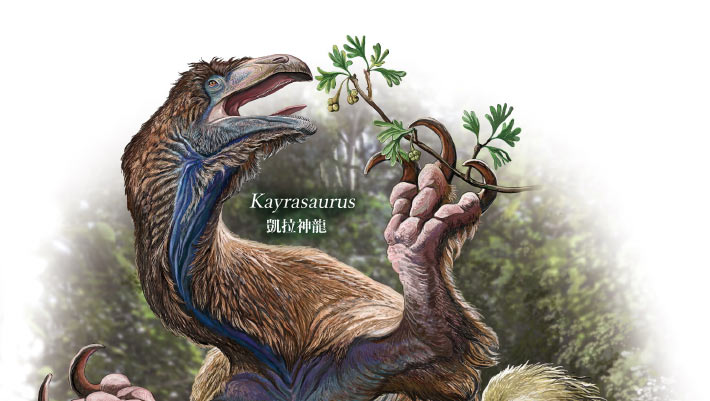
Un nouveau dinosaure thérizinosaurien découvert en Chine
Chine Dinosauria Kayrasaurus Therizinosauria nouvelle espèce squelette
Les paléontologues ont décrit un nouveau genre et une nouvelle espèce de thérizinosaure sur la base d'un squelette presque complet trouvé dans le nord-est de la Chine. L'article Un nouveau dinosaure thérizinosaurien découvert en Chine est apparu en premier sur Sci.News : Breaking Science News.
21/09/2026 sci-news ⚙ Traduction automatique
Un remarquable calmar jurassique « gros » du Wyoming est décrit scientifiquement
Jurassique Oxfordian fossile formation nouvelle espèce squelette
Une nouvelle espèce remarquable d’animal ressemblant à un calmar jurassique a été décrite dans le Wyoming. L'étrange bélemnite, nommée Wyoteuthis linsterorum, vivait il y a environ 160 millions d'années (stade faunique oxfordien). De plus, il possédait un squelette interne extraordinairement épais et en forme de tonneau. Une équipe de recherche internationale a étudié deux fossiles exceptionnellement rares de la célèbre formation de Sundance. Les scientifiques ont conclu
10/09/2026 everythingdinosaur ⚙ Traduction automatique
Fossil of Giant Squid-Like Creature from Cretaceous Period Bears Marks of Deadly Attack
Un fossile d'une créature ressemblant à un calmar géant de la période du Crétacé porte des marques d'attaque mortelle
Canada Crétacé fossile squelette
Des paléontologues étudiant un fossile découvert dans le sud du Manitoba, au Canada, ont identifié ce qu'ils pensent être deux marques de morsure sur le squelette interne de l'ancien céphalopode géant Enchoteuthis. L'article Un fossile d'une créature ressemblant à un calmar géant de la période du Crétacé porte des marques d'attaque mortelle est apparu en premier sur Sci.News : Breaking Science News.
01/09/2026 sci-news ⚙ Traduction automatique
Un remarquable fossile de reptile marin du Trias préserve les organes internes
Chine Trias fossile spécimen anatomie squelette
Les scientifiques ont décrit un fossile exceptionnel du reptile marin du Trias au long cou, Austronaga minuta. Le spécimen vient de Chine et a environ 245 millions d’années. Remarquablement, une grande partie du système digestif de l’animal a été préservée. Le fossile presque complet offre aux scientifiques une vue sans précédent du squelette et de l’anatomie interne d’un archosauromorphe.
26/08/2026 everythingdinosaur ⚙ Traduction automatique
1 2 3 4 5 6