←

squelette

Type de vue

174 image(s) · 30 Actualités

Galerie d'images

Anurognathid skeletons to scale.
Taxons Anurognathidae

Anurognathid skeletons to scale.

écaille Anurognathidae squelette
Mounted skeleton of Pinacosaurus specimen MPC 100/1305 with skull cast of Saichania. Central Museum of Mongolian Dinosaurs.
Taxons Pinacosaurus

Mounted skeleton of Pinacosaurus specimen MPC 100/1305 with skull cast of Saichania. Central Museum of Mongolian Dinosaurs.

musée Belgique moulage spécimen +5
Life restoration of the Triassic ichthyosaur Callawayia neoscapularis. Three specimens of this ichthyosaur are known, the holotype, ROM 41993, and two referred specimens, TMP 94.380.11 and 94.382.2. The skull is primarily based on ROM 41993, cross-checked against TMP 94.380.11 and TMP 94.382.2. The vertebral column is based primarily on TMP 94.382.2 as it is the most complete of these specimens, while the ribs were based on ROM 41993. The forelimbs were mainly based on those of ROM 41993, with TMP 94.380.11 used to determine their breadth. The hindlimbs were based on TMP 94.380.11, especially the more complete right hindlimb.
ROM 41993 was cross-scaled with TMP 94.380.11 by the dimensions of the forelimb epipodials, which produced similar vertebral dimensions. The two TMP specimens were cross-scaled based on femoral length, also producing similar vertebral dimensions. Nicholls & Manabe (2001) stated that no wedge-shaped caudal centra supporting a tailbend were found and that there was no evidence of a bend being present, though considered that they might have existed in the gap in the preserved caudals. Since various other Triassic ichthyosaurs have since been found to have tail bends, one was illustrated here. A modest downturn of roughly 15° was illustrated, comparable to that in Guanlingsaurus, and the location of the bend within the gap in the preserved vertebrae matches well with the location of the bend in Guizhouichthyosaurus.

References
McGowan, C. (1994). "A new species of Shastasaurus (Reptilia: Ichthyosauria) from the Triassic of British Columbia: The most complete exemplar of the genus". Journal of Vertebrate Paleontology 14 (2): 168–179. DOI:10.1080/02724634.1994.10011550.
Nicholls, E. L.; Manabe, M. (2001). "A new genus of ichthyosaur from the Late Triassic Pardonet Formation of British Columbia: Bridging the Triassic-Jurassic gap". Canadian Journal of Earth Sciences 38 (6): 983–1002.
Ji, C.; Jiang, D.Y.; Hao, W.; Sun, Y. (2011). "True tailbend occurred in the Late Triassic: Evidence from ichthyosaur skeletons of South China". Acta Scientiarum Naturalium Universitatis Pekinensis 47 (2): 309–314.
Shang, Q. H.; Li, C. (2009). "On the occurrence of the ichthyosaur Shastasaurus in the Guanling biota (Late Triassic), Guizhou, China". Vertebrata PalAsiatica 47 (3): 178–193.
Taxons Guanlingsaurus

Life restoration of the Triassic ichthyosaur Callawayia neoscapularis. Three specimens of this ichthyosaur are known, the holotype, ROM 41993, and two referred specimens, TMP 94.380.11 and 94.382.2. The skull is primarily based on ROM 41993, cross-checked against TMP 94.380.11 and TMP 94.382.2. The vertebral column is based primarily on TMP 94.382.2 as it is the most complete of these specimens, while the ribs were based on ROM 41993. The forelimbs were mainly based on those of ROM 41993, with TMP 94.380.11 used to determine their breadth. The hindlimbs were based on TMP 94.380.11, especially the more complete right hindlimb. ROM 41993 was cross-scaled with TMP 94.380.11 by the dimensions of the forelimb epipodials, which produced similar vertebral dimensions. The two TMP specimens were cross-scaled based on femoral length, also producing similar vertebral dimensions. Nicholls & Manabe (2001) stated that no wedge-shaped caudal centra supporting a tailbend were found and that there was no evidence of a bend being present, though considered that they might have existed in the gap in the preserved caudals. Since various other Triassic ichthyosaurs have since been found to have tail bends, one was illustrated here. A modest downturn of roughly 15° was illustrated, comparable to that in Guanlingsaurus, and the location of the bend within the gap in the preserved vertebrae matches well with the location of the bend in Guizhouichthyosaurus. References McGowan, C. (1994). "A new species of Shastasaurus (Reptilia: Ichthyosauria) from the Triassic of British Columbia: The most complete exemplar of the genus". Journal of Vertebrate Paleontology 14 (2): 168–179. DOI:10.1080/02724634.1994.10011550. Nicholls, E. L.; Manabe, M. (2001). "A new genus of ichthyosaur from the Late Triassic Pardonet Formation of British Columbia: Bridging the Triassic-Jurassic gap". Canadian Journal of Earth Sciences 38 (6): 983–1002. Ji, C.; Jiang, D.Y.; Hao, W.; Sun, Y. (2011). "True tailbend occurred in the Late Triassic: Evidence from ichthyosaur skeletons of South China". Acta Scientiarum Naturalium Universitatis Pekinensis 47 (2): 309–314. Shang, Q. H.; Li, C. (2009). "On the occurrence of the ichthyosaur Shastasaurus in the Guanling biota (Late Triassic), Guizhou, China". Vertebrata PalAsiatica 47 (3): 178–193.

Chine Jurassique Trias supérieur Trias +12
Ichthyosaur Skeleton, Platypterygius longmani, in The Museum and Art Gallery of the Northern Territory at Darwin.
Taxons Platypterygius

Ichthyosaur Skeleton, Platypterygius longmani, in The Museum and Art Gallery of the Northern Territory at Darwin.

musée Ichthyosauria Platypterygius squelette
Mounted skeleton of Anzu at Royal Ontario Museum
Taxons Caenagnathidae

Mounted skeleton of Anzu at Royal Ontario Museum

musée Anzu Caenagnathidae squelette
Restoration of the spinosaurid dinosaur Siamosaurus in the Sao Khua Formation palaeoenvironment, with Sunosuchus in the middle left and a herd of Phuwiangosaurus in the background.
References:
Siamosaurus based on tooth specimens [1] and the neural spine of a possibly referable skeleton[2], with other missing elements filled in with relatives (Suchomimus[3], Baryonyx[4], IchthyovenatorFile:Ichthyovenator_laosensis_skeletal_reconstruction_by_PaleoGeek.png).
Phuwiangosaurus based on skeletal by Suteethorn et al. (2009)[5] and missing elements of skull of EuhelopusFile:Euhelopus.png.

Sunosuchus based on Suteethorn and Ingavat (1983)[6] and missing elements based on Goniopholis[7].
Formations Sao Khua

Restoration of the spinosaurid dinosaur Siamosaurus in the Sao Khua Formation palaeoenvironment, with Sunosuchus in the middle left and a herd of Phuwiangosaurus in the background. References: Siamosaurus based on tooth specimens [1] and the neural spine of a possibly referable skeleton[2], with other missing elements filled in with relatives (Suchomimus[3], Baryonyx[4], IchthyovenatorFile:Ichthyovenator_laosensis_skeletal_reconstruction_by_PaleoGeek.png). Phuwiangosaurus based on skeletal by Suteethorn et al. (2009)[5] and missing elements of skull of EuhelopusFile:Euhelopus.png. Sunosuchus based on Suteethorn and Ingavat (1983)[6] and missing elements based on Goniopholis[7].

dent dessin Sao Khua spécimen +11
Mounted holotype skeleton (GM F10004) of Qianzhousaurus sinensis at the National Natural History Museum of China.
Taxons Qianzhousaurus

Mounted holotype skeleton (GM F10004) of Qianzhousaurus sinensis at the National Natural History Museum of China.

musée Chine holotype Qianzhousaurus +1
Fossil skeleton of Tianyulong confuciusi at the Chaoyang Paleontological Museum.
Taxons Tianyulong

Fossil skeleton of Tianyulong confuciusi at the Chaoyang Paleontological Museum.

musée fossile Tianyulong squelette
Identifier: annalsofmedicalh01pack (find matches)
Title: Annals of medical history
Year: 1917 (1910s)
Authors:  Packard, Francis R. (Francis Randolph), 1870-1950
Subjects:  Medicine
Publisher:  New York P.B. Hoeber
Contributing Library:  Gerstein - University of Toronto
Digitizing Sponsor:  University of Toronto

View Book Page: Book Viewer
About This Book: Catalog Entry
View All Images: All Images From Book
Click here to view book online to see this illustration in context in a browseable online version of this book.

Text Appearing Before Image:
ail strongly Hexed, and the toescontracted and appressed. The whole atti-tude strongly suggests a spastic distress,possibly brought on by some form ofpoisoning of the central nervous system,from infection or the deglutition of somepoisonous substance. 14. Osteomalacia is evidently the causeof the hypertrophy of the bones of Lim-nocyron potens, an early carnivore from theWashakie Eocene of Wyoming, nearly3,000,000 years old. MATERIALS AND METHODS The material described in the presentpaper has been loaned the writer lor de-scription by the Field Museum of Chii Osborn: Hull. Amcr. \lus. Natl. Hist., 1917,vol. 35. !>• 733. P>- 28. Studies in Paleopathology 393 by the American Museum of Natural His-tory of New York City, by Walker Museumof the University of Chicago, and by the Uni-versity of Kansas Natural History Museum. made by the well-known petrographic meth-ods so common in all geological labora-tories. The diagnoses, where they are at-tempted, arc made from comparisons of the
Text Appearing After Image:
Fig. 20. The skeleton of Strutbiomimus altus, a small dinosaur from the BeliyRiver series (Cretaceous), Red Deer River, Alberta, Canada, now regarded as ofapproximately the same age as the Judith River series. The unique feature ofthe skull is the total absence of teeth, with a size of skull one-third larger thanthe ostrich and a length of body of about fifteen feet. The position of the skeletonis decidedly that of the opisthotonos which may be regarded as an indication ofdisease. (After Osborn). A beautiful specimen of an osteoma, theonly one known so far, on the vertebra of aKansas Cretaceous mosasaur, was given thewriter by Dr. J. M. Armstrong of St. Paul.The writer expresses his obligations to thegentlemen connected with the above-men-tioned institutions and to Dr. Armstrong.The methods used are a combination ofprocedures in the various lines involved.Microscopic sections, which can be madethin enough for immersion lens study, are material with similar lesions in recent hu-man mat

Note About Images

Please note that these images are extracted from scanned page images that may have been digitally enhanced for readability - coloration and appearance of these illustrations may not perfectly resemble the original work.
Taxons Hexing

Identifier: annalsofmedicalh01pack (find matches) Title: Annals of medical history Year: 1917 (1910s) Authors: Packard, Francis R. (Francis Randolph), 1870-1950 Subjects: Medicine Publisher: New York P.B. Hoeber Contributing Library: Gerstein - University of Toronto Digitizing Sponsor: University of Toronto View Book Page: Book Viewer About This Book: Catalog Entry View All Images: All Images From Book Click here to view book online to see this illustration in context in a browseable online version of this book. Text Appearing Before Image: ail strongly Hexed, and the toescontracted and appressed. The whole atti-tude strongly suggests a spastic distress,possibly brought on by some form ofpoisoning of the central nervous system,from infection or the deglutition of somepoisonous substance. 14. Osteomalacia is evidently the causeof the hypertrophy of the bones of Lim-nocyron potens, an early carnivore from theWashakie Eocene of Wyoming, nearly3,000,000 years old. MATERIALS AND METHODS The material described in the presentpaper has been loaned the writer lor de-scription by the Field Museum of Chii Osborn: Hull. Amcr. \lus. Natl. Hist., 1917,vol. 35. !>• 733. P>- 28. Studies in Paleopathology 393 by the American Museum of Natural His-tory of New York City, by Walker Museumof the University of Chicago, and by the Uni-versity of Kansas Natural History Museum. made by the well-known petrographic meth-ods so common in all geological labora-tories. The diagnoses, where they are at-tempted, arc made from comparisons of the Text Appearing After Image: Fig. 20. The skeleton of Strutbiomimus altus, a small dinosaur from the BeliyRiver series (Cretaceous), Red Deer River, Alberta, Canada, now regarded as ofapproximately the same age as the Judith River series. The unique feature ofthe skull is the total absence of teeth, with a size of skull one-third larger thanthe ostrich and a length of body of about fifteen feet. The position of the skeletonis decidedly that of the opisthotonos which may be regarded as an indication ofdisease. (After Osborn). A beautiful specimen of an osteoma, theonly one known so far, on the vertebra of aKansas Cretaceous mosasaur, was given thewriter by Dr. J. M. Armstrong of St. Paul.The writer expresses his obligations to thegentlemen connected with the above-men-tioned institutions and to Dr. Armstrong.The methods used are a combination ofprocedures in the various lines involved.Microscopic sections, which can be madethin enough for immersion lens study, are material with similar lesions in recent hu-man mat Note About Images Please note that these images are extracted from scanned page images that may have been digitally enhanced for readability - coloration and appearance of these illustrations may not perfectly resemble the original work.

os vertèbre livre musée +11
The holotype and only known specimen of the hauffiopterygian leptonectid, Xiphodracon goldencapensis (ROM VP52596) from Golden Cap, between Charmouth and Seatown, Dorset, UK. The skeleton is exposed in ventrolateral view. The skull has been fully prepared free of matrix whereas most of the skeleton is still in matrix. The left (upper) forefin has been prepared so that it is three-dimensionally preserved and projects upwards. Scale bar represents 20 cm.
Taxons Xiphodracon

The holotype and only known specimen of the hauffiopterygian leptonectid, Xiphodracon goldencapensis (ROM VP52596) from Golden Cap, between Charmouth and Seatown, Dorset, UK. The skeleton is exposed in ventrolateral view. The skull has been fully prepared free of matrix whereas most of the skeleton is still in matrix. The left (upper) forefin has been prepared so that it is three-dimensionally preserved and projects upwards. Scale bar represents 20 cm.

écaille Royaume-Uni holotype spécimen +5
Life restoration of the German Jurassic ichthyosaur Suevoleviathan disinteger. The dorsal and caudal fins are loosely based on those of Stenopterygius.
References
Maisch, M.W. (2020). "The best-preserved skeleton of Suevoleviathan integer (Bronn, 1844)(Reptilia: Ichthyosauria) from the lower Jurassic of south-western Germany, with a discussion of the genus". Neues Jahrbuch für Geologie und Paläontologie, Abhandlungen 297 (2): 153–172.
Maisch, M.W. (1998). "A new ichthyosaur genus from the Posidonia Shale (Lower Toarcian, Jurassic) of Holzmaden, SW-Germany with comments on the phylogeny of post-Triassic ichthyosaurs". Neues Jahrbuch für Geologie und Paläontologie-Abhandlungen 209 (1): 47–78.
Taxons Suevoleviathan

Life restoration of the German Jurassic ichthyosaur Suevoleviathan disinteger. The dorsal and caudal fins are loosely based on those of Stenopterygius. References Maisch, M.W. (2020). "The best-preserved skeleton of Suevoleviathan integer (Bronn, 1844)(Reptilia: Ichthyosauria) from the lower Jurassic of south-western Germany, with a discussion of the genus". Neues Jahrbuch für Geologie und Paläontologie, Abhandlungen 297 (2): 153–172. Maisch, M.W. (1998). "A new ichthyosaur genus from the Posidonia Shale (Lower Toarcian, Jurassic) of Holzmaden, SW-Germany with comments on the phylogeny of post-Triassic ichthyosaurs". Neues Jahrbuch für Geologie und Paläontologie-Abhandlungen 209 (1): 47–78.

Allemagne Posidonia Shale Jurassique Toarcien +6
Tuarangisaurus cabazai skeleton restoration, Copenhagen
Taxons Tuarangisaurus

Tuarangisaurus cabazai skeleton restoration, Copenhagen

Tuarangisaurus squelette
Muttaburrasaurus
The plants, animals and climate of the Australian continent have changed dramatically over long periods of time. Imagine this giant creature roaming the luxuriant wet forests that covered parts of the continent in the Cretaceous period, about 100-110 million years ago. The Muttaburrasaurus ambled along on all four legs or stood on its hind legs. Its large teeth were well adapted to eat tough vegetation such as the leathery foliage of the evergreen forests of Araucaria trees, ancient relatives of the bunya pine of south-eastern Queensland.
In 1963, grazier Doug Langdon discovered the fossilised bones of a dinosaur on his property near Muttaburra in central-west Queensland. It was one of the most complete dinosaur skeletons found in Australia. The bones belonged to a new species of ornithopod and palaeontologists named it Muttaburrasaurus langdoni.

Cast of Muttaburresaurus langdoni 1987 made by Queensland Museum, Brisbane National Museum of Australia
Taxons Muttaburrasaurus

Muttaburrasaurus The plants, animals and climate of the Australian continent have changed dramatically over long periods of time. Imagine this giant creature roaming the luxuriant wet forests that covered parts of the continent in the Cretaceous period, about 100-110 million years ago. The Muttaburrasaurus ambled along on all four legs or stood on its hind legs. Its large teeth were well adapted to eat tough vegetation such as the leathery foliage of the evergreen forests of Araucaria trees, ancient relatives of the bunya pine of south-eastern Queensland. In 1963, grazier Doug Langdon discovered the fossilised bones of a dinosaur on his property near Muttaburra in central-west Queensland. It was one of the most complete dinosaur skeletons found in Australia. The bones belonged to a new species of ornithopod and palaeontologists named it Muttaburrasaurus langdoni. Cast of Muttaburresaurus langdoni 1987 made by Queensland Museum, Brisbane National Museum of Australia

os musée Australie Crétacé +5
Montanoceratops cerorhynchus (Brown & Schlaikjer, 1942) - fossil ceratopsian dinosaur skeleton from the Cretaceous of Montana, USA. (MOR 542, Museum of the Rockies, Bozeman, Montana, USA)
The species name is sometimes incorrectly spelled "cerorhynchos".  The original publication spells it "cerorhynchus".  The genus name is sometimes incorrectly spelled "Montanaceratops".
Ceratopsians are the "horned dinosaurs".  They were large, quadrupedal, herbivorous dinosaurs having a beaked skull and a frill - an extension of bone behind the skull that partially covered the neck.  Ceratopsian dinosaurs are known from the Jurassic and Cretaceous.  The last members of the group died out at the Cretaceous-Tertiary boundary, 65 million years ago.
This is a partial skeleton of a juvenile Montanoceratops, a ceratopsian from the near-latest Cretaceous of western North America.  This type of ceratopsian lacked facial horns.


From exhibit signage:
Sixty-eight million years ago, when the horned dinosaurs Triceratops and Torosaurus inhabited the coastal plain near the inland ocean, primitive "horned" dinosaurs named Montanoceratops lived in uplands near the young Rocky Mountains.  These little protoceratopsians fed on plants with slicing teeth and narrow beaks similar to their giant three-horned relatives.


Classification: Animalia, Chordata, Vertebrata, Reptilia, Archosauria, Dinosauria, Ornithischia, Marginocephalia, Ceratopsia, Leptoceratopsidae
Stratigraphy: St. Mary River Formation, Maastrichtian Stage, Upper Cretaceous
Locality: Little Rocky Coulee, north of the town of Cut Bank, eastern Glacier County, northwestern Montana, USA


Info. at:

en.wikipedia.org/wiki/Montanoceratops
Taxons Montanoceratops

Montanoceratops cerorhynchus (Brown & Schlaikjer, 1942) - fossil ceratopsian dinosaur skeleton from the Cretaceous of Montana, USA. (MOR 542, Museum of the Rockies, Bozeman, Montana, USA) The species name is sometimes incorrectly spelled "cerorhynchos". The original publication spells it "cerorhynchus". The genus name is sometimes incorrectly spelled "Montanaceratops". Ceratopsians are the "horned dinosaurs". They were large, quadrupedal, herbivorous dinosaurs having a beaked skull and a frill - an extension of bone behind the skull that partially covered the neck. Ceratopsian dinosaurs are known from the Jurassic and Cretaceous. The last members of the group died out at the Cretaceous-Tertiary boundary, 65 million years ago. This is a partial skeleton of a juvenile Montanoceratops, a ceratopsian from the near-latest Cretaceous of western North America. This type of ceratopsian lacked facial horns. From exhibit signage: Sixty-eight million years ago, when the horned dinosaurs Triceratops and Torosaurus inhabited the coastal plain near the inland ocean, primitive "horned" dinosaurs named Montanoceratops lived in uplands near the young Rocky Mountains. These little protoceratopsians fed on plants with slicing teeth and narrow beaks similar to their giant three-horned relatives. Classification: Animalia, Chordata, Vertebrata, Reptilia, Archosauria, Dinosauria, Ornithischia, Marginocephalia, Ceratopsia, Leptoceratopsidae Stratigraphy: St. Mary River Formation, Maastrichtian Stage, Upper Cretaceous Locality: Little Rocky Coulee, north of the town of Cut Bank, eastern Glacier County, northwestern Montana, USA Info. at: en.wikipedia.org/wiki/Montanoceratops

os musée États-Unis Crétacé +17
Partial skeleton of Claosaurus agilis (holotype YPM 1190).

(A) Right ilium in lateral view. (B) Partial postorbital in lateral view. (C) Distal process of the right ischium in lateral view. (D) Mounted partial skeleton of YPM 1190. (E) Coronoid process of the right dentary in lateral view. (F) Fragment of maxilla in lateral view. (G) Detail of the maxillary tooth crowns in (F). (H) Fragment of maxilla in lateral view. (I) Detail of a maxillary tooth crown in (H).
Taxons Claosaurus

Partial skeleton of Claosaurus agilis (holotype YPM 1190). (A) Right ilium in lateral view. (B) Partial postorbital in lateral view. (C) Distal process of the right ischium in lateral view. (D) Mounted partial skeleton of YPM 1190. (E) Coronoid process of the right dentary in lateral view. (F) Fragment of maxilla in lateral view. (G) Detail of the maxillary tooth crowns in (F). (H) Fragment of maxilla in lateral view. (I) Detail of a maxillary tooth crown in (H).

dent holotype Claosaurus partiel +1
Skeleton identified as Nemegtomaia by Greg Funston.[1] Central Museum of Mongolian Dinosaurs, Ulaanbaatar. Complete indexed photo collection at WorldHistoryPics.com.
Taxons Nemegtomaia

Skeleton identified as Nemegtomaia by Greg Funston.[1] Central Museum of Mongolian Dinosaurs, Ulaanbaatar. Complete indexed photo collection at WorldHistoryPics.com.

musée Dinosauria Nemegtomaia squelette
1 2 3 4 5 6 7 8 9 10 11

Actualités

New Species of Predatory Dinosaur Identified in Argentina
Une nouvelle espèce de dinosaure prédateur identifiée en Argentine
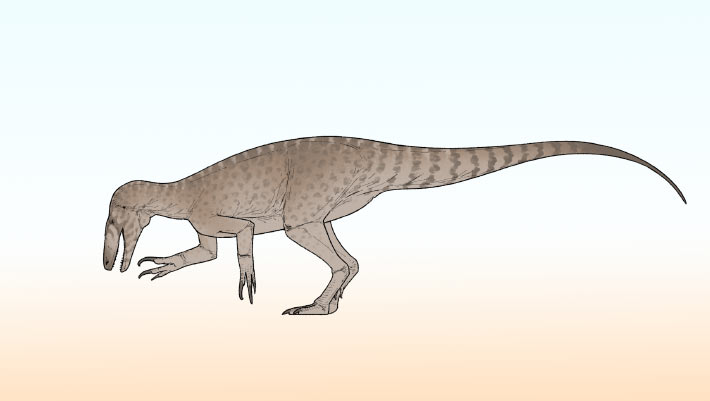
Argentine Dinosauria Megaraptoridae nouvelle espèce squelette
Les paléontologues ont identifié un nouveau genre et une nouvelle espèce de dinosaure mégaraptoridé à partir d'un squelette incomplet découvert dans le nord de la Patagonie, en Argentine. L'article Nouvelles espèces de dinosaures prédateurs identifiées en Argentine apparaît en premier sur Sci.News : Breaking Science News.
30/10/2026 sci-news ⚙ Traduction automatique
New Species of Iguanodontian Dinosaur Discovered in England
Une nouvelle espèce de dinosaure iguanodontien découverte en Angleterre
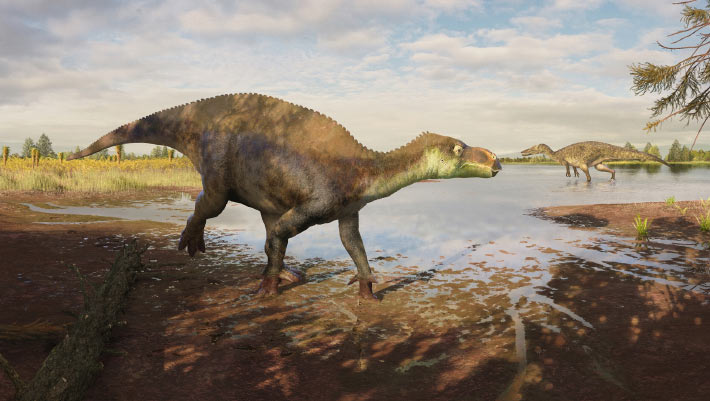
Dinosauria Iguanodontia Paludohadros nouvelle espèce partiel squelette
Un squelette partiel de dinosaure, mis au jour en 2001 dans une briqueterie du Surrey, a été identifié comme appartenant à un genre et une espèce jusqu’alors inconnus, au sein des iguanodontiens hadrosauroïdes ayant divergé précocement. L’article « Nouvelle espèce de dinosaure iguanodontien découverte en Angleterre » est paru initialement sur Sci.News : Actualités scientifiques.
27/10/2026 sci-news ⚙ Traduction automatique
Armored Amphibian from Triassic Period is First Known to Have Lived Entirely in the Sea
Un amphibien cuirassé du Trias est le premier connu à avoir vécu entièrement en mer
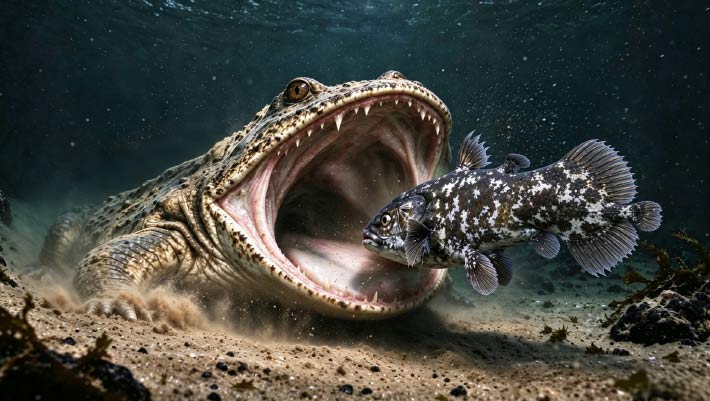
Chine Trias supérieur Trias squelette
Des paléontologues ont décrit ce qu'ils présentent comme la première espèce entièrement marine d'amphibien ancestral, *Gerrothorax maritimus*, à partir de deux squelettes presque complets datant du Trias supérieur et découverts en Chine. L'article « Un amphibien cuirassé du Trias : la première espèce connue à avoir vécu exclusivement en milieu marin » a été publié initialement sur Sci.News : Actualités scientifiques.
26/10/2026 sci-news ⚙ Traduction automatique
Un magnifique fossile de mammifère du Jurassique révèle une percée évolutive
alimentation Chine Jurassique fossile évolution mammifères squelette
Les scientifiques ont décrit un remarquable fossile de mammifère du Jurassique provenant de Chine qui fournit de nouvelles informations sur l'évolution des mammifères. L'animal vieux de 165 millions d'années, nommé Megacauda sungei, a été adapté à la vie aquatique. De plus, son squelette exceptionnellement préservé révèle des preuves importantes concernant l’évolution de l’alimentation et de la déglutition des mammifères. L'équipe de recherche internationale, dirigée par des scientifiques
09/10/2026 everythingdinosaur ⚙ Traduction automatique
Une côte cassée du plus grand T. rex du monde cache un secret vieux de 66 millions d'années
os métabolisme pathologie fossile Dinosauria Tyrannosaurus squelette
Une côte cassée de Scotty, le plus grand squelette connu de T. rex, contient un extraordinaire réseau fossilisé de vaisseaux sanguins formés pendant la guérison du dinosaure. Les scientifiques ont utilisé l’imagerie neutronique et les rayons X pour examiner l’intérieur de l’os vieux de 66 millions d’années sans l’endommager, révélant des détails rarement conservés dans les fossiles.
24/09/2026 sciencedaily ⚙ Traduction automatique
1 2 3 4 5 6