←

skeleton

View type

162 image(s) · 26 News

Image gallery

Muttaburrasaurus
The plants, animals and climate of the Australian continent have changed dramatically over long periods of time. Imagine this giant creature roaming the luxuriant wet forests that covered parts of the continent in the Cretaceous period, about 100-110 million years ago. The Muttaburrasaurus ambled along on all four legs or stood on its hind legs. Its large teeth were well adapted to eat tough vegetation such as the leathery foliage of the evergreen forests of Araucaria trees, ancient relatives of the bunya pine of south-eastern Queensland.
In 1963, grazier Doug Langdon discovered the fossilised bones of a dinosaur on his property near Muttaburra in central-west Queensland. It was one of the most complete dinosaur skeletons found in Australia. The bones belonged to a new species of ornithopod and palaeontologists named it Muttaburrasaurus langdoni.

Cast of Muttaburresaurus langdoni 1987 made by Queensland Museum, Brisbane National Museum of Australia
Taxa Muttaburrasaurus

Muttaburrasaurus The plants, animals and climate of the Australian continent have changed dramatically over long periods of time. Imagine this giant creature roaming the luxuriant wet forests that covered parts of the continent in the Cretaceous period, about 100-110 million years ago. The Muttaburrasaurus ambled along on all four legs or stood on its hind legs. Its large teeth were well adapted to eat tough vegetation such as the leathery foliage of the evergreen forests of Araucaria trees, ancient relatives of the bunya pine of south-eastern Queensland. In 1963, grazier Doug Langdon discovered the fossilised bones of a dinosaur on his property near Muttaburra in central-west Queensland. It was one of the most complete dinosaur skeletons found in Australia. The bones belonged to a new species of ornithopod and palaeontologists named it Muttaburrasaurus langdoni. Cast of Muttaburresaurus langdoni 1987 made by Queensland Museum, Brisbane National Museum of Australia

bone museum Australia Cretaceous +5
Montanoceratops cerorhynchus (Brown & Schlaikjer, 1942) - fossil ceratopsian dinosaur skeleton from the Cretaceous of Montana, USA. (MOR 542, Museum of the Rockies, Bozeman, Montana, USA)
The species name is sometimes incorrectly spelled "cerorhynchos".  The original publication spells it "cerorhynchus".  The genus name is sometimes incorrectly spelled "Montanaceratops".
Ceratopsians are the "horned dinosaurs".  They were large, quadrupedal, herbivorous dinosaurs having a beaked skull and a frill - an extension of bone behind the skull that partially covered the neck.  Ceratopsian dinosaurs are known from the Jurassic and Cretaceous.  The last members of the group died out at the Cretaceous-Tertiary boundary, 65 million years ago.
This is a partial skeleton of a juvenile Montanoceratops, a ceratopsian from the near-latest Cretaceous of western North America.  This type of ceratopsian lacked facial horns.


From exhibit signage:
Sixty-eight million years ago, when the horned dinosaurs Triceratops and Torosaurus inhabited the coastal plain near the inland ocean, primitive "horned" dinosaurs named Montanoceratops lived in uplands near the young Rocky Mountains.  These little protoceratopsians fed on plants with slicing teeth and narrow beaks similar to their giant three-horned relatives.


Classification: Animalia, Chordata, Vertebrata, Reptilia, Archosauria, Dinosauria, Ornithischia, Marginocephalia, Ceratopsia, Leptoceratopsidae
Stratigraphy: St. Mary River Formation, Maastrichtian Stage, Upper Cretaceous
Locality: Little Rocky Coulee, north of the town of Cut Bank, eastern Glacier County, northwestern Montana, USA


Info. at:

en.wikipedia.org/wiki/Montanoceratops
Taxa Montanoceratops

Montanoceratops cerorhynchus (Brown & Schlaikjer, 1942) - fossil ceratopsian dinosaur skeleton from the Cretaceous of Montana, USA. (MOR 542, Museum of the Rockies, Bozeman, Montana, USA) The species name is sometimes incorrectly spelled "cerorhynchos". The original publication spells it "cerorhynchus". The genus name is sometimes incorrectly spelled "Montanaceratops". Ceratopsians are the "horned dinosaurs". They were large, quadrupedal, herbivorous dinosaurs having a beaked skull and a frill - an extension of bone behind the skull that partially covered the neck. Ceratopsian dinosaurs are known from the Jurassic and Cretaceous. The last members of the group died out at the Cretaceous-Tertiary boundary, 65 million years ago. This is a partial skeleton of a juvenile Montanoceratops, a ceratopsian from the near-latest Cretaceous of western North America. This type of ceratopsian lacked facial horns. From exhibit signage: Sixty-eight million years ago, when the horned dinosaurs Triceratops and Torosaurus inhabited the coastal plain near the inland ocean, primitive "horned" dinosaurs named Montanoceratops lived in uplands near the young Rocky Mountains. These little protoceratopsians fed on plants with slicing teeth and narrow beaks similar to their giant three-horned relatives. Classification: Animalia, Chordata, Vertebrata, Reptilia, Archosauria, Dinosauria, Ornithischia, Marginocephalia, Ceratopsia, Leptoceratopsidae Stratigraphy: St. Mary River Formation, Maastrichtian Stage, Upper Cretaceous Locality: Little Rocky Coulee, north of the town of Cut Bank, eastern Glacier County, northwestern Montana, USA Info. at: en.wikipedia.org/wiki/Montanoceratops

bone museum United States Cretaceous +17
Partial skeleton of Claosaurus agilis (holotype YPM 1190).

(A) Right ilium in lateral view. (B) Partial postorbital in lateral view. (C) Distal process of the right ischium in lateral view. (D) Mounted partial skeleton of YPM 1190. (E) Coronoid process of the right dentary in lateral view. (F) Fragment of maxilla in lateral view. (G) Detail of the maxillary tooth crowns in (F). (H) Fragment of maxilla in lateral view. (I) Detail of a maxillary tooth crown in (H).
Taxa Claosaurus

Partial skeleton of Claosaurus agilis (holotype YPM 1190). (A) Right ilium in lateral view. (B) Partial postorbital in lateral view. (C) Distal process of the right ischium in lateral view. (D) Mounted partial skeleton of YPM 1190. (E) Coronoid process of the right dentary in lateral view. (F) Fragment of maxilla in lateral view. (G) Detail of the maxillary tooth crowns in (F). (H) Fragment of maxilla in lateral view. (I) Detail of a maxillary tooth crown in (H).

tooth holotype Claosaurus partial +1
Skeleton identified as Nemegtomaia by Greg Funston.[1] Central Museum of Mongolian Dinosaurs, Ulaanbaatar. Complete indexed photo collection at WorldHistoryPics.com.
Taxa Nemegtomaia

Skeleton identified as Nemegtomaia by Greg Funston.[1] Central Museum of Mongolian Dinosaurs, Ulaanbaatar. Complete indexed photo collection at WorldHistoryPics.com.

museum Dinosauria Nemegtomaia skeleton
Yangchuanosaurus shangyouensis skeleton displayed in Hong Kong Science Museum
Taxa Yangchuanosaurus

Yangchuanosaurus shangyouensis skeleton displayed in Hong Kong Science Museum

museum Yangchuanosaurus skeleton
Skeleton of Sinovenator on display at the Tianjin Natural History Museum.
Taxa Sinovenator

Skeleton of Sinovenator on display at the Tianjin Natural History Museum.

museum Sinovenator skeleton
Photograph of the skeleton of Patagosaurus fariasi Bonaparte, 1979. The skeleton is on display at Museo Argentino de Ciencias Naturales, in Argentina. Patagosaurus is a basal eusauropodan, closely related to Cetiosaurus possibly within Cetiosauridae. Photograph by Mathijs de Bruijne.
Taxa Patagosaurus

Photograph of the skeleton of Patagosaurus fariasi Bonaparte, 1979. The skeleton is on display at Museo Argentino de Ciencias Naturales, in Argentina. Patagosaurus is a basal eusauropodan, closely related to Cetiosaurus possibly within Cetiosauridae. Photograph by Mathijs de Bruijne.

Argentina Cetiosauria Cetiosauridae Eusauropoda +2
Skeleton of Chungkingosaurus jiangbeiensis displayed in Hong Kong Science Museum
Taxa Chungkingosaurus

Skeleton of Chungkingosaurus jiangbeiensis displayed in Hong Kong Science Museum

museum Chungkingosaurus skeleton
Reconstructed Mononykus olecranus skeleton (AMNH 28508 and AMNH 28498) on display at the American Museum of Natural History.
Taxa Mononykus

Reconstructed Mononykus olecranus skeleton (AMNH 28508 and AMNH 28498) on display at the American Museum of Natural History.

museum Mononykus skeleton
Fossil skeleton of Qianichthyosaurus zhoui on display at the Geological Museum of China.
Taxa Qianichthyosaurus

Fossil skeleton of Qianichthyosaurus zhoui on display at the Geological Museum of China.

museum China fossil Qianichthyosaurus +1
Photograph of a fossil cast of a Keichousaurus hui skeleton taken at the North American Museum of Ancient Life.
Taxa Keichousaurus

Photograph of a fossil cast of a Keichousaurus hui skeleton taken at the North American Museum of Ancient Life.

museum cast fossil Keichousaurus +1
Skeleton of '"Gyposaurus" sinensis on display at the Geological Museum of China.
Taxa Gyposaurus

Skeleton of '"Gyposaurus" sinensis on display at the Geological Museum of China.

museum China Gyposaurus skeleton
Skeleton of Herrerasaurus
Taxa Herrerasaurus

Skeleton of Herrerasaurus

Herrerasaurus skeleton
Dicraeosaurus skeleton at the Museum für Naturkunde, Berlin.
Taxa Dicraeosaurus

Dicraeosaurus skeleton at the Museum für Naturkunde, Berlin.

museum Dicraeosaurus skeleton
Composite skeleton wall mount of Lambeosaurus at Pacific Museum of Earth
Taxa Lambeosaurus

Composite skeleton wall mount of Lambeosaurus at Pacific Museum of Earth

museum Lambeosauria skeleton
The mounted skeleton of Brachiosaurus altithorax outside the Field Museum in Chicago, based on the holotype FMNH P25107, with missing parts filled in from the mounted Giraffatitan brancai MB.R.2181 at the Museum für Naturkunde Berlin.
Taxa Brachiosaurus

The mounted skeleton of Brachiosaurus altithorax outside the Field Museum in Chicago, based on the holotype FMNH P25107, with missing parts filled in from the mounted Giraffatitan brancai MB.R.2181 at the Museum für Naturkunde Berlin.

museum holotype Brachiosauria Giraffatitan +1
1 2 3 4 5 6 7 8 9 10 11

News

A broken rib from the world’s largest T. rex hid a 66-million-year-old secret
bone metabolism pathology fossil Dinosauria Tyrannosaurus skeleton
A broken rib from Scotty, the largest known T. rex skeleton, contains an extraordinary fossilized network of blood vessels formed while the dinosaur was healing. Scientists used neutron and X-ray imaging to look inside the 66-million-year-old bone without damaging it, revealing details rarely preserved in fossils.
24/09/2026 sciencedaily
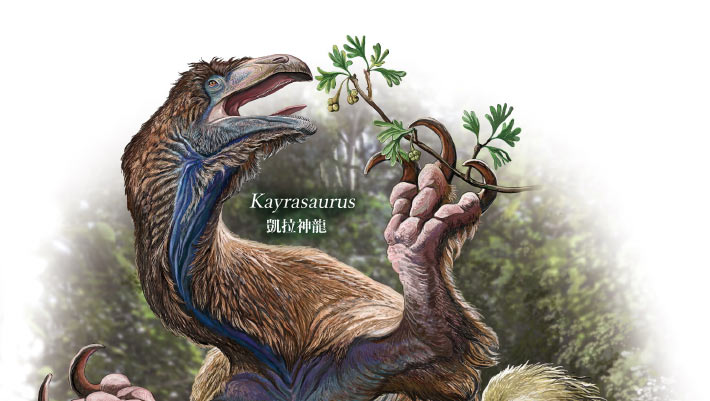
New Therizinosaurian Dinosaur Unearthed in China
China Dinosauria Kayrasaurus Therizinosauria new species skeleton
Paleontologists have described a new genus and species of therizinosaur based on a nearly complete skeleton found in northeastern China. The post New Therizinosaurian Dinosaur Unearthed in China appeared first on Sci.News: Breaking Science News.
21/09/2026 sci-news
Remarkable “Chunky” Jurassic Squid from Wyoming is Scientifically Described
Jurassic Oxfordian fossil formation new species skeleton
A remarkable new species of Jurassic squid-like animal has been described from Wyoming. The bizarre belemnite, named Wyoteuthis linsterorum, lived around 160 million years ago (Oxfordian faunal stage). Furthermore, it had an extraordinarily thick and barrel-shaped internal skeleton. An international research team studied two exceptionally rare fossils from the famous Sundance Formation. The scientists concluded
10/09/2026 everythingdinosaur
Fossil of Giant Squid-Like Creature from Cretaceous Period Bears Marks of Deadly Attack
Canada Cretaceous fossil skeleton
Paleontologists studying a fossil unearthed in southern Manitoba, Canada, have identified what they believe are two bite marks on the internal skeleton of the ancient giant cephalopod Enchoteuthis. The post Fossil of Giant Squid-Like Creature from Cretaceous Period Bears Marks of Deadly Attack appeared first on Sci.News: Breaking Science News.
01/09/2026 sci-news
Remarkable Triassic Marine Reptile Fossil Preserves Internal Organs
China Triassic fossil specimen anatomy skeleton
Scientists have described an exceptional fossil of the long-necked, Triassic marine reptile Austronaga minuta. The specimen comes from China and is around 245 million years old. Remarkably, much of the animal's digestive system has been preserved. The almost complete fossil provides scientists with an unprecedented view of the skeleton and internal anatomy of an archosauromorph.
26/08/2026 everythingdinosaur
1 2 3 4 5 6