←

skeleton

View type

162 image(s) · 26 News

Image gallery

Mounted skeleton of the highly derived California mosasaur Plotosaurus bennisoni (CIT 2750) on display at the Natural History Museum of Los Angeles County

Mounted skeleton of the highly derived California mosasaur Plotosaurus bennisoni (CIT 2750) on display at the Natural History Museum of Los Angeles County

museum Plotosaurus skeleton
Mounted skeleton of Plotosaurus from the Los Angeles County Natural History Museum; see the original image

Mounted skeleton of Plotosaurus from the Los Angeles County Natural History Museum; see the original image

museum United States Plotosaurus skeleton
Juvenile Gorgosaurus TMP 2009.12.14 preserving stomach contents. Photographs of specimen in (A) right lateral view and (B) left anterolateral view. (C) Interpretive illustration of specimen in right lateral view. Skeleton consists of a nearly complete skull, the left side of the body and limbs, and a nearly complete pelvis. Red rectangle delineates location of stomach contents. (D) Histological photomicrograph of tibia showing the presence of five lines of arrested growths and two annuli (marked by asterisks), indicating that the individual was between 5 and 7 years old. Scale bars, 50 cm (A) to (C) and 1 mm (D).

Juvenile Gorgosaurus TMP 2009.12.14 preserving stomach contents. Photographs of specimen in (A) right lateral view and (B) left anterolateral view. (C) Interpretive illustration of specimen in right lateral view. Skeleton consists of a nearly complete skull, the left side of the body and limbs, and a nearly complete pelvis. Red rectangle delineates location of stomach contents. (D) Histological photomicrograph of tibia showing the presence of five lines of arrested growths and two annuli (marked by asterisks), indicating that the individual was between 5 and 7 years old. Scale bars, 50 cm (A) to (C) and 1 mm (D).

limb pelvis scale growth +6
The Naturmuseum Senckenberg in Frankfurt is the second largest museum of natural history in Germany. It is particularly popular with children, who enjoy the extensive collection of dinosaur skeletons: Senckenberg boasts the largest exhibition of large dinosaurs in Europe. One particular treasure is a dinosaur fossil with unique, preserved scaled skin. The museum contains the world's largest and most diverse collection of stuffed birds with about 2000 specimens.

The Naturmuseum Senckenberg in Frankfurt is the second largest museum of natural history in Germany. It is particularly popular with children, who enjoy the extensive collection of dinosaur skeletons: Senckenberg boasts the largest exhibition of large dinosaurs in Europe. One particular treasure is a dinosaur fossil with unique, preserved scaled skin. The museum contains the world's largest and most diverse collection of stuffed birds with about 2000 specimens.

museum Germany fossil specimen +4
Anhanguera skeleton, North American Museum of Ancient Life.

Anhanguera skeleton, North American Museum of Ancient Life.

museum United States Anhanguera skeleton
Two Thescelosaurus skeletons, North American Museum of Ancient Life.

Two Thescelosaurus skeletons, North American Museum of Ancient Life.

museum United States Thescelosaurus skeleton
Shown is a drawing from Williston (1898) that shows the skeletons of three common species of mosasaurs from Kansas; Clidastes propython, Platecarpus tympaniticus and Tylosaurus proriger. Although these three species are shown about the same size in the drawing, in life, Clidastes was the smallest (about 12-15 feet); Platecarpus was the next largest (about 24 feet) and Tylosaurus was the largest (30 plus feet):

Shown is a drawing from Williston (1898) that shows the skeletons of three common species of mosasaurs from Kansas; Clidastes propython, Platecarpus tympaniticus and Tylosaurus proriger. Although these three species are shown about the same size in the drawing, in life, Clidastes was the smallest (about 12-15 feet); Platecarpus was the next largest (about 24 feet) and Tylosaurus was the largest (30 plus feet):

drawing Clidastes Platecarpus Tylosaurus +1
Unidentified Platecarpus sp. partial skeleton at the Natural History Museum in London, England.

Unidentified Platecarpus sp. partial skeleton at the Natural History Museum in London, England.

museum Platecarpus partial skeleton
Unidentified Platecarpus sp. partial skeleton at the Natural History Museum in London, England.

Unidentified Platecarpus sp. partial skeleton at the Natural History Museum in London, England.

museum Platecarpus partial skeleton
Ichthyosaur Skeleton, Platypterygius longmani, in The Museum and Art Gallery of the Northern Territory at Darwin.
Taxa Platypterygius

Ichthyosaur Skeleton, Platypterygius longmani, in The Museum and Art Gallery of the Northern Territory at Darwin.

museum Ichthyosauria Platypterygius skeleton
AMNH FR 192. A complete skeleton of Clidastes liodontus on display at the American Museum of Natural History.

AMNH FR 192. A complete skeleton of Clidastes liodontus on display at the American Museum of Natural History.

museum Clidastes skeleton
Euryapteryx gravis restored based on skeletons and preserved moa feathers.
Taxa Ageroolithus

Euryapteryx gravis restored based on skeletons and preserved moa feathers.

feather Ageroolithus skeleton
Title: The dinosaur book : the ruling reptiles and their relatives
Identifier: bookruli00colb (find matches)
Year: 1951 (1950s)
Authors: Colbert, Edwin H. (Edwin Harris), 1905-2001; Knight, Charles Robert, 1874-1953; American Museum of Natural History
Subjects: Dinosaurs; Reptiles, Fossil
Publisher: New York : Published for the American Museum of Natural History by McGraw-Hill
Contributing Library: American Museum of Natural History Library
Digitizing Sponsor: IMLS / LSTA / METRO

View Book Page: Book Viewer
About This Book: Catalog Entry
View All Images: All Images From Book
Click here to view book online to see this illustration in context in a browseable online version of this book.

Text Appearing Before Image: 
'
Text Appearing After Image: 
bone A typical example of the parts usually found fossilized: portions of the skeleton of a small dinosaur from Mongolia A.M.N.H. photographs One of the rarest fossils: a dino- saur egg over 60 million years old, compared with a hen's egg (left) and an alligator egg (right)

Note About Images

Please note that these images are extracted from scanned page images that may have been digitally enhanced for readability - coloration and appearance of these illustrations may not perfectly resemble the original work.
Taxa Oviraptor

Title: The dinosaur book : the ruling reptiles and their relatives Identifier: bookruli00colb (find matches) Year: 1951 (1950s) Authors: Colbert, Edwin H. (Edwin Harris), 1905-2001; Knight, Charles Robert, 1874-1953; American Museum of Natural History Subjects: Dinosaurs; Reptiles, Fossil Publisher: New York : Published for the American Museum of Natural History by McGraw-Hill Contributing Library: American Museum of Natural History Library Digitizing Sponsor: IMLS / LSTA / METRO View Book Page: Book Viewer About This Book: Catalog Entry View All Images: All Images From Book Click here to view book online to see this illustration in context in a browseable online version of this book. Text Appearing Before Image: ' Text Appearing After Image: bone A typical example of the parts usually found fossilized: portions of the skeleton of a small dinosaur from Mongolia A.M.N.H. photographs One of the rarest fossils: a dino- saur egg over 60 million years old, compared with a hen's egg (left) and an alligator egg (right) Note About Images Please note that these images are extracted from scanned page images that may have been digitally enhanced for readability - coloration and appearance of these illustrations may not perfectly resemble the original work.

bone book museum Mongolia +5
Title: The dinosaur book : the ruling reptiles and their relatives
Identifier: bookruli00colb (find matches)
Year: 1951 (1950s)
Authors: Colbert, Edwin H. (Edwin Harris), 1905-2001; Knight, Charles Robert, 1874-1953; American Museum of Natural History
Subjects: Dinosaurs; Reptiles, Fossil
Publisher: New York : Published for the American Museum of Natural History by McGraw-Hill
Contributing Library: American Museum of Natural History Library
Digitizing Sponsor: IMLS / LSTA / METRO

View Book Page: Book Viewer
About This Book: Catalog Entry
View All Images: All Images From Book
Click here to view book online to see this illustration in context in a browseable online version of this book.

Text Appearing Before Image: 
'
Text Appearing After Image: 
bone A typical example of the parts usually found fossilized: portions of the skeleton of a small dinosaur from Mongolia A.M.N.H. photographs One of the rarest fossils: a dino- saur egg over 60 million years old, compared with a hen's egg (left) and an alligator egg (right)

Note About Images

Please note that these images are extracted from scanned page images that may have been digitally enhanced for readability - coloration and appearance of these illustrations may not perfectly resemble the original work.
Taxa Fenestrosaurus

Title: The dinosaur book : the ruling reptiles and their relatives Identifier: bookruli00colb (find matches) Year: 1951 (1950s) Authors: Colbert, Edwin H. (Edwin Harris), 1905-2001; Knight, Charles Robert, 1874-1953; American Museum of Natural History Subjects: Dinosaurs; Reptiles, Fossil Publisher: New York : Published for the American Museum of Natural History by McGraw-Hill Contributing Library: American Museum of Natural History Library Digitizing Sponsor: IMLS / LSTA / METRO View Book Page: Book Viewer About This Book: Catalog Entry View All Images: All Images From Book Click here to view book online to see this illustration in context in a browseable online version of this book. Text Appearing Before Image: ' Text Appearing After Image: bone A typical example of the parts usually found fossilized: portions of the skeleton of a small dinosaur from Mongolia A.M.N.H. photographs One of the rarest fossils: a dino- saur egg over 60 million years old, compared with a hen's egg (left) and an alligator egg (right) Note About Images Please note that these images are extracted from scanned page images that may have been digitally enhanced for readability - coloration and appearance of these illustrations may not perfectly resemble the original work.

bone book museum Mongolia +5
Early Triassic marine vertebrate apex predators during the Griesbachian to Smithian interval (left) and the Spathian to Anisian interval (right). Predators not exactly to scale; see text and Tables S1–S2 for details on body size and stratigraphic occurrence. Marine vertebrate apex predators: 1, Wantzosaurus (trematosaurid ‘amphibian’); 2, Fadenia (eugeneodontiform chondrichthyan); 3, Saurichthys (actinopterygian ambush predator); 4, Rebellatrix (fork-tailed actinistian); 5, Hovasaurus (‘younginiform’ diapsid reptile); 6, Birgeria (fast-swimming predatory actinopterygian); 7, Aphaneramma (trematosaurid ‘amphibian’); 8, Bobasatrania (durophagous actinopterygian); 9, hybodontoid chondrichthyan with durophagous (e.g. Acrodus, Palaeobates) or tearing-type dentition (e.g. Hybodus); 10, e.g., Mylacanthus (durophagous actinistian); 11, Tanystropheus (protorosaurian reptile); 12, Corosaurus (sauropterygian reptile); 13, e.g., Ticinepomis (actinistian); 14, Mixosaurus (small ichthyosaur); 15, large cymbospondylid/shastasaurid ichthyosaur; 16, neoselachian chondrichthyan; 17, Omphalosaurus skeleton (possible durophagous ichthyosaur); 18, Placodus (durophagous sauropterygian reptile).
Taxa Corosaurus

Early Triassic marine vertebrate apex predators during the Griesbachian to Smithian interval (left) and the Spathian to Anisian interval (right). Predators not exactly to scale; see text and Tables S1–S2 for details on body size and stratigraphic occurrence. Marine vertebrate apex predators: 1, Wantzosaurus (trematosaurid ‘amphibian’); 2, Fadenia (eugeneodontiform chondrichthyan); 3, Saurichthys (actinopterygian ambush predator); 4, Rebellatrix (fork-tailed actinistian); 5, Hovasaurus (‘younginiform’ diapsid reptile); 6, Birgeria (fast-swimming predatory actinopterygian); 7, Aphaneramma (trematosaurid ‘amphibian’); 8, Bobasatrania (durophagous actinopterygian); 9, hybodontoid chondrichthyan with durophagous (e.g. Acrodus, Palaeobates) or tearing-type dentition (e.g. Hybodus); 10, e.g., Mylacanthus (durophagous actinistian); 11, Tanystropheus (protorosaurian reptile); 12, Corosaurus (sauropterygian reptile); 13, e.g., Ticinepomis (actinistian); 14, Mixosaurus (small ichthyosaur); 15, large cymbospondylid/shastasaurid ichthyosaur; 16, neoselachian chondrichthyan; 17, Omphalosaurus skeleton (possible durophagous ichthyosaur); 18, Placodus (durophagous sauropterygian reptile).

scale predator Anisian Early Triassic +10
Early Triassic marine vertebrate apex predators during the Griesbachian to Smithian interval (left) and the Spathian to Anisian interval (right). Predators not exactly to scale; see text and Tables S1–S2 for details on body size and stratigraphic occurrence. Marine vertebrate apex predators: 1, Wantzosaurus (trematosaurid ‘amphibian’); 2, Fadenia (eugeneodontiform chondrichthyan); 3, Saurichthys (actinopterygian ambush predator); 4, Rebellatrix (fork-tailed actinistian); 5, Hovasaurus (‘younginiform’ diapsid reptile); 6, Birgeria (fast-swimming predatory actinopterygian); 7, Aphaneramma (trematosaurid ‘amphibian’); 8, Bobasatrania (durophagous actinopterygian); 9, hybodontoid chondrichthyan with durophagous (e.g. Acrodus, Palaeobates) or tearing-type dentition (e.g. Hybodus); 10, e.g., Mylacanthus (durophagous actinistian); 11, Tanystropheus (protorosaurian reptile); 12, Corosaurus (sauropterygian reptile); 13, e.g., Ticinepomis (actinistian); 14, Mixosaurus (small ichthyosaur); 15, large cymbospondylid/shastasaurid ichthyosaur; 16, neoselachian chondrichthyan; 17, Omphalosaurus skeleton (possible durophagous ichthyosaur); 18, Placodus (durophagous sauropterygian reptile).
Taxa Corosauridae

Early Triassic marine vertebrate apex predators during the Griesbachian to Smithian interval (left) and the Spathian to Anisian interval (right). Predators not exactly to scale; see text and Tables S1–S2 for details on body size and stratigraphic occurrence. Marine vertebrate apex predators: 1, Wantzosaurus (trematosaurid ‘amphibian’); 2, Fadenia (eugeneodontiform chondrichthyan); 3, Saurichthys (actinopterygian ambush predator); 4, Rebellatrix (fork-tailed actinistian); 5, Hovasaurus (‘younginiform’ diapsid reptile); 6, Birgeria (fast-swimming predatory actinopterygian); 7, Aphaneramma (trematosaurid ‘amphibian’); 8, Bobasatrania (durophagous actinopterygian); 9, hybodontoid chondrichthyan with durophagous (e.g. Acrodus, Palaeobates) or tearing-type dentition (e.g. Hybodus); 10, e.g., Mylacanthus (durophagous actinistian); 11, Tanystropheus (protorosaurian reptile); 12, Corosaurus (sauropterygian reptile); 13, e.g., Ticinepomis (actinistian); 14, Mixosaurus (small ichthyosaur); 15, large cymbospondylid/shastasaurid ichthyosaur; 16, neoselachian chondrichthyan; 17, Omphalosaurus skeleton (possible durophagous ichthyosaur); 18, Placodus (durophagous sauropterygian reptile).

scale predator Anisian Early Triassic +10
1 2 3 4 5 6 7 8 9 10 11

News

A broken rib from the world’s largest T. rex hid a 66-million-year-old secret
bone metabolism pathology fossil Dinosauria Tyrannosaurus skeleton
A broken rib from Scotty, the largest known T. rex skeleton, contains an extraordinary fossilized network of blood vessels formed while the dinosaur was healing. Scientists used neutron and X-ray imaging to look inside the 66-million-year-old bone without damaging it, revealing details rarely preserved in fossils.
24/09/2026 sciencedaily
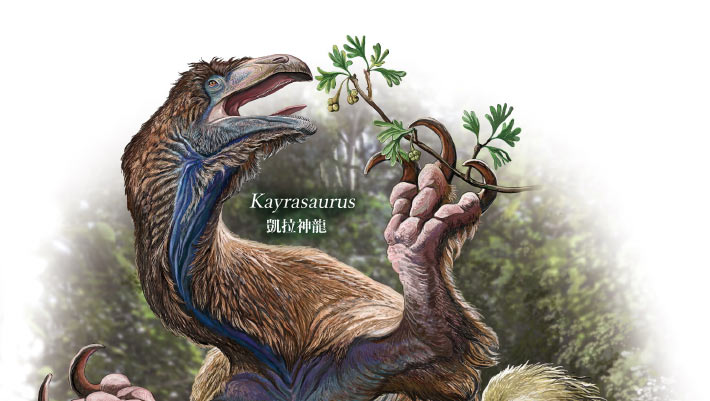
New Therizinosaurian Dinosaur Unearthed in China
China Dinosauria Kayrasaurus Therizinosauria new species skeleton
Paleontologists have described a new genus and species of therizinosaur based on a nearly complete skeleton found in northeastern China. The post New Therizinosaurian Dinosaur Unearthed in China appeared first on Sci.News: Breaking Science News.
21/09/2026 sci-news
Remarkable “Chunky” Jurassic Squid from Wyoming is Scientifically Described
Jurassic Oxfordian fossil formation new species skeleton
A remarkable new species of Jurassic squid-like animal has been described from Wyoming. The bizarre belemnite, named Wyoteuthis linsterorum, lived around 160 million years ago (Oxfordian faunal stage). Furthermore, it had an extraordinarily thick and barrel-shaped internal skeleton. An international research team studied two exceptionally rare fossils from the famous Sundance Formation. The scientists concluded
10/09/2026 everythingdinosaur
Fossil of Giant Squid-Like Creature from Cretaceous Period Bears Marks of Deadly Attack
Canada Cretaceous fossil skeleton
Paleontologists studying a fossil unearthed in southern Manitoba, Canada, have identified what they believe are two bite marks on the internal skeleton of the ancient giant cephalopod Enchoteuthis. The post Fossil of Giant Squid-Like Creature from Cretaceous Period Bears Marks of Deadly Attack appeared first on Sci.News: Breaking Science News.
01/09/2026 sci-news
Remarkable Triassic Marine Reptile Fossil Preserves Internal Organs
China Triassic fossil specimen anatomy skeleton
Scientists have described an exceptional fossil of the long-necked, Triassic marine reptile Austronaga minuta. The specimen comes from China and is around 245 million years old. Remarkably, much of the animal's digestive system has been preserved. The almost complete fossil provides scientists with an unprecedented view of the skeleton and internal anatomy of an archosauromorph.
26/08/2026 everythingdinosaur
1 2 3 4 5 6