squelette

Type de vue

202 image(s) · 20 Actualités

Galerie d'images

Skeleton of WGSC SPC V 1304 (juvenile Brevicaudosaurus jiyangshanensis). A, photograph of the specimen in dorsal view. B, interpretive drawing.
Taxons Brevicaudosaurus

Skeleton of WGSC SPC V 1304 (juvenile Brevicaudosaurus jiyangshanensis). A, photograph of the specimen in dorsal view. B, interpretive drawing.

dessin juvénile spécimen Brevicaudosaurus +1
Uncovered skeleton of
Brachauchenius sp. VL from
the late Barremian Formacio´n
Paja of Loma La Cabrera, Villa
de Leyva area, in dorsal view.
The far posterior part (ischia,
tail) and the right hind limb are

not preserved.
Taxons Stenorhynchosaurus

Uncovered skeleton of Brachauchenius sp. VL from the late Barremian Formacio´n Paja of Loma La Cabrera, Villa de Leyva area, in dorsal view. The far posterior part (ischia, tail) and the right hind limb are not preserved.

membre Barrémien Brachauchenius Stenorhynchosaurus +1
Figure 3 Sequence of caudal vertebrae of SHN.019. (1) Reconstitution of the skeleton of a Neovenator individual (copyright of the skeleton of Neovenator Scott Hartman, 2013) in which the estimated position of the tail section collected in Cambelas is marked; (2–4) sequence of seventeen partially articulated caudal vertebrae of SHN.019. Scale bar=1 m (1) or 100 mm (2).

Figure 3 Sequence of caudal vertebrae of SHN.019. (1) Reconstitution of the skeleton of a Neovenator individual (copyright of the skeleton of Neovenator Scott Hartman, 2013) in which the estimated position of the tail section collected in Cambelas is marked; (2–4) sequence of seventeen partially articulated caudal vertebrae of SHN.019. Scale bar=1 m (1) or 100 mm (2).

écaille reconstitution Lusovenator Neovenator +1
The "Big Mama" Citipati osmolskae skeleton (IGM 100/979) on display at the American Museum of Natural History.

The "Big Mama" Citipati osmolskae skeleton (IGM 100/979) on display at the American Museum of Natural History.

musée Citipati squelette
Falcarius skeleton reconstruction, Utah Museum of Natural History.

Falcarius skeleton reconstruction, Utah Museum of Natural History.

musée États-Unis Falcarius squelette
Restoration of the Segisaurus halli holotype skeleton

Restoration of the Segisaurus halli holotype skeleton

holotype Segisaurus squelette
Skeleton of Yamaceratops dorngobiensis (MPC-D 100/553) in right dorsolateral view. (A) Photograph; (B) Interpretive drawing. Bones are bounded by solid lines and colored beige; the matrix is gray. Shaded areas represent the broken surface of bones. Abbreviations: cd, caudal vertebrae; dr, dorsal ribs; dv, dorsal vertebrae; f, femur; fi, fibula; h, humerus; L, bone on the left side; p, isolated parietal; pp, pedal phalanges; R, bone on the right side; ra, radius; sk, skull; sv, sacral vertebrae; ti, tibia; u, ulna; il, ilium; is, ischium.

Skeleton of Yamaceratops dorngobiensis (MPC-D 100/553) in right dorsolateral view. (A) Photograph; (B) Interpretive drawing. Bones are bounded by solid lines and colored beige; the matrix is gray. Shaded areas represent the broken surface of bones. Abbreviations: cd, caudal vertebrae; dr, dorsal ribs; dv, dorsal vertebrae; f, femur; fi, fibula; h, humerus; L, bone on the left side; p, isolated parietal; pp, pedal phalanges; R, bone on the right side; ra, radius; sk, skull; sv, sacral vertebrae; ti, tibia; u, ulna; il, ilium; is, ischium.

os humérus dessin Yamaceratops +2
Photo: mounted skeleton of Qantassaurus intrepidus at the Australian Museum, Sydney.
Taxons Qantassaurus

Photo: mounted skeleton of Qantassaurus intrepidus at the Australian Museum, Sydney.

musée Qantassaurus squelette
Kunbarrasaurus ieversi (QM F18101; holotype) skeleton in dorsal view. Scale = 20 cm.

Kunbarrasaurus ieversi (QM F18101; holotype) skeleton in dorsal view. Scale = 20 cm.

écaille holotype Kunbarrasaurus squelette
Skeleton holotype Xingxiulong.

Skeleton holotype Xingxiulong.

holotype Xingxiulong squelette
historická budova Národního muzea v Praze - západní dvorana s proskleným stropem a kostrou dinosaura / historic building of the National Museum in Prague - West hall with glass ceiling and dinosaur skeleton
location: Prague, Czech Republic
author: Jan Helebrant
www.juhele.blogspot.com

license CC0 Public Domain Dedication

historická budova Národního muzea v Praze - západní dvorana s proskleným stropem a kostrou dinosaura / historic building of the National Museum in Prague - West hall with glass ceiling and dinosaur skeleton location: Prague, Czech Republic author: Jan Helebrant www.juhele.blogspot.com license CC0 Public Domain Dedication

musée Tchéquie Amargasaurus Dinosauria +1
Figure 1: Geographic provenance and speculative reconstruction of the gigantic titanosaurian sauropod dinosaur Notocolossus gonzalezparejasi gen. et sp. nov.
(a) Type locality of Notocolossus (indicated by star) in southern-most Mendoza Province, Argentina. (b) Reconstructed skeleton and body silhouette in right lateral view, with preserved elements of the holotype (UNCUYO-LD 301) in light green and those of the referred specimen (UNCUYO-LD 302) in orange. Scale bar, 1 m. (All images were hand drawn by the senior author [B.J.G.R.] and subsequently edited using Adobe Illustrator software.)

Figure 1: Geographic provenance and speculative reconstruction of the gigantic titanosaurian sauropod dinosaur Notocolossus gonzalezparejasi gen. et sp. nov. (a) Type locality of Notocolossus (indicated by star) in southern-most Mendoza Province, Argentina. (b) Reconstructed skeleton and body silhouette in right lateral view, with preserved elements of the holotype (UNCUYO-LD 301) in light green and those of the referred specimen (UNCUYO-LD 302) in orange. Scale bar, 1 m. (All images were hand drawn by the senior author [B.J.G.R.] and subsequently edited using Adobe Illustrator software.)

écaille Argentine holotype spécimen +4
Skeleton of Gondwanatitan faustoi (MN 4111-V), not to scale.(adapted from Kellner and Campos, 2000).

Skeleton of Gondwanatitan faustoi (MN 4111-V), not to scale.(adapted from Kellner and Campos, 2000).

écaille Gondwanatitan squelette
Cranial and postcranial sauropod remains from sediments of the Praia da Amoreira-Porto Novo Fm. of the coastal sector of Praia da Consolação-Lourinhã-Torres Vedras: 1-2, ?Turiasauria indet., heart-shaped tooth (SHN (JJS) 142, Praia da Corva) in lingual (1) and labial (2) views; 3-4, ?Macronaria indet., spatulate tooth (SHN 513, Porto Novo) in labial (3) and lingual (4) views; 5-6, Macronaria indet., compressed cone-chisel-shaped tooth (SHN 578, Valmitão) in lingual (5) and labial (6) views; 7-8, Eusauropoda indet., partial left maxilla (SHN 582, Praia dos Frades) in lateral (7) and posterior (8) views; 9, Titanosauriformes indet., posterior caudal vertebra (SHN 523, Praia da Corva) in right view; 10-12, Diplodocinae indet., partial skeleton (SHN (JJS) 177, Valmitão), anterior caudal neural spine in posterior view (10), anterior caudal centrum in right view (11) and left ischium in medial view (12); 13-16, holotype material of Zby atlanticus (ML 368, Vale de Pombas), right ungueal I in lateral view (13), right humerus in anterior view (14), right radius in posterior view (15), right ulna in lateral view (16); 17, Eusauropoda indet., partial distal forked-chevron (SHN 587, Praia da Corva) in medial view; 18, Sauropoda indet., pedal ungueal I (SHN 524, Praia de Pedrogãos) in lateral view; 19-22, Macronarian indet., partial skeleton (SHN 181, Valmitão), right astragalus in proximal view (19), anterior caudal vertebra in anterior view (20), right tibia in lateral view (21) and right fibula in medial view (22); 23-24, Eusauropoda indet., partial skeleton (SHN 530, Praia da Corva), anterior chevron in anterior view (23) and anterior caudal vertebra in posterior view (24); 25, cf. Duriatitan humerocristatus, humerus (MG 4976, Praia dos Frades) in anterior view; 26, Sauropoda indet., partial skeleton (SHN 534, Santa Rita), middle chevron in posterior view; 27, Diplodocidae indet., partial skeleton (SHN (JJS) 179, Praia Vermelha), dorsal/caudal (?) neural spine in posterior view; 28-30, holotype material of Dinheirosaurus lourinhanensis (ML 414, Porto Dinheiro), proximal end of a dorsal rib in anterior view (28), anterior caudal neural spine in posterior view (29) and articulated dorsal vertebrae in right view (30). Black scale bar: 10 cm; Grey scale bar: 5 cm; Brown scale bar: 1 cm. See Anatomical abbreviations for abbreviations.

Cranial and postcranial sauropod remains from sediments of the Praia da Amoreira-Porto Novo Fm. of the coastal sector of Praia da Consolação-Lourinhã-Torres Vedras: 1-2, ?Turiasauria indet., heart-shaped tooth (SHN (JJS) 142, Praia da Corva) in lingual (1) and labial (2) views; 3-4, ?Macronaria indet., spatulate tooth (SHN 513, Porto Novo) in labial (3) and lingual (4) views; 5-6, Macronaria indet., compressed cone-chisel-shaped tooth (SHN 578, Valmitão) in lingual (5) and labial (6) views; 7-8, Eusauropoda indet., partial left maxilla (SHN 582, Praia dos Frades) in lateral (7) and posterior (8) views; 9, Titanosauriformes indet., posterior caudal vertebra (SHN 523, Praia da Corva) in right view; 10-12, Diplodocinae indet., partial skeleton (SHN (JJS) 177, Valmitão), anterior caudal neural spine in posterior view (10), anterior caudal centrum in right view (11) and left ischium in medial view (12); 13-16, holotype material of Zby atlanticus (ML 368, Vale de Pombas), right ungueal I in lateral view (13), right humerus in anterior view (14), right radius in posterior view (15), right ulna in lateral view (16); 17, Eusauropoda indet., partial distal forked-chevron (SHN 587, Praia da Corva) in medial view; 18, Sauropoda indet., pedal ungueal I (SHN 524, Praia de Pedrogãos) in lateral view; 19-22, Macronarian indet., partial skeleton (SHN 181, Valmitão), right astragalus in proximal view (19), anterior caudal vertebra in anterior view (20), right tibia in lateral view (21) and right fibula in medial view (22); 23-24, Eusauropoda indet., partial skeleton (SHN 530, Praia da Corva), anterior chevron in anterior view (23) and anterior caudal vertebra in posterior view (24); 25, cf. Duriatitan humerocristatus, humerus (MG 4976, Praia dos Frades) in anterior view; 26, Sauropoda indet., partial skeleton (SHN 534, Santa Rita), middle chevron in posterior view; 27, Diplodocidae indet., partial skeleton (SHN (JJS) 179, Praia Vermelha), dorsal/caudal (?) neural spine in posterior view; 28-30, holotype material of Dinheirosaurus lourinhanensis (ML 414, Porto Dinheiro), proximal end of a dorsal rib in anterior view (28), anterior caudal neural spine in posterior view (29) and articulated dorsal vertebrae in right view (30). Black scale bar: 10 cm; Grey scale bar: 5 cm; Brown scale bar: 1 cm. See Anatomical abbreviations for abbreviations.

dent vertèbre Lourinhã holotype +7
Angolasaurus bocagei partial skeleton (MGUAN-PA 065) on display at the Smithsonian's National Museum of Natural History.
Taxons Angolasaurus

Angolasaurus bocagei partial skeleton (MGUAN-PA 065) on display at the Smithsonian's National Museum of Natural History.

musée Angolasaurus partiel squelette
Holotype skeleton of Jianchangnathus robustus on display at the Paleozoological Museum of China.

Holotype skeleton of Jianchangnathus robustus on display at the Paleozoological Museum of China.

musée Chine holotype Jianchangnathus +1
1 2 3 4 5 6 7 8 9 10 11 12 13

Actualités

Une « plante grimpante des sables » géante vieille de 240 millions d’années découverte cachée dans un mur de soutènement
dent prédateur Australie fossile découverte squelette
Un fossile oublié caché dans un mur de jardin s’est avéré être l’une des découvertes préhistoriques les plus remarquables d’Australie. Les scientifiques ont maintenant identifié l'amphibien Arenaerpeton supinatus, vieux de 240 millions d'années, révélant un squelette presque parfaitement conservé, avec de rares traces de peau. Cet ancien prédateur de rivière, mesurant environ 1,2 mètre de long, ressemblait un peu à une salamandre géante, mais il était plus volumineux et armé de redoutables dents en forme de crocs.
06/05/2026 sciencedaily ⚙ Traduction automatique
Early Sauropodomorph Dinosaur Unearthed in China
Un dinosaure sauropodomorphe découvert en Chine
Chine Jurassique inférieur Jurassique Dinosauria Massopoda nouvelle espèce partiel squelette
Un nouveau genre et une nouvelle espèce de sauropodomorphe massopodan qui vivaient au début du Jurassique ont été identifiés à partir d'un squelette partiel découvert dans le sud-ouest de la Chine. L'article Les premiers dinosaures sauropodomorphes découverts en Chine est apparu en premier sur Sci.News : Breaking Science News.
04/05/2026 sci-news ⚙ Traduction automatique
Ce « crocodile terroriste » de 31 pieds mangeait des dinosaures. Maintenant c'est de retour
prédateur musée États-Unis Dinosauria squelette
Un énorme « crocodile terroriste » de la taille d’un bus qui s’attaquait autrefois aux dinosaures a été ramené à la vie avec des détails époustouflants grâce au premier squelette complet scientifiquement précis de Deinosuchus schwimmeri. S'étendant sur plus de 9 mètres de long, cet ancien prédateur suprême régnait sur le sud-est des États-Unis il y a plus de 75 millions d'années. Les visiteurs peuvent désormais le voir de près au Tellus Science Museum, le seul endroit au monde à posséder cette réplique.
15/04/2026 sciencedaily ⚙ Traduction automatique
Ce dinosaure de 2 livres réécrit ce que les scientifiques savent de l'évolution
fossile Alnashetri Alvarezsauria Dinosauria oiseau évolution squelette
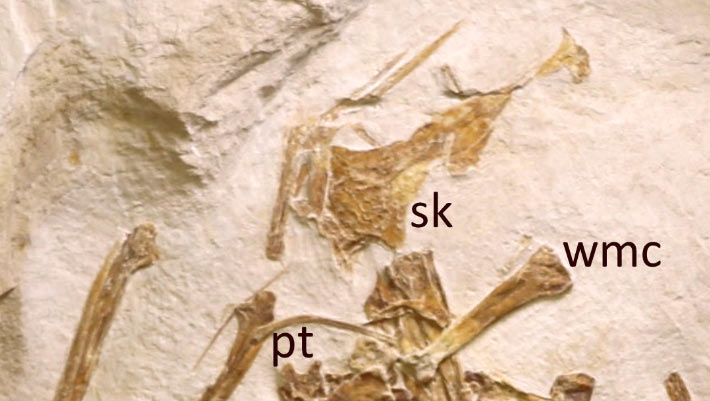
Un squelette de dinosaure presque complet découvert en Patagonie aide les scientifiques à percer le mystère des alvarezsaures, un groupe étrange de dinosaures ressemblant à des oiseaux. Le fossile d'Alnashetri cerropoliciensis révèle que ces animaux sont devenus minuscules avant de développer leurs caractéristiques spécialisées ultérieures, telles que des bras tronqués et des adaptations mangeuses de fourmis. Pesant moins de deux livres, le dinosaure est l’un des plus petits connus d’Amérique du Sud.
10/03/2026 sciencedaily ⚙ Traduction automatique
Un fossile de « Sword Dragon » vieux de 190 millions d’années réécrit l’histoire des ichtyosaures
Royaume-Uni Jurassique fossile Ichthyosauria évolution squelette
Un ichtyosaure nouvellement identifié de la côte jurassique du Royaume-Uni est en train de réécrire une partie du manuel préhistorique. Surnommé le « dragon-épée du Dorset », ce reptile marin de trois mètres de long a vécu pendant une période d’évolution mal comprise, au cours de laquelle les principaux groupes d’ichtyosaures disparaissaient et de nouveaux apparaissaient. Son squelette magnifiquement préservé – doté d’un museau en forme de lame et d’un éventuel dernier repas – permet de déterminer le moment où cette transition dramatique s’est produite.
24/02/2026 sciencedaily ⚙ Traduction automatique
1 2 3 4