←

squelette

Type de vue

162 image(s) · 26 Actualités

Galerie d'images

Plateosaurus engelhardti skeletons "Skelett 2" on exhibit at the museum of the Institute for Geosciences of the Eberhard-Karls-University Tübingen, Germany. "Skelett 2" is a composite from 2 individuals from Trossingen, Germany. Mounts created under the direction of Friedrich von Huene.
Taxons Plateosaurus

Plateosaurus engelhardti skeletons "Skelett 2" on exhibit at the museum of the Institute for Geosciences of the Eberhard-Karls-University Tübingen, Germany. "Skelett 2" is a composite from 2 individuals from Trossingen, Germany. Mounts created under the direction of Friedrich von Huene.

musée Allemagne Plateosauria squelette
Protoceratops andrewsi skeleton at Carnegie Museum of Natural History.
Taxons Protoceratops

Protoceratops andrewsi skeleton at Carnegie Museum of Natural History.

musée Pologne Protoceratops squelette
Reconstructed skeleton of Argentinonectes calafatensis at the Bernardino Rivadavia Natural Sciences Argentine Museum in 2018.
Taxons Argentinonectes

Reconstructed skeleton of Argentinonectes calafatensis at the Bernardino Rivadavia Natural Sciences Argentine Museum in 2018.

musée Argentine Argentinonectes squelette
Ornithischian dinosaur Stenopelix valdensis Meyer, 1857, holotype (GZG 741/2, formerly GPI Gö 741−2), from the Obernkirchen Sandstone (Early
Cretaceous: Berriasian), near Bückeburg, Niedersachsen, Germany. A. Large sandstone slab. B. Interpretative outline drawing of large latex cast (prepared
from large sandstone slab), showing majority of postcranial skeleton in dorsal view. C. Small sandstone slab. D. Interpretative outline drawing of small la−
tex cast (prepared from small sandstone slab), showing sacrum and caudals, pelvic region and partial hindlimbs in ventral view. For clarity elements in and
around the sacral region have not been labelled—these areas are shown in greater detail in Fig. 3. Roman numerals II–IV correspond to respective digits.

Abbreviations: mt, metatarsals; f, femur; ?, unidentified element.
Taxons Stenopelix

Ornithischian dinosaur Stenopelix valdensis Meyer, 1857, holotype (GZG 741/2, formerly GPI Gö 741−2), from the Obernkirchen Sandstone (Early Cretaceous: Berriasian), near Bückeburg, Niedersachsen, Germany. A. Large sandstone slab. B. Interpretative outline drawing of large latex cast (prepared from large sandstone slab), showing majority of postcranial skeleton in dorsal view. C. Small sandstone slab. D. Interpretative outline drawing of small la− tex cast (prepared from small sandstone slab), showing sacrum and caudals, pelvic region and partial hindlimbs in ventral view. For clarity elements in and around the sacral region have not been labelled—these areas are shown in greater detail in Fig. 3. Roman numerals II–IV correspond to respective digits. Abbreviations: mt, metatarsals; f, femur; ?, unidentified element.

dessin Allemagne Berriasien Crétacé +8
Diagnostic skeletal elements of the type specimen of Franconiasaurus brevispinus gen. et sp. nov. (BT 011224.00). (A) main slab showing partly articulated skeleton in dorsal view. Posterior part of right mandibular ramus in (B) lateral and (C) dorsal aspect; anterior cervical vertebra (D) in articular and (E) lateral view; (F) posterior cervical vertebra in lateral view; (G) cervical rib in dorsolateral view; (H) dorsal vertebra in posterior view; (I) left scapula in medial view; (J) right coracoid in supposed dorsal view; (K) left humerus in dorsal view; (L) left femur with adjacent epipodials in dorsal view; and (M) left ilium in lateral view.
Taxons Franconiasaurus

Diagnostic skeletal elements of the type specimen of Franconiasaurus brevispinus gen. et sp. nov. (BT 011224.00). (A) main slab showing partly articulated skeleton in dorsal view. Posterior part of right mandibular ramus in (B) lateral and (C) dorsal aspect; anterior cervical vertebra (D) in articular and (E) lateral view; (F) posterior cervical vertebra in lateral view; (G) cervical rib in dorsolateral view; (H) dorsal vertebra in posterior view; (I) left scapula in medial view; (J) right coracoid in supposed dorsal view; (K) left humerus in dorsal view; (L) left femur with adjacent epipodials in dorsal view; and (M) left ilium in lateral view.

humérus vertèbre spécimen Franconiasaurus +1
Incomplete skeleton of Camptosaurus prestwichii, now referred to as Cumnoria, Oxford University Museum of Natural History.
Taxons Cumnoria

Incomplete skeleton of Camptosaurus prestwichii, now referred to as Cumnoria, Oxford University Museum of Natural History.

musée Camptosaurus Cumnoria squelette
Yueosaurus tiantaiensis, reconstructed skeletons, Zhejiang Geological Museum
Taxons Yueosaurus

Yueosaurus tiantaiensis, reconstructed skeletons, Zhejiang Geological Museum

musée Yueosaurus squelette
Schematic drawing of MUPA-ATZ0103, postcranial skeleton of the paratype of Paludidraco multidentatus.
Taxons Paludidraco

Schematic drawing of MUPA-ATZ0103, postcranial skeleton of the paratype of Paludidraco multidentatus.

dessin Paludidraco squelette
The incomplete skeleton of Cetiosauriscus stewarti (BMNH R3078) mounted prior to display in around
1903. Photographed in the BMNH, and reproduced courtesy of the Leeds family, with layout by J. J. Liston. Note

the similarity of this photograph to the drawing of the skeleton in Woodward (1905); previously figured in Anon. (1924) and Naish & Martill (2008).[1][2]
Taxons Cetiosauriscus

The incomplete skeleton of Cetiosauriscus stewarti (BMNH R3078) mounted prior to display in around 1903. Photographed in the BMNH, and reproduced courtesy of the Leeds family, with layout by J. J. Liston. Note the similarity of this photograph to the drawing of the skeleton in Woodward (1905); previously figured in Anon. (1924) and Naish & Martill (2008).[1][2]

dessin Cetiosauriscus squelette
A–B, skull in dorsal view; C–E, postcranial skeleton; in left dorsolateral (C) and left lateral (D–E) views. In line drawings (B, E) dark grey tone indicates damage and light grey tone indicates the palate. Abbreviations: ca, caudal vertebra [number following indicates order in preserved series]; ce, cervical vertebra; d, dorsal vertebra; depr, depression; ecto, ectopterygoid; epip, epipterygoid; exp, expanded neural spine apex; fr, frontal; jug, jugal; l., left [followed by name of element]; mx, maxilla; p, ‘pectoral’ vertebra; par, parietal; pmx, premaxilla; po, postorbital; pofr, postfrontal; prfr, prefrontal; qua, quadrate; r., right [followed by name of element]; s, sacral vertebra; sq, squamosal; unexp, unexpanded neural spine apex. Scale bars equal 50 mm (A–B), 20 mm (C), and 200 mm (D–E).
Taxons Avalonnectes

A–B, skull in dorsal view; C–E, postcranial skeleton; in left dorsolateral (C) and left lateral (D–E) views. In line drawings (B, E) dark grey tone indicates damage and light grey tone indicates the palate. Abbreviations: ca, caudal vertebra [number following indicates order in preserved series]; ce, cervical vertebra; d, dorsal vertebra; depr, depression; ecto, ectopterygoid; epip, epipterygoid; exp, expanded neural spine apex; fr, frontal; jug, jugal; l., left [followed by name of element]; mx, maxilla; p, ‘pectoral’ vertebra; par, parietal; pmx, premaxilla; po, postorbital; pofr, postfrontal; prfr, prefrontal; qua, quadrate; r., right [followed by name of element]; s, sacral vertebra; sq, squamosal; unexp, unexpanded neural spine apex. Scale bars equal 50 mm (A–B), 20 mm (C), and 200 mm (D–E).

écaille vertèbre dessin Avalonnectes +2
Fossil skeleton of Gargoyleosaurus parkpinorum taken in 2007 at the Denver Museum of Nature and Science.
Taxons Gargoyleosaurus

Fossil skeleton of Gargoyleosaurus parkpinorum taken in 2007 at the Denver Museum of Nature and Science.

musée Denver fossile Gargoyleosaurus +1
Hypnovenator matsubaraetoheorum gen. et sp. nov. Blocks including the forelimb, knee (A), and heel (B). (C) Reconstructed skeleton. Red and yellow colors show the confirmed and probable positions of the recovered elements, respectively (Courtesy of Genya Masukawa). (D) Left manus in medial view. (E) Left manual phalanx I-1 in dorsal view. (F) Removed fragmentary left manual phalanx II-3 (manual ungual phalanx II) for preparing the left manus. (G) Cross-section of the bent right ankle. (H) Left metatarsus in posterior view. Abbreviations: as, astragalus; dp, depression; fe, femur; fi, fibula; hu, humerus; mc I, metacarpal I; mc II, metacarpal II; mc III, metacarpal III; mp I-1, manual phalanx I-1; mp I-2, manual phalanx I-2 (manual ungual phalanx I); mp II-1, manual phalanx II-1; mp II-3, manual phalanx II-3 (manual ungual phalanx II); mp III-3, manual phalanx III-3; mp III-4, manual phalanx III-4 (manual ungual phalanx III); mr, medial ridge; mt II, metatarsal II; mt III, metatarsal III; mt IV, metatarsal IV; mt V, metatarsal V; ra, radius; ti, tibia; ul, ulna. Almost all elements are from the left side. Abbreviations for elements from the right side added ‘(r)’ at the end. This figure was created using Adobe Photoshop 25.5.1 and Adobe Illustrator 28.3 (https://www.adobe.com/).
Taxons Hypnovenator

Hypnovenator matsubaraetoheorum gen. et sp. nov. Blocks including the forelimb, knee (A), and heel (B). (C) Reconstructed skeleton. Red and yellow colors show the confirmed and probable positions of the recovered elements, respectively (Courtesy of Genya Masukawa). (D) Left manus in medial view. (E) Left manual phalanx I-1 in dorsal view. (F) Removed fragmentary left manual phalanx II-3 (manual ungual phalanx II) for preparing the left manus. (G) Cross-section of the bent right ankle. (H) Left metatarsus in posterior view. Abbreviations: as, astragalus; dp, depression; fe, femur; fi, fibula; hu, humerus; mc I, metacarpal I; mc II, metacarpal II; mc III, metacarpal III; mp I-1, manual phalanx I-1; mp I-2, manual phalanx I-2 (manual ungual phalanx I); mp II-1, manual phalanx II-1; mp II-3, manual phalanx II-3 (manual ungual phalanx II); mp III-3, manual phalanx III-3; mp III-4, manual phalanx III-4 (manual ungual phalanx III); mr, medial ridge; mt II, metatarsal II; mt III, metatarsal III; mt IV, metatarsal IV; mt V, metatarsal V; ra, radius; ti, tibia; ul, ulna. Almost all elements are from the left side. Abbreviations for elements from the right side added ‘(r)’ at the end. This figure was created using Adobe Photoshop 25.5.1 and Adobe Illustrator 28.3 (https://www.adobe.com/).

humérus Hypnovenator squelette
Partial skeleton of the heterodontosaurid Tianyulong confuciusi from the Lower Cretaceous Jehol Group of China. Partial skeleton mainly in right lateral view (IVPP V17090). Enlargements of subsequent figures are shown in red. Scale bar equals 10 cm.
Taxons Tianyulong

Partial skeleton of the heterodontosaurid Tianyulong confuciusi from the Lower Cretaceous Jehol Group of China. Partial skeleton mainly in right lateral view (IVPP V17090). Enlargements of subsequent figures are shown in red. Scale bar equals 10 cm.

écaille Chine Crétacé Heterodontosauridae +3
Reconstructed Thalassodromeus sethi skeleton (the postcranium is hypothetical) with Anhanguera behind, National Museum of Nature and Science, Tokyo.
Taxons Thalassodromeus

Reconstructed Thalassodromeus sethi skeleton (the postcranium is hypothetical) with Anhanguera behind, National Museum of Nature and Science, Tokyo.

musée Anhanguera Thalassodromeus squelette
Eustreptospondylus skeleton
Taxons Eustreptospondylus

Eustreptospondylus skeleton

Eustreptospondylus squelette
A photograph of the skeleton of Jianchangosaurus yixianensis gen. et sp. nov. (41HIII-0308A) (A) and line drawing (B).

Abbreviations: at, atlas; ax, axis; cav, caudal vertebra; cv, cervical vertebra; co, coracoid; dc, distal carpal; dv, dorsal vertebra; l., left; f, femur; fi, fibula; fur, furcula; hu, humerus; il, ilium; is, ischium; pu, pubis; ra, radius; sc, scapula; ti, tibia; ul, ulna; mc, metacarpal; mt, metatarsal; mxf, maxillary fenestra; pat, proatlas; r., right; sr, sacral rib; sv, sacral vertebra; ung, ungual. All elements of the skeleton are preserved except the distal half of the caudal vertebrae. Dashed lines of metatarsals indicate areas that have been reconstructed. The middle portion of the neck, from the fourth to ninth cervical vertebrae, and the pedal phalanges have been repositioned. The rest of elements of this specimen are in the original position.
Taxons Jianchangosaurus

A photograph of the skeleton of Jianchangosaurus yixianensis gen. et sp. nov. (41HIII-0308A) (A) and line drawing (B). Abbreviations: at, atlas; ax, axis; cav, caudal vertebra; cv, cervical vertebra; co, coracoid; dc, distal carpal; dv, dorsal vertebra; l., left; f, femur; fi, fibula; fur, furcula; hu, humerus; il, ilium; is, ischium; pu, pubis; ra, radius; sc, scapula; ti, tibia; ul, ulna; mc, metacarpal; mt, metatarsal; mxf, maxillary fenestra; pat, proatlas; r., right; sr, sacral rib; sv, sacral vertebra; ung, ungual. All elements of the skeleton are preserved except the distal half of the caudal vertebrae. Dashed lines of metatarsals indicate areas that have been reconstructed. The middle portion of the neck, from the fourth to ninth cervical vertebrae, and the pedal phalanges have been repositioned. The rest of elements of this specimen are in the original position.

humérus vertèbre dessin spécimen +2
1 2 3 4 5 6 7 8 9 10 11

Actualités

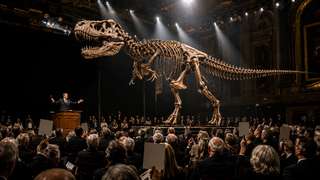
Il devient le dinosaure le plus cher du monde en 10 minutes : voici l’incroyable histoire de Gus
musée Dinosauria Tyrannosaurus squelette
Il a traversé 67 millions d’années enfoui dans le sol avant de faire trembler une salle des ventes. Le squelette de Tyrannosaurus rex surnommé "Gus" a été adjugé 50,13 millions de dollars chez Sotheby’s, à New York. Un record absolu pour un dinosaure, qui ravive le débat sur la privatisation des...
15/07/2026 futura-terre
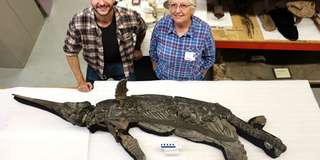
Voici le mystérieux dragon marin qui pourrait résoudre une énigme vieille de presque 200 millions d'années
Royaume-Uni Xiphodracon squelette
Un squelette de trois mètres dormait dans la craie du Dorset depuis 150 millions d'années. Des fouilleurs amateurs l'ont sorti de l'obscurité en 2001, mais il a fallu attendre plus de vingt ans pour que la science lui donne enfin un nom. Ce dragon marin bouleverse ce que l'on croyait savoir sur...
21/06/2026 futura-terre
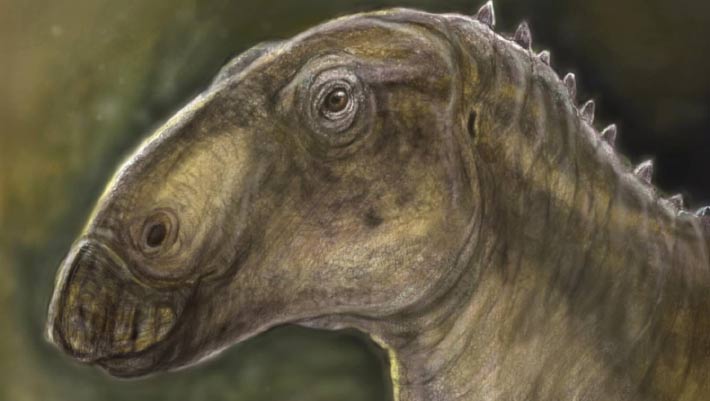
New Duck-Billed Dinosaur Unearthed in Romania
Un nouveau dinosaure à bec de canard découvert en Roumanie
bassin Hongrie Italie Roumanie Royaume-Uni Maastrichtien Dinosauria Kryptohadros nouvelle espèce squelette
Une équipe internationale de paléontologues de Roumanie, de Hongrie et d'Italie a identifié un nouveau genre et une nouvelle espèce de dinosaure herbivore à bec de canard à partir d'un squelette incomplet découvert dans le bassin de Hațeg, une dépression en forme de bol dans les Carpates de l'actuelle Roumanie. L'article Un nouveau dinosaure à bec de canard découvert en Roumanie est apparu en premier sur Sci.News : Breaking Science News.
16/06/2026 sci-news ⚙ Traduction automatique
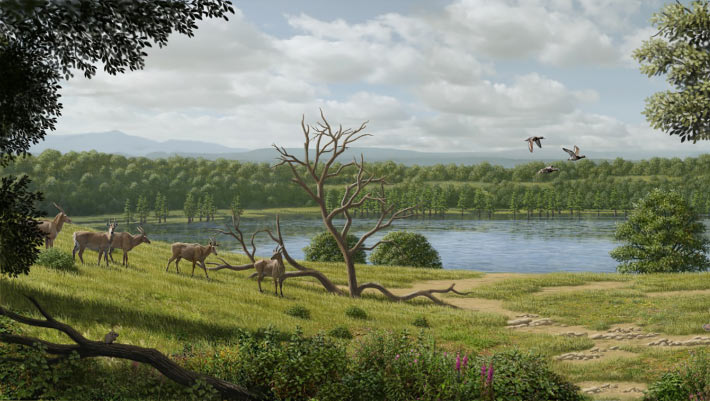
Half-Ton Cattle Relatives Roamed Europe 4 Million Years Ago
Des parents de bétail d'une demi-tonne parcouraient l'Europe il y a 4 millions d'années
Espagne Pliocène mammifères squelette
Des squelettes de bovins presque complets découverts sur le site du Pliocène inférieur de Camp dels Ninots, dans le nord-est de l'Espagne, révèlent que les ancêtres des buffles et des bovins d'aujourd'hui atteignaient déjà des tailles impressionnantes bien avant l'arrivée des humains sur le continent. L'article Des parents de bétail d'une demi-tonne parcouraient l'Europe il y a 4 millions d'années sont apparus en premier sur Sci.News : Breaking Science News.
05/06/2026 sci-news ⚙ Traduction automatique
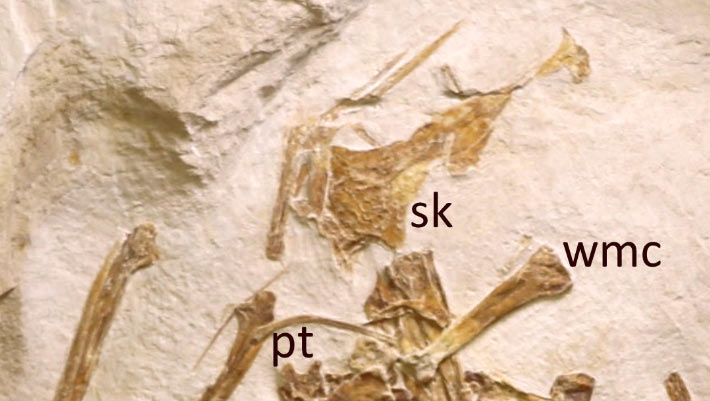
New Jurassic Pterosaur Unearthed in Germany
Un nouveau ptérosaure du Jurassique découvert en Allemagne
Allemagne Jurassique fossile Monofenestrata Pterosauria nouvelle espèce squelette
Les paléontologues ont décrit un nouveau genre et une nouvelle espèce de ptérosaure monofenestratan précoce sur la base d'un squelette fossile presque complet et bien conservé découvert en Bavière, en Allemagne. L'article Un nouveau ptérosaure jurassique découvert en Allemagne est apparu en premier sur Sci.News : Breaking Science News.
19/05/2026 sci-news ⚙ Traduction automatique
1 2 3 4 5 6