←

squelette

Type de vue

162 image(s) · 26 Actualités

Galerie d'images

Collage of four ceratopsids, clockwise from top left: Titanoceratops, Styracosaurus, Triceratops and Utahceratops. These files are already on Commons with their respective licenses. This montage was made for the article Ceratopsidae on Wikipedia.
File:Titanoceratops.jpg
File:Torosaurus, is it? (20752673005).jpg
File:Triceratops Skeleton Senckenberg.jpg
File:Utahceratops gettyi 1 salt lake city.jpg
Taxons Pachyrhinosauridae

Collage of four ceratopsids, clockwise from top left: Titanoceratops, Styracosaurus, Triceratops and Utahceratops. These files are already on Commons with their respective licenses. This montage was made for the article Ceratopsidae on Wikipedia. File:Titanoceratops.jpg File:Torosaurus, is it? (20752673005).jpg File:Triceratops Skeleton Senckenberg.jpg File:Utahceratops gettyi 1 salt lake city.jpg

Ceratopsidae Pachyrhinosauridae Styracosaurus Titanoceratops +4
Plesioplatecarpus planifrons mounted skeleton in the Rocky Mountain Dinosaur Resource Center in Woodland Park, Colorado
Taxons Mosasauridae

Plesioplatecarpus planifrons mounted skeleton in the Rocky Mountain Dinosaur Resource Center in Woodland Park, Colorado

Dinosauria Mosasauridae Plesioplatecarpus Plioplatecarpini +2
Plesioplatecarpus planifrons mounted skeleton in the Rocky Mountain Dinosaur Resource Center in Woodland Park, Colorado
Taxons Russellosaurina

Plesioplatecarpus planifrons mounted skeleton in the Rocky Mountain Dinosaur Resource Center in Woodland Park, Colorado

Dinosauria Mosasauridae Plesioplatecarpus Plioplatecarpini +2
Entire skeleton of Jidapterus edentus (RCPS-030366CY) preserved in a slab mostly in right lateral view.

Abbreviations: aa, the atlas-axis complex; bo, basioccipital; br, braincase; cve, cervical vertebrae; cv3, the third cervical vertebra; cv8, the eighth cervical vertebra; ds, dentaries; dv, dorsal vertebra; dve, dorsal vertebrae; ep, epiphysis; j, jugal; lc, left carpus; lf, left femur; li, left ilium; lis, left ischium; lm, left manual digits; lp, left pubis; lpe, left pes; lpt, left pteroid; lr, left radius; lsc, left scapula-coracoid; lt, left tibia; lta, left tarsus; lu, left ulna; lwmc, left wing metacarpal; lwp1–4; left wing phalanges 1–4; p, pterygoid; pp, postacetabular process of the right ilium; q, quadrate; rc, right carpus; rh, right humerus; rf, right femur; rfi, right fibula; ribs, ribs; ris, right ischium; rm, right manual digits; rmcI, right metacarpal I; rp, right pubis; rpe, right pes; rpt, right pteroid; rr, right radius; rsc, right scapula-coracoid; rt, right tibia; ru, right ulna; rwmc, right wing metacarpal; rwp1–4, right wing phalanges 1–4; rostrum, rostrum; st, sternum; sv, sacral vertebra; sve, sacral vertebrae. Gray shaded areas bound by solid lines indicate preserved bones, dashed lines indicate bones with margins discerned by impression, and lack of lines indicate missing bone or displacement along cracks in the slab.
Taxons Jidapterus

Entire skeleton of Jidapterus edentus (RCPS-030366CY) preserved in a slab mostly in right lateral view. Abbreviations: aa, the atlas-axis complex; bo, basioccipital; br, braincase; cve, cervical vertebrae; cv3, the third cervical vertebra; cv8, the eighth cervical vertebra; ds, dentaries; dv, dorsal vertebra; dve, dorsal vertebrae; ep, epiphysis; j, jugal; lc, left carpus; lf, left femur; li, left ilium; lis, left ischium; lm, left manual digits; lp, left pubis; lpe, left pes; lpt, left pteroid; lr, left radius; lsc, left scapula-coracoid; lt, left tibia; lta, left tarsus; lu, left ulna; lwmc, left wing metacarpal; lwp1–4; left wing phalanges 1–4; p, pterygoid; pp, postacetabular process of the right ilium; q, quadrate; rc, right carpus; rh, right humerus; rf, right femur; rfi, right fibula; ribs, ribs; ris, right ischium; rm, right manual digits; rmcI, right metacarpal I; rp, right pubis; rpe, right pes; rpt, right pteroid; rr, right radius; rsc, right scapula-coracoid; rt, right tibia; ru, right ulna; rwmc, right wing metacarpal; rwp1–4, right wing phalanges 1–4; rostrum, rostrum; st, sternum; sv, sacral vertebra; sve, sacral vertebrae. Gray shaded areas bound by solid lines indicate preserved bones, dashed lines indicate bones with margins discerned by impression, and lack of lines indicate missing bone or displacement along cracks in the slab.

os humérus vertèbre Chaoyangopteridae +3
Entire skeleton of Jidapterus edentus (RCPS-030366CY) preserved in a slab mostly in right lateral view.

Abbreviations: aa, the atlas-axis complex; bo, basioccipital; br, braincase; cve, cervical vertebrae; cv3, the third cervical vertebra; cv8, the eighth cervical vertebra; ds, dentaries; dv, dorsal vertebra; dve, dorsal vertebrae; ep, epiphysis; j, jugal; lc, left carpus; lf, left femur; li, left ilium; lis, left ischium; lm, left manual digits; lp, left pubis; lpe, left pes; lpt, left pteroid; lr, left radius; lsc, left scapula-coracoid; lt, left tibia; lta, left tarsus; lu, left ulna; lwmc, left wing metacarpal; lwp1–4; left wing phalanges 1–4; p, pterygoid; pp, postacetabular process of the right ilium; q, quadrate; rc, right carpus; rh, right humerus; rf, right femur; rfi, right fibula; ribs, ribs; ris, right ischium; rm, right manual digits; rmcI, right metacarpal I; rp, right pubis; rpe, right pes; rpt, right pteroid; rr, right radius; rsc, right scapula-coracoid; rt, right tibia; ru, right ulna; rwmc, right wing metacarpal; rwp1–4, right wing phalanges 1–4; rostrum, rostrum; st, sternum; sv, sacral vertebra; sve, sacral vertebrae. Gray shaded areas bound by solid lines indicate preserved bones, dashed lines indicate bones with margins discerned by impression, and lack of lines indicate missing bone or displacement along cracks in the slab.
Taxons Chaoyangopteridae

Entire skeleton of Jidapterus edentus (RCPS-030366CY) preserved in a slab mostly in right lateral view. Abbreviations: aa, the atlas-axis complex; bo, basioccipital; br, braincase; cve, cervical vertebrae; cv3, the third cervical vertebra; cv8, the eighth cervical vertebra; ds, dentaries; dv, dorsal vertebra; dve, dorsal vertebrae; ep, epiphysis; j, jugal; lc, left carpus; lf, left femur; li, left ilium; lis, left ischium; lm, left manual digits; lp, left pubis; lpe, left pes; lpt, left pteroid; lr, left radius; lsc, left scapula-coracoid; lt, left tibia; lta, left tarsus; lu, left ulna; lwmc, left wing metacarpal; lwp1–4; left wing phalanges 1–4; p, pterygoid; pp, postacetabular process of the right ilium; q, quadrate; rc, right carpus; rh, right humerus; rf, right femur; rfi, right fibula; ribs, ribs; ris, right ischium; rm, right manual digits; rmcI, right metacarpal I; rp, right pubis; rpe, right pes; rpt, right pteroid; rr, right radius; rsc, right scapula-coracoid; rt, right tibia; ru, right ulna; rwmc, right wing metacarpal; rwp1–4, right wing phalanges 1–4; rostrum, rostrum; st, sternum; sv, sacral vertebra; sve, sacral vertebrae. Gray shaded areas bound by solid lines indicate preserved bones, dashed lines indicate bones with margins discerned by impression, and lack of lines indicate missing bone or displacement along cracks in the slab.

os humérus vertèbre Chaoyangopteridae +3
Entire skeleton of Jidapterus edentus (RCPS-030366CY) preserved in a slab mostly in right lateral view.

Abbreviations: aa, the atlas-axis complex; bo, basioccipital; br, braincase; cve, cervical vertebrae; cv3, the third cervical vertebra; cv8, the eighth cervical vertebra; ds, dentaries; dv, dorsal vertebra; dve, dorsal vertebrae; ep, epiphysis; j, jugal; lc, left carpus; lf, left femur; li, left ilium; lis, left ischium; lm, left manual digits; lp, left pubis; lpe, left pes; lpt, left pteroid; lr, left radius; lsc, left scapula-coracoid; lt, left tibia; lta, left tarsus; lu, left ulna; lwmc, left wing metacarpal; lwp1–4; left wing phalanges 1–4; p, pterygoid; pp, postacetabular process of the right ilium; q, quadrate; rc, right carpus; rh, right humerus; rf, right femur; rfi, right fibula; ribs, ribs; ris, right ischium; rm, right manual digits; rmcI, right metacarpal I; rp, right pubis; rpe, right pes; rpt, right pteroid; rr, right radius; rsc, right scapula-coracoid; rt, right tibia; ru, right ulna; rwmc, right wing metacarpal; rwp1–4, right wing phalanges 1–4; rostrum, rostrum; st, sternum; sv, sacral vertebra; sve, sacral vertebrae. Gray shaded areas bound by solid lines indicate preserved bones, dashed lines indicate bones with margins discerned by impression, and lack of lines indicate missing bone or displacement along cracks in the slab.
Taxons Chaoyangopterinae

Entire skeleton of Jidapterus edentus (RCPS-030366CY) preserved in a slab mostly in right lateral view. Abbreviations: aa, the atlas-axis complex; bo, basioccipital; br, braincase; cve, cervical vertebrae; cv3, the third cervical vertebra; cv8, the eighth cervical vertebra; ds, dentaries; dv, dorsal vertebra; dve, dorsal vertebrae; ep, epiphysis; j, jugal; lc, left carpus; lf, left femur; li, left ilium; lis, left ischium; lm, left manual digits; lp, left pubis; lpe, left pes; lpt, left pteroid; lr, left radius; lsc, left scapula-coracoid; lt, left tibia; lta, left tarsus; lu, left ulna; lwmc, left wing metacarpal; lwp1–4; left wing phalanges 1–4; p, pterygoid; pp, postacetabular process of the right ilium; q, quadrate; rc, right carpus; rh, right humerus; rf, right femur; rfi, right fibula; ribs, ribs; ris, right ischium; rm, right manual digits; rmcI, right metacarpal I; rp, right pubis; rpe, right pes; rpt, right pteroid; rr, right radius; rsc, right scapula-coracoid; rt, right tibia; ru, right ulna; rwmc, right wing metacarpal; rwp1–4, right wing phalanges 1–4; rostrum, rostrum; st, sternum; sv, sacral vertebra; sve, sacral vertebrae. Gray shaded areas bound by solid lines indicate preserved bones, dashed lines indicate bones with margins discerned by impression, and lack of lines indicate missing bone or displacement along cracks in the slab.

os humérus vertèbre Chaoyangopteridae +3
Reconstructed skeleton of Zuul

Reconstructed skeleton of Zuul

Zuul squelette
Herbivorous dinosaur found in the Al-khoudh area.  This dinosaur is similar to the Zalmoxes and Rhabdodon dinosaurs.  The skeleton in the Bait Al Baranda Museum was assembled from bones borrowed from several museums.

Herbivorous dinosaur found in the Al-khoudh area. This dinosaur is similar to the Zalmoxes and Rhabdodon dinosaurs. The skeleton in the Bait Al Baranda Museum was assembled from bones borrowed from several museums.

os musée Dinosauria Mochlodon +3
Rates of skeletal character evolution in the skull and postcranial skeleton of hadrosauroids. Cladograms illustrate the results from branch likelihood tests for two morphological partitions: skull (cranium and mandible) (A) and postcranial skeleton (B). In both cladograms, results from the branch likelihood tests are summarized on a strict consensus tree derived from four separately analyzed MPTs, each with 100 dating replicates (a total of 400 Hedman-dated phylogenies). Pie charts on branches illustrate the proportion of dating replicates that showed significantly high rates (red), slow rates (blue), or nonsignificant average rates (white). No pie charts are plotted on branches that showed nonsignificant rates in 100% of dating replicates. Branches that showed high rates (red) in more than 50% of dating replicates are doubled in length. See the Supplementary Material for Hedman-based results plotted separately for each MPT (Supplementary Fig. S2) and for results using the MBL dating method (Supplementary Fig. S3). Silhouettes were created by Scott Hartman and were downloaded from http://phylopic.org (Creative Commons license CC BY 3.0).

Rates of skeletal character evolution in the skull and postcranial skeleton of hadrosauroids. Cladograms illustrate the results from branch likelihood tests for two morphological partitions: skull (cranium and mandible) (A) and postcranial skeleton (B). In both cladograms, results from the branch likelihood tests are summarized on a strict consensus tree derived from four separately analyzed MPTs, each with 100 dating replicates (a total of 400 Hedman-dated phylogenies). Pie charts on branches illustrate the proportion of dating replicates that showed significantly high rates (red), slow rates (blue), or nonsignificant average rates (white). No pie charts are plotted on branches that showed nonsignificant rates in 100% of dating replicates. Branches that showed high rates (red) in more than 50% of dating replicates are doubled in length. See the Supplementary Material for Hedman-based results plotted separately for each MPT (Supplementary Fig. S2) and for results using the MBL dating method (Supplementary Fig. S3). Silhouettes were created by Scott Hartman and were downloaded from http://phylopic.org (Creative Commons license CC BY 3.0).

Protohadros datation évolution squelette +1
Life restoration of the German Jurassic ichthyosaur Suevoleviathan disinteger. The dorsal and caudal fins are loosely based on those of Stenopterygius.
References
Maisch, M.W. (2020). "The best-preserved skeleton of Suevoleviathan integer (Bronn, 1844)(Reptilia: Ichthyosauria) from the lower Jurassic of south-western Germany, with a discussion of the genus". Neues Jahrbuch für Geologie und Paläontologie, Abhandlungen 297 (2): 153–172.
Maisch, M.W. (1998). "A new ichthyosaur genus from the Posidonia Shale (Lower Toarcian, Jurassic) of Holzmaden, SW-Germany with comments on the phylogeny of post-Triassic ichthyosaurs". Neues Jahrbuch für Geologie und Paläontologie-Abhandlungen 209 (1): 47–78.
Taxons Suevoleviathan

Life restoration of the German Jurassic ichthyosaur Suevoleviathan disinteger. The dorsal and caudal fins are loosely based on those of Stenopterygius. References Maisch, M.W. (2020). "The best-preserved skeleton of Suevoleviathan integer (Bronn, 1844)(Reptilia: Ichthyosauria) from the lower Jurassic of south-western Germany, with a discussion of the genus". Neues Jahrbuch für Geologie und Paläontologie, Abhandlungen 297 (2): 153–172. Maisch, M.W. (1998). "A new ichthyosaur genus from the Posidonia Shale (Lower Toarcian, Jurassic) of Holzmaden, SW-Germany with comments on the phylogeny of post-Triassic ichthyosaurs". Neues Jahrbuch für Geologie und Paläontologie-Abhandlungen 209 (1): 47–78.

Allemagne Posidonia Shale Jurassique Toarcien +6
Skeleton of Tuarangisaurus at the Museo Argentino de Ciencias Naturales Bernardino Rivadavia

Skeleton of Tuarangisaurus at the Museo Argentino de Ciencias Naturales Bernardino Rivadavia

Tuarangisaurus squelette
Tuarangisaurus cabazai skeleton restoration, Copenhagen
Taxons Tuarangisaurus

Tuarangisaurus cabazai skeleton restoration, Copenhagen

Tuarangisaurus squelette
MRF 319, a partial oviraptorosaurian skeleton referred to Anzu wyliei. 
(A) Skeletal reconstruction in left lateral view, with preserved bones in gray and bones represented in other Anzu specimens in white (hatching indicates heavily reconstructed portions of the ilia of CM 78001). Middle-posterior (ninth?) cervical vertebra in (B) anterior, (C) left lateral, and (D) dorsal views. Posterior (11th?) cervical vertebra in (E) anterior, (F) left lateral, and (G) dorsal views. Posterior (12th?) cervical vertebra in (H) anterior, (I) left lateral, and (J) dorsal views. Anteroposteriorly crushed left radius in lateral (K) and anterior (L) views. Mediolaterally crushed left ulna in lateral (M) and anterior (N) views. (O) Partial left scapulocoracoid in lateral view. Dorsal rib in anterior (P) and posterior (Q) views. Abbreviations: acr, acromial process; cr, cervical rib; dip, distal processes; pat, pathology; pf, pneumatic fossa. Scale bars = 50 cm in A; 1 cm in B–Q.

MRF 319, a partial oviraptorosaurian skeleton referred to Anzu wyliei. (A) Skeletal reconstruction in left lateral view, with preserved bones in gray and bones represented in other Anzu specimens in white (hatching indicates heavily reconstructed portions of the ilia of CM 78001). Middle-posterior (ninth?) cervical vertebra in (B) anterior, (C) left lateral, and (D) dorsal views. Posterior (11th?) cervical vertebra in (E) anterior, (F) left lateral, and (G) dorsal views. Posterior (12th?) cervical vertebra in (H) anterior, (I) left lateral, and (J) dorsal views. Anteroposteriorly crushed left radius in lateral (K) and anterior (L) views. Mediolaterally crushed left ulna in lateral (M) and anterior (N) views. (O) Partial left scapulocoracoid in lateral view. Dorsal rib in anterior (P) and posterior (Q) views. Abbreviations: acr, acromial process; cr, cervical rib; dip, distal processes; pat, pathology; pf, pneumatic fossa. Scale bars = 50 cm in A; 1 cm in B–Q.

os écaille vertèbre pathologie +5
MRF 319, a partial oviraptorosaurian skeleton referred to Anzu wyliei. Skeletal reconstruction in left lateral view, with preserved bones in gray and bones represented in other Anzu specimens in white (hatching indicates heavily reconstructed portions of the ilia. Scale bar = 50 cm (19.7 in)

MRF 319, a partial oviraptorosaurian skeleton referred to Anzu wyliei. Skeletal reconstruction in left lateral view, with preserved bones in gray and bones represented in other Anzu specimens in white (hatching indicates heavily reconstructed portions of the ilia. Scale bar = 50 cm (19.7 in)

os écaille spécimen Anzu +3
Restored skeleton of Anzu wyliei (previously labelled as a specimen of Chirostenotes)

Restored skeleton of Anzu wyliei (previously labelled as a specimen of Chirostenotes)

États-Unis spécimen Anzu Chirostenotes +1
Restored skeleton of Anzu wyliei (previously labelled as a specimen of Chirostenotes)

Restored skeleton of Anzu wyliei (previously labelled as a specimen of Chirostenotes)

États-Unis spécimen Anzu Chirostenotes +1
1 2 3 4 5 6 7 8 9 10 11

Actualités

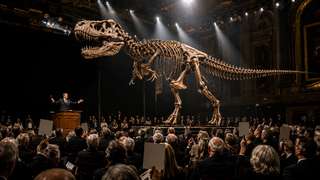
Il devient le dinosaure le plus cher du monde en 10 minutes : voici l’incroyable histoire de Gus
musée Dinosauria Tyrannosaurus squelette
Il a traversé 67 millions d’années enfoui dans le sol avant de faire trembler une salle des ventes. Le squelette de Tyrannosaurus rex surnommé "Gus" a été adjugé 50,13 millions de dollars chez Sotheby’s, à New York. Un record absolu pour un dinosaure, qui ravive le débat sur la privatisation des...
15/07/2026 futura-terre
Voici le mystérieux dragon marin qui pourrait résoudre une énigme vieille de presque 200 millions d'années
Royaume-Uni Xiphodracon squelette
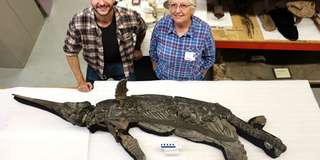
Un squelette de trois mètres dormait dans la craie du Dorset depuis 150 millions d'années. Des fouilleurs amateurs l'ont sorti de l'obscurité en 2001, mais il a fallu attendre plus de vingt ans pour que la science lui donne enfin un nom. Ce dragon marin bouleverse ce que l'on croyait savoir sur...
21/06/2026 futura-terre
New Duck-Billed Dinosaur Unearthed in Romania
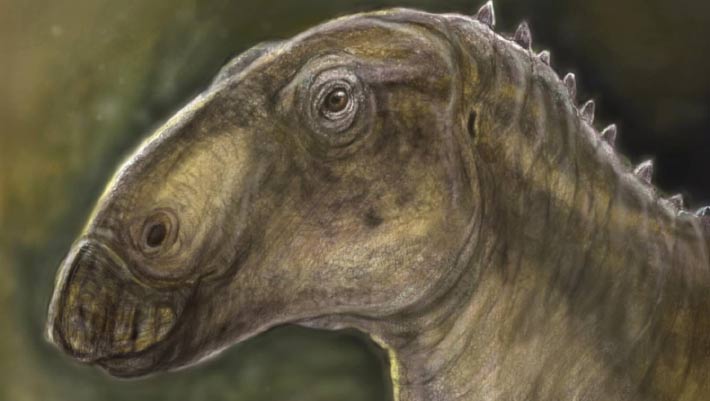
Un nouveau dinosaure à bec de canard découvert en Roumanie
bassin Hongrie Italie Roumanie Royaume-Uni Maastrichtien Dinosauria Kryptohadros nouvelle espèce squelette
Une équipe internationale de paléontologues de Roumanie, de Hongrie et d'Italie a identifié un nouveau genre et une nouvelle espèce de dinosaure herbivore à bec de canard à partir d'un squelette incomplet découvert dans le bassin de Hațeg, une dépression en forme de bol dans les Carpates de l'actuelle Roumanie. L'article Un nouveau dinosaure à bec de canard découvert en Roumanie est apparu en premier sur Sci.News : Breaking Science News.
16/06/2026 sci-news ⚙ Traduction automatique
Half-Ton Cattle Relatives Roamed Europe 4 Million Years Ago
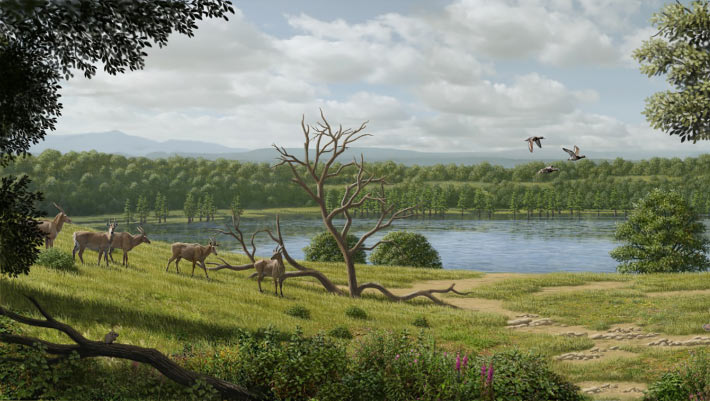
Des parents de bétail d'une demi-tonne parcouraient l'Europe il y a 4 millions d'années
Espagne Pliocène mammifères squelette
Des squelettes de bovins presque complets découverts sur le site du Pliocène inférieur de Camp dels Ninots, dans le nord-est de l'Espagne, révèlent que les ancêtres des buffles et des bovins d'aujourd'hui atteignaient déjà des tailles impressionnantes bien avant l'arrivée des humains sur le continent. L'article Des parents de bétail d'une demi-tonne parcouraient l'Europe il y a 4 millions d'années sont apparus en premier sur Sci.News : Breaking Science News.
05/06/2026 sci-news ⚙ Traduction automatique
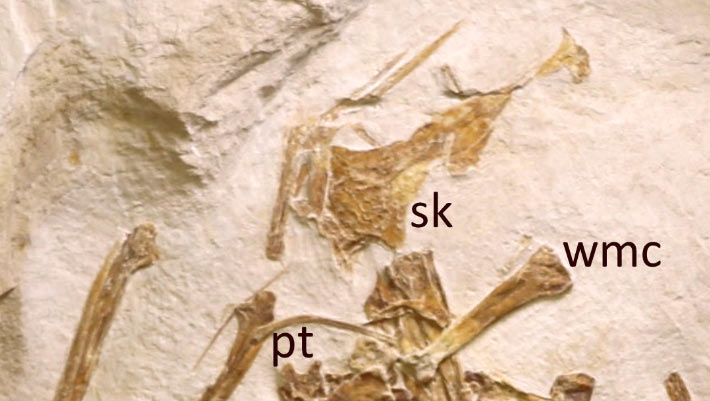
New Jurassic Pterosaur Unearthed in Germany
Un nouveau ptérosaure du Jurassique découvert en Allemagne
Allemagne Jurassique fossile Monofenestrata Pterosauria nouvelle espèce squelette
Les paléontologues ont décrit un nouveau genre et une nouvelle espèce de ptérosaure monofenestratan précoce sur la base d'un squelette fossile presque complet et bien conservé découvert en Bavière, en Allemagne. L'article Un nouveau ptérosaure jurassique découvert en Allemagne est apparu en premier sur Sci.News : Breaking Science News.
19/05/2026 sci-news ⚙ Traduction automatique
1 2 3 4 5 6