←

squelette

Type de vue

162 image(s) · 26 Actualités

Galerie d'images

Shri rapax 3D skeletal reconstruction by Alex Pritchard of Dinosaur Skeletons.
Taxons Shri

Shri rapax 3D skeletal reconstruction by Alex Pritchard of Dinosaur Skeletons.

Dinosauria Shri squelette
Photo: mounted skeleton of Qantassaurus intrepidus at the Australian Museum, Sydney.
Taxons Qantassaurus

Photo: mounted skeleton of Qantassaurus intrepidus at the Australian Museum, Sydney.

musée Qantassaurus squelette
Uncovered skeleton of
Brachauchenius sp. VL from
the late Barremian Formacio´n
Paja of Loma La Cabrera, Villa
de Leyva area, in dorsal view.
The far posterior part (ischia,
tail) and the right hind limb are

not preserved.
Taxons Stenorhynchosaurus

Uncovered skeleton of Brachauchenius sp. VL from the late Barremian Formacio´n Paja of Loma La Cabrera, Villa de Leyva area, in dorsal view. The far posterior part (ischia, tail) and the right hind limb are not preserved.

membre Barrémien Brachauchenius Stenorhynchosaurus +1
Life restoration of the Triassic ichthyosaur Callawayia neoscapularis. Three specimens of this ichthyosaur are known, the holotype, ROM 41993, and two referred specimens, TMP 94.380.11 and 94.382.2. The skull is primarily based on ROM 41993, cross-checked against TMP 94.380.11 and TMP 94.382.2. The vertebral column is based primarily on TMP 94.382.2 as it is the most complete of these specimens, while the ribs were based on ROM 41993. The forelimbs were mainly based on those of ROM 41993, with TMP 94.380.11 used to determine their breadth. The hindlimbs were based on TMP 94.380.11, especially the more complete right hindlimb.
ROM 41993 was cross-scaled with TMP 94.380.11 by the dimensions of the forelimb epipodials, which produced similar vertebral dimensions. The two TMP specimens were cross-scaled based on femoral length, also producing similar vertebral dimensions. Nicholls & Manabe (2001) stated that no wedge-shaped caudal centra supporting a tailbend were found and that there was no evidence of a bend being present, though considered that they might have existed in the gap in the preserved caudals. Since various other Triassic ichthyosaurs have since been found to have tail bends, one was illustrated here. A modest downturn of roughly 15° was illustrated, comparable to that in Guanlingsaurus, and the location of the bend within the gap in the preserved vertebrae matches well with the location of the bend in Guizhouichthyosaurus.

References
McGowan, C. (1994). "A new species of Shastasaurus (Reptilia: Ichthyosauria) from the Triassic of British Columbia: The most complete exemplar of the genus". Journal of Vertebrate Paleontology 14 (2): 168–179. DOI:10.1080/02724634.1994.10011550.
Nicholls, E. L.; Manabe, M. (2001). "A new genus of ichthyosaur from the Late Triassic Pardonet Formation of British Columbia: Bridging the Triassic-Jurassic gap". Canadian Journal of Earth Sciences 38 (6): 983–1002.
Ji, C.; Jiang, D.Y.; Hao, W.; Sun, Y. (2011). "True tailbend occurred in the Late Triassic: Evidence from ichthyosaur skeletons of South China". Acta Scientiarum Naturalium Universitatis Pekinensis 47 (2): 309–314.
Shang, Q. H.; Li, C. (2009). "On the occurrence of the ichthyosaur Shastasaurus in the Guanling biota (Late Triassic), Guizhou, China". Vertebrata PalAsiatica 47 (3): 178–193.
Taxons Guanlingsaurus

Life restoration of the Triassic ichthyosaur Callawayia neoscapularis. Three specimens of this ichthyosaur are known, the holotype, ROM 41993, and two referred specimens, TMP 94.380.11 and 94.382.2. The skull is primarily based on ROM 41993, cross-checked against TMP 94.380.11 and TMP 94.382.2. The vertebral column is based primarily on TMP 94.382.2 as it is the most complete of these specimens, while the ribs were based on ROM 41993. The forelimbs were mainly based on those of ROM 41993, with TMP 94.380.11 used to determine their breadth. The hindlimbs were based on TMP 94.380.11, especially the more complete right hindlimb. ROM 41993 was cross-scaled with TMP 94.380.11 by the dimensions of the forelimb epipodials, which produced similar vertebral dimensions. The two TMP specimens were cross-scaled based on femoral length, also producing similar vertebral dimensions. Nicholls & Manabe (2001) stated that no wedge-shaped caudal centra supporting a tailbend were found and that there was no evidence of a bend being present, though considered that they might have existed in the gap in the preserved caudals. Since various other Triassic ichthyosaurs have since been found to have tail bends, one was illustrated here. A modest downturn of roughly 15° was illustrated, comparable to that in Guanlingsaurus, and the location of the bend within the gap in the preserved vertebrae matches well with the location of the bend in Guizhouichthyosaurus. References McGowan, C. (1994). "A new species of Shastasaurus (Reptilia: Ichthyosauria) from the Triassic of British Columbia: The most complete exemplar of the genus". Journal of Vertebrate Paleontology 14 (2): 168–179. DOI:10.1080/02724634.1994.10011550. Nicholls, E. L.; Manabe, M. (2001). "A new genus of ichthyosaur from the Late Triassic Pardonet Formation of British Columbia: Bridging the Triassic-Jurassic gap". Canadian Journal of Earth Sciences 38 (6): 983–1002. Ji, C.; Jiang, D.Y.; Hao, W.; Sun, Y. (2011). "True tailbend occurred in the Late Triassic: Evidence from ichthyosaur skeletons of South China". Acta Scientiarum Naturalium Universitatis Pekinensis 47 (2): 309–314. Shang, Q. H.; Li, C. (2009). "On the occurrence of the ichthyosaur Shastasaurus in the Guanling biota (Late Triassic), Guizhou, China". Vertebrata PalAsiatica 47 (3): 178–193.

Chine Jurassique Trias supérieur Trias +12
The holotype of Dianmeisaurus mutaensis (HFUT MT-21-08-001). (A) the skeleton in dorsal view; (B) the counterpart of (A) (natural mold). Scale bars equal 1 cm.
Taxons Dianmeisaurus

The holotype of Dianmeisaurus mutaensis (HFUT MT-21-08-001). (A) the skeleton in dorsal view; (B) the counterpart of (A) (natural mold). Scale bars equal 1 cm.

écaille holotype Dianmeisaurus squelette
Skeleton of WGSC SPC V 1304 (juvenile Brevicaudosaurus jiyangshanensis). A, photograph of the specimen in dorsal view. B, interpretive drawing.
Taxons Brevicaudosaurus

Skeleton of WGSC SPC V 1304 (juvenile Brevicaudosaurus jiyangshanensis). A, photograph of the specimen in dorsal view. B, interpretive drawing.

dessin juvénile spécimen Brevicaudosaurus +1
Neotype skeleton of Massospondylus carinatus (BP/1/4934) in left lateral (A) and right lateral (B) views. Scale bars = 50 mm.
Taxons Massospondylus

Neotype skeleton of Massospondylus carinatus (BP/1/4934) in left lateral (A) and right lateral (B) views. Scale bars = 50 mm.

écaille Massospondylus squelette
Reconstructed skeleton of Tenontosaurus, from the Cloverly Formation.
Taxons Tenontosaurus

Reconstructed skeleton of Tenontosaurus, from the Cloverly Formation.

Cloverly Tenontosaurus formation squelette
Mounted skeleton of Stegosaurus stenops (specimen NHMUK PV R36730, "Sophie"/"Sarah") in right lateral view at the Natural History Museum, London.
Taxons Stegosaurus

Mounted skeleton of Stegosaurus stenops (specimen NHMUK PV R36730, "Sophie"/"Sarah") in right lateral view at the Natural History Museum, London.

musée spécimen Stegosauria squelette
Mounted skeleton (cast) of Majungasaurus crenatissimus, Stony Brook University.
Taxons Abelisauridae

Mounted skeleton (cast) of Majungasaurus crenatissimus, Stony Brook University.

moulage Abelisauridae Majungasaurini Majungasaurus +1
Mounted skeleton (cast) of Majungasaurus crenatissimus, Stony Brook University.
Taxons Majungasaurus

Mounted skeleton (cast) of Majungasaurus crenatissimus, Stony Brook University.

moulage Abelisauridae Majungasaurini Majungasaurus +1
Triceratops skeleton at the Smithsonian museum of Natural History
Taxons Marginocephalia

Triceratops skeleton at the Smithsonian museum of Natural History

musée Marginocephalia Triceratops squelette
Duck-billed dinosaurs at the Royal Ontario Museum. A Maiasaura skeleton is visible on the foreground, with two Maiasaura juveniles at the foot of the skeletal mount. On the background, flushing with the wall, there's the two-dimensional mount of a Gryposaurus specimen. The unidentified skull of another duck-billed dinosaur is visible on the low right corner of the photograph.
Taxons Hadrosauridae

Duck-billed dinosaurs at the Royal Ontario Museum. A Maiasaura skeleton is visible on the foreground, with two Maiasaura juveniles at the foot of the skeletal mount. On the background, flushing with the wall, there's the two-dimensional mount of a Gryposaurus specimen. The unidentified skull of another duck-billed dinosaur is visible on the low right corner of the photograph.

musée juvénile spécimen Dinosauria +5
Duck-billed dinosaurs at the Royal Ontario Museum. A Maiasaura skeleton is visible on the foreground, with two Maiasaura juveniles at the foot of the skeletal mount. On the background, flushing with the wall, there's the two-dimensional mount of a Gryposaurus specimen. The unidentified skull of another duck-billed dinosaur is visible on the low right corner of the photograph.
Taxons Hadrosauridae

Duck-billed dinosaurs at the Royal Ontario Museum. A Maiasaura skeleton is visible on the foreground, with two Maiasaura juveniles at the foot of the skeletal mount. On the background, flushing with the wall, there's the two-dimensional mount of a Gryposaurus specimen. The unidentified skull of another duck-billed dinosaur is visible on the low right corner of the photograph.

musée juvénile spécimen Dinosauria +5
Restoration of the spinosaurid dinosaur Siamosaurus in the Sao Khua Formation palaeoenvironment, with Sunosuchus in the middle left and a herd of Phuwiangosaurus in the background.
References:
Siamosaurus based on tooth specimens [1] and the neural spine of a possibly referable skeleton[2], with other missing elements filled in with relatives (Suchomimus[3], Baryonyx[4], IchthyovenatorFile:Ichthyovenator_laosensis_skeletal_reconstruction_by_PaleoGeek.png).
Phuwiangosaurus based on skeletal by Suteethorn et al. (2009)[5] and missing elements of skull of EuhelopusFile:Euhelopus.png.

Sunosuchus based on Suteethorn and Ingavat (1983)[6] and missing elements based on Goniopholis[7].
Formations Sao Khua

Restoration of the spinosaurid dinosaur Siamosaurus in the Sao Khua Formation palaeoenvironment, with Sunosuchus in the middle left and a herd of Phuwiangosaurus in the background. References: Siamosaurus based on tooth specimens [1] and the neural spine of a possibly referable skeleton[2], with other missing elements filled in with relatives (Suchomimus[3], Baryonyx[4], IchthyovenatorFile:Ichthyovenator_laosensis_skeletal_reconstruction_by_PaleoGeek.png). Phuwiangosaurus based on skeletal by Suteethorn et al. (2009)[5] and missing elements of skull of EuhelopusFile:Euhelopus.png. Sunosuchus based on Suteethorn and Ingavat (1983)[6] and missing elements based on Goniopholis[7].

dent dessin Sao Khua spécimen +11
historická budova Národního muzea v Praze - západní dvorana s proskleným stropem a kostrou dinosaura / historic building of the National Museum in Prague - West hall with glass ceiling and dinosaur skeleton
location: Prague, Czech Republic
author: Jan Helebrant
www.juhele.blogspot.com

license CC0 Public Domain Dedication
Taxons Amargasaurus

historická budova Národního muzea v Praze - západní dvorana s proskleným stropem a kostrou dinosaura / historic building of the National Museum in Prague - West hall with glass ceiling and dinosaur skeleton location: Prague, Czech Republic author: Jan Helebrant www.juhele.blogspot.com license CC0 Public Domain Dedication

musée Tchéquie Amargasaurus Dinosauria +1
1 2 3 4 5 6 7 8 9 10 11

Actualités

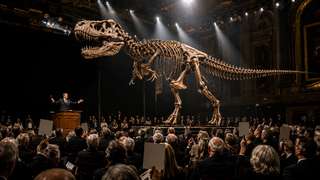
Il devient le dinosaure le plus cher du monde en 10 minutes : voici l’incroyable histoire de Gus
musée Dinosauria Tyrannosaurus squelette
Il a traversé 67 millions d’années enfoui dans le sol avant de faire trembler une salle des ventes. Le squelette de Tyrannosaurus rex surnommé "Gus" a été adjugé 50,13 millions de dollars chez Sotheby’s, à New York. Un record absolu pour un dinosaure, qui ravive le débat sur la privatisation des...
15/07/2026 futura-terre
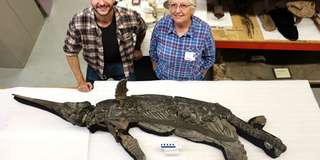
Voici le mystérieux dragon marin qui pourrait résoudre une énigme vieille de presque 200 millions d'années
Royaume-Uni Xiphodracon squelette
Un squelette de trois mètres dormait dans la craie du Dorset depuis 150 millions d'années. Des fouilleurs amateurs l'ont sorti de l'obscurité en 2001, mais il a fallu attendre plus de vingt ans pour que la science lui donne enfin un nom. Ce dragon marin bouleverse ce que l'on croyait savoir sur...
21/06/2026 futura-terre
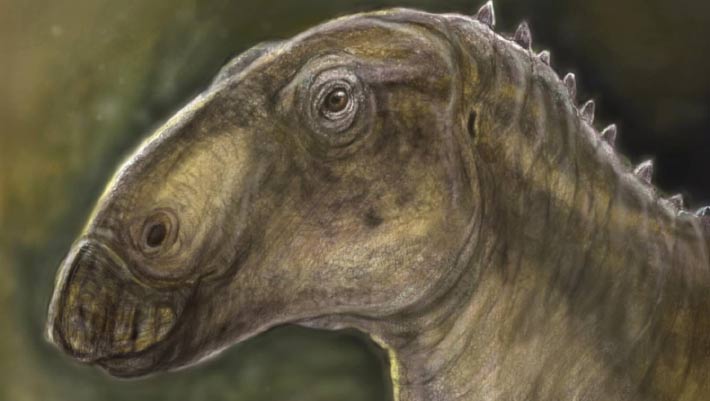
New Duck-Billed Dinosaur Unearthed in Romania
Un nouveau dinosaure à bec de canard découvert en Roumanie
bassin Hongrie Italie Roumanie Royaume-Uni Maastrichtien Dinosauria Kryptohadros nouvelle espèce squelette
Une équipe internationale de paléontologues de Roumanie, de Hongrie et d'Italie a identifié un nouveau genre et une nouvelle espèce de dinosaure herbivore à bec de canard à partir d'un squelette incomplet découvert dans le bassin de Hațeg, une dépression en forme de bol dans les Carpates de l'actuelle Roumanie. L'article Un nouveau dinosaure à bec de canard découvert en Roumanie est apparu en premier sur Sci.News : Breaking Science News.
16/06/2026 sci-news ⚙ Traduction automatique
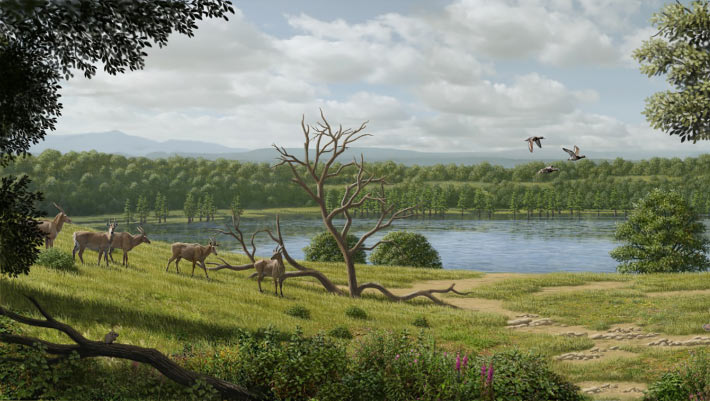
Half-Ton Cattle Relatives Roamed Europe 4 Million Years Ago
Des parents de bétail d'une demi-tonne parcouraient l'Europe il y a 4 millions d'années
Espagne Pliocène mammifères squelette
Des squelettes de bovins presque complets découverts sur le site du Pliocène inférieur de Camp dels Ninots, dans le nord-est de l'Espagne, révèlent que les ancêtres des buffles et des bovins d'aujourd'hui atteignaient déjà des tailles impressionnantes bien avant l'arrivée des humains sur le continent. L'article Des parents de bétail d'une demi-tonne parcouraient l'Europe il y a 4 millions d'années sont apparus en premier sur Sci.News : Breaking Science News.
05/06/2026 sci-news ⚙ Traduction automatique
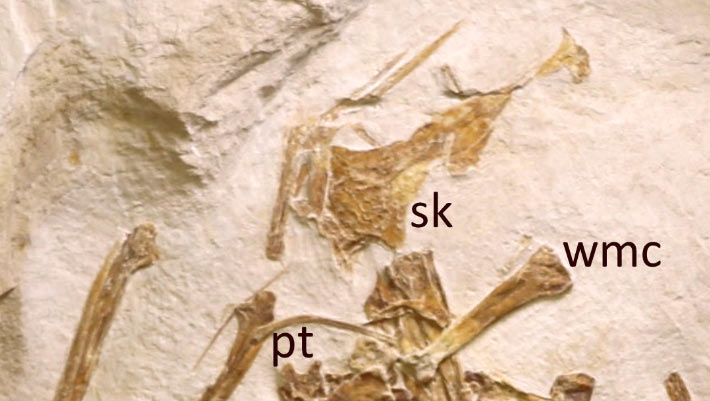
New Jurassic Pterosaur Unearthed in Germany
Un nouveau ptérosaure du Jurassique découvert en Allemagne
Allemagne Jurassique fossile Monofenestrata Pterosauria nouvelle espèce squelette
Les paléontologues ont décrit un nouveau genre et une nouvelle espèce de ptérosaure monofenestratan précoce sur la base d'un squelette fossile presque complet et bien conservé découvert en Bavière, en Allemagne. L'article Un nouveau ptérosaure jurassique découvert en Allemagne est apparu en premier sur Sci.News : Breaking Science News.
19/05/2026 sci-news ⚙ Traduction automatique
1 2 3 4 5 6