←

squelette

Type de vue

162 image(s) · 26 Actualités

Galerie d'images

Muttaburrasaurus
The plants, animals and climate of the Australian continent have changed dramatically over long periods of time. Imagine this giant creature roaming the luxuriant wet forests that covered parts of the continent in the Cretaceous period, about 100-110 million years ago. The Muttaburrasaurus ambled along on all four legs or stood on its hind legs. Its large teeth were well adapted to eat tough vegetation such as the leathery foliage of the evergreen forests of Araucaria trees, ancient relatives of the bunya pine of south-eastern Queensland.
In 1963, grazier Doug Langdon discovered the fossilised bones of a dinosaur on his property near Muttaburra in central-west Queensland. It was one of the most complete dinosaur skeletons found in Australia. The bones belonged to a new species of ornithopod and palaeontologists named it Muttaburrasaurus langdoni.

Cast of Muttaburresaurus langdoni 1987 made by Queensland Museum, Brisbane National Museum of Australia
Taxons Muttaburrasaurus

Muttaburrasaurus The plants, animals and climate of the Australian continent have changed dramatically over long periods of time. Imagine this giant creature roaming the luxuriant wet forests that covered parts of the continent in the Cretaceous period, about 100-110 million years ago. The Muttaburrasaurus ambled along on all four legs or stood on its hind legs. Its large teeth were well adapted to eat tough vegetation such as the leathery foliage of the evergreen forests of Araucaria trees, ancient relatives of the bunya pine of south-eastern Queensland. In 1963, grazier Doug Langdon discovered the fossilised bones of a dinosaur on his property near Muttaburra in central-west Queensland. It was one of the most complete dinosaur skeletons found in Australia. The bones belonged to a new species of ornithopod and palaeontologists named it Muttaburrasaurus langdoni. Cast of Muttaburresaurus langdoni 1987 made by Queensland Museum, Brisbane National Museum of Australia

os musée Australie Crétacé +5
Montanoceratops cerorhynchus (Brown & Schlaikjer, 1942) - fossil ceratopsian dinosaur skeleton from the Cretaceous of Montana, USA. (MOR 542, Museum of the Rockies, Bozeman, Montana, USA)
The species name is sometimes incorrectly spelled "cerorhynchos".  The original publication spells it "cerorhynchus".  The genus name is sometimes incorrectly spelled "Montanaceratops".
Ceratopsians are the "horned dinosaurs".  They were large, quadrupedal, herbivorous dinosaurs having a beaked skull and a frill - an extension of bone behind the skull that partially covered the neck.  Ceratopsian dinosaurs are known from the Jurassic and Cretaceous.  The last members of the group died out at the Cretaceous-Tertiary boundary, 65 million years ago.
This is a partial skeleton of a juvenile Montanoceratops, a ceratopsian from the near-latest Cretaceous of western North America.  This type of ceratopsian lacked facial horns.


From exhibit signage:
Sixty-eight million years ago, when the horned dinosaurs Triceratops and Torosaurus inhabited the coastal plain near the inland ocean, primitive "horned" dinosaurs named Montanoceratops lived in uplands near the young Rocky Mountains.  These little protoceratopsians fed on plants with slicing teeth and narrow beaks similar to their giant three-horned relatives.


Classification: Animalia, Chordata, Vertebrata, Reptilia, Archosauria, Dinosauria, Ornithischia, Marginocephalia, Ceratopsia, Leptoceratopsidae
Stratigraphy: St. Mary River Formation, Maastrichtian Stage, Upper Cretaceous
Locality: Little Rocky Coulee, north of the town of Cut Bank, eastern Glacier County, northwestern Montana, USA


Info. at:

en.wikipedia.org/wiki/Montanoceratops
Taxons Montanoceratops

Montanoceratops cerorhynchus (Brown & Schlaikjer, 1942) - fossil ceratopsian dinosaur skeleton from the Cretaceous of Montana, USA. (MOR 542, Museum of the Rockies, Bozeman, Montana, USA) The species name is sometimes incorrectly spelled "cerorhynchos". The original publication spells it "cerorhynchus". The genus name is sometimes incorrectly spelled "Montanaceratops". Ceratopsians are the "horned dinosaurs". They were large, quadrupedal, herbivorous dinosaurs having a beaked skull and a frill - an extension of bone behind the skull that partially covered the neck. Ceratopsian dinosaurs are known from the Jurassic and Cretaceous. The last members of the group died out at the Cretaceous-Tertiary boundary, 65 million years ago. This is a partial skeleton of a juvenile Montanoceratops, a ceratopsian from the near-latest Cretaceous of western North America. This type of ceratopsian lacked facial horns. From exhibit signage: Sixty-eight million years ago, when the horned dinosaurs Triceratops and Torosaurus inhabited the coastal plain near the inland ocean, primitive "horned" dinosaurs named Montanoceratops lived in uplands near the young Rocky Mountains. These little protoceratopsians fed on plants with slicing teeth and narrow beaks similar to their giant three-horned relatives. Classification: Animalia, Chordata, Vertebrata, Reptilia, Archosauria, Dinosauria, Ornithischia, Marginocephalia, Ceratopsia, Leptoceratopsidae Stratigraphy: St. Mary River Formation, Maastrichtian Stage, Upper Cretaceous Locality: Little Rocky Coulee, north of the town of Cut Bank, eastern Glacier County, northwestern Montana, USA Info. at: en.wikipedia.org/wiki/Montanoceratops

os musée États-Unis Crétacé +17
Partial skeleton of Claosaurus agilis (holotype YPM 1190).

(A) Right ilium in lateral view. (B) Partial postorbital in lateral view. (C) Distal process of the right ischium in lateral view. (D) Mounted partial skeleton of YPM 1190. (E) Coronoid process of the right dentary in lateral view. (F) Fragment of maxilla in lateral view. (G) Detail of the maxillary tooth crowns in (F). (H) Fragment of maxilla in lateral view. (I) Detail of a maxillary tooth crown in (H).
Taxons Claosaurus

Partial skeleton of Claosaurus agilis (holotype YPM 1190). (A) Right ilium in lateral view. (B) Partial postorbital in lateral view. (C) Distal process of the right ischium in lateral view. (D) Mounted partial skeleton of YPM 1190. (E) Coronoid process of the right dentary in lateral view. (F) Fragment of maxilla in lateral view. (G) Detail of the maxillary tooth crowns in (F). (H) Fragment of maxilla in lateral view. (I) Detail of a maxillary tooth crown in (H).

dent holotype Claosaurus partiel +1
Skeleton identified as Nemegtomaia by Greg Funston.[1] Central Museum of Mongolian Dinosaurs, Ulaanbaatar. Complete indexed photo collection at WorldHistoryPics.com.
Taxons Nemegtomaia

Skeleton identified as Nemegtomaia by Greg Funston.[1] Central Museum of Mongolian Dinosaurs, Ulaanbaatar. Complete indexed photo collection at WorldHistoryPics.com.

musée Dinosauria Nemegtomaia squelette
Yangchuanosaurus shangyouensis skeleton displayed in Hong Kong Science Museum
Taxons Yangchuanosaurus

Yangchuanosaurus shangyouensis skeleton displayed in Hong Kong Science Museum

musée Yangchuanosaurus squelette
Skeleton of Sinovenator on display at the Tianjin Natural History Museum.
Taxons Sinovenator

Skeleton of Sinovenator on display at the Tianjin Natural History Museum.

musée Sinovenator squelette
Photograph of the skeleton of Patagosaurus fariasi Bonaparte, 1979. The skeleton is on display at Museo Argentino de Ciencias Naturales, in Argentina. Patagosaurus is a basal eusauropodan, closely related to Cetiosaurus possibly within Cetiosauridae. Photograph by Mathijs de Bruijne.
Taxons Patagosaurus

Photograph of the skeleton of Patagosaurus fariasi Bonaparte, 1979. The skeleton is on display at Museo Argentino de Ciencias Naturales, in Argentina. Patagosaurus is a basal eusauropodan, closely related to Cetiosaurus possibly within Cetiosauridae. Photograph by Mathijs de Bruijne.

Argentine Cetiosauria Cetiosauridae Eusauropoda +2
Skeleton of Chungkingosaurus jiangbeiensis displayed in Hong Kong Science Museum
Taxons Chungkingosaurus

Skeleton of Chungkingosaurus jiangbeiensis displayed in Hong Kong Science Museum

musée Chungkingosaurus squelette
Reconstructed Mononykus olecranus skeleton (AMNH 28508 and AMNH 28498) on display at the American Museum of Natural History.
Taxons Mononykus

Reconstructed Mononykus olecranus skeleton (AMNH 28508 and AMNH 28498) on display at the American Museum of Natural History.

musée Mononykus squelette
Fossil skeleton of Qianichthyosaurus zhoui on display at the Geological Museum of China.
Taxons Qianichthyosaurus

Fossil skeleton of Qianichthyosaurus zhoui on display at the Geological Museum of China.

musée Chine fossile Qianichthyosaurus +1
Photograph of a fossil cast of a Keichousaurus hui skeleton taken at the North American Museum of Ancient Life.
Taxons Keichousaurus

Photograph of a fossil cast of a Keichousaurus hui skeleton taken at the North American Museum of Ancient Life.

musée moulage fossile Keichousaurus +1
Skeleton of '"Gyposaurus" sinensis on display at the Geological Museum of China.
Taxons Gyposaurus

Skeleton of '"Gyposaurus" sinensis on display at the Geological Museum of China.

musée Chine Gyposaurus squelette
Skeleton of Herrerasaurus
Taxons Herrerasaurus

Skeleton of Herrerasaurus

Herrerasaurus squelette
Dicraeosaurus skeleton at the Museum für Naturkunde, Berlin.
Taxons Dicraeosaurus

Dicraeosaurus skeleton at the Museum für Naturkunde, Berlin.

musée Dicraeosaurus squelette
Composite skeleton wall mount of Lambeosaurus at Pacific Museum of Earth
Taxons Lambeosaurus

Composite skeleton wall mount of Lambeosaurus at Pacific Museum of Earth

musée Lambeosauria squelette
The mounted skeleton of Brachiosaurus altithorax outside the Field Museum in Chicago, based on the holotype FMNH P25107, with missing parts filled in from the mounted Giraffatitan brancai MB.R.2181 at the Museum für Naturkunde Berlin.
Taxons Brachiosaurus

The mounted skeleton of Brachiosaurus altithorax outside the Field Museum in Chicago, based on the holotype FMNH P25107, with missing parts filled in from the mounted Giraffatitan brancai MB.R.2181 at the Museum für Naturkunde Berlin.

musée holotype Brachiosauria Giraffatitan +1
1 2 3 4 5 6 7 8 9 10 11

Actualités

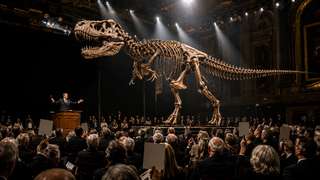
Il devient le dinosaure le plus cher du monde en 10 minutes : voici l’incroyable histoire de Gus
musée Dinosauria Tyrannosaurus squelette
Il a traversé 67 millions d’années enfoui dans le sol avant de faire trembler une salle des ventes. Le squelette de Tyrannosaurus rex surnommé "Gus" a été adjugé 50,13 millions de dollars chez Sotheby’s, à New York. Un record absolu pour un dinosaure, qui ravive le débat sur la privatisation des...
15/07/2026 futura-terre
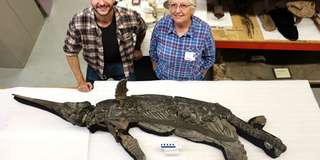
Voici le mystérieux dragon marin qui pourrait résoudre une énigme vieille de presque 200 millions d'années
Royaume-Uni Xiphodracon squelette
Un squelette de trois mètres dormait dans la craie du Dorset depuis 150 millions d'années. Des fouilleurs amateurs l'ont sorti de l'obscurité en 2001, mais il a fallu attendre plus de vingt ans pour que la science lui donne enfin un nom. Ce dragon marin bouleverse ce que l'on croyait savoir sur...
21/06/2026 futura-terre
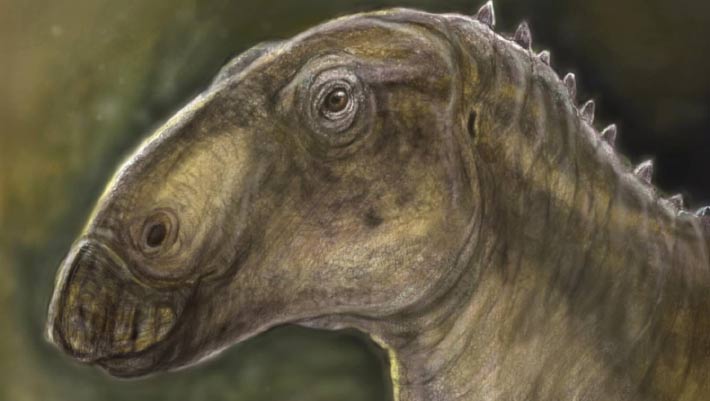
New Duck-Billed Dinosaur Unearthed in Romania
Un nouveau dinosaure à bec de canard découvert en Roumanie
bassin Hongrie Italie Roumanie Royaume-Uni Maastrichtien Dinosauria Kryptohadros nouvelle espèce squelette
Une équipe internationale de paléontologues de Roumanie, de Hongrie et d'Italie a identifié un nouveau genre et une nouvelle espèce de dinosaure herbivore à bec de canard à partir d'un squelette incomplet découvert dans le bassin de Hațeg, une dépression en forme de bol dans les Carpates de l'actuelle Roumanie. L'article Un nouveau dinosaure à bec de canard découvert en Roumanie est apparu en premier sur Sci.News : Breaking Science News.
16/06/2026 sci-news ⚙ Traduction automatique
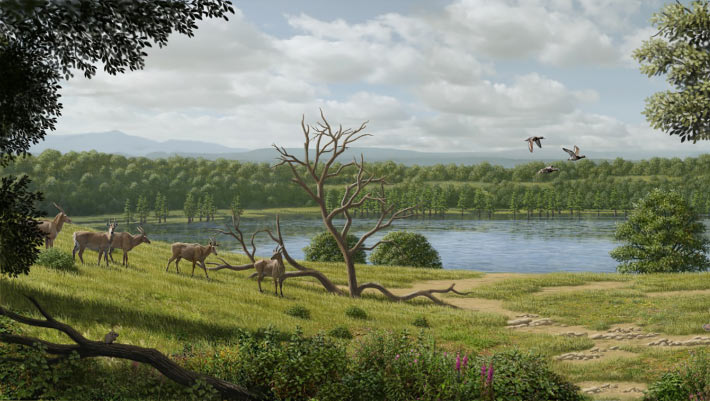
Half-Ton Cattle Relatives Roamed Europe 4 Million Years Ago
Des parents de bétail d'une demi-tonne parcouraient l'Europe il y a 4 millions d'années
Espagne Pliocène mammifères squelette
Des squelettes de bovins presque complets découverts sur le site du Pliocène inférieur de Camp dels Ninots, dans le nord-est de l'Espagne, révèlent que les ancêtres des buffles et des bovins d'aujourd'hui atteignaient déjà des tailles impressionnantes bien avant l'arrivée des humains sur le continent. L'article Des parents de bétail d'une demi-tonne parcouraient l'Europe il y a 4 millions d'années sont apparus en premier sur Sci.News : Breaking Science News.
05/06/2026 sci-news ⚙ Traduction automatique
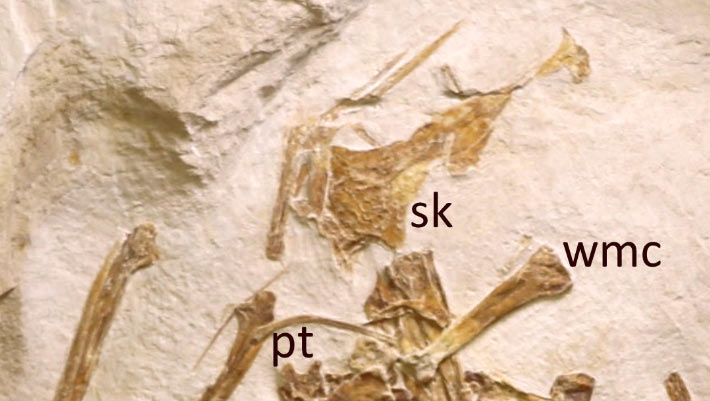
New Jurassic Pterosaur Unearthed in Germany
Un nouveau ptérosaure du Jurassique découvert en Allemagne
Allemagne Jurassique fossile Monofenestrata Pterosauria nouvelle espèce squelette
Les paléontologues ont décrit un nouveau genre et une nouvelle espèce de ptérosaure monofenestratan précoce sur la base d'un squelette fossile presque complet et bien conservé découvert en Bavière, en Allemagne. L'article Un nouveau ptérosaure jurassique découvert en Allemagne est apparu en premier sur Sci.News : Breaking Science News.
19/05/2026 sci-news ⚙ Traduction automatique
1 2 3 4 5 6