←

squelette

Type de vue

162 image(s) · 26 Actualités

Galerie d'images

Skeleton of Yamaceratops dorngobiensis (MPC-D 100/553) in right dorsolateral view. (A) Photograph; (B) Interpretive drawing. Bones are bounded by solid lines and colored beige; the matrix is gray. Shaded areas represent the broken surface of bones. Abbreviations: cd, caudal vertebrae; dr, dorsal ribs; dv, dorsal vertebrae; f, femur; fi, fibula; h, humerus; L, bone on the left side; p, isolated parietal; pp, pedal phalanges; R, bone on the right side; ra, radius; sk, skull; sv, sacral vertebrae; ti, tibia; u, ulna; il, ilium; is, ischium.
Taxons Yamaceratops

Skeleton of Yamaceratops dorngobiensis (MPC-D 100/553) in right dorsolateral view. (A) Photograph; (B) Interpretive drawing. Bones are bounded by solid lines and colored beige; the matrix is gray. Shaded areas represent the broken surface of bones. Abbreviations: cd, caudal vertebrae; dr, dorsal ribs; dv, dorsal vertebrae; f, femur; fi, fibula; h, humerus; L, bone on the left side; p, isolated parietal; pp, pedal phalanges; R, bone on the right side; ra, radius; sk, skull; sv, sacral vertebrae; ti, tibia; u, ulna; il, ilium; is, ischium.

os humérus dessin Yamaceratops +2
Falcarius skeleton reconstruction, Utah Museum of Natural History.
Taxons Falcarius

Falcarius skeleton reconstruction, Utah Museum of Natural History.

musée États-Unis Falcarius squelette
Skeleton of Gondwanatitan faustoi (MN 4111-V), not to scale.(adapted from Kellner and Campos, 2000).
Taxons Gondwanatitan

Skeleton of Gondwanatitan faustoi (MN 4111-V), not to scale.(adapted from Kellner and Campos, 2000).

écaille Gondwanatitan squelette
Cranial and postcranial sauropod remains from sediments of the Praia da Amoreira-Porto Novo Fm. of the coastal sector of Praia da Consolação-Lourinhã-Torres Vedras: 1-2, ?Turiasauria indet., heart-shaped tooth (SHN (JJS) 142, Praia da Corva) in lingual (1) and labial (2) views; 3-4, ?Macronaria indet., spatulate tooth (SHN 513, Porto Novo) in labial (3) and lingual (4) views; 5-6, Macronaria indet., compressed cone-chisel-shaped tooth (SHN 578, Valmitão) in lingual (5) and labial (6) views; 7-8, Eusauropoda indet., partial left maxilla (SHN 582, Praia dos Frades) in lateral (7) and posterior (8) views; 9, Titanosauriformes indet., posterior caudal vertebra (SHN 523, Praia da Corva) in right view; 10-12, Diplodocinae indet., partial skeleton (SHN (JJS) 177, Valmitão), anterior caudal neural spine in posterior view (10), anterior caudal centrum in right view (11) and left ischium in medial view (12); 13-16, holotype material of Zby atlanticus (ML 368, Vale de Pombas), right ungueal I in lateral view (13), right humerus in anterior view (14), right radius in posterior view (15), right ulna in lateral view (16); 17, Eusauropoda indet., partial distal forked-chevron (SHN 587, Praia da Corva) in medial view; 18, Sauropoda indet., pedal ungueal I (SHN 524, Praia de Pedrogãos) in lateral view; 19-22, Macronarian indet., partial skeleton (SHN 181, Valmitão), right astragalus in proximal view (19), anterior caudal vertebra in anterior view (20), right tibia in lateral view (21) and right fibula in medial view (22); 23-24, Eusauropoda indet., partial skeleton (SHN 530, Praia da Corva), anterior chevron in anterior view (23) and anterior caudal vertebra in posterior view (24); 25, cf. Duriatitan humerocristatus, humerus (MG 4976, Praia dos Frades) in anterior view; 26, Sauropoda indet., partial skeleton (SHN 534, Santa Rita), middle chevron in posterior view; 27, Diplodocidae indet., partial skeleton (SHN (JJS) 179, Praia Vermelha), dorsal/caudal (?) neural spine in posterior view; 28-30, holotype material of Dinheirosaurus lourinhanensis (ML 414, Porto Dinheiro), proximal end of a dorsal rib in anterior view (28), anterior caudal neural spine in posterior view (29) and articulated dorsal vertebrae in right view (30). Black scale bar: 10 cm; Grey scale bar: 5 cm; Brown scale bar: 1 cm. See Anatomical abbreviations for abbreviations.
Taxons Zby

Cranial and postcranial sauropod remains from sediments of the Praia da Amoreira-Porto Novo Fm. of the coastal sector of Praia da Consolação-Lourinhã-Torres Vedras: 1-2, ?Turiasauria indet., heart-shaped tooth (SHN (JJS) 142, Praia da Corva) in lingual (1) and labial (2) views; 3-4, ?Macronaria indet., spatulate tooth (SHN 513, Porto Novo) in labial (3) and lingual (4) views; 5-6, Macronaria indet., compressed cone-chisel-shaped tooth (SHN 578, Valmitão) in lingual (5) and labial (6) views; 7-8, Eusauropoda indet., partial left maxilla (SHN 582, Praia dos Frades) in lateral (7) and posterior (8) views; 9, Titanosauriformes indet., posterior caudal vertebra (SHN 523, Praia da Corva) in right view; 10-12, Diplodocinae indet., partial skeleton (SHN (JJS) 177, Valmitão), anterior caudal neural spine in posterior view (10), anterior caudal centrum in right view (11) and left ischium in medial view (12); 13-16, holotype material of Zby atlanticus (ML 368, Vale de Pombas), right ungueal I in lateral view (13), right humerus in anterior view (14), right radius in posterior view (15), right ulna in lateral view (16); 17, Eusauropoda indet., partial distal forked-chevron (SHN 587, Praia da Corva) in medial view; 18, Sauropoda indet., pedal ungueal I (SHN 524, Praia de Pedrogãos) in lateral view; 19-22, Macronarian indet., partial skeleton (SHN 181, Valmitão), right astragalus in proximal view (19), anterior caudal vertebra in anterior view (20), right tibia in lateral view (21) and right fibula in medial view (22); 23-24, Eusauropoda indet., partial skeleton (SHN 530, Praia da Corva), anterior chevron in anterior view (23) and anterior caudal vertebra in posterior view (24); 25, cf. Duriatitan humerocristatus, humerus (MG 4976, Praia dos Frades) in anterior view; 26, Sauropoda indet., partial skeleton (SHN 534, Santa Rita), middle chevron in posterior view; 27, Diplodocidae indet., partial skeleton (SHN (JJS) 179, Praia Vermelha), dorsal/caudal (?) neural spine in posterior view; 28-30, holotype material of Dinheirosaurus lourinhanensis (ML 414, Porto Dinheiro), proximal end of a dorsal rib in anterior view (28), anterior caudal neural spine in posterior view (29) and articulated dorsal vertebrae in right view (30). Black scale bar: 10 cm; Grey scale bar: 5 cm; Brown scale bar: 1 cm. See Anatomical abbreviations for abbreviations.

humérus écaille dent vertèbre +13
Kunbarrasaurus ieversi (QM F18101; holotype) skeleton in dorsal view. Scale = 20 cm.
Taxons Kunbarrasaurus

Kunbarrasaurus ieversi (QM F18101; holotype) skeleton in dorsal view. Scale = 20 cm.

écaille holotype Kunbarrasaurus squelette
Figure 3 Sequence of caudal vertebrae of SHN.019. (1) Reconstitution of the skeleton of a Neovenator individual (copyright of the skeleton of Neovenator Scott Hartman, 2013) in which the estimated position of the tail section collected in Cambelas is marked; (2–4) sequence of seventeen partially articulated caudal vertebrae of SHN.019. Scale bar=1 m (1) or 100 mm (2).
Taxons Lusovenator

Figure 3 Sequence of caudal vertebrae of SHN.019. (1) Reconstitution of the skeleton of a Neovenator individual (copyright of the skeleton of Neovenator Scott Hartman, 2013) in which the estimated position of the tail section collected in Cambelas is marked; (2–4) sequence of seventeen partially articulated caudal vertebrae of SHN.019. Scale bar=1 m (1) or 100 mm (2).

écaille reconstitution Lusovenator Neovenator +1
Skeleton holotype Xingxiulong.
Taxons Xingxiulong

Skeleton holotype Xingxiulong.

holotype Xingxiulong squelette
The "Big Mama" Citipati osmolskae skeleton (IGM 100/979) on display at the American Museum of Natural History.
Taxons Citipati

The "Big Mama" Citipati osmolskae skeleton (IGM 100/979) on display at the American Museum of Natural History.

musée Citipati squelette
Figure 1: Geographic provenance and speculative reconstruction of the gigantic titanosaurian sauropod dinosaur Notocolossus gonzalezparejasi gen. et sp. nov.
(a) Type locality of Notocolossus (indicated by star) in southern-most Mendoza Province, Argentina. (b) Reconstructed skeleton and body silhouette in right lateral view, with preserved elements of the holotype (UNCUYO-LD 301) in light green and those of the referred specimen (UNCUYO-LD 302) in orange. Scale bar, 1 m. (All images were hand drawn by the senior author [B.J.G.R.] and subsequently edited using Adobe Illustrator software.)
Taxons Notocolossus

Figure 1: Geographic provenance and speculative reconstruction of the gigantic titanosaurian sauropod dinosaur Notocolossus gonzalezparejasi gen. et sp. nov. (a) Type locality of Notocolossus (indicated by star) in southern-most Mendoza Province, Argentina. (b) Reconstructed skeleton and body silhouette in right lateral view, with preserved elements of the holotype (UNCUYO-LD 301) in light green and those of the referred specimen (UNCUYO-LD 302) in orange. Scale bar, 1 m. (All images were hand drawn by the senior author [B.J.G.R.] and subsequently edited using Adobe Illustrator software.)

écaille Argentine holotype spécimen +4
Restoration of the Segisaurus halli holotype skeleton
Taxons Segisaurus

Restoration of the Segisaurus halli holotype skeleton

holotype Segisaurus squelette
A diagram of the dromaeosaurid dinosaur Pyroraptor olympius with selected fossil elements that can be reliably scaled using measurements given by Allain & Taquet (2000) to produce a realistic estimate of the taxon's size and proportions in life. This silhouette is based on the supposition of the missing elements of Pyroraptor's skeleton having fairly generalized dromaeosaurid proportions.
Taxons Pyroraptor

A diagram of the dromaeosaurid dinosaur Pyroraptor olympius with selected fossil elements that can be reliably scaled using measurements given by Allain & Taquet (2000) to produce a realistic estimate of the taxon's size and proportions in life. This silhouette is based on the supposition of the missing elements of Pyroraptor's skeleton having fairly generalized dromaeosaurid proportions.

fossile Dinosauria Dromaeosauridae Pyroraptor +1
Angolasaurus bocagei partial skeleton (MGUAN-PA 065) on display at the Smithsonian's National Museum of Natural History.
Taxons Angolasaurus

Angolasaurus bocagei partial skeleton (MGUAN-PA 065) on display at the Smithsonian's National Museum of Natural History.

musée Angolasaurus partiel squelette
Angolasaurus bocagei partial skeleton (MGUAN-PA 065) on display at the Smithsonian's National Museum of Natural History.
Taxons Angolasaurus

Angolasaurus bocagei partial skeleton (MGUAN-PA 065) on display at the Smithsonian's National Museum of Natural History.

musée Angolasaurus partiel squelette
Holotype skeleton of Jianchangnathus robustus on display at the Paleozoological Museum of China.
Taxons Jianchangnathus

Holotype skeleton of Jianchangnathus robustus on display at the Paleozoological Museum of China.

musée Chine holotype Jianchangnathus +1
Copy of a skeleton of a Lessemsaurus in the exhibition "Gigasaurier - Die Riesen Argentiniens" in Frankfurt am Main 2010
Taxons Lessemsauridae

Copy of a skeleton of a Lessemsaurus in the exhibition "Gigasaurier - Die Riesen Argentiniens" in Frankfurt am Main 2010

Lessemsauridae Lessemsaurus squelette
Copy of a skeleton of a Lessemsaurus in the exhibition "Gigasaurier - Die Riesen Argentiniens" in Frankfurt am Main 2010
Taxons Lessemsaurus

Copy of a skeleton of a Lessemsaurus in the exhibition "Gigasaurier - Die Riesen Argentiniens" in Frankfurt am Main 2010

Lessemsauridae Lessemsaurus squelette
1 2 3 4 5 6 7 8 9 10 11

Actualités

Une côte cassée du plus grand T. rex du monde cache un secret vieux de 66 millions d'années
os métabolisme pathologie fossile Dinosauria Tyrannosaurus squelette
Une côte cassée de Scotty, le plus grand squelette connu de T. rex, contient un extraordinaire réseau fossilisé de vaisseaux sanguins formés pendant la guérison du dinosaure. Les scientifiques ont utilisé l’imagerie neutronique et les rayons X pour examiner l’intérieur de l’os vieux de 66 millions d’années sans l’endommager, révélant des détails rarement conservés dans les fossiles.
24/09/2026 sciencedaily ⚙ Traduction automatique
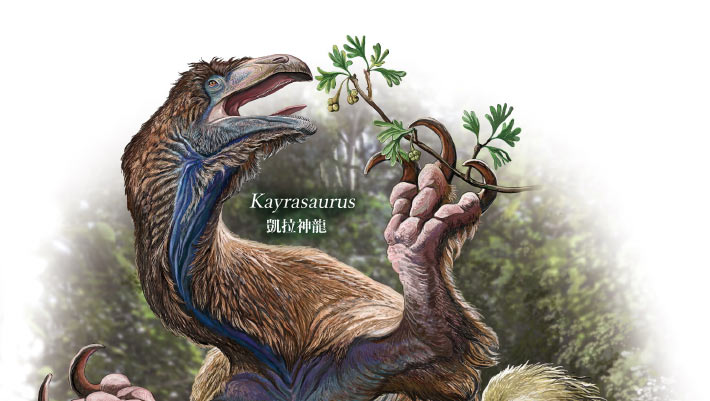
New Therizinosaurian Dinosaur Unearthed in China
Un nouveau dinosaure thérizinosaurien découvert en Chine
Chine Dinosauria Kayrasaurus Therizinosauria nouvelle espèce squelette
Les paléontologues ont décrit un nouveau genre et une nouvelle espèce de thérizinosaure sur la base d'un squelette presque complet trouvé dans le nord-est de la Chine. L'article Un nouveau dinosaure thérizinosaurien découvert en Chine est apparu en premier sur Sci.News : Breaking Science News.
21/09/2026 sci-news ⚙ Traduction automatique
Un remarquable calmar jurassique « gros » du Wyoming est décrit scientifiquement
Jurassique Oxfordian fossile formation nouvelle espèce squelette
Une nouvelle espèce remarquable d’animal ressemblant à un calmar jurassique a été décrite dans le Wyoming. L'étrange bélemnite, nommée Wyoteuthis linsterorum, vivait il y a environ 160 millions d'années (stade faunique oxfordien). De plus, il possédait un squelette interne extraordinairement épais et en forme de tonneau. Une équipe de recherche internationale a étudié deux fossiles exceptionnellement rares de la célèbre formation de Sundance. Les scientifiques ont conclu
10/09/2026 everythingdinosaur ⚙ Traduction automatique
Fossil of Giant Squid-Like Creature from Cretaceous Period Bears Marks of Deadly Attack
Un fossile d'une créature ressemblant à un calmar géant de la période du Crétacé porte des marques d'attaque mortelle
Canada Crétacé fossile squelette
Des paléontologues étudiant un fossile découvert dans le sud du Manitoba, au Canada, ont identifié ce qu'ils pensent être deux marques de morsure sur le squelette interne de l'ancien céphalopode géant Enchoteuthis. L'article Un fossile d'une créature ressemblant à un calmar géant de la période du Crétacé porte des marques d'attaque mortelle est apparu en premier sur Sci.News : Breaking Science News.
01/09/2026 sci-news ⚙ Traduction automatique
Un remarquable fossile de reptile marin du Trias préserve les organes internes
Chine Trias fossile spécimen anatomie squelette
Les scientifiques ont décrit un fossile exceptionnel du reptile marin du Trias au long cou, Austronaga minuta. Le spécimen vient de Chine et a environ 245 millions d’années. Remarquablement, une grande partie du système digestif de l’animal a été préservée. Le fossile presque complet offre aux scientifiques une vue sans précédent du squelette et de l’anatomie interne d’un archosauromorphe.
26/08/2026 everythingdinosaur ⚙ Traduction automatique
1 2 3 4 5 6