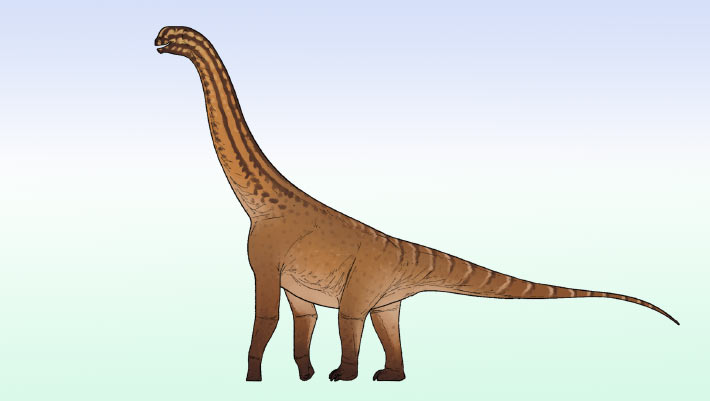
squelette

Type de vue

202 image(s) · 20 Actualités

Galerie d'images

The whole skeleton of the holotype Tongtianlong limosus gen. et sp. nov. in dorsal view (a) and lateral view (b). Scale bar = 10 cm.
Taxons Tongtianlong

The whole skeleton of the holotype Tongtianlong limosus gen. et sp. nov. in dorsal view (a) and lateral view (b). Scale bar = 10 cm.

écaille holotype Tongtianlong squelette
A photograph of the skeleton of Jianchangosaurus yixianensis gen. et sp. nov. (41HIII-0308A) (A) and line drawing (B).

Abbreviations: at, atlas; ax, axis; cav, caudal vertebra; cv, cervical vertebra; co, coracoid; dc, distal carpal; dv, dorsal vertebra; l., left; f, femur; fi, fibula; fur, furcula; hu, humerus; il, ilium; is, ischium; pu, pubis; ra, radius; sc, scapula; ti, tibia; ul, ulna; mc, metacarpal; mt, metatarsal; mxf, maxillary fenestra; pat, proatlas; r., right; sr, sacral rib; sv, sacral vertebra; ung, ungual. All elements of the skeleton are preserved except the distal half of the caudal vertebrae. Dashed lines of metatarsals indicate areas that have been reconstructed. The middle portion of the neck, from the fourth to ninth cervical vertebrae, and the pedal phalanges have been repositioned. The rest of elements of this specimen are in the original position.
Taxons Jianchangosaurus

A photograph of the skeleton of Jianchangosaurus yixianensis gen. et sp. nov. (41HIII-0308A) (A) and line drawing (B). Abbreviations: at, atlas; ax, axis; cav, caudal vertebra; cv, cervical vertebra; co, coracoid; dc, distal carpal; dv, dorsal vertebra; l., left; f, femur; fi, fibula; fur, furcula; hu, humerus; il, ilium; is, ischium; pu, pubis; ra, radius; sc, scapula; ti, tibia; ul, ulna; mc, metacarpal; mt, metatarsal; mxf, maxillary fenestra; pat, proatlas; r., right; sr, sacral rib; sv, sacral vertebra; ung, ungual. All elements of the skeleton are preserved except the distal half of the caudal vertebrae. Dashed lines of metatarsals indicate areas that have been reconstructed. The middle portion of the neck, from the fourth to ninth cervical vertebrae, and the pedal phalanges have been repositioned. The rest of elements of this specimen are in the original position.

humérus vertèbre dessin spécimen +2
Squelette partiel de Wulatesaurus.
Taxons Bannykus

Squelette partiel de Wulatesaurus.

Japon Bannykus partiel squelette
Alvarezsaurus skeleton restoration, Copenhagen.
Taxons Alvarezsaurus

Alvarezsaurus skeleton restoration, Copenhagen.

Alvarezsauria squelette
Skeleton outline of Dracoraptor hanigani.

Bones highlighted green for present, orange for external moulds and blue for tentatively identified bones. Many unidentified or uncertain elements have been omitted.
Taxons Dracoraptor

Skeleton outline of Dracoraptor hanigani. Bones highlighted green for present, orange for external moulds and blue for tentatively identified bones. Many unidentified or uncertain elements have been omitted.

os Dracoraptor squelette
Reconstruction of the terrestrial paleoenvironmental setting of the Sao Khua Formation by Renata Cunha.
In the center, a generalized spinosaurid feeds on a sauropod. This trophic relationship is hypothesized based on isolated tooth crowns found in association with a sauropod skeleton [67]. In the background, a small pack of the ornithomimosaur theropod Kinnareemimus. Both sauropods and ornithomimosaurs (as part of the “herbivorous” theropods) were found to be positively associated with terrestrial paleoenvironments by Butler and Barrett [15].

(cropped from File:Spinosaurid and Kinnareemimus.PNG)
Taxons Kinnareemimus

Reconstruction of the terrestrial paleoenvironmental setting of the Sao Khua Formation by Renata Cunha. In the center, a generalized spinosaurid feeds on a sauropod. This trophic relationship is hypothesized based on isolated tooth crowns found in association with a sauropod skeleton [67]. In the background, a small pack of the ornithomimosaur theropod Kinnareemimus. Both sauropods and ornithomimosaurs (as part of the “herbivorous” theropods) were found to be positively associated with terrestrial paleoenvironments by Butler and Barrett [15]. (cropped from File:Spinosaurid and Kinnareemimus.PNG)

dent Sao Khua Kinnareemimus Ornithomimosauria +3
Photo of the partial holotype skeleton of the ornithomimosaur Garudimimus brevipes, as mounted in the Mongolian Natural History Museum. Scan of physical photograph.
Taxons Garudimimus

Photo of the partial holotype skeleton of the ornithomimosaur Garudimimus brevipes, as mounted in the Mongolian Natural History Museum. Scan of physical photograph.

musée holotype Garudimimus Ornithomimosauria +2
Reconstruction of the Bravoceratops skeleton with known bones marked in white. Specimen: TMM 46015-1 (holotype). Scale bar=2 m. Total length along centra=6.97 m.
Taxons Bravoceratops

Reconstruction of the Bravoceratops skeleton with known bones marked in white. Specimen: TMM 46015-1 (holotype). Scale bar=2 m. Total length along centra=6.97 m.

os écaille holotype spécimen +2
Ornithischian dinosaur Stenopelix valdensis Meyer, 1857, holotype (GZG 741/2, formerly GPI Gö 741−2), from the Obernkirchen Sandstone (Early
Cretaceous: Berriasian), near Bückeburg, Niedersachsen, Germany. A. Large sandstone slab. B. Interpretative outline drawing of large latex cast (prepared
from large sandstone slab), showing majority of postcranial skeleton in dorsal view. C. Small sandstone slab. D. Interpretative outline drawing of small la−
tex cast (prepared from small sandstone slab), showing sacrum and caudals, pelvic region and partial hindlimbs in ventral view. For clarity elements in and
around the sacral region have not been labelled—these areas are shown in greater detail in Fig. 3. Roman numerals II–IV correspond to respective digits.

Abbreviations: mt, metatarsals; f, femur; ?, unidentified element.
Taxons Stenopelix

Ornithischian dinosaur Stenopelix valdensis Meyer, 1857, holotype (GZG 741/2, formerly GPI Gö 741−2), from the Obernkirchen Sandstone (Early Cretaceous: Berriasian), near Bückeburg, Niedersachsen, Germany. A. Large sandstone slab. B. Interpretative outline drawing of large latex cast (prepared from large sandstone slab), showing majority of postcranial skeleton in dorsal view. C. Small sandstone slab. D. Interpretative outline drawing of small la− tex cast (prepared from small sandstone slab), showing sacrum and caudals, pelvic region and partial hindlimbs in ventral view. For clarity elements in and around the sacral region have not been labelled—these areas are shown in greater detail in Fig. 3. Roman numerals II–IV correspond to respective digits. Abbreviations: mt, metatarsals; f, femur; ?, unidentified element.

dessin Allemagne Berriasien Crétacé +8
Composite skeleton on display at the Perot Museum of Nature and Science. Scale bar equals 10 cm.
Taxons Convolosaurus

Composite skeleton on display at the Perot Museum of Nature and Science. Scale bar equals 10 cm.

écaille musée Convolosaurus squelette
The holotype skeleton of Kamuysaurus japonicus gen. et sp. nov. (b) Reconstructed skeleton, showing recovered elements. Selected postcranial elements: cervical vertebrae (atlas, axis, and fourth and twelfth cervicals) in left lateral view (c), dorsal vertebrae (first, seventh, and sixteenth dorsals) in left lateral view (d), caudal vertebrae (anterior, middle, and posterior caudals) in left lateral view (e), left scapula (f) and coracoid (g) in lateral view, right sternum in ventral view (h), left humerus in anterior view (i), right ulna and radius in medial view (j), right manus in dorsal view (k), right pelvis in lateral view (l), right femur in anterior view (m), right tibia in anterior view (n), right fibula in lateral view (o), right astragalus and calcaneum, articulated positioned with tibia (p), and right pes in dorsal view (q). All scales are 10 cm except 1 m scale for (b). Abbreviations; ac, acromion process; ast, astragalus; cal, calcaneum; dpc, deltopectoral crest; fi, fibula; icg, intercondylar groove; il, ilium; is, ischium; ltr, lesser trochanter; mc2, metacarpal II; mc5, metacarpal V; mt2, metatarsal II; mt4, metatarsal IV; nc, neurocentrum; od, odontoid; olp, olecranon process; pc, pleurocentrum; pu, pubis; ra, radius; ti, tibia; ul, ulna; vp, ventral process.
Taxons Kamuysaurus

The holotype skeleton of Kamuysaurus japonicus gen. et sp. nov. (b) Reconstructed skeleton, showing recovered elements. Selected postcranial elements: cervical vertebrae (atlas, axis, and fourth and twelfth cervicals) in left lateral view (c), dorsal vertebrae (first, seventh, and sixteenth dorsals) in left lateral view (d), caudal vertebrae (anterior, middle, and posterior caudals) in left lateral view (e), left scapula (f) and coracoid (g) in lateral view, right sternum in ventral view (h), left humerus in anterior view (i), right ulna and radius in medial view (j), right manus in dorsal view (k), right pelvis in lateral view (l), right femur in anterior view (m), right tibia in anterior view (n), right fibula in lateral view (o), right astragalus and calcaneum, articulated positioned with tibia (p), and right pes in dorsal view (q). All scales are 10 cm except 1 m scale for (b). Abbreviations; ac, acromion process; ast, astragalus; cal, calcaneum; dpc, deltopectoral crest; fi, fibula; icg, intercondylar groove; il, ilium; is, ischium; ltr, lesser trochanter; mc2, metacarpal II; mc5, metacarpal V; mt2, metatarsal II; mt4, metatarsal IV; nc, neurocentrum; od, odontoid; olp, olecranon process; pc, pleurocentrum; pu, pubis; ra, radius; ti, tibia; ul, ulna; vp, ventral process.

crête humérus bassin écaille +3
Incomplete skeleton of Camptosaurus prestwichii, now referred to as Cumnoria, Oxford University Museum of Natural History.
Taxons Cumnoria

Incomplete skeleton of Camptosaurus prestwichii, now referred to as Cumnoria, Oxford University Museum of Natural History.

musée Camptosaurus Cumnoria squelette
Yueosaurus tiantaiensis, reconstructed skeletons, Zhejiang Geological Museum
Taxons Yueosaurus

Yueosaurus tiantaiensis, reconstructed skeletons, Zhejiang Geological Museum

musée Yueosaurus squelette
Partial skeleton of the heterodontosaurid Tianyulong confuciusi from the Lower Cretaceous Jehol Group of China. Partial skeleton mainly in right lateral view (IVPP V17090). Enlargements of subsequent figures are shown in red. Scale bar equals 10 cm.
Taxons Tianyulong

Partial skeleton of the heterodontosaurid Tianyulong confuciusi from the Lower Cretaceous Jehol Group of China. Partial skeleton mainly in right lateral view (IVPP V17090). Enlargements of subsequent figures are shown in red. Scale bar equals 10 cm.

écaille Chine Crétacé Heterodontosauridae +3
Photograph and outline drawing of the skeleton of Chuanqilong chaoyangensis.

A, photograph; B, outline drawing. Abbreviations: ca, caudal vertebrae; cb, cervical band; da, dermal armor; dr, dorsal rib; lfe, left femur; lfi, left fibula; lhu, left humerus; lil, left ilium; lis, left ischium; lma, left maxilla; lmd, left mandible; lmt, left metatarsal; lra, left radius; lsc, left scapula; lti, left tibia; lul, left ulna; mc, metacarpals; orb, orbital; pl, plates; q, quadrate; rfe, right femur; rfi, right fibula; rhu, right humerus; ril, right ilium; rma, right maxilla; rmd, right mandible; rmt, right metatarsals; rra, right radius; rsc, right scapula; rti, right tibia; rul, right ulna; sar, sacral rib; te, tendons. [planned for page width].
Taxons Chuanqilong

Photograph and outline drawing of the skeleton of Chuanqilong chaoyangensis. A, photograph; B, outline drawing. Abbreviations: ca, caudal vertebrae; cb, cervical band; da, dermal armor; dr, dorsal rib; lfe, left femur; lfi, left fibula; lhu, left humerus; lil, left ilium; lis, left ischium; lma, left maxilla; lmd, left mandible; lmt, left metatarsal; lra, left radius; lsc, left scapula; lti, left tibia; lul, left ulna; mc, metacarpals; orb, orbital; pl, plates; q, quadrate; rfe, right femur; rfi, right fibula; rhu, right humerus; ril, right ilium; rma, right maxilla; rmd, right mandible; rmt, right metatarsals; rra, right radius; rsc, right scapula; rti, right tibia; rul, right ulna; sar, sacral rib; te, tendons. [planned for page width].

armure humérus dessin Chuanqilong +1
Reconstructed skeleton of Zuul

Reconstructed skeleton of Zuul

Zuul squelette
1 2 3 4 5 6 7 8 9 10 11 12 13

Actualités

Voici le mystérieux dragon marin qui pourrait résoudre une énigme vieille de presque 200 millions d'années
Royaume-Uni Xiphodracon squelette
Un squelette de trois mètres dormait dans la craie du Dorset depuis 150 millions d'années. Des fouilleurs amateurs l'ont sorti de l'obscurité en 2001, mais il a fallu attendre plus de vingt ans pour que la science lui donne enfin un nom. Ce dragon marin bouleverse ce que l'on croyait savoir sur...
21/06/2026 futura-terre
New Duck-Billed Dinosaur Unearthed in Romania
Un nouveau dinosaure à bec de canard découvert en Roumanie
bassin Hongrie Italie Roumanie Royaume-Uni Maastrichtien Dinosauria Kryptohadros nouvelle espèce squelette
Une équipe internationale de paléontologues de Roumanie, de Hongrie et d'Italie a identifié un nouveau genre et une nouvelle espèce de dinosaure herbivore à bec de canard à partir d'un squelette incomplet découvert dans le bassin de Hațeg, une dépression en forme de bol dans les Carpates de l'actuelle Roumanie. L'article Un nouveau dinosaure à bec de canard découvert en Roumanie est apparu en premier sur Sci.News : Breaking Science News.
16/06/2026 sci-news ⚙ Traduction automatique
Half-Ton Cattle Relatives Roamed Europe 4 Million Years Ago
Des parents de bétail d'une demi-tonne parcouraient l'Europe il y a 4 millions d'années
Espagne Pliocène mammifères squelette
Des squelettes de bovins presque complets découverts sur le site du Pliocène inférieur de Camp dels Ninots, dans le nord-est de l'Espagne, révèlent que les ancêtres des buffles et des bovins d'aujourd'hui atteignaient déjà des tailles impressionnantes bien avant l'arrivée des humains sur le continent. L'article Des parents de bétail d'une demi-tonne parcouraient l'Europe il y a 4 millions d'années sont apparus en premier sur Sci.News : Breaking Science News.
05/06/2026 sci-news ⚙ Traduction automatique
New Jurassic Pterosaur Unearthed in Germany
Un nouveau ptérosaure du Jurassique découvert en Allemagne
Allemagne Jurassique fossile Monofenestrata Pterosauria nouvelle espèce squelette
Les paléontologues ont décrit un nouveau genre et une nouvelle espèce de ptérosaure monofenestratan précoce sur la base d'un squelette fossile presque complet et bien conservé découvert en Bavière, en Allemagne. L'article Un nouveau ptérosaure jurassique découvert en Allemagne est apparu en premier sur Sci.News : Breaking Science News.
19/05/2026 sci-news ⚙ Traduction automatique
Magnifique squelette fossile d'Eryops exposé
prédateur musée Permien fossile squelette
Quand j'étais enfant, l'un de mes animaux préhistoriques préférés était le géant temnospondyl Eryops.  Cela me fait toujours plaisir de tomber sur des fossiles de ce prédateur du Permien inférieur.  En effet, le simple fait de voir un squelette reconstruit me fait sourire.  Quand je suis au Musée d'Histoire Naturelle de Londres, j'essaie de prendre le temps d'observer l'Eryops megacephalus.
06/05/2026 everythingdinosaur ⚙ Traduction automatique
1 2 3 4