fossile

Nature du spécimen

267 image(s) · 171 Actualités

Galerie d'images

Fossil specimen of early Cretaceous pterosaur Sinopterus dongi, which is collected from Chaoyang, Liaoning, China. The specimen (BMNHC Ph773) is a collection of Beijing Museum of Natural History and was on display in the National Museum of Natural Science (Taichung, Taiwan) during a special exhibition.
Taxons Huaxiapterus

Fossil specimen of early Cretaceous pterosaur Sinopterus dongi, which is collected from Chaoyang, Liaoning, China. The specimen (BMNHC Ph773) is a collection of Beijing Museum of Natural History and was on display in the National Museum of Natural Science (Taichung, Taiwan) during a special exhibition.

musée Chine Taïwan Crétacé +6
A diagram of the dromaeosaurid dinosaur Pyroraptor olympius with selected fossil elements that can be reliably scaled using measurements given by Allain & Taquet (2000) to produce a realistic estimate of the taxon's size and proportions in life. This silhouette is based on the supposition of the missing elements of Pyroraptor's skeleton having fairly generalized dromaeosaurid proportions.

A diagram of the dromaeosaurid dinosaur Pyroraptor olympius with selected fossil elements that can be reliably scaled using measurements given by Allain & Taquet (2000) to produce a realistic estimate of the taxon's size and proportions in life. This silhouette is based on the supposition of the missing elements of Pyroraptor's skeleton having fairly generalized dromaeosaurid proportions.

fossile Dinosauria Dromaeosauridae Pyroraptor +1
Sinornithosaurus millenii fossil displayed in Hong Kong Science Museum

Sinornithosaurus millenii fossil displayed in Hong Kong Science Museum

musée fossile Sinornithosaurus
Fossiles de Variraptor présentés lors de l'exposition "Sur les traces des dinosaures de la montagne Sainte-Victoire"

Fossiles de Variraptor présentés lors de l'exposition "Sur les traces des dinosaures de la montagne Sainte-Victoire"

fossile Dinosauria Variraptor
Fossil specimen of Anchiornis huxleyi on display at the Beijing Museum of Natural History.

Fossil specimen of Anchiornis huxleyi on display at the Beijing Museum of Natural History.

musée fossile spécimen Anchiornis
Title: The dinosaur book : the ruling reptiles and their relatives
Identifier: bookruli00colb (find matches)
Year: 1951 (1950s)
Authors: Colbert, Edwin H. (Edwin Harris), 1905-2001; Knight, Charles Robert, 1874-1953; American Museum of Natural History
Subjects: Dinosaurs; Reptiles, Fossil
Publisher: New York : Published for the American Museum of Natural History by McGraw-Hill
Contributing Library: American Museum of Natural History Library
Digitizing Sponsor: IMLS / LSTA / METRO

View Book Page: Book Viewer
About This Book: Catalog Entry
View All Images: All Images From Book
Click here to view book online to see this illustration in context in a browseable online version of this book.

Text Appearing Before Image: 
'
Text Appearing After Image: 
bone A typical example of the parts usually found fossilized: portions of the skeleton of a small dinosaur from Mongolia A.M.N.H. photographs One of the rarest fossils: a dino- saur egg over 60 million years old, compared with a hen's egg (left) and an alligator egg (right)

Note About Images

Please note that these images are extracted from scanned page images that may have been digitally enhanced for readability - coloration and appearance of these illustrations may not perfectly resemble the original work.
Taxons Oviraptor

Title: The dinosaur book : the ruling reptiles and their relatives Identifier: bookruli00colb (find matches) Year: 1951 (1950s) Authors: Colbert, Edwin H. (Edwin Harris), 1905-2001; Knight, Charles Robert, 1874-1953; American Museum of Natural History Subjects: Dinosaurs; Reptiles, Fossil Publisher: New York : Published for the American Museum of Natural History by McGraw-Hill Contributing Library: American Museum of Natural History Library Digitizing Sponsor: IMLS / LSTA / METRO View Book Page: Book Viewer About This Book: Catalog Entry View All Images: All Images From Book Click here to view book online to see this illustration in context in a browseable online version of this book. Text Appearing Before Image: ' Text Appearing After Image: bone A typical example of the parts usually found fossilized: portions of the skeleton of a small dinosaur from Mongolia A.M.N.H. photographs One of the rarest fossils: a dino- saur egg over 60 million years old, compared with a hen's egg (left) and an alligator egg (right) Note About Images Please note that these images are extracted from scanned page images that may have been digitally enhanced for readability - coloration and appearance of these illustrations may not perfectly resemble the original work.

os musée Mongolie fossile +4
Title: The dinosaur book : the ruling reptiles and their relatives
Identifier: bookruli00colb (find matches)
Year: 1951 (1950s)
Authors: Colbert, Edwin H. (Edwin Harris), 1905-2001; Knight, Charles Robert, 1874-1953; American Museum of Natural History
Subjects: Dinosaurs; Reptiles, Fossil
Publisher: New York : Published for the American Museum of Natural History by McGraw-Hill
Contributing Library: American Museum of Natural History Library
Digitizing Sponsor: IMLS / LSTA / METRO

View Book Page: Book Viewer
About This Book: Catalog Entry
View All Images: All Images From Book
Click here to view book online to see this illustration in context in a browseable online version of this book.

Text Appearing Before Image: 
'
Text Appearing After Image: 
bone A typical example of the parts usually found fossilized: portions of the skeleton of a small dinosaur from Mongolia A.M.N.H. photographs One of the rarest fossils: a dino- saur egg over 60 million years old, compared with a hen's egg (left) and an alligator egg (right)

Note About Images

Please note that these images are extracted from scanned page images that may have been digitally enhanced for readability - coloration and appearance of these illustrations may not perfectly resemble the original work.
Taxons Fenestrosaurus

Title: The dinosaur book : the ruling reptiles and their relatives Identifier: bookruli00colb (find matches) Year: 1951 (1950s) Authors: Colbert, Edwin H. (Edwin Harris), 1905-2001; Knight, Charles Robert, 1874-1953; American Museum of Natural History Subjects: Dinosaurs; Reptiles, Fossil Publisher: New York : Published for the American Museum of Natural History by McGraw-Hill Contributing Library: American Museum of Natural History Library Digitizing Sponsor: IMLS / LSTA / METRO View Book Page: Book Viewer About This Book: Catalog Entry View All Images: All Images From Book Click here to view book online to see this illustration in context in a browseable online version of this book. Text Appearing Before Image: ' Text Appearing After Image: bone A typical example of the parts usually found fossilized: portions of the skeleton of a small dinosaur from Mongolia A.M.N.H. photographs One of the rarest fossils: a dino- saur egg over 60 million years old, compared with a hen's egg (left) and an alligator egg (right) Note About Images Please note that these images are extracted from scanned page images that may have been digitally enhanced for readability - coloration and appearance of these illustrations may not perfectly resemble the original work.

os musée Mongolie fossile +4
Montanoceratops cerorhynchus (Brown & Schlaikjer, 1942) - fossil ceratopsian dinosaur skeleton from the Cretaceous of Montana, USA. (MOR 542, Museum of the Rockies, Bozeman, Montana, USA)
The species name is sometimes incorrectly spelled "cerorhynchos".  The original publication spells it "cerorhynchus".  The genus name is sometimes incorrectly spelled "Montanaceratops".
Ceratopsians are the "horned dinosaurs".  They were large, quadrupedal, herbivorous dinosaurs having a beaked skull and a frill - an extension of bone behind the skull that partially covered the neck.  Ceratopsian dinosaurs are known from the Jurassic and Cretaceous.  The last members of the group died out at the Cretaceous-Tertiary boundary, 65 million years ago.
This is a partial skeleton of a juvenile Montanoceratops, a ceratopsian from the near-latest Cretaceous of western North America.  This type of ceratopsian lacked facial horns.


From exhibit signage:
Sixty-eight million years ago, when the horned dinosaurs Triceratops and Torosaurus inhabited the coastal plain near the inland ocean, primitive "horned" dinosaurs named Montanoceratops lived in uplands near the young Rocky Mountains.  These little protoceratopsians fed on plants with slicing teeth and narrow beaks similar to their giant three-horned relatives.


Classification: Animalia, Chordata, Vertebrata, Reptilia, Archosauria, Dinosauria, Ornithischia, Marginocephalia, Ceratopsia, Leptoceratopsidae
Stratigraphy: St. Mary River Formation, Maastrichtian Stage, Upper Cretaceous
Locality: Little Rocky Coulee, north of the town of Cut Bank, eastern Glacier County, northwestern Montana, USA


Info. at:

en.wikipedia.org/wiki/Montanoceratops
Taxons Montanoceratops

Montanoceratops cerorhynchus (Brown & Schlaikjer, 1942) - fossil ceratopsian dinosaur skeleton from the Cretaceous of Montana, USA. (MOR 542, Museum of the Rockies, Bozeman, Montana, USA) The species name is sometimes incorrectly spelled "cerorhynchos". The original publication spells it "cerorhynchus". The genus name is sometimes incorrectly spelled "Montanaceratops". Ceratopsians are the "horned dinosaurs". They were large, quadrupedal, herbivorous dinosaurs having a beaked skull and a frill - an extension of bone behind the skull that partially covered the neck. Ceratopsian dinosaurs are known from the Jurassic and Cretaceous. The last members of the group died out at the Cretaceous-Tertiary boundary, 65 million years ago. This is a partial skeleton of a juvenile Montanoceratops, a ceratopsian from the near-latest Cretaceous of western North America. This type of ceratopsian lacked facial horns. From exhibit signage: Sixty-eight million years ago, when the horned dinosaurs Triceratops and Torosaurus inhabited the coastal plain near the inland ocean, primitive "horned" dinosaurs named Montanoceratops lived in uplands near the young Rocky Mountains. These little protoceratopsians fed on plants with slicing teeth and narrow beaks similar to their giant three-horned relatives. Classification: Animalia, Chordata, Vertebrata, Reptilia, Archosauria, Dinosauria, Ornithischia, Marginocephalia, Ceratopsia, Leptoceratopsidae Stratigraphy: St. Mary River Formation, Maastrichtian Stage, Upper Cretaceous Locality: Little Rocky Coulee, north of the town of Cut Bank, eastern Glacier County, northwestern Montana, USA Info. at: en.wikipedia.org/wiki/Montanoceratops

os musée États-Unis Crétacé +10
Various fossils pertaining to the holotype of the Triassic ichthyosaur Toretocnemus californicus. This image is derived from plate 24 in Merriam (1903), done by an uncredited artist. The arrangement of the individual figures has been modified from the original.
Original description:
Toretocnemus californicus n. gen. and sp.
Figures reproduced natural size from the type specimen.

Fig. 1. — Inferior side of right posterior limb. t, tibia.
Fig. 2. — Right anterior limb. r, radius.
Fig. 3.— Pelvic arch.
Fig. 4. — Middle dorsal vertebrae and a rib from the same region.
Taxons Toretocnemus

Various fossils pertaining to the holotype of the Triassic ichthyosaur Toretocnemus californicus. This image is derived from plate 24 in Merriam (1903), done by an uncredited artist. The arrangement of the individual figures has been modified from the original. Original description: Toretocnemus californicus n. gen. and sp. Figures reproduced natural size from the type specimen. Fig. 1. — Inferior side of right posterior limb. t, tibia. Fig. 2. — Right anterior limb. r, radius. Fig. 3.— Pelvic arch. Fig. 4. — Middle dorsal vertebrae and a rib from the same region.

membre description Trias fossile +5
Fossil of Tholodus, an extinct reptile  - Muschelkalkmuseum Hagdorn

Fossil of Tholodus, an extinct reptile - Muschelkalkmuseum Hagdorn

fossile
fossil of hauffiosaurus
Taxons Hauffiosaurus

fossil of hauffiosaurus

fossile Hauffiosaurus
Neotype fossil of Ardeadactylus longicollum, specimen number SMNS 56603 (Number 58 in Wellnhofer 1970).

Neotype fossil of Ardeadactylus longicollum, specimen number SMNS 56603 (Number 58 in Wellnhofer 1970).

fossile spécimen Ardeadactylus Wellnhoferia
The probable azhdarchid trace fossil Haenamichnus uhangriensis. A, the 7.3 m trackway CNUPH.P9; B, H. uhangriensis holotype (CNUPH.P2), manus (top) and pes (bottom) prints. Scale bars represent 1 m (A) and 100 mm (B).
Taxons Haenamichnus

The probable azhdarchid trace fossil Haenamichnus uhangriensis. A, the 7.3 m trackway CNUPH.P9; B, H. uhangriensis holotype (CNUPH.P2), manus (top) and pes (bottom) prints. Scale bars represent 1 m (A) and 100 mm (B).

écaille fossile holotype Azhdarchidae +1
Pelvis (fused ilia and pubes) of UALVP 48778, holotype of Hesperonychus elizabethae, from the late Campanian Dinosaur Park Formation of Alberta, Canada. Fossil collected by Dr. Elizabeth Nicholls. Prepared by Clive Coy. Digital photography by Nick Longrich. Additional digital editing by Nick Longrich.
Taxons Hesperonychus

Pelvis (fused ilia and pubes) of UALVP 48778, holotype of Hesperonychus elizabethae, from the late Campanian Dinosaur Park Formation of Alberta, Canada. Fossil collected by Dr. Elizabeth Nicholls. Prepared by Clive Coy. Digital photography by Nick Longrich. Additional digital editing by Nick Longrich.

bassin Canada Dinosaur Park Campanien +6
Fossil specimen RTMP 82.19.23 - A lacrimal, postorbitals, squamosals, frontals, parietals, and braincase referred to Latenivenatrix mcmasterae, but formerly assigned to Stenonychosaurus inequalis (=Troodon inequalis). Described by 

Currie, 1985. "Cranial anatomy of Stenonychosaurus inequalis (Saurischia, Theropoda) and its bearing on the origin of birds." Canadian Journal of Earth Sciences, 22(1), 643-658.
5d-dinosaur-camp-day2-20120802-15.jpg
Taxons Latenivenatrix

Fossil specimen RTMP 82.19.23 - A lacrimal, postorbitals, squamosals, frontals, parietals, and braincase referred to Latenivenatrix mcmasterae, but formerly assigned to Stenonychosaurus inequalis (=Troodon inequalis). Described by Currie, 1985. "Cranial anatomy of Stenonychosaurus inequalis (Saurischia, Theropoda) and its bearing on the origin of birds." Canadian Journal of Earth Sciences, 22(1), 643-658. 5d-dinosaur-camp-day2-20120802-15.jpg

Canada fossile spécimen Dinosauria +7
Fossils of Magnapualia

Fossils of Magnapualia

fossile Magnapaulia
1 2 3 4 5 6 7 8 9 10 11 12 13 14 15 16 17

Actualités

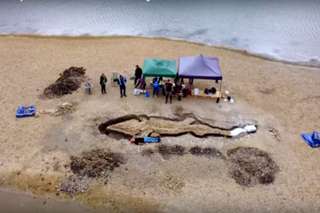
Un gigantesque « dragon des mers » vieux de 180 millions d’années découvert au Royaume-Uni
Royaume-Uni fossile Ichthyosauria découverte
180 millions d'années sous nos pieds. Un fossile d'ichtyosaure colossal vient d'être mis au jour en Angleterre, et il redessine ce que l'on croyait savoir sur ces reptiles marins préhistoriques. Une découverte qui a fait trembler le monde de la paléontologie britannique. 
16/06/2026 futura-terre
Fossils from Chinese Cave Fill Crucial Gap in History of Gigantopithecus blacki
Des fossiles provenant d'une grotte chinoise comblent une lacune cruciale dans l'histoire du Gigantopithecus blacki
dent Chine fossile origine humaine mammifères
Au fond d'une grotte calcaire du sud de la Chine, des paléontologues ont découvert un assemblage de treize dents fossilisées appartenant à Gigantopithecus blacki, la plus grande espèce de primate jamais connue. L'article Les fossiles des grottes chinoises comblent une lacune cruciale dans l'histoire de Gigantopithecus blacki apparaît en premier sur Sci.News : Breaking Science News.
15/06/2026 sci-news ⚙ Traduction automatique
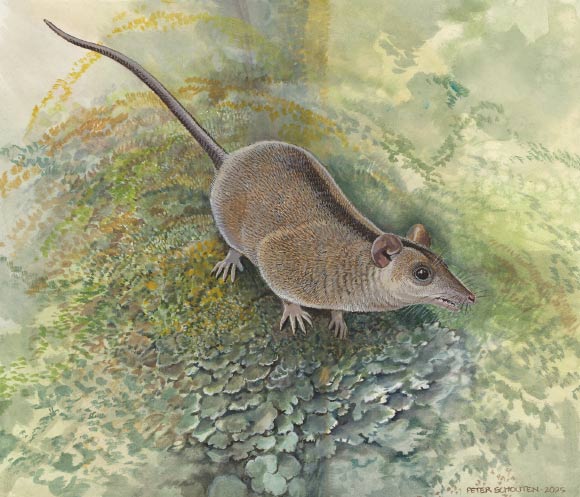
New Marsupial Lineage Emerges from Australian Fossils
Une nouvelle lignée marsupiale émerge des fossiles australiens
Australie Miocène fossile insecte mammifères nouvelle espèce
Les paléontologues ont décrit un nouveau genre et trois nouvelles espèces de petits marsupiaux insectivores provenant des dépôts du Miocène inférieur de la zone du patrimoine mondial de Riversleigh, dans le nord-ouest du Queensland, l'un des sites fossilifères les plus riches d'Australie. L'article Une nouvelle lignée marsupiale émerge des fossiles australiens apparaît en premier sur Sci.News : Breaking Science News.
15/06/2026 sci-news ⚙ Traduction automatique
Un superbe crâne de théropode exposé
musée fossile Tyrannosaurus crâne
Lors d'une visite au Museum für Naturkunde (Berlin) nous en avons profité pour photographier le magnifique crâne de Tristan le Tyrannosaurus rex.  Le crâne est l’un des crânes de tyrannosaure les plus complets et les mieux conservés connus de la science.  Les fossiles de T. rex, exposés à côté du crâne, ont été nommés Tristan Otto.  À
12/06/2026 everythingdinosaur ⚙ Traduction automatique
Les cahiers disparus qui ont résolu un mystère fossile vieux de 55 millions d'années
prédateur Nouvelle-Zélande fossile découverte poisson
Un poisson fossile spectaculaire découvert sur une falaise isolée en Nouvelle-Zélande il y a près de 30 ans a enfin révélé toute son histoire grâce à une découverte inattendue : les carnets de terrain du collectionneur original, perdus depuis longtemps. Le fossile de 1,2 mètre, conservé dans des détails tridimensionnels époustouflants, appartenait à un ancien prédateur ressemblant à un tarpon qui naviguait dans les eaux néo-zélandaises il y a environ 55 millions d'années.
12/06/2026 sciencedaily ⚙ Traduction automatique
1 2 3 4 5 6 7 8 9 10 11 12 13 14 15 16 17 18 19 20 21 22 23 24 25 26 27 28 29 30 31 32 33 34 35