Early Cretaceous

Geological interval

33 image(s) · 12 News

View page

Image gallery

Left dentary of rebbachisaurid sauropod Demandasaurus darwini
gen. et sp. nov. from Late Barremian–Early Aptian, Early Cretaceous of
Tenadas de los Vallejos II, Spain, MDS−RVII,443, in lateral (A) and dorsal

(B) views. The arrow indicates a depressed area in a dorsolateral position.
Taxa Demandasaurus

Left dentary of rebbachisaurid sauropod Demandasaurus darwini gen. et sp. nov. from Late Barremian–Early Aptian, Early Cretaceous of Tenadas de los Vallejos II, Spain, MDS−RVII,443, in lateral (A) and dorsal (B) views. The arrow indicates a depressed area in a dorsolateral position.

Spain Aptian Barremian Cretaceous +3
Fossil specimen of early Cretaceous pterosaur Sinopterus dongi, which is collected from Chaoyang, Liaoning, China. The specimen (BMNHC Ph773) is a collection of Beijing Museum of Natural History and was on display in the National Museum of Natural Science (Taichung, Taiwan) during a special exhibition.
Taxa Sinopterus

Fossil specimen of early Cretaceous pterosaur Sinopterus dongi, which is collected from Chaoyang, Liaoning, China. The specimen (BMNHC Ph773) is a collection of Beijing Museum of Natural History and was on display in the National Museum of Natural Science (Taichung, Taiwan) during a special exhibition.

museum China Taiwan Cretaceous +5
Leptocleidus capensis, a plesiosaur from the Early Cretaceous of South Africa, pencil drawing, digital coloring
Taxa Leptocleididae

Leptocleidus capensis, a plesiosaur from the Early Cretaceous of South Africa, pencil drawing, digital coloring

drawing South Africa Cretaceous Early Cretaceous +4
Figure 1: Geographic distribution of Early Cretaceous iguanodontians in North America.
Taxa found at each locality are as follows: (A) Dakotadon lakotaensis; (B) Osmakasaurus depressus; (C) Tenontosaurus tilletti, Tenontosaurus dossi; (D) Tenontosaurus tilletti; (E) Theiophytalia kerri; (F) Cedrorestes crichtoni, Planicoxa venenica; (G) Hippodraco scutodens; (H) Iguanacolossus fortis; (I) Tenontosaurus sp; (J) Tenontosaurus tilletti.
Taxa Osmakasaurus

Figure 1: Geographic distribution of Early Cretaceous iguanodontians in North America. Taxa found at each locality are as follows: (A) Dakotadon lakotaensis; (B) Osmakasaurus depressus; (C) Tenontosaurus tilletti, Tenontosaurus dossi; (D) Tenontosaurus tilletti; (E) Theiophytalia kerri; (F) Cedrorestes crichtoni, Planicoxa venenica; (G) Hippodraco scutodens; (H) Iguanacolossus fortis; (I) Tenontosaurus sp; (J) Tenontosaurus tilletti.

Cretaceous Early Cretaceous Cedrorestes Dakotadon +7
A photograph of partial specimen American Museum of Natural History (AMNH) 22555, posterior dorsal vertebrae, and the sacrum and pelvis (both iliae, and right ischium and pubis) of Anhanguera sp. (formerly often assigned to Anhanguera santanae),[1] from the Early Cretaceous Romualdo Formation (former Romualdo Member of the Santana Formation) of NE Brazil in dorsal view.
Taxa Anhanguera

A photograph of partial specimen American Museum of Natural History (AMNH) 22555, posterior dorsal vertebrae, and the sacrum and pelvis (both iliae, and right ischium and pubis) of Anhanguera sp. (formerly often assigned to Anhanguera santanae),[1] from the Early Cretaceous Romualdo Formation (former Romualdo Member of the Santana Formation) of NE Brazil in dorsal view.

pelvis museum Brazil Conway +7
Reconstruction of Agustinia ligabuei from the Early Cretaceous of Argentina as a rebbachisaurid following Bellardini et al. 2022

Reconstruction of Agustinia ligabuei from the Early Cretaceous of Argentina as a rebbachisaurid following Bellardini et al. 2022

Argentina Cretaceous Early Cretaceous Agustinia +2
Agustinia ligabuei, a sauropod from the Early Cretaceous of Argentina. Digital.

Agustinia ligabuei, a sauropod from the Early Cretaceous of Argentina. Digital.

Argentina Cretaceous Early Cretaceous Agustinia +2
Pliosaurus (Luskhan itilensis) lived on the territory of the Volga region in the Hauterivian age of the Early Cretaceous period. Discovered in 2002 by G.N. Uspensky on the banks of the Volga near the village of Slantsevy Rudnik. This is the most complete pliosaurus skeleton found in Russia. This pliosaurus was not a predator and preferred to feed on fish and cephalopods.

Pliosaurus (Luskhan itilensis) lived on the territory of the Volga region in the Hauterivian age of the Early Cretaceous period. Discovered in 2002 by G.N. Uspensky on the banks of the Volga near the village of Slantsevy Rudnik. This is the most complete pliosaurus skeleton found in Russia. This pliosaurus was not a predator and preferred to feed on fish and cephalopods.

predator Russia Cretaceous Early Cretaceous +5
Reconstruction of brachauchenin pliosaurid Luskhan itilensis. Early Cretaceous of Ulyanovsk region. 2017.

Reconstruction of brachauchenin pliosaurid Luskhan itilensis. Early Cretaceous of Ulyanovsk region. 2017.

Cretaceous Early Cretaceous Brachaucheninae Luskhan +1
Comptonatus is an iguanodontid ornithopod dinosaur that lived about 125 million years ago, in the Early Cretaceous of what is now Europe. It was a medium sized herbivore at about 7 m in length, and weighed around 1 t in body mass. Fossilized footprints found near the original specimen indicate that Comptonatus was likely a herding animal. Comparisons between Comptonatus and other iguanodontids that lived around the same time and region show a high rate of diversity. This indicates there may have been pressure for speedy evolutionary adaptation in the region, or perhaps a high volume of migration.
Taxa Comptonatus

Comptonatus is an iguanodontid ornithopod dinosaur that lived about 125 million years ago, in the Early Cretaceous of what is now Europe. It was a medium sized herbivore at about 7 m in length, and weighed around 1 t in body mass. Fossilized footprints found near the original specimen indicate that Comptonatus was likely a herding animal. Comparisons between Comptonatus and other iguanodontids that lived around the same time and region show a high rate of diversity. This indicates there may have been pressure for speedy evolutionary adaptation in the region, or perhaps a high volume of migration.

migration Cretaceous Early Cretaceous specimen +3
Left dentary of rebbachisaurid sauropod Demandasaurus darwini
gen. et sp. nov. from Late Barremian–Early Aptian, Early Cretaceous of
Tenadas de los Vallejos II, Spain, MDS−RVII,443, in lateral (A) and dorsal

(B) views. The arrow indicates a depressed area in a dorsolateral position.

Left dentary of rebbachisaurid sauropod Demandasaurus darwini gen. et sp. nov. from Late Barremian–Early Aptian, Early Cretaceous of Tenadas de los Vallejos II, Spain, MDS−RVII,443, in lateral (A) and dorsal (B) views. The arrow indicates a depressed area in a dorsolateral position.

Spain Aptian Barremian Cretaceous +3
Life restoration of Cearadactylus atrox.
Based on figure 2 of "On the systematic relationships of Cearadactylus atrox, an enigmatic Early Cretaceous pterosaur from the Santana Formation of Brazil" by D. M. Unwin Mitteilungen Museum für Naturkunde Berlin, Geowissenschaftlichen Reihe 5: 239-263

Life restoration of Cearadactylus atrox. Based on figure 2 of "On the systematic relationships of Cearadactylus atrox, an enigmatic Early Cretaceous pterosaur from the Santana Formation of Brazil" by D. M. Unwin Mitteilungen Museum für Naturkunde Berlin, Geowissenschaftlichen Reihe 5: 239-263

museum Brazil Cretaceous Early Cretaceous +4
Figure 1: Geographic distribution of Early Cretaceous iguanodontians in North America.
Taxa found at each locality are as follows: (A) Dakotadon lakotaensis; (B) Osmakasaurus depressus; (C) Tenontosaurus tilletti, Tenontosaurus dossi; (D) Tenontosaurus tilletti; (E) Theiophytalia kerri; (F) Cedrorestes crichtoni, Planicoxa venenica; (G) Hippodraco scutodens; (H) Iguanacolossus fortis; (I) Tenontosaurus sp; (J) Tenontosaurus tilletti.
Taxa Planicoxa

Figure 1: Geographic distribution of Early Cretaceous iguanodontians in North America. Taxa found at each locality are as follows: (A) Dakotadon lakotaensis; (B) Osmakasaurus depressus; (C) Tenontosaurus tilletti, Tenontosaurus dossi; (D) Tenontosaurus tilletti; (E) Theiophytalia kerri; (F) Cedrorestes crichtoni, Planicoxa venenica; (G) Hippodraco scutodens; (H) Iguanacolossus fortis; (I) Tenontosaurus sp; (J) Tenontosaurus tilletti.

Cretaceous Early Cretaceous Cedrorestes Dakotadon +7
A map showing the distribution of paraves in Early Cretaceous with respective paleogeographic setting.

A map showing the distribution of paraves in Early Cretaceous with respective paleogeographic setting.

Cretaceous Early Cretaceous Paraves
A photograph of partial specimen American Museum of Natural History (AMNH) 22555, skull without mandible, of Anhanguera sp. (formerly often assigned to Anhanguera santanae),[1] from the Early Cretaceous Romualdo Formation (former Romualdo Member of the Santana Formation) of NE Brazil in right lateral view.

A photograph of partial specimen American Museum of Natural History (AMNH) 22555, skull without mandible, of Anhanguera sp. (formerly often assigned to Anhanguera santanae),[1] from the Early Cretaceous Romualdo Formation (former Romualdo Member of the Santana Formation) of NE Brazil in right lateral view.

museum Brazil Conway Romualdo +7
A photograph of partial specimen American Museum of Natural History (AMNH) 22555, anterior dorsal vertebrae, dorsal ribs and partial shoulder girdle (at least right scapula) of Anhanguera sp. (formerly often assigned to Anhanguera santanae),[1] from the Early Cretaceous Romualdo Formation (former Romualdo Member of the Santana Formation) of NE Brazil in dorsal view.

A photograph of partial specimen American Museum of Natural History (AMNH) 22555, anterior dorsal vertebrae, dorsal ribs and partial shoulder girdle (at least right scapula) of Anhanguera sp. (formerly often assigned to Anhanguera santanae),[1] from the Early Cretaceous Romualdo Formation (former Romualdo Member of the Santana Formation) of NE Brazil in dorsal view.

museum Brazil Conway Romualdo +6
1 2 3

News

Queensland Ichthyosaur Fossil Provides World-first Evidence of Predation on a Pterosaur
predator prey Australia Toolebuc Cretaceous Early Cretaceous fossil Ichthyosauria Pterosauria formation
An extraordinary fossil from Queensland, Australia has provided evidence of a prehistoric food chain. Scientists have identified the first definitive evidence that an ichthyosaur consumed a pterosaur. Furthermore, the marine reptile later became prey for one of the largest predators in the ancient Eromanga Sea. The spectacular fossil comes from the Lower Cretaceous Toolebuc Formation
28/07/2026 everythingdinosaur
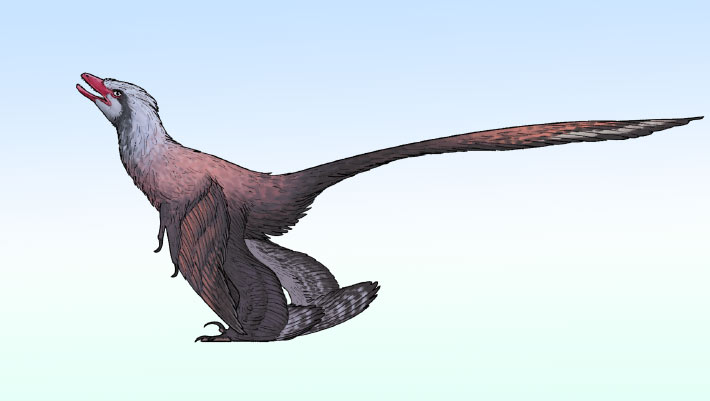
New Feathered Dinosaur from China Had Peacock-Like Tail
feather China Cretaceous Early Cretaceous Dinosauria bird evolution new species
A new genus and species of four-winged pennaraptoran dinosaur from the Early Cretaceous of northern China is adding another twist to the story of how birds evolved from their dinosaur ancestors. The post New Feathered Dinosaur from China Had Peacock-Like Tail appeared first on Sci.News: Breaking Science News.
23/06/2026 sci-news
125-Million-Year-Old Crocodile Relative Reveals Its True Colors
scale skin Spain Cretaceous Early Cretaceous other reptiles
Exceptionally preserved skin of Montsecosuchus depereti, an extinct crocodylomorph no larger than a house cat that prowled the tropical wetlands of Early Cretaceous Spain, has allowed paleontologists to reconstruct details of its scales, sensory organs and even possible banded markings along its tail. The post 125-Million-Year-Old Crocodile Relative Reveals Its True Colors appeared first on Sci.News: Breaking Science News.
18/06/2026 sci-news
Sauroposeidon: Beast of the Week
United States Cretaceous Early Cretaceous Dinosauria Sauroposeidon
 This week we will be checking out a huge dinosaur with an equally impressive name.  Enter Sauroposeidon proteles!Sauroposeidon was a sauropod dinosaur (long neck) that lived in what is now Oklahoma, Texas, and Wyoming, USA, during the early Cretaceous period, about 113 million years ago.  Its genus name translates to "Lizard Earthquake God" after the Greek god, Poseidon, who in addition to his more famous association with the ocean, was also the god of earthquakes in Greek mythology. Since not
14/06/2026 prehistoricbeastoftheweek
New Four-winged Dinosaur from China Described
feather limb description China Cretaceous Early Cretaceous fossil Dinosauria Microraptorinae new species partial
Palaeontologists have described a new species of microraptorine theropod from north-western China. Named Jian changmaensis, this small, feathered dinosaur probably glided on four wings. The fossil provides fresh insights into Early Cretaceous ecosystems and extends the known range of the Microraptorinae. The fossil material consists of an articulated partial left pectoral girdle and forelimb. It
08/06/2026 everythingdinosaur
1 2 3