←

Argentine

Pays

37 image(s) · 9 Actualités

Galerie d'images

Photograph of the skeleton of Patagosaurus fariasi Bonaparte, 1979. The skeleton is on display at Museo Argentino de Ciencias Naturales, in Argentina. Patagosaurus is a basal eusauropodan, closely related to Cetiosaurus possibly within Cetiosauridae. Photograph by Mathijs de Bruijne.
Taxons Patagosaurus

Photograph of the skeleton of Patagosaurus fariasi Bonaparte, 1979. The skeleton is on display at Museo Argentino de Ciencias Naturales, in Argentina. Patagosaurus is a basal eusauropodan, closely related to Cetiosaurus possibly within Cetiosauridae. Photograph by Mathijs de Bruijne.

Argentine Cetiosauria Cetiosauridae Eusauropoda +2
Reconstructed skeleton of Argentinonectes calafatensis at the Bernardino Rivadavia Natural Sciences Argentine Museum in 2018.
Taxons Argentinonectes

Reconstructed skeleton of Argentinonectes calafatensis at the Bernardino Rivadavia Natural Sciences Argentine Museum in 2018.

musée Argentine Argentinonectes squelette
Reconstruction of the Abelisaurus skull with original bones of the holotype. Museo Provincial Carlos Ameghino, Cipolletti, Argentina. Scale = 10 cm
Taxons Abelisaurus

Reconstruction of the Abelisaurus skull with original bones of the holotype. Museo Provincial Carlos Ameghino, Cipolletti, Argentina. Scale = 10 cm

os écaille Argentine holotype +3
Cervical vertebrae of rebbachisaurid sauropod Katepensaurus goicoecheai Ibiricu, Casal, Martínez, Lamanna, Luna, and Salgado, 2013a from the
Cenomanian–Turonian Bajo Barreal Formation of Chubut Province, Argentina. A. UNPSJB-PV 1007/1, anterior cervical vertebra in anterior (A1) and
right ventrolateral (A2) views. B. UNPSJB-PV 1007/2, anterior cervical vertebra in right lateral view. C. UNPSJB-PV 1007/3, middle cervical vertebra in

right lateral view. Lateral fossae of the centrum (hypothesized as pneumatic in origin) indicated by arrows.
Taxons Katepensaurus

Cervical vertebrae of rebbachisaurid sauropod Katepensaurus goicoecheai Ibiricu, Casal, Martínez, Lamanna, Luna, and Salgado, 2013a from the Cenomanian–Turonian Bajo Barreal Formation of Chubut Province, Argentina. A. UNPSJB-PV 1007/1, anterior cervical vertebra in anterior (A1) and right ventrolateral (A2) views. B. UNPSJB-PV 1007/2, anterior cervical vertebra in right lateral view. C. UNPSJB-PV 1007/3, middle cervical vertebra in right lateral view. Lateral fossae of the centrum (hypothesized as pneumatic in origin) indicated by arrows.

vertèbre Argentine Cénomanien Turonien +3
Astigmasaura is a medium-sized rebbachisaurid sauropod dinosaur from the Late Cretaceous period of what is now Argentina. Rebbachisaurids had highly pneumatized bones that helped them to hold their weight on their four pillar-like legs, and extremely long tails. Astigmasaura was likely a ground-level browsing herbivore.
Taxons Astigmasaura

Astigmasaura is a medium-sized rebbachisaurid sauropod dinosaur from the Late Cretaceous period of what is now Argentina. Rebbachisaurids had highly pneumatized bones that helped them to hold their weight on their four pillar-like legs, and extremely long tails. Astigmasaura was likely a ground-level browsing herbivore.

os Argentine Crétacé Crétacé supérieur +3
Campananeyen is a rebbachisaurid sauropod that lived approximately 100 million years ago in the Late Cretaceous of what is now Argentina. Rebbachisaurids are the main group of diplodocoidea to have lived past the Jurassic, and had a more horizontal posture than contemporary sauropods, mainly the titanosaurs. They are unique among sauropods for having batteries of teeth used for chewing, rather than the typical peglike teeth sauropods used to strip leaves off branches.
Taxons Campananeyen

Campananeyen is a rebbachisaurid sauropod that lived approximately 100 million years ago in the Late Cretaceous of what is now Argentina. Rebbachisaurids are the main group of diplodocoidea to have lived past the Jurassic, and had a more horizontal posture than contemporary sauropods, mainly the titanosaurs. They are unique among sauropods for having batteries of teeth used for chewing, rather than the typical peglike teeth sauropods used to strip leaves off branches.

Argentine Crétacé Jurassique Crétacé supérieur +4
Skeleton of Tehuelchesaurus at the Museo Paleontológico Egidio Feruglio in Trelew, Argentina
Taxons Tehuelchesaurus

Skeleton of Tehuelchesaurus at the Museo Paleontológico Egidio Feruglio in Trelew, Argentina

Argentine Tehuelchesaurus squelette
Skeleton of Bagualia at the Museo Paleontológico Egidio Feruglio in Trelew, Argentina
Taxons Bagualia

Skeleton of Bagualia at the Museo Paleontológico Egidio Feruglio in Trelew, Argentina

Argentine Bagualia squelette
Fig. 5. Forelimb bones of the titanosaurian sauropod Bustingorrytitan shiva gen. et sp. nov. from “Bustingorry II” site, Neuquén Province, Argentina,
upper Cenomanian. A. Left coracoid (holotype, MMCH-Pv 59/13) in lateral view. B. Left scapula (holotype, MMCH-Pv 59/11) in lateral view. C. Left
humerus (holotype, MMCH-Pv 59/21) in proximal (C1), anterior (C2), and distal (C3) views. D. Right radius (holotype, MMCH-Pv 59/22) in posterior
view. E. Left sternal plate (holotype, MMCH-Pv 59/15) in dorsal view. F. Articulated metacarpals I–V (holotype, MMCH-Pv 59/25–29) in proximal
(F1), anterior (F2) and distal (F3) views. G. Right ulna (holotype, MMCH-Pv 59/23) in medial (G1) and proximal (G2) views. Abbreviations: cf, coracoid

foramen; gas, glenoid articular surface; igl, infraglenoid lip; I–V, metacarpals. Scale bars 200 mm.
Taxons Bustingorrytitan

Fig. 5. Forelimb bones of the titanosaurian sauropod Bustingorrytitan shiva gen. et sp. nov. from “Bustingorry II” site, Neuquén Province, Argentina, upper Cenomanian. A. Left coracoid (holotype, MMCH-Pv 59/13) in lateral view. B. Left scapula (holotype, MMCH-Pv 59/11) in lateral view. C. Left humerus (holotype, MMCH-Pv 59/21) in proximal (C1), anterior (C2), and distal (C3) views. D. Right radius (holotype, MMCH-Pv 59/22) in posterior view. E. Left sternal plate (holotype, MMCH-Pv 59/15) in dorsal view. F. Articulated metacarpals I–V (holotype, MMCH-Pv 59/25–29) in proximal (F1), anterior (F2) and distal (F3) views. G. Right ulna (holotype, MMCH-Pv 59/23) in medial (G1) and proximal (G2) views. Abbreviations: cf, coracoid foramen; gas, glenoid articular surface; igl, infraglenoid lip; I–V, metacarpals. Scale bars 200 mm.

os humérus écaille Argentine +4
Speculative reconstruction of Aoniraptor'’ from the Late Cretaceous of Argentina, here restored as a megaraptoran as recovered by most studies
Taxons Aoniraptor

Speculative reconstruction of Aoniraptor'’ from the Late Cretaceous of Argentina, here restored as a megaraptoran as recovered by most studies

Argentine Crétacé Crétacé supérieur Aoniraptor +1
Argentinosaurus huinculensis reconstruction at Museo Municipal Carmen Funes, Plaza Huincul, Neuquén, Argentina.
Taxons Argentinosaurus

Argentinosaurus huinculensis reconstruction at Museo Municipal Carmen Funes, Plaza Huincul, Neuquén, Argentina.

Argentine Argentinosauria
Articulated tibia, fibula, astragalus and calcaneum of Xenotarsosaurus (UNPSJB PV 194/1; Universidad Nacional de la Patagonia ‘San Juan Bosco’, Chubut, Argentina). Scale bar: 5 cm.
Taxons Xenotarsosaurus

Articulated tibia, fibula, astragalus and calcaneum of Xenotarsosaurus (UNPSJB PV 194/1; Universidad Nacional de la Patagonia ‘San Juan Bosco’, Chubut, Argentina). Scale bar: 5 cm.

écaille Argentine Xenotarsosaurus
Fig. 2. Selected cranial elements of Bicentenaria argentina nov. gen. et nov. sp. A, left lateral view of preserved caudal half of skull and jaws; B, right lateral view of preserved caudal half of skull and jaws; C, left quadrate and lower jaw in caudal view; D, fragmentary premaxillae with teeth in left lateral view; E, fragmentary left maxilla with tooth in lateral view. Abbreviations: an, angular; antf, antorbital fossa; art, articular; bs, basipterygoid process of basisphenoid; ch, notch for the chorda tympanica; gl, glenoid fossa; j, jugal; lc, lateral condyle of quadrate; lr, longitudinal ridge; ect, ectopterygoid; prar, right prearticular; pral, left prearticular; ptq, pterygoid ramus of quadrate; q, quadrate; qj, quadratojugal; sanl, left surangular; sanr, right surangular; rart, retroarticular process; t, tooth. Scale bars = 1 centimeter.
Taxons Bicentenaria

Fig. 2. Selected cranial elements of Bicentenaria argentina nov. gen. et nov. sp. A, left lateral view of preserved caudal half of skull and jaws; B, right lateral view of preserved caudal half of skull and jaws; C, left quadrate and lower jaw in caudal view; D, fragmentary premaxillae with teeth in left lateral view; E, fragmentary left maxilla with tooth in lateral view. Abbreviations: an, angular; antf, antorbital fossa; art, articular; bs, basipterygoid process of basisphenoid; ch, notch for the chorda tympanica; gl, glenoid fossa; j, jugal; lc, lateral condyle of quadrate; lr, longitudinal ridge; ect, ectopterygoid; prar, right prearticular; pral, left prearticular; ptq, pterygoid ramus of quadrate; q, quadrate; qj, quadratojugal; sanl, left surangular; sanr, right surangular; rart, retroarticular process; t, tooth. Scale bars = 1 centimeter.

écaille dent Argentine Bicentenaria +1
Reconstruction of Bravasaurus arreirosorum a titanosaur dinosaur from the Late Cretaceous of Argentina
Taxons Bravasaurus

Reconstruction of Bravasaurus arreirosorum a titanosaur dinosaur from the Late Cretaceous of Argentina

Argentine Crétacé Crétacé supérieur Bravasaurus +2
Adeopapposaurus mognai, Early Jurassic of Argentina. Digital.
Taxons Massospondylidae

Adeopapposaurus mognai, Early Jurassic of Argentina. Digital.

Argentine Jurassique inférieur Jurassique Adeopapposaurus +2
Anacleto fm. (Upper Cretaceous) in Auca Mahuida, Neuquen, Argentina.
Formations Anacleto

Anacleto fm. (Upper Cretaceous) in Auca Mahuida, Neuquen, Argentina.

Argentine Anacleto Crétacé
1 2 3

Actualités

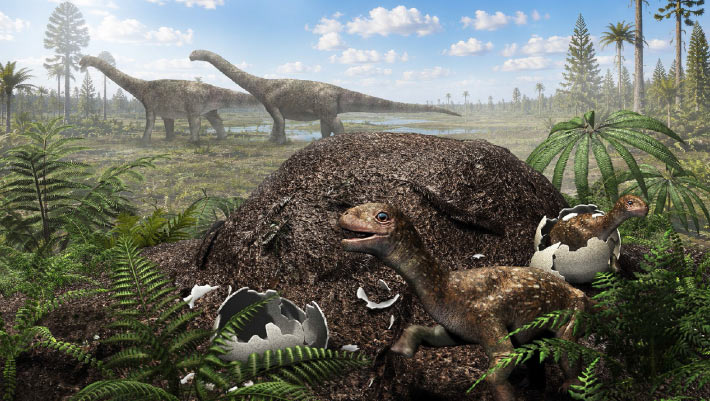
Titanosaurs Nested Far South of Equator, Fossil Eggshells Reveal
Des coquilles d'œufs fossiles révèlent que les titanosaures nichaient très au sud de l'équateur
nid Argentine Équateur fossile Dinosauria Titanosauria
Des paléontologues travaillant en Patagonie, en Argentine, ont découvert des coquilles d'œufs fossilisées qui poussent l'aire de nidification connue des dinosaures plus loin dans l'hémisphère sud que ce qui avait été documenté auparavant. L'article Titanosaures nichés à l'extrême sud de l'équateur, des coquilles d'œufs fossiles révélées sont apparus en premier sur Sci.News : Breaking Science News.
23/09/2026 sci-news ⚙ Traduction automatique
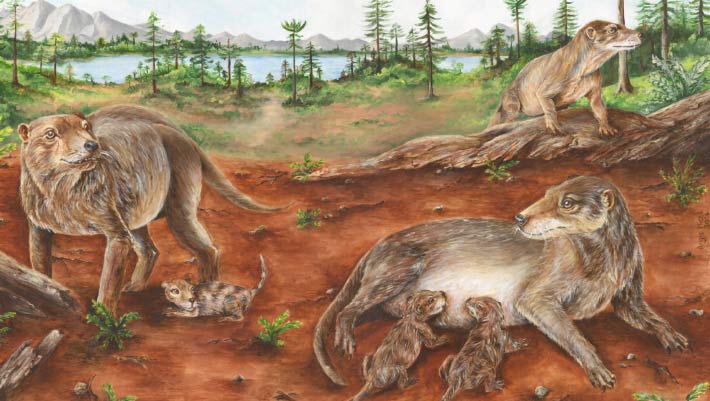
Fossil Evidence Pushes Back Origin of Live Birth by 90 Million Years
Les preuves fossiles repoussent l’origine des naissances vivantes de 90 millions d’années
reproduction Argentine fossile mammifères
Les paléontologues étudiant un fossile de cynodonte d'Argentine vieux de 236 millions d'années affirment avoir trouvé la première preuve de viviparité (naissance vivante) dans la lignée évolutive qui mène aux mammifères, repoussant l'origine de cette stratégie de reproduction de 90 à 95 millions d'années. L'article Les preuves fossiles repoussent l'origine des naissances vivantes de 90 millions d'années est apparu en premier sur Sci.News : Breaking Science News.
13/08/2026 sci-news ⚙ Traduction automatique
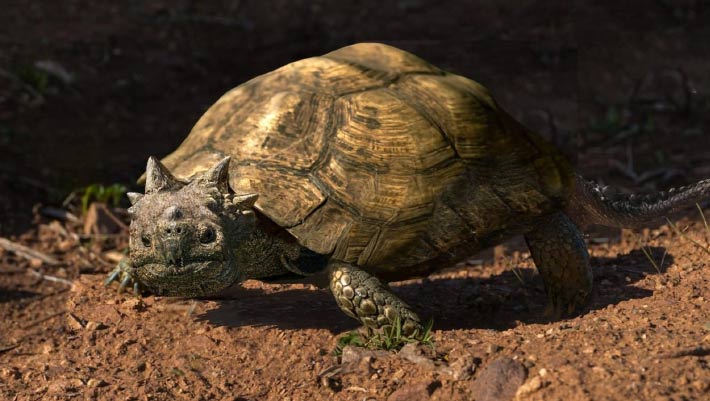
Fossil Discovery in Patagonia Reveals New Species of Horned Turtle
La découverte de fossiles en Patagonie révèle de nouvelles espèces de tortues à cornes
Argentine Maastrichtien fossile Dinosauria découverte extinction nouvelle espèce autres reptiles
Les paléontologues ont identifié une nouvelle espèce de tortue méiolaniforme du nord de la Patagonie, en Argentine, qui vivait à l'époque maastrichtienne, juste avant l'extinction massive déclenchée par un astéroïde qui a anéanti tous les dinosaures non aviaires. L'article La découverte de fossiles en Patagonie révèle de nouvelles espèces de tortues à cornes apparaît en premier sur Sci.News : Breaking Science News.
09/06/2026 sci-news ⚙ Traduction automatique
Un nouveau dinosaure Unenlagiid de Patagonie (Argentine)
Argentine Japon Crétacé Crétacé supérieur fossile Dinosauria Kank Unenlagiidae découverte formation nouvelle espèce
Une équipe de scientifiques argentins et japonais a décrit une nouvelle espèce de dinosaure unenlagiidé du sud de la Patagonie. Nommé Kank australis, ce petit dinosaure théropode vivait il y a environ 70 millions d'années à la fin du Crétacé. Les restes fossiles ont été découverts dans la formation Chorrillo de la province de Santa Cruz, en Argentine. La découverte aide mieux les paléontologues
02/06/2026 everythingdinosaur ⚙ Traduction automatique
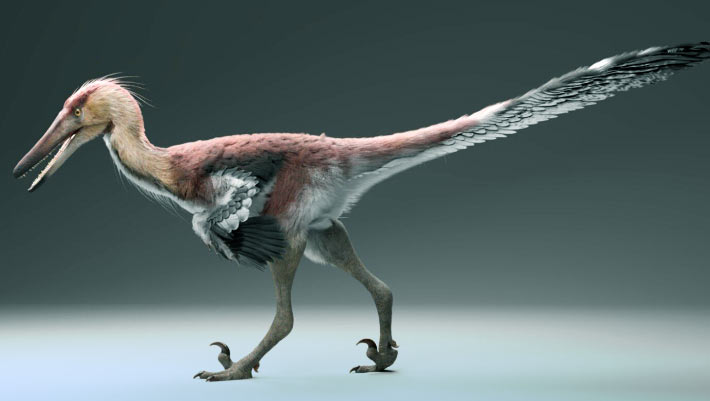
New Dinosaur Species from Argentina May Have Specialized in Catching Fish
De nouvelles espèces de dinosaures d'Argentine pourraient s'être spécialisées dans la capture de poissons
Argentine Crétacé Crétacé supérieur Dinosauria Kank Unenlagiidae
Des paléontologues argentins ont identifié une espèce jusqu'alors inconnue de dinosaures unenlagiidés qui parcouraient les zones humides d'eau douce à la fin du Crétacé, ajoutant ainsi la preuve que certains dinosaures se spécialisaient dans la capture de poissons. L'article De nouvelles espèces de dinosaures d'Argentine pourraient s'être spécialisées dans la capture de poissons est apparu en premier sur Sci.News : Breaking Science News.
29/05/2026 sci-news ⚙ Traduction automatique
1 2