←

Dinosauria

Taxon

251 image(s) · 248 Actualités

Voir la fiche

Galerie d'images

A cast of BYU 9025, the holotype fossil of the sauropod dinosaur Supersaurus, a giant scapulocoracoid measuring 2.4m long.
• The source photo was taken at the Dinosaur Journey Musuem.
• Notes regarding the file; This image was edited and extracted from the original seen here. [1] The Photoshop CC lens correction profile and a 'perspective warp' correction were applied.
Taxons Supersaurus

A cast of BYU 9025, the holotype fossil of the sauropod dinosaur Supersaurus, a giant scapulocoracoid measuring 2.4m long. • The source photo was taken at the Dinosaur Journey Musuem. • Notes regarding the file; This image was edited and extracted from the original seen here. [1] The Photoshop CC lens correction profile and a 'perspective warp' correction were applied.

moulage fossile holotype Dinosauria +1
Digital illustration of the Sauropod Dinosaur Isisaurus colberti from the Late Cretaceous (Maastrichtian) of India (72.2-66 MYA). References include Jain & Bandyopadhyay (1997), several papers from Wilson et al. and skeletal reconstruction by Scott Hartman.
Illustrated by Ansh Saxena.
About Isisaurus–

Isisaurus colberti (=Titanosaurus colberti) was a species of Titanosaurian Sauropod Dinosaur from the Late Cretaceous (Maastrichtian) age in the Indian Subcontinent. Isisaurus lived sympatrically with another Titanosaurian Sauropod Jainosaurus. It also lived alongside Theropods like Rajasaurus, Rahiolisaurus, Indosuchus etc. Remains of Isisaurus come from the Lameta formation of Central India.
Taxons Isisaurus

Digital illustration of the Sauropod Dinosaur Isisaurus colberti from the Late Cretaceous (Maastrichtian) of India (72.2-66 MYA). References include Jain & Bandyopadhyay (1997), several papers from Wilson et al. and skeletal reconstruction by Scott Hartman. Illustrated by Ansh Saxena. About Isisaurus– Isisaurus colberti (=Titanosaurus colberti) was a species of Titanosaurian Sauropod Dinosaur from the Late Cretaceous (Maastrichtian) age in the Indian Subcontinent. Isisaurus lived sympatrically with another Titanosaurian Sauropod Jainosaurus. It also lived alongside Theropods like Rajasaurus, Rahiolisaurus, Indosuchus etc. Remains of Isisaurus come from the Lameta formation of Central India.

Inde Lameta Crétacé Crétacé supérieur +9
Saurexallopus, a four toed dinosaur or bird trace fossil (jr syn Exallopus
Taxons Saurexallopus

Saurexallopus, a four toed dinosaur or bird trace fossil (jr syn Exallopus

fossile Dinosauria Exallopus Saurexallopus +1
Fossil samples – e.g. ‘primitive’ bony fish (1, 2), a skull of a temnospondyl ‘amphibian’ (probably a metoposauroid) in dorsal view (3), a skull of an archosaur of the crocodile lineage (probably a phytosaur) in palatal view (4), holotype of the “gliding reptile” Icarosaurus siefkeri [1] (5) and Atreipus-Grallator-type dinosaur tracks (bottom right) – from the Newark Supergroup, i.e. a series of mainly Late Triassic to Early Jurassic sedimentary rocks of eastern North America


↑ Edwin H. Colbert: A gliding reptile from the Triassic of New Jersey. American Museum Novitates, 2230. American Museum of Natural History, New York 1966, digitallibrary.amnh.org, cf. fig. 3 therein.
Taxons Atreipus

Fossil samples – e.g. ‘primitive’ bony fish (1, 2), a skull of a temnospondyl ‘amphibian’ (probably a metoposauroid) in dorsal view (3), a skull of an archosaur of the crocodile lineage (probably a phytosaur) in palatal view (4), holotype of the “gliding reptile” Icarosaurus siefkeri [1] (5) and Atreipus-Grallator-type dinosaur tracks (bottom right) – from the Newark Supergroup, i.e. a series of mainly Late Triassic to Early Jurassic sedimentary rocks of eastern North America ↑ Edwin H. Colbert: A gliding reptile from the Triassic of New Jersey. American Museum Novitates, 2230. American Museum of Natural History, New York 1966, digitallibrary.amnh.org, cf. fig. 3 therein.

musée Jurassique inférieur Jurassique Trias supérieur +9
An Ankylosaurus head (cast of specimen AMNH 5214), on display at the Museum of the Rockies in Bozeman, Montana.  This is from a specimen collected in Custer County, Montana.
The Ankylosauria were armored dinosaurs that lived from 122 million years ago to 66 million years ago in western North America, Europe, and East Asia.  There were two subgroups:  The Nodosauridae and Ankylosauridae. 
The Ankylosauridae contained six species, and a single subfamily -- the Ankylosaurinae.  There 18 genus within the subfamily, of which Ankylosaurus is the best known.  Ankylosaurus as the last of these, and lived 65.5 to 66.5 million years ago.
Ankylosaurus was about 20.5 feet long, 5 feet wide, and 5.5 feet tall at the hip.  It walked on all fours, with the rear legs longer than the front ones.  They ripped vegetation, and swallowed it whole.  Their defining feature was their armor.  They body was covered in thick, heavy bony plates, and most of the plates were fused together to make them even stronger.  Embedded in the skin were more knobs of bone, and the outer skin above these knobs covered in keratin (the same stuff fingernails are made of).  Ankylosaurus had a tail club, which consisted of several large osteoderms fused to the last few tail vertebrae.

Ankylosaurus was discovered in 1908.
Taxons Ankylosaurus

An Ankylosaurus head (cast of specimen AMNH 5214), on display at the Museum of the Rockies in Bozeman, Montana. This is from a specimen collected in Custer County, Montana. The Ankylosauria were armored dinosaurs that lived from 122 million years ago to 66 million years ago in western North America, Europe, and East Asia. There were two subgroups: The Nodosauridae and Ankylosauridae. The Ankylosauridae contained six species, and a single subfamily -- the Ankylosaurinae. There 18 genus within the subfamily, of which Ankylosaurus is the best known. Ankylosaurus as the last of these, and lived 65.5 to 66.5 million years ago. Ankylosaurus was about 20.5 feet long, 5 feet wide, and 5.5 feet tall at the hip. It walked on all fours, with the rear legs longer than the front ones. They ripped vegetation, and swallowed it whole. Their defining feature was their armor. They body was covered in thick, heavy bony plates, and most of the plates were fused together to make them even stronger. Embedded in the skin were more knobs of bone, and the outer skin above these knobs covered in keratin (the same stuff fingernails are made of). Ankylosaurus had a tail club, which consisted of several large osteoderms fused to the last few tail vertebrae. Ankylosaurus was discovered in 1908.

armure os peau musée +7
The "Dinosaurs in Their Time" exhibit at the Carnegie Museum of Natural History.
Pictures from some of my free time during the Project Zero Perspectives conference (#PZPGH) in Pittsburg, Pennsylvania - May 2017.
Taxons Corythosaurus

The "Dinosaurs in Their Time" exhibit at the Carnegie Museum of Natural History. Pictures from some of my free time during the Project Zero Perspectives conference (#PZPGH) in Pittsburg, Pennsylvania - May 2017.

musée Corythosaurus Dinosauria
Musango is a basal sauropodomorph dinosaur that lived during the Late Triassic period in what is now Zimbabwe. Typical of early sauropodomorphs, or "prosauropods," it was an obligate biped with a long neck, and a long tail for counterbalance. Musango grew to approximately 5 m in total body length.

Musango is a basal sauropodomorph dinosaur that lived during the Late Triassic period in what is now Zimbabwe. Typical of early sauropodomorphs, or "prosauropods," it was an obligate biped with a long neck, and a long tail for counterbalance. Musango grew to approximately 5 m in total body length.

Zimbabwe Trias supérieur Trias Dinosauria +1
Uragasaurus is a sauropod dinosaur, and the first mamenchisaurid known from Thailand. Mamenchisaurids exhibit the basic sauropod body plan, processing their herbivorous diet in their large gut. Uniquely, mamenchisaurid necks, like that of Uragasaurus, are proportionately long, even by sauropod standards.

Uragasaurus is a sauropod dinosaur, and the first mamenchisaurid known from Thailand. Mamenchisaurids exhibit the basic sauropod body plan, processing their herbivorous diet in their large gut. Uniquely, mamenchisaurid necks, like that of Uragasaurus, are proportionately long, even by sauropod standards.

Thaïlande Dinosauria Mamenchisauridae Uragasaurus
Restored profile of the oviraptorid dinosaur Heyuannia yanshini by Matt Martyniuk.

Restored profile of the oviraptorid dinosaur Heyuannia yanshini by Matt Martyniuk.

Dinosauria Heyuannia Ingenia Oviraptoridae
Vitosaura is an abelisaurid theropod dinosaur that lived in what is now Argentina. It was a medium sized bipedal carnivore reaching around 6 m in total body length. Though only known from the pelvic girdle, Vitosaura likely had a blunt rugose snout, and extremely short arms, as these are typical traits of abelisaurs.

Vitosaura is an abelisaurid theropod dinosaur that lived in what is now Argentina. It was a medium sized bipedal carnivore reaching around 6 m in total body length. Though only known from the pelvic girdle, Vitosaura likely had a blunt rugose snout, and extremely short arms, as these are typical traits of abelisaurs.

Argentine Abelisauria Abelisauridae Dinosauria +1
Isasicursor santacrucensis, an elasmarian ornithopod dinosaur.

Isasicursor santacrucensis, an elasmarian ornithopod dinosaur.

Dinosauria Elasmaria Isasicursor
Graph of relative Dinosaur fossil populations from each period of geologic time in the Mesozoic, ordered by major clade

Graph of relative Dinosaur fossil populations from each period of geologic time in the Mesozoic, ordered by major clade

Mésozoïque fossile Dinosauria
Holotype skull of the centrosaurine ceratopsian dinosaur Diabloceratops eatoni from the Late Cretaceous (Campanian) of the Wahweap Formation, Grand Staircase-Escalante National Monument, Utah. Photograph by Nick Longrich, 2023.

Holotype skull of the centrosaurine ceratopsian dinosaur Diabloceratops eatoni from the Late Cretaceous (Campanian) of the Wahweap Formation, Grand Staircase-Escalante National Monument, Utah. Photograph by Nick Longrich, 2023.

Campanien Crétacé Crétacé supérieur holotype +5
Diuqin is an unenlagiine dinosaur from the Late Cretaceous of what is now Argentina. Unenlagiines, known exclusively from South America, are usually classified as dromaeosaurs though this is sometimes debated. Like dromaeosaurs, they were covered in feathers, carnivorous, and had the large sickle-like claw on the inner toe of each foot. Unique to unenlagiines is their elongated snout, suggesting a piscivorous diet. Diuqin was a medium-sized unenlagiine, at about 4 m in length.

Diuqin is an unenlagiine dinosaur from the Late Cretaceous of what is now Argentina. Unenlagiines, known exclusively from South America, are usually classified as dromaeosaurs though this is sometimes debated. Like dromaeosaurs, they were covered in feathers, carnivorous, and had the large sickle-like claw on the inner toe of each foot. Unique to unenlagiines is their elongated snout, suggesting a piscivorous diet. Diuqin was a medium-sized unenlagiine, at about 4 m in length.

griffe plume Argentine Crétacé +5
Figure 1. Evolution of macroecological traits in Dinosauria. Large scale event in dinosaur evolution (a); the origin of dinosaurs (star), hyperthermals (volcano), the earliest fossil Avialae (bird), the earliest fossil angiosperm (flower), the Cretaceous/Palaeogene mass extinction (asteroid). Phylogeny of dinosaurs (b) redrawn from Sereno and adapted to the current consensus and upon which an ancestral state reconstruction of temperature niche (mean annual temperature) after Chiarenza et al. is plotted; Mesozoic palaeogeographies (c) for Triassic (T), Jurassic (J) and Cretaceous (K). Silhouette colours symbolize body mass for each of the taxa represented; information on dietary habits are plotted after Barrett and Zanno & Makovicky; numbers represent clades discussed through this study: 1, Ornithischia; 2, Thyreophora; 3, Ornithopoda; 4, Hadrosauroidea; 5, Marginocephalia; 6, Ceratopsia; 7, Saurischia; 8, Sauropodomorpha; 9, Sauropoda; 10, Theropoda; 11, Ceratosauria; 12, Tetanurae; 13, Coelurosauria; 14, Maniraptoriformes; 15, Maniraptora; 16, Deinonychosauria; 17, Avialae; 18, Ornithothoraces. Palaeogeographies modified from original plots via R package ‘mapast’ using plate models by Scotese.

Figure 1. Evolution of macroecological traits in Dinosauria. Large scale event in dinosaur evolution (a); the origin of dinosaurs (star), hyperthermals (volcano), the earliest fossil Avialae (bird), the earliest fossil angiosperm (flower), the Cretaceous/Palaeogene mass extinction (asteroid). Phylogeny of dinosaurs (b) redrawn from Sereno and adapted to the current consensus and upon which an ancestral state reconstruction of temperature niche (mean annual temperature) after Chiarenza et al. is plotted; Mesozoic palaeogeographies (c) for Triassic (T), Jurassic (J) and Cretaceous (K). Silhouette colours symbolize body mass for each of the taxa represented; information on dietary habits are plotted after Barrett and Zanno & Makovicky; numbers represent clades discussed through this study: 1, Ornithischia; 2, Thyreophora; 3, Ornithopoda; 4, Hadrosauroidea; 5, Marginocephalia; 6, Ceratopsia; 7, Saurischia; 8, Sauropodomorpha; 9, Sauropoda; 10, Theropoda; 11, Ceratosauria; 12, Tetanurae; 13, Coelurosauria; 14, Maniraptoriformes; 15, Maniraptora; 16, Deinonychosauria; 17, Avialae; 18, Ornithothoraces. Palaeogeographies modified from original plots via R package ‘mapast’ using plate models by Scotese.

écaille Crétacé Jurassique Mésozoïque +23
Diagram illustrating the "Temporal paradox" in paleontology. First given it's nickname by Alan Feduccia, the paradox is made up by the fact that almost all feathered dinosaurs are dated to have lived millions of years after Archaeopteryx, the oldest bird (late Jurassic, believed to have existed about 150 million years ago). Only a few of the feathered dinosaurs/birdlike dinosaurs are given an older date than Archaeopteryx.

Diagram illustrating the "Temporal paradox" in paleontology. First given it's nickname by Alan Feduccia, the paradox is made up by the fact that almost all feathered dinosaurs are dated to have lived millions of years after Archaeopteryx, the oldest bird (late Jurassic, believed to have existed about 150 million years ago). Only a few of the feathered dinosaurs/birdlike dinosaurs are given an older date than Archaeopteryx.

Jurassique Jurassique supérieur Archaeopteryx Coelurosauria +2
1 2 3 4 5 6 7 8 9 10 11 12 13 14 15 16

Actualités

Le modèle de dinosaure Haolonggood Diplodocus photographié au soleil
écaille jouet Dinosauria Diplodocia
Le modèle de dinosaure Haolonggood Diplodocus est une impressionnante figure animale préhistorique. Mesurant environ soixante-quinze centimètres de long, cette réplique à l'échelle 1:35 fait une véritable déclaration dans n'importe quelle collection. Récemment, le jeune fan de dinosaures et artiste talentueux Caldey a envoyé à Everything Dinosaur une magnifique photographie du modèle de dinosaure Haolonggood Diplodocus (variante Meng Kang) profitant d'un soleil radieux.
13/06/2026 everythingdinosaur ⚙ Traduction automatique
La piste des dinosaures de l'Oxfordshire pourrait être la plus longue piste de sauropodes connue
Royaume-Uni Jurassique empreintes Cetiosauria Dinosauria découverte
Les scientifiques qui étudient la célèbre « autoroute des dinosaures » de l'Oxfordshire ont annoncé que l'une des voies géantes pourrait représenter la plus longue voie de sauropode connue découverte au monde. La séquence remarquable d'empreintes de pas, découverte à la carrière de Dewars Farm, pourrait avoir été faite par un seul Cétiosaure alors qu'il errait dans une vasière jurassique autour de 166 millions d'années.
11/06/2026 everythingdinosaur ⚙ Traduction automatique
Description d'un fossile de dinosaure rare du groupe de Nanaimo du Crétacé supérieur
os vertèbre description Canada Colombie Crétacé Crétacé supérieur fossile Dinosauria Ornithomimosauria
Les chercheurs ont décrit une seule vertèbre caudale de dinosaure (coccyx) de l'île Denman (Colombie-Britannique, Canada).  Il a été identifié comme une vertèbre caudale d'ornithomimosaure. Le fossile, censé représenter un os de la partie médiane de la queue, n'est que le deuxième fossile de dinosaure identifié dans le groupe de Nanaimo du Crétacé supérieur. De plus, il
10/06/2026 everythingdinosaur ⚙ Traduction automatique
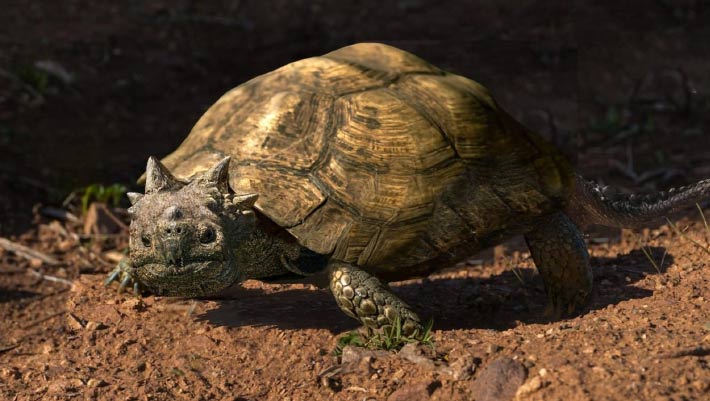
Fossil Discovery in Patagonia Reveals New Species of Horned Turtle
La découverte de fossiles en Patagonie révèle de nouvelles espèces de tortues à cornes
Argentine Maastrichtien fossile Dinosauria découverte extinction nouvelle espèce autres reptiles
Les paléontologues ont identifié une nouvelle espèce de tortue méiolaniforme du nord de la Patagonie, en Argentine, qui vivait à l'époque maastrichtienne, juste avant l'extinction massive déclenchée par un astéroïde qui a anéanti tous les dinosaures non aviaires. L'article La découverte de fossiles en Patagonie révèle de nouvelles espèces de tortues à cornes apparaît en premier sur Sci.News : Breaking Science News.
09/06/2026 sci-news ⚙ Traduction automatique
Un nouveau modèle de paraceratherium Haolonggood arrive en stock
jouet Oligocène Dinosauria mammifères
Everything Dinosaur proposera le nouveau modèle Haolonggood Paraceratherium pour 2026.  Il s’agit de la deuxième figure de mammifère préhistorique introduite par cette société. Récemment, une figurine de rhinocéros laineux (Coelodonta) a été annoncée.  Curieusement, le géant Paraceratherium est lointainement apparenté à Coelodonta.  Les deux animaux sont des ongulés aux doigts impairs (Perissodactyla). Patrouiller le paysage oligocène. Le nouveau
09/06/2026 everythingdinosaur ⚙ Traduction automatique
1 2 3 4 5 6 7 8 9 10 11 12 13 14 15 16 17 18 19 20 21 22 23 24 25 26 27 28 29 30 31 32 33 34 35 36 37 38 39 40 41 42 43 44 45 46 47 48 49 50