Dinosauria

Taxon

285 image(s) · 193 Actualités

Voir la fiche

Galerie d'images

Fossil specimen RTMP 82.19.23 - A lacrimal, postorbitals, squamosals, frontals, parietals, and braincase referred to Latenivenatrix mcmasterae, but formerly assigned to Stenonychosaurus inequalis (=Troodon inequalis). Described by 

Currie, 1985. "Cranial anatomy of Stenonychosaurus inequalis (Saurischia, Theropoda) and its bearing on the origin of birds." Canadian Journal of Earth Sciences, 22(1), 643-658.
5d-dinosaur-camp-day2-20120802-15.jpg
Taxons Latenivenatrix

Fossil specimen RTMP 82.19.23 - A lacrimal, postorbitals, squamosals, frontals, parietals, and braincase referred to Latenivenatrix mcmasterae, but formerly assigned to Stenonychosaurus inequalis (=Troodon inequalis). Described by Currie, 1985. "Cranial anatomy of Stenonychosaurus inequalis (Saurischia, Theropoda) and its bearing on the origin of birds." Canadian Journal of Earth Sciences, 22(1), 643-658. 5d-dinosaur-camp-day2-20120802-15.jpg

Canada fossile spécimen Dinosauria +7
Restoration of the skeleton, Age of Dinosaur Museum, Winton, Australia

Restoration of the skeleton, Age of Dinosaur Museum, Winton, Australia

musée Australie Winton Australovenator +2
Sarcosaurus diagram of known material: reconstruction based on basal Ceratosaurs (such as Berberosaurus and Saltriovenator). The Skull was made to look more generic and less like more derived Ceratosaurs such as Ceratosaurus. "Liassaurus", referred to "cf. Sarcosaurus woodi" and is smaller than the holotype: material in light grey is preserved, but to what extent is uncertain as it is not figured.
References:
Carrano and Sampson (2004). "A review of coelophysoids (Dinosauria: Theropoda) from the Early Jurassic of Europe, with comments on the late history of the Coelophysoidea." N. Jb. Geol. Palaont. Mh., 2004(9): 537-558. (for figures of the material)
theropoddatabase.com/Coelophysoidea.htm#Sarcosauruswoodi (for measurements of "Liassaurus")

Allain, Ronan & Tykoski, Ronald & Aquesbi, Najat & Jalil, Nour-Eddine & Monbaron, Michel & Russell, Dale & Taquet, Philippe. (2007). An abelisauroid (Dinosauria: Theropoda) from the Early Jurassic of the High Atlas Mountains, Morocco, and the radiation of Ceratosaurs. Journal of Vertebrate Paleontology. 27. 10.1671/0272-4634(2007)27[610:AADTFT]2.0.CO;2. (for measurements for Berberosaurus)
Taxons Sarcosaurus

Sarcosaurus diagram of known material: reconstruction based on basal Ceratosaurs (such as Berberosaurus and Saltriovenator). The Skull was made to look more generic and less like more derived Ceratosaurs such as Ceratosaurus. "Liassaurus", referred to "cf. Sarcosaurus woodi" and is smaller than the holotype: material in light grey is preserved, but to what extent is uncertain as it is not figured. References: Carrano and Sampson (2004). "A review of coelophysoids (Dinosauria: Theropoda) from the Early Jurassic of Europe, with comments on the late history of the Coelophysoidea." N. Jb. Geol. Palaont. Mh., 2004(9): 537-558. (for figures of the material) theropoddatabase.com/Coelophysoidea.htm#Sarcosauruswoodi (for measurements of "Liassaurus") Allain, Ronan & Tykoski, Ronald & Aquesbi, Najat & Jalil, Nour-Eddine & Monbaron, Michel & Russell, Dale & Taquet, Philippe. (2007). An abelisauroid (Dinosauria: Theropoda) from the Early Jurassic of the High Atlas Mountains, Morocco, and the radiation of Ceratosaurs. Journal of Vertebrate Paleontology. 27. 10.1671/0272-4634(2007)27[610:AADTFT]2.0.CO;2. (for measurements for Berberosaurus)

Maroc Jurassique inférieur Jurassique holotype +8
Leaellynasaura amicagraphica, dinosaur, skull. Holotype. [P 185991]
Taxons Leaellynasaura

Leaellynasaura amicagraphica, dinosaur, skull. Holotype. [P 185991]

musée holotype Dinosauria Leaellynasaura +1
Material of the dinosaur Bahariasaurus ingens (1-4, 7-18, 24-26) and indeterminate theropods (5-6, 19-23) from the Bahariya Formation of Egypt.

Material of the dinosaur Bahariasaurus ingens (1-4, 7-18, 24-26) and indeterminate theropods (5-6, 19-23) from the Bahariya Formation of Egypt.

Égypte Bahariasaurus Dinosauria formation
A cast of BYU 9025, the holotype fossil of the sauropod dinosaur Supersaurus, a giant scapulocoracoid measuring 2.4m long.
• The source photo was taken at the Dinosaur Journey Musuem.
• Notes regarding the file; This image was edited and extracted from the original seen here. [1] The Photoshop CC lens correction profile and a 'perspective warp' correction were applied.

A cast of BYU 9025, the holotype fossil of the sauropod dinosaur Supersaurus, a giant scapulocoracoid measuring 2.4m long. • The source photo was taken at the Dinosaur Journey Musuem. • Notes regarding the file; This image was edited and extracted from the original seen here. [1] The Photoshop CC lens correction profile and a 'perspective warp' correction were applied.

moulage fossile holotype Dinosauria +1
Diamantinasaurus matildae gen. et sp. nov. (AODF 603)
A. Right side
B. Left side
(both silhouettes with sketched in bone parts of the material currently known at publishing date; scale bars: 5 x 5 = 25 m; complemented with height data here)
Taxons Diamantinasaurus

Diamantinasaurus matildae gen. et sp. nov. (AODF 603) A. Right side B. Left side (both silhouettes with sketched in bone parts of the material currently known at publishing date; scale bars: 5 x 5 = 25 m; complemented with height data here)

os écaille musée Diamantinasauria +1
Saurexallopus, a four toed dinosaur or bird trace fossil (jr syn Exallopus

Saurexallopus, a four toed dinosaur or bird trace fossil (jr syn Exallopus

fossile Dinosauria Exallopus Saurexallopus +1
* Wintonotitan wattsi gen. et sp. nov. (QMF 7292)
(Silhouette with sketched in bone parts of the material currently known at publishing date; scale bar: size unknown — not mentioned in original source)
Taxons Wintonotitan

* Wintonotitan wattsi gen. et sp. nov. (QMF 7292) (Silhouette with sketched in bone parts of the material currently known at publishing date; scale bar: size unknown — not mentioned in original source)

os écaille musée Dinosauria +1
Digital illustration of the Sauropod Dinosaur Isisaurus colberti from the Late Cretaceous (Maastrichtian) of India (72.2-66 MYA). References include Jain & Bandyopadhyay (1997), several papers from Wilson et al. and skeletal reconstruction by Scott Hartman.
Illustrated by Ansh Saxena.
About Isisaurus–

Isisaurus colberti (=Titanosaurus colberti) was a species of Titanosaurian Sauropod Dinosaur from the Late Cretaceous (Maastrichtian) age in the Indian Subcontinent. Isisaurus lived sympatrically with another Titanosaurian Sauropod Jainosaurus. It also lived alongside Theropods like Rajasaurus, Rahiolisaurus, Indosuchus etc. Remains of Isisaurus come from the Lameta formation of Central India.

Digital illustration of the Sauropod Dinosaur Isisaurus colberti from the Late Cretaceous (Maastrichtian) of India (72.2-66 MYA). References include Jain & Bandyopadhyay (1997), several papers from Wilson et al. and skeletal reconstruction by Scott Hartman. Illustrated by Ansh Saxena. About Isisaurus– Isisaurus colberti (=Titanosaurus colberti) was a species of Titanosaurian Sauropod Dinosaur from the Late Cretaceous (Maastrichtian) age in the Indian Subcontinent. Isisaurus lived sympatrically with another Titanosaurian Sauropod Jainosaurus. It also lived alongside Theropods like Rajasaurus, Rahiolisaurus, Indosuchus etc. Remains of Isisaurus come from the Lameta formation of Central India.

Inde Lameta Crétacé Crétacé supérieur +9
Skeletal reconstructions of Dinosaur Park Formation caenagnathids. Skeletal reconstructions of Citipes elegans (left), Chirostenotes pergracilis (middle), and Caenagnathus collinsi (right), showing variation in skeletal representation and body size. Previously referred material is indicated in white and newly referred material is indicated in red for each taxon. Blue asterisks indicate elements that have been histologically sampled for each taxon. Citipes elegans: dentaries, metatarsal IV; Chirostenotes pergracilis: dentaries, tibia; Caenagnathus collinsi: pubis.
Taxons Caenagnathus

Skeletal reconstructions of Dinosaur Park Formation caenagnathids. Skeletal reconstructions of Citipes elegans (left), Chirostenotes pergracilis (middle), and Caenagnathus collinsi (right), showing variation in skeletal representation and body size. Previously referred material is indicated in white and newly referred material is indicated in red for each taxon. Blue asterisks indicate elements that have been histologically sampled for each taxon. Citipes elegans: dentaries, metatarsal IV; Chirostenotes pergracilis: dentaries, tibia; Caenagnathus collinsi: pubis.

Dinosaur Park Caenagnathidae Caenagnathus Chirostenotes +3
Megapnosaurus is a coelophysid theropod dinosaur from the Early Jurassic Period of Africa. It was a lightly built bipedal carnivore that grew to just over 2 m long and 13 kg in body mass. Its close relation to Coelophysis has caused some confusion in classifying the genus - it had a slender build and curved S-shaped neck, but was more robust. Comparisons between the scleral rings of Megapnosaurus and modern birds and reptiles indicate that it may have been nocturnal.
Taxons Megapnosaurus

Megapnosaurus is a coelophysid theropod dinosaur from the Early Jurassic Period of Africa. It was a lightly built bipedal carnivore that grew to just over 2 m long and 13 kg in body mass. Its close relation to Coelophysis has caused some confusion in classifying the genus - it had a slender build and curved S-shaped neck, but was more robust. Comparisons between the scleral rings of Megapnosaurus and modern birds and reptiles indicate that it may have been nocturnal.

Jurassique inférieur Jurassique Coelophysidae Coelophysis +3
Restoration of Asiaceratops salsopaludalis a ceratopsian dinosaur from the Late Cretaceous of Uzbekistan
Taxons Asiaceratops

Restoration of Asiaceratops salsopaludalis a ceratopsian dinosaur from the Late Cretaceous of Uzbekistan

Ouzbékistan Crétacé Crétacé supérieur Asiaceratops +2
Dinosaur skeleton.
Taxons Deinocheirus

Dinosaur skeleton.

Deinocheiridae Deinocheirus Dinosauria Garudimimidae +1
Dinosaur skeleton.
Taxons Garudimimidae

Dinosaur skeleton.

Deinocheiridae Deinocheirus Dinosauria Garudimimidae +1
Skull of Lesothosaurus - ornithischian dinosaur
Taxons Lesothosaurus

Skull of Lesothosaurus - ornithischian dinosaur

Dinosauria Lesothosauria Ornithischia Stormbergia +1
1 2 3 4 5 6 7 8 9 10 11 12 13 14 15 16 17 18

Actualités

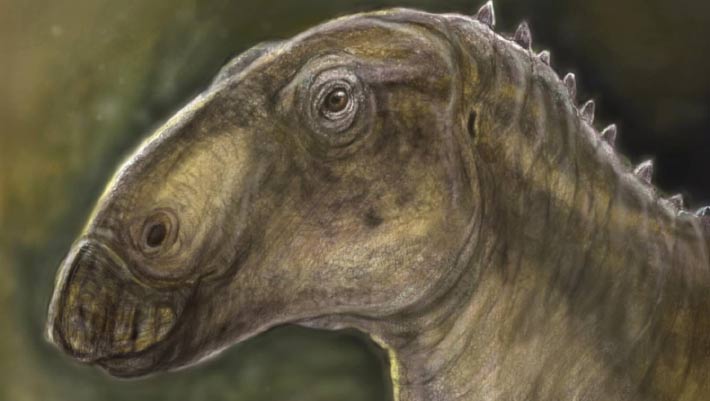
New Duck-Billed Dinosaur Unearthed in Romania
Un nouveau dinosaure à bec de canard découvert en Roumanie
bassin Hongrie Italie Roumanie Royaume-Uni Maastrichtien Dinosauria Kryptohadros nouvelle espèce squelette
Une équipe internationale de paléontologues de Roumanie, de Hongrie et d'Italie a identifié un nouveau genre et une nouvelle espèce de dinosaure herbivore à bec de canard à partir d'un squelette incomplet découvert dans le bassin de Hațeg, une dépression en forme de bol dans les Carpates de l'actuelle Roumanie. L'article Un nouveau dinosaure à bec de canard découvert en Roumanie est apparu en premier sur Sci.News : Breaking Science News.
16/06/2026 sci-news ⚙ Traduction automatique
Pourquoi les avis clients authentiques sont importants pour tout ce qui concerne les dinosaures
Dinosauria
Chez Everything Dinosaur, nous apprécions les commentaires honnêtes des clients. Au fil des années, de véritables avis clients nous ont aidé à établir la confiance auprès des collectionneurs, des familles et des passionnés de dinosaures du monde entier. C’est pourquoi nous prenons grand soin de garantir que les avis des clients restent authentiques. Récemment, notre filtre anti-spam a intercepté un e-mail marketing non sollicité proposant des services liés aux avis. L'approche a rappelé
16/06/2026 everythingdinosaur ⚙ Traduction automatique
Une étude révolutionnaire renforce les arguments en faveur des lèvres chez les dinosaures
peau tissus dent Dinosauria biomécanique étude
Le débat sur les lèvres des dinosaures se poursuit.  La question de savoir si les dinosaures possédaient des tissus extra-oraux reste controversée. Cependant, une nouvelle étude remarquable vient renforcer considérablement l’idée selon laquelle la plupart des dinosaures possédaient des tissus extra-oraux qui recouvraient et protégeaient leurs dents. Une nouvelle étude, publiée dans la revue "Palaeontology", fournit des preuves irréfutables que les lèvres étaient une condition ancestrale
15/06/2026 everythingdinosaur ⚙ Traduction automatique
Sauroposeidon: Beast of the Week
Sauroposeidon : Bête de la semaine
États-Unis Crétacé Crétacé inférieur Dinosauria Sauroposeidon
 Cette semaine, nous allons découvrir un énorme dinosaure au nom tout aussi impressionnant.  Entrez Sauroposeidon proteles !Sauroposeidon était un dinosaure sauropode (à long cou) qui vivait dans ce qui est aujourd'hui l'Oklahoma, le Texas et le Wyoming, aux États-Unis, au début du Crétacé, il y a environ 113 millions d'années.  Son nom de genre se traduit par « Dieu des tremblements de terre lézard » en hommage au dieu grec Poséidon, qui, en plus de son association la plus célèbre avec l'océan, était également le dieu des tremblements de terre dans la mythologie grecque. Puisque non
14/06/2026 prehistoricbeastoftheweek ⚙ Traduction automatique
Un cétiosaure aurait-il pu quitter la plus longue piste de sauropode ?
Royaume-Uni Bathonien Jurassique Jurassique moyen empreintes Cetiosauria Dinosauria
Récemment, nous avons publié un article mettant en avant les recherches en cours sur la remarquable « autoroute des dinosaures » de l'Oxfordshire.  Une carrière de calcaire conserve les restes de nombreuses traces de dinosaures.  Les traces sont conservées dans des strates déposées au Jurassique moyen.  Les paléontologues estiment que les traces ont environ 166 millions d'années (stade faunique bathonien).  Dans une récente radio
14/06/2026 everythingdinosaur ⚙ Traduction automatique
1 2 3 4 5 6 7 8 9 10 11 12 13 14 15 16 17 18 19 20 21 22 23 24 25 26 27 28 29 30 31 32 33 34 35 36 37 38 39