crâne

Type de vue

244 image(s) · 27 Actualités

Galerie d'images

Reconstructed skull of Jaxartosaurus aralensis Riabinin, 1937. Only a posterior portion of the skull, as well as a surangular is known, with the rest of the skull being based mostly upon File:Aralosaurus skull.png. Jaxartosaurus is currently classified as a basal lambeosaurine, more derived than Aralosaurini, but more primitive than Parasaurolophini and Lambeosaurini. It might be more derived than Tsintaosaurini (Godefroit et al., 2004). References: 
Riabinin, A.M. (1937). "A New Finding of Dinosaurs in the Trans-Baikal Region". Ezhegodn. Vserossijskogo Palaeont. Obstcg. 11: 142–144
Godefroit, P.; Bolotsky, Y.L.; Van Itterbeeck, J. (2004). "The lambeosaurine dinosaur Amurosaurus riabinini, from the
Maastrichtian of Far Eastern Russia". Acta Palaeontologica Polonica 49(4): 585–618
Taxons Jaxartosaurus

Reconstructed skull of Jaxartosaurus aralensis Riabinin, 1937. Only a posterior portion of the skull, as well as a surangular is known, with the rest of the skull being based mostly upon File:Aralosaurus skull.png. Jaxartosaurus is currently classified as a basal lambeosaurine, more derived than Aralosaurini, but more primitive than Parasaurolophini and Lambeosaurini. It might be more derived than Tsintaosaurini (Godefroit et al., 2004). References: Riabinin, A.M. (1937). "A New Finding of Dinosaurs in the Trans-Baikal Region". Ezhegodn. Vserossijskogo Palaeont. Obstcg. 11: 142–144 Godefroit, P.; Bolotsky, Y.L.; Van Itterbeeck, J. (2004). "The lambeosaurine dinosaur Amurosaurus riabinini, from the Maastrichtian of Far Eastern Russia". Acta Palaeontologica Polonica 49(4): 585–618

Russie Maastrichtien Amurosaurus Aralosaurini +7
Partial skull of Manidens condorensis from the Middle Jurassic Cañadón Asfalto Formation of Argentina. Skull reconstructions in lateral view. Dashed lines indicate estimated edges. Abbreviations: a angular antfo antorbital fossa asaf anterior surangular foramen be buccal emargination bo basioccipital bt basal tubera d dentary d1, 2, 11 dentary tooth 1, 2, 11 emfo external mandibular fossa f frontal gl glenoid gr groove j jugal jfl jugal flange jh jugal horn m maxilla m1, 11 maxillary tooth 1, 11 n nasal pd predentary pm premaxilla po postorbital pof postorbital fossa popr paroccipital process q quadrate qj quadratojugal ri ridge sa surangular sq squamosal.

Partial skull of Manidens condorensis from the Middle Jurassic Cañadón Asfalto Formation of Argentina. Skull reconstructions in lateral view. Dashed lines indicate estimated edges. Abbreviations: a angular antfo antorbital fossa asaf anterior surangular foramen be buccal emargination bo basioccipital bt basal tubera d dentary d1, 2, 11 dentary tooth 1, 2, 11 emfo external mandibular fossa f frontal gl glenoid gr groove j jugal jfl jugal flange jh jugal horn m maxilla m1, 11 maxillary tooth 1, 11 n nasal pd predentary pm premaxilla po postorbital pof postorbital fossa popr paroccipital process q quadrate qj quadratojugal ri ridge sa surangular sq squamosal.

dent Argentine Jurassique Jurassique moyen +4
Sarahsaurus aurifontanalis, referred skull (MCZ 8893), in (a) lateral, (b) occipital, (c) dorsal and (d) ventral views. an, angular; ar, articular; bo, basioccipital; bs, basisphenoid; ec, ectopterygoid; f, frontal; h, hyoid; j, jugal; l, lacrimal; ls, laterosphenoid; m, maxilla; n, nasal; op, opisthotic-exoccipital; p, parietal; po, postorbital; prf, prefrontal; pm, premaxilla; pt, pterygoid; q, quadrate; qj, quadratojugal; so, supraoccipital; sq, squamosal. Scale bar, 5 cm.

Sarahsaurus aurifontanalis, referred skull (MCZ 8893), in (a) lateral, (b) occipital, (c) dorsal and (d) ventral views. an, angular; ar, articular; bo, basioccipital; bs, basisphenoid; ec, ectopterygoid; f, frontal; h, hyoid; j, jugal; l, lacrimal; ls, laterosphenoid; m, maxilla; n, nasal; op, opisthotic-exoccipital; p, parietal; po, postorbital; prf, prefrontal; pm, premaxilla; pt, pterygoid; q, quadrate; qj, quadratojugal; so, supraoccipital; sq, squamosal. Scale bar, 5 cm.

écaille Sarahsaurus crâne
Skull of the mosasaurid squamate Thalassotitan atrox from the late Maastrichtian of Sidi Daoui, Ouled Abdoun Basin, Khouribga Province, Morocco, North Africa.

Skull of the mosasaurid squamate Thalassotitan atrox from the late Maastrichtian of Sidi Daoui, Ouled Abdoun Basin, Khouribga Province, Morocco, North Africa.

Maroc Maastrichtien Mosasauridae Thalassotitan +1
Holotype of Ulughbegsaurus as well as the holotype placed on a reconstruction of Ulughbegsaurus's skull

Holotype of Ulughbegsaurus as well as the holotype placed on a reconstruction of Ulughbegsaurus's skull

holotype Ulughbegsaurus crâne
Reconstructed skull of Einiosaurus procurvicornis on display at the Natural History Museum of Los Angeles County.

Reconstructed skull of Einiosaurus procurvicornis on display at the Natural History Museum of Los Angeles County.

musée Einiosaurus crâne
Montanoceratops cerorhynchus (Brown & Schlaikjer, 1942) - fossil ceratopsian dinosaur skeleton from the Cretaceous of Montana, USA. (MOR 542, Museum of the Rockies, Bozeman, Montana, USA)
The species name is sometimes incorrectly spelled "cerorhynchos".  The original publication spells it "cerorhynchus".  The genus name is sometimes incorrectly spelled "Montanaceratops".
Ceratopsians are the "horned dinosaurs".  They were large, quadrupedal, herbivorous dinosaurs having a beaked skull and a frill - an extension of bone behind the skull that partially covered the neck.  Ceratopsian dinosaurs are known from the Jurassic and Cretaceous.  The last members of the group died out at the Cretaceous-Tertiary boundary, 65 million years ago.
This is a partial skeleton of a juvenile Montanoceratops, a ceratopsian from the near-latest Cretaceous of western North America.  This type of ceratopsian lacked facial horns.


From exhibit signage:
Sixty-eight million years ago, when the horned dinosaurs Triceratops and Torosaurus inhabited the coastal plain near the inland ocean, primitive "horned" dinosaurs named Montanoceratops lived in uplands near the young Rocky Mountains.  These little protoceratopsians fed on plants with slicing teeth and narrow beaks similar to their giant three-horned relatives.


Classification: Animalia, Chordata, Vertebrata, Reptilia, Archosauria, Dinosauria, Ornithischia, Marginocephalia, Ceratopsia, Leptoceratopsidae
Stratigraphy: St. Mary River Formation, Maastrichtian Stage, Upper Cretaceous
Locality: Little Rocky Coulee, north of the town of Cut Bank, eastern Glacier County, northwestern Montana, USA


Info. at:

en.wikipedia.org/wiki/Montanoceratops
Taxons Montanoceratops

Montanoceratops cerorhynchus (Brown & Schlaikjer, 1942) - fossil ceratopsian dinosaur skeleton from the Cretaceous of Montana, USA. (MOR 542, Museum of the Rockies, Bozeman, Montana, USA) The species name is sometimes incorrectly spelled "cerorhynchos". The original publication spells it "cerorhynchus". The genus name is sometimes incorrectly spelled "Montanaceratops". Ceratopsians are the "horned dinosaurs". They were large, quadrupedal, herbivorous dinosaurs having a beaked skull and a frill - an extension of bone behind the skull that partially covered the neck. Ceratopsian dinosaurs are known from the Jurassic and Cretaceous. The last members of the group died out at the Cretaceous-Tertiary boundary, 65 million years ago. This is a partial skeleton of a juvenile Montanoceratops, a ceratopsian from the near-latest Cretaceous of western North America. This type of ceratopsian lacked facial horns. From exhibit signage: Sixty-eight million years ago, when the horned dinosaurs Triceratops and Torosaurus inhabited the coastal plain near the inland ocean, primitive "horned" dinosaurs named Montanoceratops lived in uplands near the young Rocky Mountains. These little protoceratopsians fed on plants with slicing teeth and narrow beaks similar to their giant three-horned relatives. Classification: Animalia, Chordata, Vertebrata, Reptilia, Archosauria, Dinosauria, Ornithischia, Marginocephalia, Ceratopsia, Leptoceratopsidae Stratigraphy: St. Mary River Formation, Maastrichtian Stage, Upper Cretaceous Locality: Little Rocky Coulee, north of the town of Cut Bank, eastern Glacier County, northwestern Montana, USA Info. at: en.wikipedia.org/wiki/Montanoceratops

os musée États-Unis Crétacé +10
Skull of a Parksosaurus
Taxons Parksosaurus

Skull of a Parksosaurus

Parksosaurus crâne
Kronosaurus queenslandicus (QM F18827; proposed neotype [part]) skull in dorsal view (modified from McHenry Citation2009). Scale = 30 cm.

Kronosaurus queenslandicus (QM F18827; proposed neotype [part]) skull in dorsal view (modified from McHenry Citation2009). Scale = 30 cm.

écaille Kronosaurus crâne
Paratype skull of Hamipterus tianshanensis on display at the Paleozoological Museum of China.
Taxons Hamipterus

Paratype skull of Hamipterus tianshanensis on display at the Paleozoological Museum of China.

musée Chine Hamipteridae Hamipterus +1
Paratype skull of Hamipterus tianshanensis on display at the Paleozoological Museum of China.
Taxons Hamipteridae

Paratype skull of Hamipterus tianshanensis on display at the Paleozoological Museum of China.

musée Chine Hamipteridae Hamipterus +1
Skull reconstruction of Incisivosaurus gauthieri.
Taxons Incisivosaurus

Skull reconstruction of Incisivosaurus gauthieri.

Incisivosaurus crâne
Sarcosaurus diagram of known material: reconstruction based on basal Ceratosaurs (such as Berberosaurus and Saltriovenator). The Skull was made to look more generic and less like more derived Ceratosaurs such as Ceratosaurus. "Liassaurus", referred to "cf. Sarcosaurus woodi" and is smaller than the holotype: material in light grey is preserved, but to what extent is uncertain as it is not figured.
References:
Carrano and Sampson (2004). "A review of coelophysoids (Dinosauria: Theropoda) from the Early Jurassic of Europe, with comments on the late history of the Coelophysoidea." N. Jb. Geol. Palaont. Mh., 2004(9): 537-558. (for figures of the material)
theropoddatabase.com/Coelophysoidea.htm#Sarcosauruswoodi (for measurements of "Liassaurus")

Allain, Ronan & Tykoski, Ronald & Aquesbi, Najat & Jalil, Nour-Eddine & Monbaron, Michel & Russell, Dale & Taquet, Philippe. (2007). An abelisauroid (Dinosauria: Theropoda) from the Early Jurassic of the High Atlas Mountains, Morocco, and the radiation of Ceratosaurs. Journal of Vertebrate Paleontology. 27. 10.1671/0272-4634(2007)27[610:AADTFT]2.0.CO;2. (for measurements for Berberosaurus)
Taxons Sarcosaurus

Sarcosaurus diagram of known material: reconstruction based on basal Ceratosaurs (such as Berberosaurus and Saltriovenator). The Skull was made to look more generic and less like more derived Ceratosaurs such as Ceratosaurus. "Liassaurus", referred to "cf. Sarcosaurus woodi" and is smaller than the holotype: material in light grey is preserved, but to what extent is uncertain as it is not figured. References: Carrano and Sampson (2004). "A review of coelophysoids (Dinosauria: Theropoda) from the Early Jurassic of Europe, with comments on the late history of the Coelophysoidea." N. Jb. Geol. Palaont. Mh., 2004(9): 537-558. (for figures of the material) theropoddatabase.com/Coelophysoidea.htm#Sarcosauruswoodi (for measurements of "Liassaurus") Allain, Ronan & Tykoski, Ronald & Aquesbi, Najat & Jalil, Nour-Eddine & Monbaron, Michel & Russell, Dale & Taquet, Philippe. (2007). An abelisauroid (Dinosauria: Theropoda) from the Early Jurassic of the High Atlas Mountains, Morocco, and the radiation of Ceratosaurs. Journal of Vertebrate Paleontology. 27. 10.1671/0272-4634(2007)27[610:AADTFT]2.0.CO;2. (for measurements for Berberosaurus)

Maroc Jurassique inférieur Jurassique holotype +8
Leaellynasaura amicagraphica, dinosaur, skull. Holotype. [P 185991]
Taxons Leaellynasaura

Leaellynasaura amicagraphica, dinosaur, skull. Holotype. [P 185991]

musée holotype Dinosauria Leaellynasaura +1
Rhomboid distal nasal process of the crest of Tsintaosaurus spinorhinus.

A. Partial distal nasal process of IVPP V725 in right lateral view. B. Lateral view of composite skull (reversed). C. partial premaxillonasal complex of IVPP V829 in right lateral view. D. Line drawing of (C) showing nasal-premaxilla articulation, and the displacement (arrow) experienced by the distal nasal process relative to its articular position. E. Mounted holotype skull (IVPP V725) of T. spinorhinus in left lateral view (reversed). F. Partial right distal nasal process (although catalogued as IVPP V725, this element corresponds to a different specimen than the type; reversed).
Taxons Tsintaosaurus

Rhomboid distal nasal process of the crest of Tsintaosaurus spinorhinus. A. Partial distal nasal process of IVPP V725 in right lateral view. B. Lateral view of composite skull (reversed). C. partial premaxillonasal complex of IVPP V829 in right lateral view. D. Line drawing of (C) showing nasal-premaxilla articulation, and the displacement (arrow) experienced by the distal nasal process relative to its articular position. E. Mounted holotype skull (IVPP V725) of T. spinorhinus in left lateral view (reversed). F. Partial right distal nasal process (although catalogued as IVPP V725, this element corresponds to a different specimen than the type; reversed).

crête dessin holotype spécimen +3
Xenovenator espinosai, holotype braincase CPC 2973. In (A) left lateral; (B) right lateral; (C) dorsal; (D) ventral; (E) anterior; (F) posterior. Abbreviations: bo, basicoccipital; bul, parabasisphenoid bulla; ex, exoccipital; fr, frontal; lad, lateral depression; lac, lacrimal articulation; lat, laterosphenoid; osp, orbitosphenoid; par, parietal; pbs, parabasisphenoid; po, postorbital; ri, median ridge; sk, skull; stf, supratemporal fossa.
Taxons Xenovenator

Xenovenator espinosai, holotype braincase CPC 2973. In (A) left lateral; (B) right lateral; (C) dorsal; (D) ventral; (E) anterior; (F) posterior. Abbreviations: bo, basicoccipital; bul, parabasisphenoid bulla; ex, exoccipital; fr, frontal; lad, lateral depression; lac, lacrimal articulation; lat, laterosphenoid; osp, orbitosphenoid; par, parietal; pbs, parabasisphenoid; po, postorbital; ri, median ridge; sk, skull; stf, supratemporal fossa.

holotype Xenovenator crâne
1 2 3 4 5 6 7 8 9 10 11 12 13 14 15 16

Actualités

Ce fossile de dinosaure capture les derniers instants d'une attaque de T. rex
dent prédateur proie fossile Dinosauria Edmontosaurus Tyrannosaurus découverte crâne
Un crâne fossilisé d'Edmontosaure avec une dent de tyrannosaure encore incrustée dans son visage a fourni aux scientifiques de rares preuves d'une rencontre dramatique entre prédateur et proie. La découverte suggère que le carnivore géant a prononcé une morsure face-à-face incroyablement puissante, offrant de nouveaux indices sur la façon dont le tyrannosaure chassait.
14/07/2026 sciencedaily ⚙ Traduction automatique
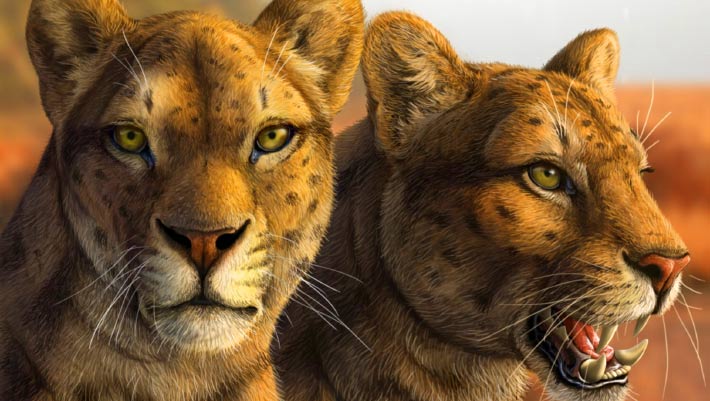
Early Saber-Toothed Cat Gets New Face after Decades of Mystery
Le premier chat à dents de sabre obtient un nouveau visage après des décennies de mystère
dent paléoart reconstitution États-Unis Pliocène mammifères crâne
Un crâne presque complet découvert il y a plusieurs décennies en Arizona a donné aux paléontologues leur aperçu le plus clair à ce jour d'Adelphailurus kansensis, une espèce énigmatique de félidés qui habitait l'Amérique du Nord il y a plus de 5 millions d'années et occupait une des premières branches de l'arbre généalogique des chats à dents de sabre. L'article Le premier chat à dents de sabre obtient un nouveau visage après des décennies de mystère est apparu en premier sur Sci.News : Breaking Science News.
29/06/2026 sci-news ⚙ Traduction automatique
Un superbe crâne de théropode exposé
musée fossile Tyrannosaurus crâne
Lors d'une visite au Museum für Naturkunde (Berlin) nous en avons profité pour photographier le magnifique crâne de Tristan le Tyrannosaurus rex.  Le crâne est l’un des crânes de tyrannosaure les plus complets et les mieux conservés connus de la science.  Les fossiles de T. rex, exposés à côté du crâne, ont été nommés Tristan Otto.  À
12/06/2026 everythingdinosaur ⚙ Traduction automatique
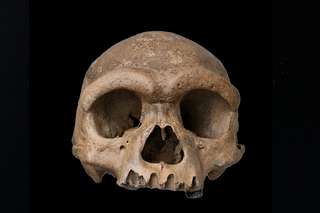
Les scientifiques pensaient les Denisoviens introuvables : cette découverte spectaculaire change désormais tout
os ADN Chine découverte Homo sapiens origine humaine crâne
Pendant quinze ans, les Denisoviens n'ont eu ni visage ni contour. Juste de l'ADN extrait d'un fragment d'os sibérien grand comme un ongle. En 2025, un crâne exceptionnel découvert en Chine a tout changé. Homo longi, surnommé l'Homme dragon, donne enfin un visage à ce groupe humain fantôme. 
06/06/2026 futura-terre
Ce poisson préhistorique pourrait expliquer comment les animaux ont marché pour la première fois sur Terre
Antarctique crâne
Les scientifiques ont examiné l'intérieur du crâne d'un poisson de l'Antarctique vieux de 380 millions d'années, étroitement apparenté aux premiers animaux à avoir marché sur terre, révélant des indices surprenants sur la façon dont la vie a commencé à sortir de l'eau. Grâce à l’imagerie neutronique avancée, les chercheurs ont découvert que Koharalepis jarviki possédait des caractéristiques adaptées pour vivre près de la surface de l’eau, notamment des ouvertures dans son crâne qui auraient pu l’aider à avaler de l’air et un organe sensible à la lumière lié aux rythmes jour-nuit.
25/05/2026 sciencedaily-paleo ⚙ Traduction automatique
1 2 3 4 5 6