crâne

Type de vue

244 image(s) · 27 Actualités

Galerie d'images

Yizhousaurus sunae skull and jaw
Taxons Yizhousaurus

Yizhousaurus sunae skull and jaw

Yizhousaurus crâne
Skull diagram showing the known material of Aardonyx. Based on photographs and measurements in original description and supplementary material. Scale bar = 10 cm
Taxons Aardonyx

Skull diagram showing the known material of Aardonyx. Based on photographs and measurements in original description and supplementary material. Scale bar = 10 cm

écaille description Aardonyx crâne
Photographs of the skull of BP/1/4779.
(A) Right lateral view. (B) Dorsal view. (C) Left lateral view. Scale bar represents 10 mm. Photographs by Kimberley E.J. Chapelle.
Taxons Ngwevu

Photographs of the skull of BP/1/4779. (A) Right lateral view. (B) Dorsal view. (C) Left lateral view. Scale bar represents 10 mm. Photographs by Kimberley E.J. Chapelle.

écaille Ngwevu crâne
Skull of the new basal sauropodomorph Leyesaurus marayensis (PVSJ 706). 
Photograph of the skull (A) and
interpretative drawing (B) in lateral view.
Dark grey color represents matrix and light grey color represents foraminae.

Abbreviations: a, angular; aoF, antorbital fenestra; aoFo; antorbital fossa; Apmx, ascending process of the maxilla; d, dentary; f, frontal; itF, infratemporal fenestra; j, jugal; l, lacrimal; laoFo; lacrimal antorbital fossa; mF, mandibular fenestra; mx, maxilla; n, nasal; O, orbit; p, parietal; pf, prefrontal; pm, premaxilla; po, postorbital; rug, platform-like rugosities; q, quadrate; qj, quadratejugal; Rmx, ridge of the ascending process of the maxilla; sa, surangular; snf, subnarial foramen.
Scale bar equals 1cm.
Taxons Leyesaurus

Skull of the new basal sauropodomorph Leyesaurus marayensis (PVSJ 706). Photograph of the skull (A) and interpretative drawing (B) in lateral view. Dark grey color represents matrix and light grey color represents foraminae. Abbreviations: a, angular; aoF, antorbital fenestra; aoFo; antorbital fossa; Apmx, ascending process of the maxilla; d, dentary; f, frontal; itF, infratemporal fenestra; j, jugal; l, lacrimal; laoFo; lacrimal antorbital fossa; mF, mandibular fenestra; mx, maxilla; n, nasal; O, orbit; p, parietal; pf, prefrontal; pm, premaxilla; po, postorbital; rug, platform-like rugosities; q, quadrate; qj, quadratejugal; Rmx, ridge of the ascending process of the maxilla; sa, surangular; snf, subnarial foramen. Scale bar equals 1cm.

écaille dessin Leyesaurus crâne
Photograph of the skulls NHMD 164741 and NHMD 164758. (A) NHMD 164741 in left lateral view. (B) NHMD 164758 in left lateral view.
Taxons Issi

Photograph of the skulls NHMD 164741 and NHMD 164758. (A) NHMD 164741 in left lateral view. (B) NHMD 164758 in left lateral view.

Issi crâne
Three-dimensional skull of BMT 1955.G35.1, Protoichthyosaurus prostaxalis. (B) Skull in left lateral view, as reconstructed in 2015. (C) Skull in right lateral view, as reconstructed in 2015. Note the distinctive asymmetric maxilla with long, narrow anterior process. Teeth are not in their original positions. Scale bar represents 20 cm.
Taxons Protoichthyosaurus

Three-dimensional skull of BMT 1955.G35.1, Protoichthyosaurus prostaxalis. (B) Skull in left lateral view, as reconstructed in 2015. (C) Skull in right lateral view, as reconstructed in 2015. Note the distinctive asymmetric maxilla with long, narrow anterior process. Teeth are not in their original positions. Scale bar represents 20 cm.

écaille Protoichthyosaurus crâne
Skull of Megacephalosaurus eulerti FHSM VP-321 in dorsal and palatal view. Right mandible in medial and lateral views.

Skull of Megacephalosaurus eulerti FHSM VP-321 in dorsal and palatal view. Right mandible in medial and lateral views.

Megacephalosaurus crâne
Holotype skull of Plesiotylosaurus crassidens (LACM 2759) on display at the Natural History Museum of Los Angeles County.

Holotype skull of Plesiotylosaurus crassidens (LACM 2759) on display at the Natural History Museum of Los Angeles County.

musée holotype Plesiotylosaurus crâne
Selmasaurus johnsoni mounted skull in the Rocky Mountain Dinosaur Resource Center in Woodland Park, Colorado

Selmasaurus johnsoni mounted skull in the Rocky Mountain Dinosaur Resource Center in Woodland Park, Colorado

Dinosauria Selmasaurus crâne
Cast of the skull of Parapsicephalus purdoni (specimen AMNH 1694) in the American Museum of Natural History.

Cast of the skull of Parapsicephalus purdoni (specimen AMNH 1694) in the American Museum of Natural History.

musée moulage spécimen Parapsicephalus +1
Achelousaurus horneri skull, collected in Glacier County, Montana, at the Museum of the Rockies in Bozeman, Montana.
The Ceratopsidae are those dinosaurs with head frills.  There are three large subgroups of Ceratopsidae: Centrosaurinae, Ceratopsinae, and Chasmosaurinae. The Triceratopsini are a "tribe" of the Chasmosaurinae -- a genus so vast that it gets the special name "tribe".  The Pachyrhinosaurini are a "tribe" within the Centrosaurinae.

Achelousaurus is a genus within the Pachyrhinosaurini.  So far, only three skulls and some limited skeletal remains have been collected anywhere in the world -- and all of them in Montana.  Their bony frills are quite similar to the Styracosaurus albertensis, although their other skull features (such as big bony bosses on the nose and behind the eyes) are not.

Achelousaurus horneri skull, collected in Glacier County, Montana, at the Museum of the Rockies in Bozeman, Montana. The Ceratopsidae are those dinosaurs with head frills. There are three large subgroups of Ceratopsidae: Centrosaurinae, Ceratopsinae, and Chasmosaurinae. The Triceratopsini are a "tribe" of the Chasmosaurinae -- a genus so vast that it gets the special name "tribe". The Pachyrhinosaurini are a "tribe" within the Centrosaurinae. Achelousaurus is a genus within the Pachyrhinosaurini. So far, only three skulls and some limited skeletal remains have been collected anywhere in the world -- and all of them in Montana. Their bony frills are quite similar to the Styracosaurus albertensis, although their other skull features (such as big bony bosses on the nose and behind the eyes) are not.

musée États-Unis Achelousaurus Centrosaurinae +8
Skull cast of Liaoceratops yanzigouensis on display at the Baoding Natural History Museum.

Skull cast of Liaoceratops yanzigouensis on display at the Baoding Natural History Museum.

musée moulage Liaoceratops crâne
Skeleton of Yamaceratops dorngobiensis (MPC-D 100/553) in right dorsolateral view. (A) Photograph; (B) Interpretive drawing. Bones are bounded by solid lines and colored beige; the matrix is gray. Shaded areas represent the broken surface of bones. Abbreviations: cd, caudal vertebrae; dr, dorsal ribs; dv, dorsal vertebrae; f, femur; fi, fibula; h, humerus; L, bone on the left side; p, isolated parietal; pp, pedal phalanges; R, bone on the right side; ra, radius; sk, skull; sv, sacral vertebrae; ti, tibia; u, ulna; il, ilium; is, ischium.

Skeleton of Yamaceratops dorngobiensis (MPC-D 100/553) in right dorsolateral view. (A) Photograph; (B) Interpretive drawing. Bones are bounded by solid lines and colored beige; the matrix is gray. Shaded areas represent the broken surface of bones. Abbreviations: cd, caudal vertebrae; dr, dorsal ribs; dv, dorsal vertebrae; f, femur; fi, fibula; h, humerus; L, bone on the left side; p, isolated parietal; pp, pedal phalanges; R, bone on the right side; ra, radius; sk, skull; sv, sacral vertebrae; ti, tibia; u, ulna; il, ilium; is, ischium.

os humérus dessin Yamaceratops +2
Skeletal elements of Lophorhothon atopus. (A, B and C) Partial skull roof and braincase (holotype FMNH 27383) in dorsal, ventral, and left lateral views. (D) Partial left nasal of FMNH 27383 in lateral view. (E) Left prefrontal of FMNH 27383 in lateral view. (F) Partial left jugal of FMNH 27383 in medial view. (G) Detail of marginal denticles of the dentary tooth in (H). (H) Apical half of a dentary tooth crown AUMP 2295 in lingual view. (I) Maxillary tooth crown of FMNH 27383 in labial view. (J) Left pubis of AUMP 2295 in lateral view. (K) Iliac process of the left ilium of FMNH 27383 in lateral view.
Taxons Lophorhothon

Skeletal elements of Lophorhothon atopus. (A, B and C) Partial skull roof and braincase (holotype FMNH 27383) in dorsal, ventral, and left lateral views. (D) Partial left nasal of FMNH 27383 in lateral view. (E) Left prefrontal of FMNH 27383 in lateral view. (F) Partial left jugal of FMNH 27383 in medial view. (G) Detail of marginal denticles of the dentary tooth in (H). (H) Apical half of a dentary tooth crown AUMP 2295 in lingual view. (I) Maxillary tooth crown of FMNH 27383 in labial view. (J) Left pubis of AUMP 2295 in lateral view. (K) Iliac process of the left ilium of FMNH 27383 in lateral view.

dent holotype Lophorhothon partiel +1
The skull of the holotype of Acristavus, MOR 1155
Taxons Acristavus

The skull of the holotype of Acristavus, MOR 1155

holotype Acristavus Montanoceratops crâne
Holotype skull of Augustynolophus morrisi (LACM 2852) on display at the Natural History Museum of Los Angeles County.
Taxons Augustynolophus

Holotype skull of Augustynolophus morrisi (LACM 2852) on display at the Natural History Museum of Los Angeles County.

musée holotype Augustynolophus crâne
1 2 3 4 5 6 7 8 9 10 11 12 13 14 15 16

Actualités

Ce fossile de dinosaure capture les derniers instants d'une attaque de T. rex
dent prédateur proie fossile Dinosauria Edmontosaurus Tyrannosaurus découverte crâne
Un crâne fossilisé d'Edmontosaure avec une dent de tyrannosaure encore incrustée dans son visage a fourni aux scientifiques de rares preuves d'une rencontre dramatique entre prédateur et proie. La découverte suggère que le carnivore géant a prononcé une morsure face-à-face incroyablement puissante, offrant de nouveaux indices sur la façon dont le tyrannosaure chassait.
14/07/2026 sciencedaily ⚙ Traduction automatique
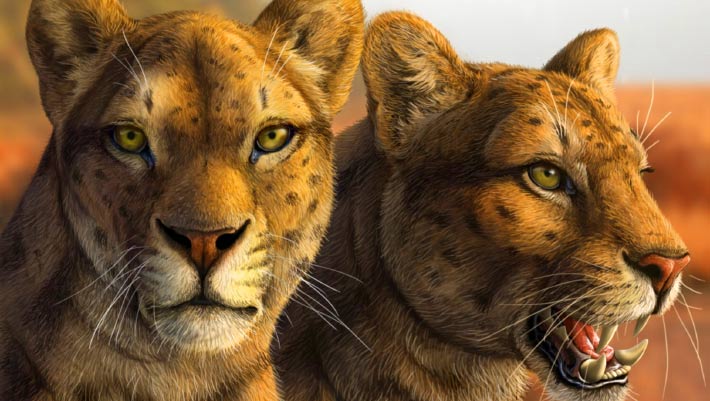
Early Saber-Toothed Cat Gets New Face after Decades of Mystery
Le premier chat à dents de sabre obtient un nouveau visage après des décennies de mystère
dent paléoart reconstitution États-Unis Pliocène mammifères crâne
Un crâne presque complet découvert il y a plusieurs décennies en Arizona a donné aux paléontologues leur aperçu le plus clair à ce jour d'Adelphailurus kansensis, une espèce énigmatique de félidés qui habitait l'Amérique du Nord il y a plus de 5 millions d'années et occupait une des premières branches de l'arbre généalogique des chats à dents de sabre. L'article Le premier chat à dents de sabre obtient un nouveau visage après des décennies de mystère est apparu en premier sur Sci.News : Breaking Science News.
29/06/2026 sci-news ⚙ Traduction automatique
Un superbe crâne de théropode exposé
musée fossile Tyrannosaurus crâne
Lors d'une visite au Museum für Naturkunde (Berlin) nous en avons profité pour photographier le magnifique crâne de Tristan le Tyrannosaurus rex.  Le crâne est l’un des crânes de tyrannosaure les plus complets et les mieux conservés connus de la science.  Les fossiles de T. rex, exposés à côté du crâne, ont été nommés Tristan Otto.  À
12/06/2026 everythingdinosaur ⚙ Traduction automatique
Les scientifiques pensaient les Denisoviens introuvables : cette découverte spectaculaire change désormais tout
os ADN Chine découverte Homo sapiens origine humaine crâne
Pendant quinze ans, les Denisoviens n'ont eu ni visage ni contour. Juste de l'ADN extrait d'un fragment d'os sibérien grand comme un ongle. En 2025, un crâne exceptionnel découvert en Chine a tout changé. Homo longi, surnommé l'Homme dragon, donne enfin un visage à ce groupe humain fantôme. 
06/06/2026 futura-terre
Ce poisson préhistorique pourrait expliquer comment les animaux ont marché pour la première fois sur Terre
Antarctique crâne
Les scientifiques ont examiné l'intérieur du crâne d'un poisson de l'Antarctique vieux de 380 millions d'années, étroitement apparenté aux premiers animaux à avoir marché sur terre, révélant des indices surprenants sur la façon dont la vie a commencé à sortir de l'eau. Grâce à l’imagerie neutronique avancée, les chercheurs ont découvert que Koharalepis jarviki possédait des caractéristiques adaptées pour vivre près de la surface de l’eau, notamment des ouvertures dans son crâne qui auraient pu l’aider à avaler de l’air et un organe sensible à la lumière lié aux rythmes jour-nuit.
25/05/2026 sciencedaily-paleo ⚙ Traduction automatique
1 2 3 4 5 6