←

formation

Thématique

210 image(s) · 17 Actualités

Galerie d'images

Dentaries of selected European rhabdodontomorphs in dorsal and lateral views. (A) Obelignathus septimanicus, holotype MDE D30, right dentary from the 'Grès à Reptiles' Formation, Montouliers (France); (B) Mochlodon vorosi holotype MTM V 2010.105.1, left dentary from the Csehbánya Formation, Iharkút (Hungary; mirrored); (C) Mochlodon suessi, lectotype PIUW 2349/2, right dentary from the Grünbach Formation, Muthmannsdorf (Austria); (D) Zalmoxes robustus holotype NHMUK R3392, right dentary from the Sinpetru Formation, Sânpetru (Romania); (E) Rhabdodon priscus, lectotype MPLM 30, left dentary from the Marnes Rouges Inférieures Formation, la Nerthe (France; mirrored drawing after Matheron; outline based on specimens MPLM 30 and MPLM 31, size estimation based on Matheron and Brinkman); (F) Zalmoxes shqiperorum holotype NHMUK R4900, right dentary from the Sinpetru Formation of Sânpetru (Romania; outline based on the specimen UBB NVZ1-1).

Dentaries of selected European rhabdodontomorphs in dorsal and lateral views. (A) Obelignathus septimanicus, holotype MDE D30, right dentary from the 'Grès à Reptiles' Formation, Montouliers (France); (B) Mochlodon vorosi holotype MTM V 2010.105.1, left dentary from the Csehbánya Formation, Iharkút (Hungary; mirrored); (C) Mochlodon suessi, lectotype PIUW 2349/2, right dentary from the Grünbach Formation, Muthmannsdorf (Austria); (D) Zalmoxes robustus holotype NHMUK R3392, right dentary from the Sinpetru Formation, Sânpetru (Romania); (E) Rhabdodon priscus, lectotype MPLM 30, left dentary from the Marnes Rouges Inférieures Formation, la Nerthe (France; mirrored drawing after Matheron; outline based on specimens MPLM 30 and MPLM 31, size estimation based on Matheron and Brinkman); (F) Zalmoxes shqiperorum holotype NHMUK R4900, right dentary from the Sinpetru Formation of Sânpetru (Romania; outline based on the specimen UBB NVZ1-1).

dessin Autriche France Hongrie +8
Representative taxa from the Santonian Iharkút fauna from the Csehbánya Formation, Bakony Mountains, western Hungary. A Pannoniasaurus inexpectatus (Squamata, Mosasauroidea), dorsal vertebra (MTM uncatalogued) in dorsal view (photo by Réka Kalmár) B Foxemys trabanti (Pleurodira, Bothremydidae), skull (MTM V 2010.215.1.) in dorsal view (photo by Márton Rabi). C Bicuspidon aff. hatzegiensis (Squamata, Borioteiioidea), left dentary (MTM 2006.112.1.) in medial view (photo by László Makádi) D Basal tetanuran (Theropoda, Tetanurae), tooth (MTM V.01.54) in ?lingual view E Indeterminate abelisaurid (Theropoda, Abelisauridae), pedal ungual phalanx (MTM V 2008.43.1.) in lateral view F Pneumatoraptor fodori (Theropoda, Paraves), left scapulocoracoid (holotype, MTM V 2008.38.1.) in lateral view G Mochlodon vorosi (Ornithopoda, Rhabdodontidae), left dentary (holotype, MTM V 2010.105.1) in lateral view H Bakonydraco galaczi (Pterosauria, Azhdarchidae), mandible (holotype, MTM 2007.110.1) in dorsal view I Iharkutosuchus makadii (Eusuchia, Hylaeochampsidae), skull (holotype, MTM 2006.52.1) in dorsal view J Hungarosaurus tormai (Ankylosauria, Nodosauridae), right dentary (MTM 2007.25.2) in lateral view K Bauxitornis mindszentyae (Aves, Enantiornithes), left tarsometatarsus (holotype, MTM V 2009.38.1) in anterior view L Ajkaceratops kozmai (Ceratopsia), fused rostral and premaxillae (holotype, MTM V 2009.192.1) in lateral view. Scale bars: 2 cm in A, V, G, H, I, J; 1 cm in D, E, F, K, L; 1 mm in C.

Representative taxa from the Santonian Iharkút fauna from the Csehbánya Formation, Bakony Mountains, western Hungary. A Pannoniasaurus inexpectatus (Squamata, Mosasauroidea), dorsal vertebra (MTM uncatalogued) in dorsal view (photo by Réka Kalmár) B Foxemys trabanti (Pleurodira, Bothremydidae), skull (MTM V 2010.215.1.) in dorsal view (photo by Márton Rabi). C Bicuspidon aff. hatzegiensis (Squamata, Borioteiioidea), left dentary (MTM 2006.112.1.) in medial view (photo by László Makádi) D Basal tetanuran (Theropoda, Tetanurae), tooth (MTM V.01.54) in ?lingual view E Indeterminate abelisaurid (Theropoda, Abelisauridae), pedal ungual phalanx (MTM V 2008.43.1.) in lateral view F Pneumatoraptor fodori (Theropoda, Paraves), left scapulocoracoid (holotype, MTM V 2008.38.1.) in lateral view G Mochlodon vorosi (Ornithopoda, Rhabdodontidae), left dentary (holotype, MTM V 2010.105.1) in lateral view H Bakonydraco galaczi (Pterosauria, Azhdarchidae), mandible (holotype, MTM 2007.110.1) in dorsal view I Iharkutosuchus makadii (Eusuchia, Hylaeochampsidae), skull (holotype, MTM 2006.52.1) in dorsal view J Hungarosaurus tormai (Ankylosauria, Nodosauridae), right dentary (MTM 2007.25.2) in lateral view K Bauxitornis mindszentyae (Aves, Enantiornithes), left tarsometatarsus (holotype, MTM V 2009.38.1) in anterior view L Ajkaceratops kozmai (Ceratopsia), fused rostral and premaxillae (holotype, MTM V 2009.192.1) in lateral view. Scale bars: 2 cm in A, V, G, H, I, J; 1 cm in D, E, F, K, L; 1 mm in C.

dent vertèbre Hongrie Santonien +15
Representative taxa from the latest Campanian–Maastrichtian faunas from Transylvania, western Romania. A–B Nidophis insularis (Serpentes, Madtsoiidae), articulated vertebrae (LPB (FGGUB) v.547/2) in left lateral (A) and dorsal (B) views (Densuş-Ciula Formation, Tuştea, Haţeg Basin; photo by Ştefan Vasile) C Allodaposuchus precedens (Eusuchia, ?Hylaeochampsidae), skull (PSMUBB V 438) in dorsal view (Sebeş = Şard Formation, Oarda de Jos, southwestern Transylvanian Basin; photo by Vlad Codrea/Massimo Delfino) D Theriosuchus sympiestodon (Mesoeucrocodylia, Atoposauridae), right maxilla (MCDRD 793) in lateral view (Sînpetru Formation, Sînpetru, Haţeg Basin) E–F Indeterminate titanosaur (?Magyarosaurus dacus) (Sauropoda, Titanosauria), isolated osteoderm (LPB (FGGUB) R.1410) in dorsal (E) and lateral (F) views (Sînpetru Formation, Sînpetru, Haţeg Basin) G Indeterminate ornithuran bird (Aves, Ornithurae), incomplete left tibiotarsus (LPB (FGGUB) R.1902) in anterior view (Densuş-Ciula Formation, Vălioara, Haţeg Basin) H Balaur bondoc (Theropoda, Dromaeosauridae), articulated left distal hindlimb (EME PV.313) in lateral view (Sebeş = Şard Formation, Sebeş-Glod, southewestern Transylvanian Basin; photo by Mick Ellison) I Zalmoxes robustus (Ornithopoda, Rhabdodontidae), right dentary (NHMUK R.3407) in medial view (Sînpetru Formation, Sînpetru, Haţeg Basin) J Telmatosaurus transsylvanicus (Hadrosauria), right maxilla (MFGI unnumbered) in lateral view (Sînpetru Formation, Sînpetru, Haţeg Basin) K Indeterminate nodosaurid – Struthiosaurus transylvanicus or new taxon – (Ankylosauria, Nodosauridae), isolated tooth (LPB (FGGUB) R.2182) in medial view (Sînpetru Formation, Sînpetru, Haţeg Basin) L Barbatodon transylvanicus (Multituberculata, Kogaionidae), right maxilla (LPB (FGGUB) M.1635) in medial view (Sînpetru Formation, Pui, Haţeg Basin). Scale bars equal 1 mm in A, B; 5 mm in K; 1 cm in G, L; 2 cm in D; and 5 cm in C, E, F, H, I, J.

Representative taxa from the latest Campanian–Maastrichtian faunas from Transylvania, western Romania. A–B Nidophis insularis (Serpentes, Madtsoiidae), articulated vertebrae (LPB (FGGUB) v.547/2) in left lateral (A) and dorsal (B) views (Densuş-Ciula Formation, Tuştea, Haţeg Basin; photo by Ştefan Vasile) C Allodaposuchus precedens (Eusuchia, ?Hylaeochampsidae), skull (PSMUBB V 438) in dorsal view (Sebeş = Şard Formation, Oarda de Jos, southwestern Transylvanian Basin; photo by Vlad Codrea/Massimo Delfino) D Theriosuchus sympiestodon (Mesoeucrocodylia, Atoposauridae), right maxilla (MCDRD 793) in lateral view (Sînpetru Formation, Sînpetru, Haţeg Basin) E–F Indeterminate titanosaur (?Magyarosaurus dacus) (Sauropoda, Titanosauria), isolated osteoderm (LPB (FGGUB) R.1410) in dorsal (E) and lateral (F) views (Sînpetru Formation, Sînpetru, Haţeg Basin) G Indeterminate ornithuran bird (Aves, Ornithurae), incomplete left tibiotarsus (LPB (FGGUB) R.1902) in anterior view (Densuş-Ciula Formation, Vălioara, Haţeg Basin) H Balaur bondoc (Theropoda, Dromaeosauridae), articulated left distal hindlimb (EME PV.313) in lateral view (Sebeş = Şard Formation, Sebeş-Glod, southewestern Transylvanian Basin; photo by Mick Ellison) I Zalmoxes robustus (Ornithopoda, Rhabdodontidae), right dentary (NHMUK R.3407) in medial view (Sînpetru Formation, Sînpetru, Haţeg Basin) J Telmatosaurus transsylvanicus (Hadrosauria), right maxilla (MFGI unnumbered) in lateral view (Sînpetru Formation, Sînpetru, Haţeg Basin) K Indeterminate nodosaurid – Struthiosaurus transylvanicus or new taxon – (Ankylosauria, Nodosauridae), isolated tooth (LPB (FGGUB) R.2182) in medial view (Sînpetru Formation, Sînpetru, Haţeg Basin) L Barbatodon transylvanicus (Multituberculata, Kogaionidae), right maxilla (LPB (FGGUB) M.1635) in medial view (Sînpetru Formation, Pui, Haţeg Basin). Scale bars equal 1 mm in A, B; 5 mm in K; 1 cm in G, L; 2 cm in D; and 5 cm in C, E, F, H, I, J.

Roumanie Densuş-Ciula Sebeş Sînpetru +9
Palaeogeographic distribution of late Early and early Late Cretaceous pterosaur assemblages. Taxonomic composition of assemblages shown on Fig. 1. Palaeogeography based on Smith et al. 1994. Abbreviations: 1. Cambridge Greensand, England: 2. Lower Chalk, England: 3. Züümbayan Svita, Khuren-Dukh, Mongolia: 4. Lysaya Gora, Saratov, Russia: 5. Kem Kem red beds, Morocco: 6. Paw Paw Formation, Texas, USA: 7. Lagarcito Formation, San Luis, Argentina: 8. Santana and Crato Formations, Ceara, Brazil: 9. Toolebuc Formation, Queensland, Australia.

Palaeogeographic distribution of late Early and early Late Cretaceous pterosaur assemblages. Taxonomic composition of assemblages shown on Fig. 1. Palaeogeography based on Smith et al. 1994. Abbreviations: 1. Cambridge Greensand, England: 2. Lower Chalk, England: 3. Züümbayan Svita, Khuren-Dukh, Mongolia: 4. Lysaya Gora, Saratov, Russia: 5. Kem Kem red beds, Morocco: 6. Paw Paw Formation, Texas, USA: 7. Lagarcito Formation, San Luis, Argentina: 8. Santana and Crato Formations, Ceara, Brazil: 9. Toolebuc Formation, Queensland, Australia.

Argentine Australie Brésil Mongolie +8
Locality map for Australian eurypodan thyreophoran fossils.

1, Stegosaurian? footprint (QM F5701), Walloon Coal Measures, Balgowan Colliery, Balgowan (Bajocian–Bathonian); 2, Minmi paravertebra holotype (QM F10329) (Molnar, 1980), Minmi Member, Bungil Formation (Valanginian–Barremian); 3, Thyreophoran trackways, Broome Sandstone, Dampier Peninsula, Western Australia (Valanginian–Barremian); 4, Ankylosauria indet. (see Barrett et al., 2010) ‘Flat Rocks’ Wonthaggi Formation (upper Hauterivian–Albian); 5, NMV P216739, ‘Lake Copco–Dinosaur Cove’ Eumeralla Formation (middle upper Aptian to lower middle Albian) (Barrett et al., 2010); 6, QM F33286; 7, AM F119849 and AM F35259; 8, Kunbarrasaurus ieversi gen. et sp. nov. (formerly Minmi sp.) (QM F18101); 9, QM F33565 and QM F33566; 10, QM F44324-28. Legend: Dark Green, Toolebuc Formation (late middle–early late Albian); Green, Allaru Formation (upper Albian–(?)lower Cenomanian); Light green, Mackunda Formation (upper Albian–lower Cenomanian); Lightest green, Winton Formation (late Albian–early Turonian).
Formations Toolebuc

Locality map for Australian eurypodan thyreophoran fossils. 1, Stegosaurian? footprint (QM F5701), Walloon Coal Measures, Balgowan Colliery, Balgowan (Bajocian–Bathonian); 2, Minmi paravertebra holotype (QM F10329) (Molnar, 1980), Minmi Member, Bungil Formation (Valanginian–Barremian); 3, Thyreophoran trackways, Broome Sandstone, Dampier Peninsula, Western Australia (Valanginian–Barremian); 4, Ankylosauria indet. (see Barrett et al., 2010) ‘Flat Rocks’ Wonthaggi Formation (upper Hauterivian–Albian); 5, NMV P216739, ‘Lake Copco–Dinosaur Cove’ Eumeralla Formation (middle upper Aptian to lower middle Albian) (Barrett et al., 2010); 6, QM F33286; 7, AM F119849 and AM F35259; 8, Kunbarrasaurus ieversi gen. et sp. nov. (formerly Minmi sp.) (QM F18101); 9, QM F33565 and QM F33566; 10, QM F44324-28. Legend: Dark Green, Toolebuc Formation (late middle–early late Albian); Green, Allaru Formation (upper Albian–(?)lower Cenomanian); Light green, Mackunda Formation (upper Albian–lower Cenomanian); Lightest green, Winton Formation (late Albian–early Turonian).

Australie Broome Sandstone Eumeralla Toolebuc +18
Original figure caption: .mw-parser-output .smallcaps{font-variant:small-caps}The Middletown Slab covered with the Footprints of Carnivorous Dinosaurs. The tracks are in high relief. Additional notes: Most if not all of these tridactylous (i.e. three-toed) footprints/tracks (but not the actual trackmaker!) are referred to as Grallator or as Grallator-type trace fossils. “High relief” means that these are actually casts of footprints forming a positive relief on the lower surface of the sandstone slab (so-called positive hyporelief). The material that originally formed the mud over which the dinosaurs walked was too friable to be recovered from the quarry in one piece. The slab consists of so called ‘brownstone’ which is the trading name of the sandstone quarried at Middletown, Connecticut. This sandstone belongs to the Lower Jurassic Portland Formation of the Hartford Basin (“Connecticut Valley”) and thus to the upper part of the Newark Supergroup. The trackmakers probably were relatively small ‘primitive’ theropod dinosaurs (coelophysoids) such as Podokesaurus the remains of which were recovered from Lower Jurassic deposits of the Hartford Basin.
Formations Portland

Original figure caption: .mw-parser-output .smallcaps{font-variant:small-caps}The Middletown Slab covered with the Footprints of Carnivorous Dinosaurs. The tracks are in high relief. Additional notes: Most if not all of these tridactylous (i.e. three-toed) footprints/tracks (but not the actual trackmaker!) are referred to as Grallator or as Grallator-type trace fossils. “High relief” means that these are actually casts of footprints forming a positive relief on the lower surface of the sandstone slab (so-called positive hyporelief). The material that originally formed the mud over which the dinosaurs walked was too friable to be recovered from the quarry in one piece. The slab consists of so called ‘brownstone’ which is the trading name of the sandstone quarried at Middletown, Connecticut. This sandstone belongs to the Lower Jurassic Portland Formation of the Hartford Basin (“Connecticut Valley”) and thus to the upper part of the Newark Supergroup. The trackmakers probably were relatively small ‘primitive’ theropod dinosaurs (coelophysoids) such as Podokesaurus the remains of which were recovered from Lower Jurassic deposits of the Hartford Basin.

Portland Jurassique moulage fossile +4
A pair of Wendiceratops running through the Oldman formation.

A pair of Wendiceratops running through the Oldman formation.

Oldman Wendiceratops formation
Brachylophosaurus canadensis TMP 1990.104.0001, Oldman Formation, Milk River, Alberta. Original, not cast. At the Royal Tyrrell Museum of Palaeontology.

Brachylophosaurus canadensis TMP 1990.104.0001, Oldman Formation, Milk River, Alberta. Original, not cast. At the Royal Tyrrell Museum of Palaeontology.

musée Milk River Oldman moulage +2
Brachylophosaurus canadensis TMP 1990.104.0001, Oldman Formation, Milk River, Alberta. Original, not cast. At the Royal Tyrrell Museum of Palaeontology.

Brachylophosaurus canadensis TMP 1990.104.0001, Oldman Formation, Milk River, Alberta. Original, not cast. At the Royal Tyrrell Museum of Palaeontology.

musée Milk River Oldman moulage +2
Campanian fauna from the Oldman Formation: Wendiceratops, Corythosaurus, Scolosaurus, Chasmosaurus and "Troodon"

Campanian fauna from the Oldman Formation: Wendiceratops, Corythosaurus, Scolosaurus, Chasmosaurus and "Troodon"

Oldman Campanien Chasmosaurus Corythosaurus +4
Geographic and stratigraphic relationships of the holotype EMK 0012 and the Loki Quarry in northern Montana. (A) Regional relationships between the cross-border paleontological sites in the Oldman and Judith River formations along the Milk River and in Kennedy Coulee in Alberta and Montana. (B) Generalized stratigraphic section in the Kennedy Coulee area modified after Goodwin & Deino (1989) and Rogers, Eberth & Ramezani (2023) with the relationships between the Foremost and Oldman formations in Canada and the Judith River Formation in Montana. Relative placements of important taxa in this area are indicated. Position of 40Ar/39Ar dates originally obtained by Goodwin & Deino (1989) are shown in relation to the new U–Pb CA-ID-TIMS date for KC061517-1 by Ramezani et al. (2022). Bentonite ash beds are only 5 to 7 cm thick so they are exaggerated for clarity. Scale bars delineated in map view are indicated kilometers and in meters stratigraphically.

Geographic and stratigraphic relationships of the holotype EMK 0012 and the Loki Quarry in northern Montana. (A) Regional relationships between the cross-border paleontological sites in the Oldman and Judith River formations along the Milk River and in Kennedy Coulee in Alberta and Montana. (B) Generalized stratigraphic section in the Kennedy Coulee area modified after Goodwin & Deino (1989) and Rogers, Eberth & Ramezani (2023) with the relationships between the Foremost and Oldman formations in Canada and the Judith River Formation in Montana. Relative placements of important taxa in this area are indicated. Position of 40Ar/39Ar dates originally obtained by Goodwin & Deino (1989) are shown in relation to the new U–Pb CA-ID-TIMS date for KC061517-1 by Ramezani et al. (2022). Bentonite ash beds are only 5 to 7 cm thick so they are exaggerated for clarity. Scale bars delineated in map view are indicated kilometers and in meters stratigraphically.

écaille Canada Foremost Judith River +4
Brachylophosaurus, Daspletosaurus and Scolosaurus from the Oldman Formation.

Brachylophosaurus, Daspletosaurus and Scolosaurus from the Oldman Formation.

Oldman Brachylophosaurus Daspletosaurus Scolosaurus +1
Brachylophosaurus canadensis skull (original). From the Oldman Formation, Milk River, Alberta. On display at the Royal Tyrrell Museum, Alberta, Canada.

Brachylophosaurus canadensis skull (original). From the Oldman Formation, Milk River, Alberta. On display at the Royal Tyrrell Museum, Alberta, Canada.

musée Canada Milk River Oldman +3
Brachylophosaurus canadensis (TMP 2005.000.0029), Royal Tyrrell Museum, Drumheller, Alberta, 2025-07-13; cast, Campanian, from the Oldman Formation
Formations Oldman

Brachylophosaurus canadensis (TMP 2005.000.0029), Royal Tyrrell Museum, Drumheller, Alberta, 2025-07-13; cast, Campanian, from the Oldman Formation

musée Oldman Campanien moulage +2
Sandstones of the Milk River Formation flank the Milk river at Writing-on-Stone Provincial Park, Alberta.

Sandstones of the Milk River Formation flank the Milk river at Writing-on-Stone Provincial Park, Alberta.

Milk River formation
African locality: 5, Majunga, Maevarano Formation (Campanian): Rahonavis ostromi.
Formations Maevarano

African locality: 5, Majunga, Maevarano Formation (Campanian): Rahonavis ostromi.

Maevarano Campanien Rahonavis formation
1 2 3 4 5 6 7 8 9 10 11 12 13 14

Actualités

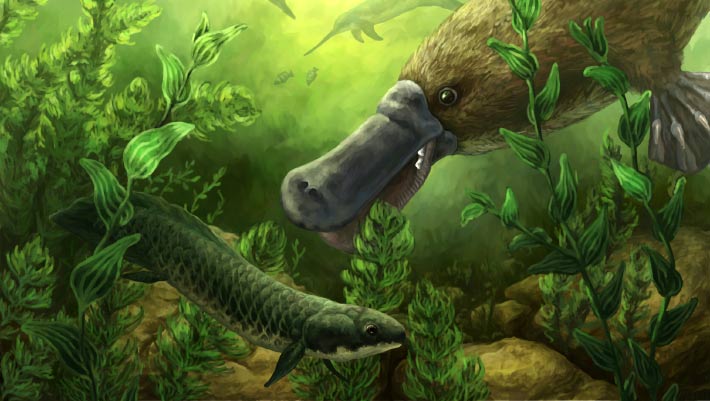
Early Platypuses Had Strong Teeth and Powerful Jaws, Fossils Show
Les premiers ornithorynques avaient des dents solides et des mâchoires puissantes, selon des fossiles
mâchoire dent Australie fossile formation
De nouveaux fossiles de la Formation de Namba, en Australie méridionale, révèlent qu'il y a 25 millions d'années, Obdurodon insignis prospérait dans les lacs intérieurs luxuriants aux côtés de dauphins d'eau douce et d'autres espèces aujourd'hui disparues. L'article Les premiers ornithorynques avaient des dents solides et des mâchoires puissantes, Fossils Show est apparu en premier sur Sci.News : Breaking Science News.
28/04/2026 sci-news ⚙ Traduction automatique
Des scientifiques viennent de découvrir que l’Afrique est plus proche de l’éclatement que nous le pensions
fossile formation
Sous le rift Turkana, en Afrique de l’Est, les scientifiques ont découvert que la croûte s’amincit jusqu’à atteindre un point critique, ce qui suggère que le continent se désagrège progressivement. Ce processus de « rétrécissement » marque un stade avancé de rifting qui pourrait éventuellement conduire à la formation d’un nouvel océan dans des millions d’années. Étonnamment, les mêmes forces géologiques qui divisent la terre peuvent également expliquer pourquoi la région détient un registre fossile si riche. Au lieu d'être le berceau de l'humanité, Turkana pourrait bien être simplement le lieu où
25/04/2026 sciencedaily-paleo ⚙ Traduction automatique
D’étranges roches en « peau d’éléphant » révèlent une vie ancienne dans l’océan sombre
Maroc fossile découverte formation
Une étrange formation rocheuse ridée au Maroc a amené les scientifiques à repenser l'endroit où pourraient vivre d'anciens microbes. Au lieu d’eaux peu profondes et ensoleillées, ces microbes pourraient avoir prospéré dans les profondeurs de l’océan, alimentés par les produits chimiques libérés par les glissements de terrain sous-marins. La découverte suggère que les environnements sombres et riches en nutriments ont abrité des écosystèmes prospères beaucoup plus tôt que prévu. Cela soulève également la possibilité que de nombreux fossiles similaires aient été négligés ou mal interprétés.
03/04/2026 sciencedaily-paleo ⚙ Traduction automatique
Épisode 173 : Forêt pétrifiée
États-Unis Chinle Trias supérieur Trias formation
Le parc national de la Forêt Pétrifiée, dans le nord-est de l'Arizona, aux États-Unis, est une plaque tournante de la paléontologie du Trias et présente des affleurements représentant 20 millions d'années de la formation Chinle du Trias supérieur. Les visiteurs s'émerveillent devant les arbres fossilisés colorés dont le parc tire son nom, mais toute une série d'animaux ont élu domicile dans ces forêts marécageuses il y a 225 millions d'années [&hellip
17/03/2026 palaeocast ⚙ Traduction automatique
Des fossiles de poissons vieux de 400 millions d'années révèlent comment la vie a commencé à s'installer sur terre
Australie Chine fossile formation crâne
Les scientifiques ont découvert de nouveaux indices sur certains des premiers poissons de la Terre, mettant ainsi en lumière les origines anciennes des vertébrés qui ont fini par s’installer sur terre. En réanalysant de mystérieux fossiles de la célèbre formation australienne Gogo et en étudiant un crâne de poisson-poumon récemment reconstruit, vieux de 410 millions d'années et provenant de Chine, les chercheurs révèlent comment ces créatures primitives ont évolué.
12/03/2026 sciencedaily ⚙ Traduction automatique
1 2 3 4