←

Dinosauria

Taxon

251 image(s) · 248 Actualités

Voir la fiche

Galerie d'images

Original caption: "Calibrated phylogeny of Neosauropoda. Summarized strict consensus tree showing the relationships among neosauropod dinosaurs and the phylogenetic position of Tapuiasaurus macedoi gen. n. sp. n. The support values (Bremer/Bootstrap) for the nodes labelled in the figure are: Neosauropoda (1/-), Somphospondyli (2/68), Titanosauria (2/58), Lithostrotia (3/68), “advanced titanosaurians” (3/65), Nemegtosauridae (1/-), Saltasauridae (1/-). See Figure S4 for a complete strict consensus tree including all sauropod terminal taxa used in the analysis. Age of first appearance for taxa used in the calibrated phylogeny are given in Text S4."
Taxons Rayososaurus

Original caption: "Calibrated phylogeny of Neosauropoda. Summarized strict consensus tree showing the relationships among neosauropod dinosaurs and the phylogenetic position of Tapuiasaurus macedoi gen. n. sp. n. The support values (Bremer/Bootstrap) for the nodes labelled in the figure are: Neosauropoda (1/-), Somphospondyli (2/68), Titanosauria (2/58), Lithostrotia (3/68), “advanced titanosaurians” (3/65), Nemegtosauridae (1/-), Saltasauridae (1/-). See Figure S4 for a complete strict consensus tree including all sauropod terminal taxa used in the analysis. Age of first appearance for taxa used in the calibrated phylogeny are given in Text S4."

Dinosauria Lithostrotia Nemegtosauridae Neosauropoda +6
Duonychus tsogtbaatari in Dinosaur Expo 2019 at Nationail Science Museum in Tokyo
Taxons Duonychus

Duonychus tsogtbaatari in Dinosaur Expo 2019 at Nationail Science Museum in Tokyo

musée Dinosauria Duonychus
This file represents a possible life appearance of the Indian Titanosaurian Sauropod dinosaur Jainosaurus septentrionalis from the Late Cretaceous (Maastrichtian) of India, belonging to the Lameta Formation.
References used: 
Huene & Matley (1933)
Hunt et al. (1995)
Gunnar Bivens' skeletal diagram

Wilson et al. (2008) "Reassessment of Sauropod Dinosaur Jainosaurus (="Antarctosaurus") Septentrionalis from the Upper Cretaceous of India"
Taxons Jainosaurus

This file represents a possible life appearance of the Indian Titanosaurian Sauropod dinosaur Jainosaurus septentrionalis from the Late Cretaceous (Maastrichtian) of India, belonging to the Lameta Formation. References used: Huene & Matley (1933) Hunt et al. (1995) Gunnar Bivens' skeletal diagram Wilson et al. (2008) "Reassessment of Sauropod Dinosaur Jainosaurus (="Antarctosaurus") Septentrionalis from the Upper Cretaceous of India"

Inde Lameta Crétacé Crétacé supérieur +6
Dinosaur Vectaerovenator Reconstruction
Taxons Vectaerovenator

Dinosaur Vectaerovenator Reconstruction

Dinosauria Vectaerovenator
Wyoming Dinosaur Center
Taxons Medusaceratops

Wyoming Dinosaur Center

Dinosauria Medusaceratops
Reconstruceted skull of Dubreuillosaurus illustrating known (white) and unknown (grey) material. Scale bar is 10cm. Based of figures and description of Allain (2002) "Discovery of megalosaur (Dinosauria, Theropoda) in the middle Bathonian of Normandy (France) and its implications for the phylogeny of basal Tetanurae"
Taxons Dubreuillosaurus

Reconstruceted skull of Dubreuillosaurus illustrating known (white) and unknown (grey) material. Scale bar is 10cm. Based of figures and description of Allain (2002) "Discovery of megalosaur (Dinosauria, Theropoda) in the middle Bathonian of Normandy (France) and its implications for the phylogeny of basal Tetanurae"

écaille description France Bathonien +8
Malefica is a hadrosaurid dinosaur from the Late Cretaceous of Texas in the United States. Like other hadrosaurs, Malefica was herbivorous, processing plant matter with their broad beaks and battery of teeth in the back of the mouth. It could grow to around 6 m in length, and weighed about 1 t. The discovery of Malefica helped to understand the distribution of hadrosaurs in Cretaceous North America, as well as evolutionary lineages between basal hadrosaurs and the more derived saurolophids.
Taxons Malefica

Malefica is a hadrosaurid dinosaur from the Late Cretaceous of Texas in the United States. Like other hadrosaurs, Malefica was herbivorous, processing plant matter with their broad beaks and battery of teeth in the back of the mouth. It could grow to around 6 m in length, and weighed about 1 t. The discovery of Malefica helped to understand the distribution of hadrosaurs in Cretaceous North America, as well as evolutionary lineages between basal hadrosaurs and the more derived saurolophids.

États-Unis Crétacé Crétacé supérieur Dinosauria +5
Dzharacursor is an ornithomimid theropod dinosaur from the Late Cretaceous of what is now Uzbekistan. Ornithomimids like Dzharacursor are known for their long legs lending to a cursorial, or running, lifestyle. They had a feathered covering, and were likely omnivorous, or possibly herbivorous. Adult Dzharacursor could grow to approximately 3.5 m in length.
Taxons Dzharacursor

Dzharacursor is an ornithomimid theropod dinosaur from the Late Cretaceous of what is now Uzbekistan. Ornithomimids like Dzharacursor are known for their long legs lending to a cursorial, or running, lifestyle. They had a feathered covering, and were likely omnivorous, or possibly herbivorous. Adult Dzharacursor could grow to approximately 3.5 m in length.

Ouzbékistan Crétacé Crétacé supérieur Dinosauria +2
Skeletal mount of the spinosaurine species Ichthyovenator laosensis at the Giga Dinosaur Exhibition in the National Museum of Nature and Science, Tokyo.
Taxons Ichthyovenator

Skeletal mount of the spinosaurine species Ichthyovenator laosensis at the Giga Dinosaur Exhibition in the National Museum of Nature and Science, Tokyo.

musée Dinosauria Ichthyovenator
Skeletal reconsturion of alvarezsaurian dinosaur Shishugounykus inexpectus. Scale bar, 200 mm.
Taxons Shishugounykus

Skeletal reconsturion of alvarezsaurian dinosaur Shishugounykus inexpectus. Scale bar, 200 mm.

écaille Alvarezsauria Dinosauria Shishugounykus
Impression in stone of small dinosaur "nodosaur".
Taxons Propanoplosaurus

Impression in stone of small dinosaur "nodosaur".

Dinosauria Propanoplosaurus
Ahvaytum is a saturnaliid sauropodomorph from the Late Triassic of what is now Wyoming. It is the oldest known dinosaur from the northern continent of Laurasia, challenging previous hypotheses of dinosaur origins and dispersal. Typical of basal dinosaurs from the Triassic, Ahvaytum was a small slender biped, reaching about 1 m in body length.
Taxons Ahvaytum

Ahvaytum is a saturnaliid sauropodomorph from the Late Triassic of what is now Wyoming. It is the oldest known dinosaur from the northern continent of Laurasia, challenging previous hypotheses of dinosaur origins and dispersal. Typical of basal dinosaurs from the Triassic, Ahvaytum was a small slender biped, reaching about 1 m in body length.

Trias supérieur Trias Ahvaytum Dinosauria +1
Huashanosaurus is a basal sauropod dinosaur that lived from the Early to Middle Jurassic periods of what is now China. It was a long-necked herbivore which still exhibited many basal traits of the earlier sauropodomorphs, while transitioning to obligate quardupedality. Huashanosaurus grew to approximately 12 m in length, and weighed around 10 t.
Taxons Huashanosaurus

Huashanosaurus is a basal sauropod dinosaur that lived from the Early to Middle Jurassic periods of what is now China. It was a long-necked herbivore which still exhibited many basal traits of the earlier sauropodomorphs, while transitioning to obligate quardupedality. Huashanosaurus grew to approximately 12 m in length, and weighed around 10 t.

Chine Jurassique Jurassique moyen Dinosauria +1
Fujianvenator is an anchiornithid avialan from the Late Jurassic of China, whose discovery gave important insight to the evolution of birds. It had proportionately long legs, with the tibia twice the length of the femur. This suggests it may have been a strong runner, and possibly had a terrestrial or wading lifestyle. Fujianvenator was a small dinosaur, weighing about 640 g. As an avialan, it was almost certainly covered in feathers, though it does not seem likely to have been capable of flight.
Taxons Fujianvenator

Fujianvenator is an anchiornithid avialan from the Late Jurassic of China, whose discovery gave important insight to the evolution of birds. It had proportionately long legs, with the tibia twice the length of the femur. This suggests it may have been a strong runner, and possibly had a terrestrial or wading lifestyle. Fujianvenator was a small dinosaur, weighing about 640 g. As an avialan, it was almost certainly covered in feathers, though it does not seem likely to have been capable of flight.

plume vol Chine Jurassique +7
Vectipelta at Dinosaur Isle Museum, Isle of Wight, England
Taxons Vectipelta

Vectipelta at Dinosaur Isle Museum, Isle of Wight, England

musée Dinosauria Vectipelta
Reconstruction of the skull of Spinops sternbergorum gen. et sp. nov. from the Campanian of Dinosaur Provincial Park, southern Alberta, in right lateral view. Preserved elements are stippled; missing portions are dotted and modeled after Centrosaurus apertus.
Taxons Spinops

Reconstruction of the skull of Spinops sternbergorum gen. et sp. nov. from the Campanian of Dinosaur Provincial Park, southern Alberta, in right lateral view. Preserved elements are stippled; missing portions are dotted and modeled after Centrosaurus apertus.

Campanien Centrosaurus Dinosauria Spinops +1
1 2 3 4 5 6 7 8 9 10 11 12 13 14 15 16

Actualités

Une illustration magnifique et détaillée du spinosaure
dessin Dinosauria Spinosauria
Merci Caldey d'avoir envoyé dans Everything Dinosaur votre illustration des nouveau-nés Spinosaurus "Surviving Earth".  Le célèbre paléoartiste Gabriel Ugueto a réalisé le concept art de cette nouvelle série télévisée en huit épisodes. Nous avons eu la chance de voir certaines de ses illustrations remarquables, notamment les dessins de Spinosaurus.  Le dessin de Caldey recrée fidèlement la scène mettant en scène le
29/05/2026 everythingdinosaur ⚙ Traduction automatique
Fungi Bloomed Twice around End-Cretaceous Mass Extinction
Les champignons ont fleuri deux fois autour de l'extinction massive de la fin du Crétacé
bassin Denver Crétacé Dinosauria extinction
En étudiant les microfossiles fongiques dans des échantillons de roches vieilles de 66 millions d'années du bassin de Denver, au Colorado, les microbiologistes de l'Université Johns Hopkins ont confirmé que l'impact de l'astéroïde tueur de dinosaures a déclenché une invasion fongique mondiale et a découvert une deuxième crise écologique, jusqu'alors inconnue, juste avant elle. L'article Les champignons ont fleuri deux fois autour de l'extinction massive de la fin du Crétacé est apparu en premier sur Sci.News : Breaking Science News.
28/05/2026 sci-news ⚙ Traduction automatique
Un nouvel e-mail de bienvenue pour les abonnés à la newsletter
Dinosauria
Everything Dinosaur a créé un nouvel e-mail de bienvenue pour les abonnés à la newsletter. Les membres de l'équipe révèlent le premier remerciement de l'entreprise pour avoir rejoint l'e-mail de la newsletter Everything Dinosaur. Mike et Sue accueillent les nouveaux abonnés avec un message personnel et amical.  De plus, l'e-mail de bienvenue met en valeur l'expertise de l'entreprise et sa vaste présence sur les réseaux sociaux. Merci pour
28/05/2026 everythingdinosaur ⚙ Traduction automatique
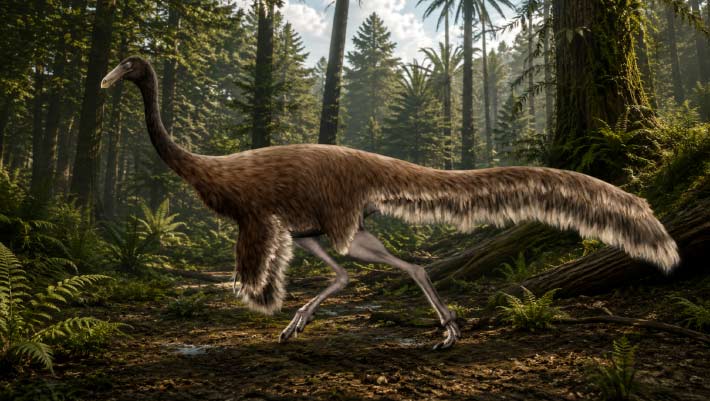
Quelle est la différence entre un ptérosaure et un dinosaure ?
Dinosauria Pterosauria
Quelle est la différence entre un ptérosaure et un dinosaure ? Beaucoup de gens pensent que les ptérosaures étaient des dinosaures, mais ce n’est pas exact. Les ptérosaures étaient des reptiles volants qui vivaient en même temps que les dinosaures.  Bien que les ptérosaures et les dinosaures soient tous deux des reptiles et appartiennent à un groupe plus large appelé Archosauria, les ptérosaures ont évolué séparément et
27/05/2026 everythingdinosaur ⚙ Traduction automatique
Rare Ostrich-Like Dinosaur Fossil Found on Canadian Island
Un rare fossile de dinosaure ressemblant à une autruche découvert sur une île canadienne
vertèbre Canada Colombie fossile Dinosauria Ornithomimosauria oiseau
Des paléontologues canadiens affirment avoir découvert une vertèbre caudale de dinosaure dans des roches marines vieilles de 75 à 80 millions d'années sur une petite île au large de la Colombie-Britannique, fournissant ainsi la preuve la plus claire à ce jour que des ornithomimosaures ressemblant à des oiseaux parcouraient autrefois l'ancienne côte du Pacifique de l'Amérique du Nord. L'article Un fossile rare de dinosaure ressemblant à une autruche trouvé sur une île canadienne est apparu en premier sur Sci.News : Breaking Science News.
25/05/2026 sci-news ⚙ Traduction automatique
1 2 3 4 5 6 7 8 9 10 11 12 13 14 15 16 17 18 19 20 21 22 23 24 25 26 27 28 29 30 31 32 33 34 35 36 37 38 39 40 41 42 43 44 45 46 47 48 49 50