formation

Thématique

189 image(s) · 11 Actualités

Galerie d'images

Banded iron formation from the Precambrian of Wyoming, USA. (~10.9 cm across at its widest)
Banded iron formations, or BIFs, are unusual, dense sedimentary rocks consisting of alternating layers of iron-rich oxides and iron-rich silicates.  Most BIFs are Proterozoic in age (although some are Late Archean), and do not form today - they're “extinct”!  Many specific varieties of iron formation are known, and some are given special rock names.  For example, jaspilite is an attractive reddish & silvery gray banded rock consisting of hematite, red chert (“jasper”), and specular hematite or magnetite.
Because of their age, most BIFs have been around long enough to have been subjected to one or more orogenic (mountain-building) events.  As such, most BIFs are folded and/or metamorphosed to varying degrees. 
BIFs are known from around the world, but some of the most famous & extensive BIF deposits are found in the vicinity of North America’s Lake Superior Basin.  Many BIFs have economic concentrations of iron and are mined.  BIFs are the most important variety of iron ore on Earth.
Some iron mines in west-central Wyoming exploit BIFs in the Goldman Meadows Formation, a Mesoarchean unit exposed in the Wind River Range.  These rocks have been multiply metamorphosed during the Precambrian.  The result of this metamorphism is highly contorted folding and fracturing.  The rock shown above is a folded quartz-hematite-limonite meta-BIF.
Stratigraphy: iron formation member (probably the upper iron formation member) of the Goldman Meadows Formation, upper Mesoarchean, 2.87 Ga (metamorphosed in the Archean at 2.8 Ga and in the Mesoproterozoic at 1.4 Ga)
Geologic context: northwestern flank of the South Pass Greenstone Belt, southern Wind River Range

Locality: Atlantic City Iron Mine (open-pit mine; sample possibly collected from tailings piles around the now-flooded pit) (E1/2 of section 26, T30N, R100W, Miners Delight 7.5' USGS topographic quadrangle), South Pass-Atlantic City Mining District, along Rt. 28, southwestern side of South Pass, north of Atlantic City, southwestern Fremont County, west-central Wyoming, USA (mine is at 42° 32' 45" North latitude, 108° 44' 33" West longitude)
Intervalles Mesoarchean

Banded iron formation from the Precambrian of Wyoming, USA. (~10.9 cm across at its widest) Banded iron formations, or BIFs, are unusual, dense sedimentary rocks consisting of alternating layers of iron-rich oxides and iron-rich silicates. Most BIFs are Proterozoic in age (although some are Late Archean), and do not form today - they're “extinct”! Many specific varieties of iron formation are known, and some are given special rock names. For example, jaspilite is an attractive reddish & silvery gray banded rock consisting of hematite, red chert (“jasper”), and specular hematite or magnetite. Because of their age, most BIFs have been around long enough to have been subjected to one or more orogenic (mountain-building) events. As such, most BIFs are folded and/or metamorphosed to varying degrees. BIFs are known from around the world, but some of the most famous & extensive BIF deposits are found in the vicinity of North America’s Lake Superior Basin. Many BIFs have economic concentrations of iron and are mined. BIFs are the most important variety of iron ore on Earth. Some iron mines in west-central Wyoming exploit BIFs in the Goldman Meadows Formation, a Mesoarchean unit exposed in the Wind River Range. These rocks have been multiply metamorphosed during the Precambrian. The result of this metamorphism is highly contorted folding and fracturing. The rock shown above is a folded quartz-hematite-limonite meta-BIF. Stratigraphy: iron formation member (probably the upper iron formation member) of the Goldman Meadows Formation, upper Mesoarchean, 2.87 Ga (metamorphosed in the Archean at 2.8 Ga and in the Mesoproterozoic at 1.4 Ga) Geologic context: northwestern flank of the South Pass Greenstone Belt, southern Wind River Range Locality: Atlantic City Iron Mine (open-pit mine; sample possibly collected from tailings piles around the now-flooded pit) (E1/2 of section 26, T30N, R100W, Miners Delight 7.5' USGS topographic quadrangle), South Pass-Atlantic City Mining District, along Rt. 28, southwestern side of South Pass, north of Atlantic City, southwestern Fremont County, west-central Wyoming, USA (mine is at 42° 32' 45" North latitude, 108° 44' 33" West longitude)

États-Unis Archéen Protérozoïque formation
This artist's concept shows a celestial body about the size of our moon slamming at great speed into a body the size of Mercury. NASA's Spitzer Space Telescope found evidence that a high-speed collision of this sort occurred a few thousand years ago around a young star, called HD 172555, still in the early stages of planet formation. The star is about 100 light-years from Earth.
Intervalles Hadean

This artist's concept shows a celestial body about the size of our moon slamming at great speed into a body the size of Mercury. NASA's Spitzer Space Telescope found evidence that a high-speed collision of this sort occurred a few thousand years ago around a young star, called HD 172555, still in the early stages of planet formation. The star is about 100 light-years from Earth.

formation
Palaeogeographic distribution of late Early and early Late Cretaceous pterosaur assemblages. Taxonomic composition of assemblages shown on Fig. 1. Palaeogeography based on Smith et al. 1994. Abbreviations: 1. Cambridge Greensand, England: 2. Lower Chalk, England: 3. Züümbayan Svita, Khuren-Dukh, Mongolia: 4. Lysaya Gora, Saratov, Russia: 5. Kem Kem red beds, Morocco: 6. Paw Paw Formation, Texas, USA: 7. Lagarcito Formation, San Luis, Argentina: 8. Santana and Crato Formations, Ceara, Brazil: 9. Toolebuc Formation, Queensland, Australia.

Palaeogeographic distribution of late Early and early Late Cretaceous pterosaur assemblages. Taxonomic composition of assemblages shown on Fig. 1. Palaeogeography based on Smith et al. 1994. Abbreviations: 1. Cambridge Greensand, England: 2. Lower Chalk, England: 3. Züümbayan Svita, Khuren-Dukh, Mongolia: 4. Lysaya Gora, Saratov, Russia: 5. Kem Kem red beds, Morocco: 6. Paw Paw Formation, Texas, USA: 7. Lagarcito Formation, San Luis, Argentina: 8. Santana and Crato Formations, Ceara, Brazil: 9. Toolebuc Formation, Queensland, Australia.

Argentine Australie Brésil Mongolie +8
Locality map for Australian eurypodan thyreophoran fossils.

1, Stegosaurian? footprint (QM F5701), Walloon Coal Measures, Balgowan Colliery, Balgowan (Bajocian–Bathonian); 2, Minmi paravertebra holotype (QM F10329) (Molnar, 1980), Minmi Member, Bungil Formation (Valanginian–Barremian); 3, Thyreophoran trackways, Broome Sandstone, Dampier Peninsula, Western Australia (Valanginian–Barremian); 4, Ankylosauria indet. (see Barrett et al., 2010) ‘Flat Rocks’ Wonthaggi Formation (upper Hauterivian–Albian); 5, NMV P216739, ‘Lake Copco–Dinosaur Cove’ Eumeralla Formation (middle upper Aptian to lower middle Albian) (Barrett et al., 2010); 6, QM F33286; 7, AM F119849 and AM F35259; 8, Kunbarrasaurus ieversi gen. et sp. nov. (formerly Minmi sp.) (QM F18101); 9, QM F33565 and QM F33566; 10, QM F44324-28. Legend: Dark Green, Toolebuc Formation (late middle–early late Albian); Green, Allaru Formation (upper Albian–(?)lower Cenomanian); Light green, Mackunda Formation (upper Albian–lower Cenomanian); Lightest green, Winton Formation (late Albian–early Turonian).
Formations Toolebuc

Locality map for Australian eurypodan thyreophoran fossils. 1, Stegosaurian? footprint (QM F5701), Walloon Coal Measures, Balgowan Colliery, Balgowan (Bajocian–Bathonian); 2, Minmi paravertebra holotype (QM F10329) (Molnar, 1980), Minmi Member, Bungil Formation (Valanginian–Barremian); 3, Thyreophoran trackways, Broome Sandstone, Dampier Peninsula, Western Australia (Valanginian–Barremian); 4, Ankylosauria indet. (see Barrett et al., 2010) ‘Flat Rocks’ Wonthaggi Formation (upper Hauterivian–Albian); 5, NMV P216739, ‘Lake Copco–Dinosaur Cove’ Eumeralla Formation (middle upper Aptian to lower middle Albian) (Barrett et al., 2010); 6, QM F33286; 7, AM F119849 and AM F35259; 8, Kunbarrasaurus ieversi gen. et sp. nov. (formerly Minmi sp.) (QM F18101); 9, QM F33565 and QM F33566; 10, QM F44324-28. Legend: Dark Green, Toolebuc Formation (late middle–early late Albian); Green, Allaru Formation (upper Albian–(?)lower Cenomanian); Light green, Mackunda Formation (upper Albian–lower Cenomanian); Lightest green, Winton Formation (late Albian–early Turonian).

Australie Broome Sandstone Eumeralla Toolebuc +18
Original figure caption: .mw-parser-output .smallcaps{font-variant:small-caps}The Middletown Slab covered with the Footprints of Carnivorous Dinosaurs. The tracks are in high relief. Additional notes: Most if not all of these tridactylous (i.e. three-toed) footprints/tracks (but not the actual trackmaker!) are referred to as Grallator or as Grallator-type trace fossils. “High relief” means that these are actually casts of footprints forming a positive relief on the lower surface of the sandstone slab (so-called positive hyporelief). The material that originally formed the mud over which the dinosaurs walked was too friable to be recovered from the quarry in one piece. The slab consists of so called ‘brownstone’ which is the trading name of the sandstone quarried at Middletown, Connecticut. This sandstone belongs to the Lower Jurassic Portland Formation of the Hartford Basin (“Connecticut Valley”) and thus to the upper part of the Newark Supergroup. The trackmakers probably were relatively small ‘primitive’ theropod dinosaurs (coelophysoids) such as Podokesaurus the remains of which were recovered from Lower Jurassic deposits of the Hartford Basin.
Formations Portland

Original figure caption: .mw-parser-output .smallcaps{font-variant:small-caps}The Middletown Slab covered with the Footprints of Carnivorous Dinosaurs. The tracks are in high relief. Additional notes: Most if not all of these tridactylous (i.e. three-toed) footprints/tracks (but not the actual trackmaker!) are referred to as Grallator or as Grallator-type trace fossils. “High relief” means that these are actually casts of footprints forming a positive relief on the lower surface of the sandstone slab (so-called positive hyporelief). The material that originally formed the mud over which the dinosaurs walked was too friable to be recovered from the quarry in one piece. The slab consists of so called ‘brownstone’ which is the trading name of the sandstone quarried at Middletown, Connecticut. This sandstone belongs to the Lower Jurassic Portland Formation of the Hartford Basin (“Connecticut Valley”) and thus to the upper part of the Newark Supergroup. The trackmakers probably were relatively small ‘primitive’ theropod dinosaurs (coelophysoids) such as Podokesaurus the remains of which were recovered from Lower Jurassic deposits of the Hartford Basin.

Portland Jurassique moulage fossile +4
A pair of Wendiceratops running through the Oldman formation.

A pair of Wendiceratops running through the Oldman formation.

Oldman Wendiceratops formation
Brachylophosaurus canadensis TMP 1990.104.0001, Oldman Formation, Milk River, Alberta. Original, not cast. At the Royal Tyrrell Museum of Palaeontology.

Brachylophosaurus canadensis TMP 1990.104.0001, Oldman Formation, Milk River, Alberta. Original, not cast. At the Royal Tyrrell Museum of Palaeontology.

musée Milk River Oldman moulage +2
Brachylophosaurus canadensis TMP 1990.104.0001, Oldman Formation, Milk River, Alberta. Original, not cast. At the Royal Tyrrell Museum of Palaeontology.

Brachylophosaurus canadensis TMP 1990.104.0001, Oldman Formation, Milk River, Alberta. Original, not cast. At the Royal Tyrrell Museum of Palaeontology.

musée Milk River Oldman moulage +2
Campanian fauna from the Oldman Formation: Wendiceratops, Corythosaurus, Scolosaurus, Chasmosaurus and "Troodon"

Campanian fauna from the Oldman Formation: Wendiceratops, Corythosaurus, Scolosaurus, Chasmosaurus and "Troodon"

Oldman Campanien Chasmosaurus Corythosaurus +4
Geographic and stratigraphic relationships of the holotype EMK 0012 and the Loki Quarry in northern Montana. (A) Regional relationships between the cross-border paleontological sites in the Oldman and Judith River formations along the Milk River and in Kennedy Coulee in Alberta and Montana. (B) Generalized stratigraphic section in the Kennedy Coulee area modified after Goodwin & Deino (1989) and Rogers, Eberth & Ramezani (2023) with the relationships between the Foremost and Oldman formations in Canada and the Judith River Formation in Montana. Relative placements of important taxa in this area are indicated. Position of 40Ar/39Ar dates originally obtained by Goodwin & Deino (1989) are shown in relation to the new U–Pb CA-ID-TIMS date for KC061517-1 by Ramezani et al. (2022). Bentonite ash beds are only 5 to 7 cm thick so they are exaggerated for clarity. Scale bars delineated in map view are indicated kilometers and in meters stratigraphically.

Geographic and stratigraphic relationships of the holotype EMK 0012 and the Loki Quarry in northern Montana. (A) Regional relationships between the cross-border paleontological sites in the Oldman and Judith River formations along the Milk River and in Kennedy Coulee in Alberta and Montana. (B) Generalized stratigraphic section in the Kennedy Coulee area modified after Goodwin & Deino (1989) and Rogers, Eberth & Ramezani (2023) with the relationships between the Foremost and Oldman formations in Canada and the Judith River Formation in Montana. Relative placements of important taxa in this area are indicated. Position of 40Ar/39Ar dates originally obtained by Goodwin & Deino (1989) are shown in relation to the new U–Pb CA-ID-TIMS date for KC061517-1 by Ramezani et al. (2022). Bentonite ash beds are only 5 to 7 cm thick so they are exaggerated for clarity. Scale bars delineated in map view are indicated kilometers and in meters stratigraphically.

écaille Canada Foremost Judith River +4
Brachylophosaurus, Daspletosaurus and Scolosaurus from the Oldman Formation.

Brachylophosaurus, Daspletosaurus and Scolosaurus from the Oldman Formation.

Oldman Brachylophosaurus Daspletosaurus Scolosaurus +1
Brachylophosaurus canadensis skull (original). From the Oldman Formation, Milk River, Alberta. On display at the Royal Tyrrell Museum, Alberta, Canada.

Brachylophosaurus canadensis skull (original). From the Oldman Formation, Milk River, Alberta. On display at the Royal Tyrrell Museum, Alberta, Canada.

musée Canada Milk River Oldman +3
Brachylophosaurus canadensis (TMP 2005.000.0029), Royal Tyrrell Museum, Drumheller, Alberta, 2025-07-13; cast, Campanian, from the Oldman Formation
Formations Oldman

Brachylophosaurus canadensis (TMP 2005.000.0029), Royal Tyrrell Museum, Drumheller, Alberta, 2025-07-13; cast, Campanian, from the Oldman Formation

musée Oldman Campanien moulage +2
Sandstones of the Milk River Formation flank the Milk river at Writing-on-Stone Provincial Park, Alberta.

Sandstones of the Milk River Formation flank the Milk river at Writing-on-Stone Provincial Park, Alberta.

Milk River formation
African locality: 5, Majunga, Maevarano Formation (Campanian): Rahonavis ostromi.
Formations Maevarano

African locality: 5, Majunga, Maevarano Formation (Campanian): Rahonavis ostromi.

Maevarano Campanien Rahonavis formation
Bryce Canyon geologic map, showing a variety of rock formations in the national park including the Claron Formation, which forms the park’s famous red hoodoos.

Bryce Canyon geologic map, showing a variety of rock formations in the national park including the Claron Formation, which forms the park’s famous red hoodoos.

formation
1 2 3 4 5 6 7 8 9 10 11 12

Actualités

Flowering Plants Were Already Thriving before Dinosaur-Killing Asteroid Hit
Les plantes à fleurs prospéraient déjà avant l’impact de l’astéroïde tueur de dinosaures
Mexique Crétacé fossile Dinosauria extinction formation
Les fossiles de la formation Jose Creek au Nouveau-Mexique révèlent que les angiospermes (plantes à fleurs) avaient construit des forêts denses et fruitières il y a près de 75 millions d'années - près de 9 millions d'années avant l'extinction massive de la fin du Crétacé qui a tué les dinosaures - remettant en question un récit évolutif de longue date sur la façon dont ils sont parvenus à dominer la planète. L'article Les plantes à fleurs prospéraient déjà avant l'attaque d'un astéroïde tueur de dinosaures apparaît en premier sur Sci.News : Breaking Science News.
29/06/2026 sci-news ⚙ Traduction automatique
À la recherche d'une espèce insaisissable d'allosaure
os Tanzanie Tendaguru fossile Allosauria formation
Allosaurus has become a bit of a taxonomic waste basket.  Ce terme concerne le matériel fossile provenant de théropodes attribué au genre.  Cependant, certaines preuves justifiant l'attribution du matériel sont provisoires.  Par exemple, des os de théropodes du sud-est de la Tanzanie (Formation Tendaguru) avaient été attribués à une espèce d'allosaure nommée Allosaurus tendagurensis.  En 1925,
04/06/2026 everythingdinosaur ⚙ Traduction automatique
Un nouveau dinosaure Unenlagiid de Patagonie (Argentine)
Argentine Japon Crétacé Crétacé supérieur fossile Dinosauria Kank Unenlagiidae découverte formation nouvelle espèce
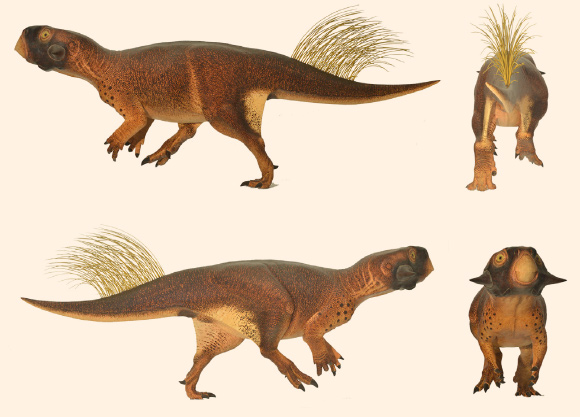
Une équipe de scientifiques argentins et japonais a décrit une nouvelle espèce de dinosaure unenlagiidé du sud de la Patagonie. Nommé Kank australis, ce petit dinosaure théropode vivait il y a environ 70 millions d'années à la fin du Crétacé. Les restes fossiles ont été découverts dans la formation Chorrillo de la province de Santa Cruz, en Argentine. La découverte aide mieux les paléontologues
02/06/2026 everythingdinosaur ⚙ Traduction automatique
La Terre cache un mécanisme profond qui pourrait expliquer la formation des continents depuis des milliards d’années
formation étude
Une étude récente met en lumière un processus géologique méconnu, la relamination, qui permet à des fragments de croûte continentale de s’incorporer au manteau terrestre lors des collisions de plaques. Ce mécanisme pourrait expliquer l’origine de certains magmas et jouer un rôle clé dans...
17/05/2026 futura-terre
Early Platypuses Had Strong Teeth and Powerful Jaws, Fossils Show
Les premiers ornithorynques avaient des dents solides et des mâchoires puissantes, selon des fossiles
mâchoire dent Australie fossile formation
De nouveaux fossiles de la Formation de Namba, en Australie méridionale, révèlent qu'il y a 25 millions d'années, Obdurodon insignis prospérait dans les lacs intérieurs luxuriants aux côtés de dauphins d'eau douce et d'autres espèces aujourd'hui disparues. L'article Les premiers ornithorynques avaient des dents solides et des mâchoires puissantes, Fossils Show est apparu en premier sur Sci.News : Breaking Science News.
28/04/2026 sci-news ⚙ Traduction automatique
1 2 3