←

Argentine

Pays

37 image(s) · 9 Actualités

Galerie d'images
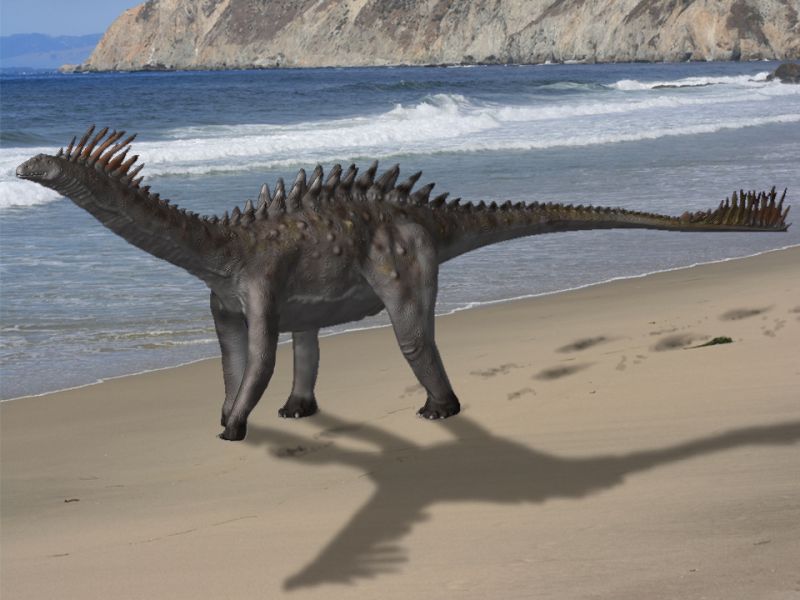
Agustinia ligabuei, a sauropod from the Early Cretaceous of Argentina. Digital.

Agustinia ligabuei, a sauropod from the Early Cretaceous of Argentina. Digital.

Argentine Crétacé Crétacé inférieur Agustinia +2
Vitosaura is an abelisaurid theropod dinosaur that lived in what is now Argentina. It was a medium sized bipedal carnivore reaching around 6 m in total body length. Though only known from the pelvic girdle, Vitosaura likely had a blunt rugose snout, and extremely short arms, as these are typical traits of abelisaurs.

Vitosaura is an abelisaurid theropod dinosaur that lived in what is now Argentina. It was a medium sized bipedal carnivore reaching around 6 m in total body length. Though only known from the pelvic girdle, Vitosaura likely had a blunt rugose snout, and extremely short arms, as these are typical traits of abelisaurs.

Argentine Abelisauria Abelisauridae Dinosauria +1
Danian microflora - Lefipán Formation, Cañadón Asfalto Basin, Patagonia, Argentina

Danian microflora - Lefipán Formation, Cañadón Asfalto Basin, Patagonia, Argentina

Argentine Danien formation
Fossiliferous limestone of the Roca Formation (Danian) in Barda Norte, the type locality of the Roca Formation, General Roca, Río Negro, Patagonia, Argentina.
Intervalles Danian

Fossiliferous limestone of the Roca Formation (Danian) in Barda Norte, the type locality of the Roca Formation, General Roca, Río Negro, Patagonia, Argentina.

Argentine Danien formation
Diuqin is an unenlagiine dinosaur from the Late Cretaceous of what is now Argentina. Unenlagiines, known exclusively from South America, are usually classified as dromaeosaurs though this is sometimes debated. Like dromaeosaurs, they were covered in feathers, carnivorous, and had the large sickle-like claw on the inner toe of each foot. Unique to unenlagiines is their elongated snout, suggesting a piscivorous diet. Diuqin was a medium-sized unenlagiine, at about 4 m in length.

Diuqin is an unenlagiine dinosaur from the Late Cretaceous of what is now Argentina. Unenlagiines, known exclusively from South America, are usually classified as dromaeosaurs though this is sometimes debated. Like dromaeosaurs, they were covered in feathers, carnivorous, and had the large sickle-like claw on the inner toe of each foot. Unique to unenlagiines is their elongated snout, suggesting a piscivorous diet. Diuqin was a medium-sized unenlagiine, at about 4 m in length.

griffe plume Argentine Crétacé +5
The saltasaurine sauropod Neuquensaurus australis, from the Anacleto Formation (Upper Cretaceous), Patagonia, Argentina. Restoration of the skeleton mounted at the Museo de La Plata, Argentina.
Taxons Saltasauroidea

The saltasaurine sauropod Neuquensaurus australis, from the Anacleto Formation (Upper Cretaceous), Patagonia, Argentina. Restoration of the skeleton mounted at the Museo de La Plata, Argentina.

Argentine Anacleto Crétacé Lohuecosauria +4
The saltasaurine sauropod Neuquensaurus australis, from the Anacleto Formation (Upper Cretaceous), Patagonia, Argentina. Restoration of the skeleton mounted at the Museo de La Plata, Argentina.
Taxons Lohuecosauria

The saltasaurine sauropod Neuquensaurus australis, from the Anacleto Formation (Upper Cretaceous), Patagonia, Argentina. Restoration of the skeleton mounted at the Museo de La Plata, Argentina.

Argentine Anacleto Crétacé Lohuecosauria +4
Palaeogeographic distribution of late Early and early Late Cretaceous pterosaur assemblages. Taxonomic composition of assemblages shown on Fig. 1. Palaeogeography based on Smith et al. 1994. Abbreviations: 1. Cambridge Greensand, England: 2. Lower Chalk, England: 3. Züümbayan Svita, Khuren-Dukh, Mongolia: 4. Lysaya Gora, Saratov, Russia: 5. Kem Kem red beds, Morocco: 6. Paw Paw Formation, Texas, USA: 7. Lagarcito Formation, San Luis, Argentina: 8. Santana and Crato Formations, Ceara, Brazil: 9. Toolebuc Formation, Queensland, Australia.

Palaeogeographic distribution of late Early and early Late Cretaceous pterosaur assemblages. Taxonomic composition of assemblages shown on Fig. 1. Palaeogeography based on Smith et al. 1994. Abbreviations: 1. Cambridge Greensand, England: 2. Lower Chalk, England: 3. Züümbayan Svita, Khuren-Dukh, Mongolia: 4. Lysaya Gora, Saratov, Russia: 5. Kem Kem red beds, Morocco: 6. Paw Paw Formation, Texas, USA: 7. Lagarcito Formation, San Luis, Argentina: 8. Santana and Crato Formations, Ceara, Brazil: 9. Toolebuc Formation, Queensland, Australia.

Argentine Australie Brésil Mongolie +8
Paleogeography and paleoclimate of the Late Jurassic - 150 Ma with dinosaur fossil localities:
A = Tendaguru Formation, Tanzania
C1 =  Shishugou & Kalazha Formations, China
C2 =  Shangshaximiao (Upper Shaximiao) Formation, China
E1 =  Sables de Glos, Argiles d’Octeville, Marnes de Bléville, Kimmeridge Clay, Calcareous Grit, Corallian Oolite, Oxford Clay, Portland Stone, England & France
E2 = Villar del Arzobispo, Alcobaça, Guimarota, Sobral, Amoreira-Porto Novo, Bombarral, Freixial, Lourinhã Formations, Spain & Portugal
M1-6 = Morrison Formation, United States
S1 =  Toquí & Cañadón Calcáreo Formations, Chile & Argentina

Paleogeography and paleoclimate of the Late Jurassic - 150 Ma with dinosaur fossil localities: A = Tendaguru Formation, Tanzania C1 = Shishugou & Kalazha Formations, China C2 = Shangshaximiao (Upper Shaximiao) Formation, China E1 = Sables de Glos, Argiles d’Octeville, Marnes de Bléville, Kimmeridge Clay, Calcareous Grit, Corallian Oolite, Oxford Clay, Portland Stone, England & France E2 = Villar del Arzobispo, Alcobaça, Guimarota, Sobral, Amoreira-Porto Novo, Bombarral, Freixial, Lourinhã Formations, Spain & Portugal M1-6 = Morrison Formation, United States S1 = Toquí & Cañadón Calcáreo Formations, Chile & Argentina

Argentine Chili Chine France +19
1 2 3

Actualités

Cet étrange dinosaure géant pourrait changer ce que nous savons sur les titans du Jurassique
Argentine Jurassique fossile Bicharracosaurus Brachiosauria Brachiosauridae Dinosauria Diplodocia évolution
Un étrange nouveau dinosaure géant découvert en Argentine donne aux paléontologues un nouveau regard sur l'évolution des titans du Jurassique dans l'hémisphère sud. Bicharracosaurus dionidei s'étendait sur environ 20 mètres de long et présentait un étrange mélange de caractéristiques observées chez les parents du Diplodocus et du Brachiosaurus. Les scientifiques pensent qu’il pourrait s’agir du premier brachiosaure du Jurassique connu d’Amérique du Sud, contribuant ainsi à combler une lacune majeure dans les archives fossiles de dinosaures.
12/05/2026 sciencedaily ⚙ Traduction automatique
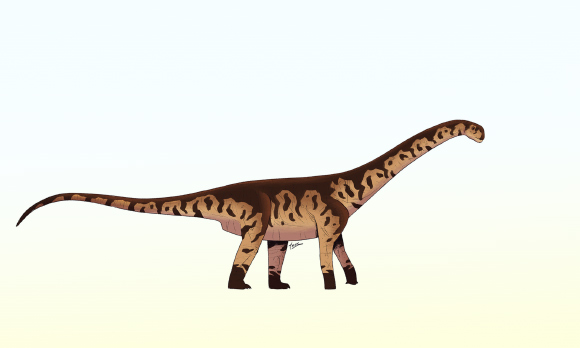
New Species of Giant Long-Necked Dinosaur Identified in Argentina
Une nouvelle espèce de dinosaure géant à long cou identifiée en Argentine
Argentine fossile Dinosauria Macronaria nouvelle espèce
Les fossiles découverts dans un ranch isolé en Argentine appartiennent à un nouveau genre et à une nouvelle espèce de dinosaure sauropode macronaire, selon une équipe internationale de paléontologues dirigée par la Ludwig-Maximilians-Universität München. L'article Nouvelle espèce de dinosaure géant à long cou identifié en Argentine apparaît en premier sur Sci.News : Breaking Science News.
11/05/2026 sci-news ⚙ Traduction automatique
Ce serpent vieux de 100 millions d'années avait des pattes postérieures et un os perdu qui change l'évolution
os membre prédateur Argentine fossile évolution
Il y a près de 100 millions d’années, les serpents n’étaient pas les créatures élégantes et sans membres que nous connaissons aujourd’hui : ils avaient encore des pattes postérieures et même une pommette qui ont presque disparu chez les espèces modernes. Un fossile remarquablement préservé de Najash rionegrina d'Argentine a remodelé la façon dont les scientifiques pensent aux origines des serpents, suggérant que les premiers serpents étaient de grands prédateurs à la bouche large plutôt que de minuscules fouisseurs.
24/04/2026 sciencedaily ⚙ Traduction automatique
L’ADN ancien révèle un changement agricole qui a poussé une société au bord du gouffre
ADN Argentine étude
Une nouvelle étude révèle que l’agriculture dans la vallée d’Uspallata en Argentine a été adoptée par les chasseurs-cueilleurs locaux plutôt que introduite par des populations extérieures. Des siècles plus tard, un groupe d’agriculteurs stressés, gros producteurs de maïs, ont migré vers la région, confrontés à l’instabilité climatique, aux maladies et au déclin des populations. Malgré ces pressions, il n’y a aucun signe de violence ; au contraire, les familles sont restées connectées au fil des générations, utilisant les réseaux de parenté pour survivre. La recherche montre comment la coopération, et non le conflit, a aidé la communauté
22/03/2026 sciencedaily-paleo ⚙ Traduction automatique
1 2