←

skull

View type

215 image(s) · 30 News

Image gallery

Skull of Jinchuanloong niedu (JCMF0132) in left lateral view.

Skull of Jinchuanloong niedu (JCMF0132) in left lateral view.

Jinchuanloong skull
Jinchuanloong is a relatively basal sauropod that measured an estimated 10 m in length. Sauropod skulls typically don't preserve well in the fossil record, but Jinchuanloong is known mainly from the skull, and parts of the neck and tail. Like all sauropods, Jinchuanloong was a quadrupedal herbivore that used its long neck to reach the vegetation that it fed on.

Jinchuanloong is a relatively basal sauropod that measured an estimated 10 m in length. Sauropod skulls typically don't preserve well in the fossil record, but Jinchuanloong is known mainly from the skull, and parts of the neck and tail. Like all sauropods, Jinchuanloong was a quadrupedal herbivore that used its long neck to reach the vegetation that it fed on.

fossil Jinchuanloong skull
Dinosaur sand sculptures at the Sand Sculpting Australia "Dinostory" exhibit held at Frankston, Victoria, Australia 2008/2009.The sculpture was the created with the combined efforts of an international team of sand sculpting artists: 
Karen Fralich (Canada) - children playing in foreground;
Peter Bignell (Tasmania, Australia) - Triceratops skull and logo;
Martijn Rijerse (Netherlands) - Tyrannosaurus rex scene;
Jino van Bruissenen and Christina Mija (NSW, Australia) - background panel.

Dinosaur sand sculptures at the Sand Sculpting Australia "Dinostory" exhibit held at Frankston, Victoria, Australia 2008/2009.The sculpture was the created with the combined efforts of an international team of sand sculpting artists: Karen Fralich (Canada) - children playing in foreground; Peter Bignell (Tasmania, Australia) - Triceratops skull and logo; Martijn Rijerse (Netherlands) - Tyrannosaurus rex scene; Jino van Bruissenen and Christina Mija (NSW, Australia) - background panel.

Australia Canada Netherlands Dinosauria +3
Various fossils pertaining to the holotype of the Triassic ichthyosaur Toretocnemus (originally Leptocheirus, also Merriamia) zitteli. This image is derived from plate 23 in Merriam (1903), done by an uncredited artist. The arrangement of the individual figures has been modified from the original (most notably, figures 3 and 4 were swapped to minimize confusion).
Original description:
Leptocheirus zitteli n. gen. and sp.
Figures reproduced natural size from the type specimen.

Fig. 1.— Right side of skull.
Fig. 2. — Cross-section of posterior portion of the lower jaw, taken above the point marked A on the lateral view of the skull.
Fig. 3. — Cross-section of the upper and lower jaws, taken at the break immediately behind the point marked Sp on the lateral view of the skull.
Fig. 4. — Lateral view of an anterior caudal centrum.
Legend (modified from original):

Ar - articular
A - angular
D - dentary
J - jugal
L - lacrimal
Mx - maxilla
Po - postorbital
Sa - surangular
Se - sclerotic ring
Sp - spenial
T - cross-section of tooth
X - doubtful element

Various fossils pertaining to the holotype of the Triassic ichthyosaur Toretocnemus (originally Leptocheirus, also Merriamia) zitteli. This image is derived from plate 23 in Merriam (1903), done by an uncredited artist. The arrangement of the individual figures has been modified from the original (most notably, figures 3 and 4 were swapped to minimize confusion). Original description: Leptocheirus zitteli n. gen. and sp. Figures reproduced natural size from the type specimen. Fig. 1.— Right side of skull. Fig. 2. — Cross-section of posterior portion of the lower jaw, taken above the point marked A on the lateral view of the skull. Fig. 3. — Cross-section of the upper and lower jaws, taken at the break immediately behind the point marked Sp on the lateral view of the skull. Fig. 4. — Lateral view of an anterior caudal centrum. Legend (modified from original): Ar - articular A - angular D - dentary J - jugal L - lacrimal Mx - maxilla Po - postorbital Sa - surangular Se - sclerotic ring Sp - spenial T - cross-section of tooth X - doubtful element

description Triassic fossil holotype +7
Life restoration of Proceratosaurus bradleyi. Missing parts of skull are consistent with those of the related Guanlong per:[1] Body proportions are consistent with the skeletal reconstruction of Guanlong in fig. 11 here:[2]

Life restoration of Proceratosaurus bradleyi. Missing parts of skull are consistent with those of the related Guanlong per:[1] Body proportions are consistent with the skeletal reconstruction of Guanlong in fig. 11 here:[2]

Coeluridae Guanlong Proceratosaurus skull
Barracudasauroides panxianensis, skull.
Stage :   Anisian from 247.2 million years ago until ~242 million years ago.
Size and weight : 118x62x545 cm – 79.4 Kg

Barracudasauroides panxianensis, skull. Stage : Anisian from 247.2 million years ago until ~242 million years ago. Size and weight : 118x62x545 cm – 79.4 Kg

Anisian Barracudasauroides Mixosauridae skull
Diagram of the skull of Taniwhasaurus antarcticus, the areas in black being the known fossil material.
Reference source:

Álvarez–Herrera, Agnolin & Novas (2020) "A rostral neurovascular system in the mosasaur Taniwhasaurus antarcticus"

Diagram of the skull of Taniwhasaurus antarcticus, the areas in black being the known fossil material. Reference source: Álvarez–Herrera, Agnolin & Novas (2020) "A rostral neurovascular system in the mosasaur Taniwhasaurus antarcticus"

fossil Plioplatecarpinae Taniwhasaurus skull
Pterodaustro skull
Taxa Ctenochasmatoidea

Pterodaustro skull

Archaeopterodactyloidea Aurorazhdarchidae Ctenochasmatoidea Euctenochasmatia +2
Pterodaustro skull
Taxa Euctenochasmatia

Pterodaustro skull

Archaeopterodactyloidea Aurorazhdarchidae Ctenochasmatoidea Euctenochasmatia +2
Pterodaustro skull
Taxa Archaeopterodactyloidea

Pterodaustro skull

Archaeopterodactyloidea Aurorazhdarchidae Ctenochasmatoidea Euctenochasmatia +2
Pterodaustro skull
Taxa Aurorazhdarchidae

Pterodaustro skull

Archaeopterodactyloidea Aurorazhdarchidae Ctenochasmatoidea Euctenochasmatia +2
Figure 4
The reconstruction of the skull and lower jaw of the holotype of Darwinopterus camposi sp. nov. (IVPP V 17957). Scale bar: 50 mm. Abbreviations: d, dentary; f, frontal; j, jugal; ltf, lower temporal fenestra; m, maxilla; man.sys, mandibular symphysis; naof, nasoantorbital fenestra; o, orbit; p, parietal; pm, premaxilla; pmcr, premaxillary crest; po, postorbital; prn, nasal process; q, quadrate; sq, squamosal; utf, upper temporal fenestra.
Taxa Monofenestrata

Figure 4 The reconstruction of the skull and lower jaw of the holotype of Darwinopterus camposi sp. nov. (IVPP V 17957). Scale bar: 50 mm. Abbreviations: d, dentary; f, frontal; j, jugal; ltf, lower temporal fenestra; m, maxilla; man.sys, mandibular symphysis; naof, nasoantorbital fenestra; o, orbit; p, parietal; pm, premaxilla; pmcr, premaxillary crest; po, postorbital; prn, nasal process; q, quadrate; sq, squamosal; utf, upper temporal fenestra.

crest scale holotype Darwinoptera +3
Figure 4
The reconstruction of the skull and lower jaw of the holotype of Darwinopterus camposi sp. nov. (IVPP V 17957). Scale bar: 50 mm. Abbreviations: d, dentary; f, frontal; j, jugal; ltf, lower temporal fenestra; m, maxilla; man.sys, mandibular symphysis; naof, nasoantorbital fenestra; o, orbit; p, parietal; pm, premaxilla; pmcr, premaxillary crest; po, postorbital; prn, nasal process; q, quadrate; sq, squamosal; utf, upper temporal fenestra.
Taxa Darwinoptera

Figure 4 The reconstruction of the skull and lower jaw of the holotype of Darwinopterus camposi sp. nov. (IVPP V 17957). Scale bar: 50 mm. Abbreviations: d, dentary; f, frontal; j, jugal; ltf, lower temporal fenestra; m, maxilla; man.sys, mandibular symphysis; naof, nasoantorbital fenestra; o, orbit; p, parietal; pm, premaxilla; pmcr, premaxillary crest; po, postorbital; prn, nasal process; q, quadrate; sq, squamosal; utf, upper temporal fenestra.

crest scale holotype Darwinoptera +3
Mounted replica of a composite skeleton of Edmontosaurus annectens on display at the University of Oxford Museum, Oxford, England. The original skeleton is compiled from disarticulated fossil bones from a bonebed of the Hell Creek Formation, exposed in the Ruth Mason Quarry in Harding County, South Dakota. It is 8.5 m (28 ft.) long and the skull is almost 1 m (39 in.) in length.[1][2]


↑ Dinosaurs in the Museum. Oxford University Museum of Natural History (brochure, PDF), p. 7

↑ BHI Fossil Replica Catalog 2012. Black Hills Institute of Geological Research, Inc., Hill City, SD, 2012 (PDF), p. 22
Taxa Edmontosaurini

Mounted replica of a composite skeleton of Edmontosaurus annectens on display at the University of Oxford Museum, Oxford, England. The original skeleton is compiled from disarticulated fossil bones from a bonebed of the Hell Creek Formation, exposed in the Ruth Mason Quarry in Harding County, South Dakota. It is 8.5 m (28 ft.) long and the skull is almost 1 m (39 in.) in length.[1][2] ↑ Dinosaurs in the Museum. Oxford University Museum of Natural History (brochure, PDF), p. 7 ↑ BHI Fossil Replica Catalog 2012. Black Hills Institute of Geological Research, Inc., Hill City, SD, 2012 (PDF), p. 22

bone museum Hell Creek fossil +10
Mounted replica of a composite skeleton of Edmontosaurus annectens on display at the University of Oxford Museum, Oxford, England. The original skeleton is compiled from disarticulated fossil bones from a bonebed of the Hell Creek Formation, exposed in the Ruth Mason Quarry in Harding County, South Dakota. It is 8.5 m (28 ft.) long and the skull is almost 1 m (39 in.) in length.[1][2]


↑ Dinosaurs in the Museum. Oxford University Museum of Natural History (brochure, PDF), p. 7

↑ BHI Fossil Replica Catalog 2012. Black Hills Institute of Geological Research, Inc., Hill City, SD, 2012 (PDF), p. 22
Taxa Kritosaurini

Mounted replica of a composite skeleton of Edmontosaurus annectens on display at the University of Oxford Museum, Oxford, England. The original skeleton is compiled from disarticulated fossil bones from a bonebed of the Hell Creek Formation, exposed in the Ruth Mason Quarry in Harding County, South Dakota. It is 8.5 m (28 ft.) long and the skull is almost 1 m (39 in.) in length.[1][2] ↑ Dinosaurs in the Museum. Oxford University Museum of Natural History (brochure, PDF), p. 7 ↑ BHI Fossil Replica Catalog 2012. Black Hills Institute of Geological Research, Inc., Hill City, SD, 2012 (PDF), p. 22

bone museum Hell Creek fossil +10
Mounted replica of a composite skeleton of Edmontosaurus annectens on display at the University of Oxford Museum, Oxford, England. The original skeleton is compiled from disarticulated fossil bones from a bonebed of the Hell Creek Formation, exposed in the Ruth Mason Quarry in Harding County, South Dakota. It is 8.5 m (28 ft.) long and the skull is almost 1 m (39 in.) in length.[1][2]


↑ Dinosaurs in the Museum. Oxford University Museum of Natural History (brochure, PDF), p. 7

↑ BHI Fossil Replica Catalog 2012. Black Hills Institute of Geological Research, Inc., Hill City, SD, 2012 (PDF), p. 22
Taxa Saurolophini

Mounted replica of a composite skeleton of Edmontosaurus annectens on display at the University of Oxford Museum, Oxford, England. The original skeleton is compiled from disarticulated fossil bones from a bonebed of the Hell Creek Formation, exposed in the Ruth Mason Quarry in Harding County, South Dakota. It is 8.5 m (28 ft.) long and the skull is almost 1 m (39 in.) in length.[1][2] ↑ Dinosaurs in the Museum. Oxford University Museum of Natural History (brochure, PDF), p. 7 ↑ BHI Fossil Replica Catalog 2012. Black Hills Institute of Geological Research, Inc., Hill City, SD, 2012 (PDF), p. 22

bone museum Hell Creek fossil +10
1 2 3 4 5 6 7 8 9 10 11 12 13 14

News

Son crâne mesure 2 mètres et compte encore 130 dents : découvrez ce redoutable prédateur du Jurassique
tooth predator book Jurassic Pliosaurus discovery skull
Une découverte paléontologique majeure vient de secouer la communauté scientifique mondiale. Un crâne gigantesque de pliosaure, reptile marin datant de 150 millions d'années, a récemment été inscrit au Guinness Book des records. Cette relique exceptionnellement préservée nous offre une fenêtre...
04/10/2026 futura-terre
Paleontologists Identify New Species of Glyptodont
museum Denmark new species skull
An incomplete fossilized skull that has sat in the collections of the Natural History Museum of Denmark since the 19th century has turned out to represent a previously unrecognized species of glyptodont (genus Glyptotherium) that once roamed South America. The post Paleontologists Identify New Species of Glyptodont appeared first on Sci.News: Breaking Science News.
28/08/2026 sci-news
Remarkable New Museum für Naturkunde Berlin Galleries Open to Visitors
museum skull
Two remarkable Museum für Naturkunde Berlin galleries are being opened to visitors for the first time. The new "Mammal Skulls" and "Deer and Horned Animals" galleries will welcome members of the public during the Long Night of Museums event on Saturday 29th of August. Until now, these collections have been reserved exclusively for researchers. Their
28/08/2026 everythingdinosaur
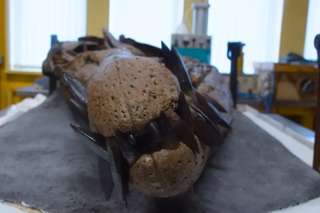
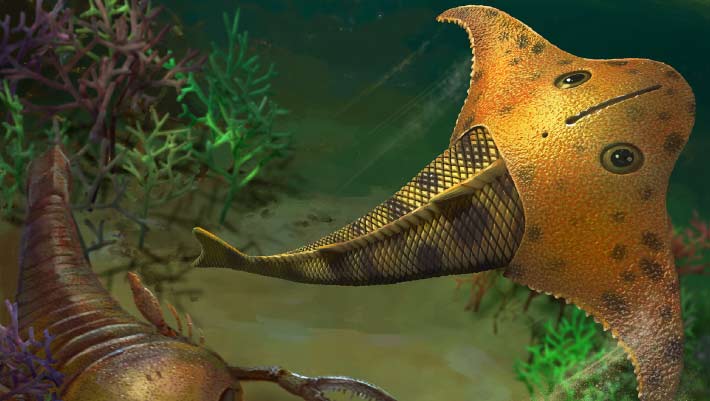
Meet Bataspis crux, Jawless Fish that Cruised Devonian Seas with Batwing Head
jaw China Devonian Late Devonian fish new species skull
Paleontologists in China have identified a new species of armored, jawless fish from rocks around 419 million years old whose skull was shaped like the wing of a bat and whose unusual head made it an efficient glider through Devonian seas. The post Meet Bataspis crux, Jawless Fish that Cruised Devonian Seas with Batwing Head appeared first on Sci.News: Breaking Science News.
18/08/2026 sci-news
A 30-year-old fossil was hiding bones from a mysterious ancient sea monster
bone jaw Cretaceous fossil Mosasaurus new species skull
Fossils collected in Osaka more than 30 years ago have revealed a surprise hiding in plain sight: four previously unrecognized bones from a giant Cretaceous mosasaur. Among them is the first confirmed premaxilla—the frontmost bone of the upper jaw—ever identified in a Japanese mosasaur fossil. Even more intriguing, parts of the skull show unusual anatomical features that don’t match known mosasaurs, raising the possibility that the remains belong to an entirely new species.
15/08/2026 sciencedaily
1 2 3 4 5 6