←

Crétacé

Intervalle géologique

163 image(s) · 58 Actualités

Voir la fiche

Galerie d'images

Saltasaurus (which means "lizard from Salta") was a sauropod dinosaur of the Late Cretaceous Period. Relatively small among sauropods, though still massive by human standards, it was characterized by a diplodocid-like head
Taxons Saltasaurini

Saltasaurus (which means "lizard from Salta") was a sauropod dinosaur of the Late Cretaceous Period. Relatively small among sauropods, though still massive by human standards, it was characterized by a diplodocid-like head

Crétacé Crétacé supérieur Balochisauridae Dinosauria +7
Globidens aegyptiacus Zdansky, 1934 - Ouled Abdoun, Khouribgha Province, Chaouia-Ouardigha Region, Morocco - Maastrichtian, Cretaceous (≈ -70,6 MA ± ≈ 0,6 MA)

Globidens aegyptiacus Zdansky, 1934 - Ouled Abdoun, Khouribgha Province, Chaouia-Ouardigha Region, Morocco - Maastrichtian, Cretaceous (≈ -70,6 MA ± ≈ 0,6 MA)

Maroc Crétacé Maastrichtien Globidens +1
Globidens aegyptiacus Zdansky, 1934 - Ouled Abdoun, Khouribgha Province, Chaouia-Ouardigha Region, Morocco - Maastrichtian, Cretaceous (≈ -70,6 MA ± ≈ 0,6 MA)

Globidens aegyptiacus Zdansky, 1934 - Ouled Abdoun, Khouribgha Province, Chaouia-Ouardigha Region, Morocco - Maastrichtian, Cretaceous (≈ -70,6 MA ± ≈ 0,6 MA)

Maroc Crétacé Maastrichtien Globidens +1
The Maastrichtian, Transylvanian giant azhdarchid pterosaur Hatzegopteryx sp. preys on the rhabdodontid iguanodontian Zalmoxes. Because large predatory theropods are unknown on Late Cretaceous Haţeg Island, giant azhdarchids may have played a key role as terrestrial predators in this community.

The Maastrichtian, Transylvanian giant azhdarchid pterosaur Hatzegopteryx sp. preys on the rhabdodontid iguanodontian Zalmoxes. Because large predatory theropods are unknown on Late Cretaceous Haţeg Island, giant azhdarchids may have played a key role as terrestrial predators in this community.

prédateur proie Crétacé Crétacé supérieur +8
Reconstruction of Mochlodon suessi from the Late Cretaceous of Austria. Based on Zalmoxes by Scott Hartman
Taxons Mochlodon

Reconstruction of Mochlodon suessi from the Late Cretaceous of Austria. Based on Zalmoxes by Scott Hartman

Autriche Crétacé Crétacé supérieur Mochlodon +1
Palaeogeographic distribution of late Early and early Late Cretaceous pterosaur assemblages. Taxonomic composition of assemblages shown on Fig. 1. Palaeogeography based on Smith et al. 1994. Abbreviations: 1. Cambridge Greensand, England: 2. Lower Chalk, England: 3. Züümbayan Svita, Khuren-Dukh, Mongolia: 4. Lysaya Gora, Saratov, Russia: 5. Kem Kem red beds, Morocco: 6. Paw Paw Formation, Texas, USA: 7. Lagarcito Formation, San Luis, Argentina: 8. Santana and Crato Formations, Ceara, Brazil: 9. Toolebuc Formation, Queensland, Australia.

Palaeogeographic distribution of late Early and early Late Cretaceous pterosaur assemblages. Taxonomic composition of assemblages shown on Fig. 1. Palaeogeography based on Smith et al. 1994. Abbreviations: 1. Cambridge Greensand, England: 2. Lower Chalk, England: 3. Züümbayan Svita, Khuren-Dukh, Mongolia: 4. Lysaya Gora, Saratov, Russia: 5. Kem Kem red beds, Morocco: 6. Paw Paw Formation, Texas, USA: 7. Lagarcito Formation, San Luis, Argentina: 8. Santana and Crato Formations, Ceara, Brazil: 9. Toolebuc Formation, Queensland, Australia.

Argentine Australie Brésil Mongolie +8
Locality map: Grand Staircase-Escalante National Monument, southern Utah.
Map showing the Nipple Butte area (indicated by yellow star) of Grand Staircase-Escalante National Monument (GSENM). GSENM is bounded by the red rectangle and silhouetted in dark gray on the inset of Utah and surrounding states (modified from [1]).

The original map has been modified to show the Nipple Butte area instead of the Machairoceratops fossil locality as in the original source. New location based on map in A New Macrovertebrate Assemblage from the Late Cretaceous (Campanian) of Southern Utah, page 601.

Locality map: Grand Staircase-Escalante National Monument, southern Utah. Map showing the Nipple Butte area (indicated by yellow star) of Grand Staircase-Escalante National Monument (GSENM). GSENM is bounded by the red rectangle and silhouetted in dark gray on the inset of Utah and surrounding states (modified from [1]). The original map has been modified to show the Nipple Butte area instead of the Machairoceratops fossil locality as in the original source. New location based on map in A New Macrovertebrate Assemblage from the Late Cretaceous (Campanian) of Southern Utah, page 601.

Campanien Crétacé Crétacé supérieur fossile +1
Kaiparowits Formation (Campanian; Upper Cretaceous) at The Blues, near Powell Point (peak to the left) composed of the Claron Formation.

Kaiparowits Formation (Campanian; Upper Cretaceous) at The Blues, near Powell Point (peak to the left) composed of the Claron Formation.

Kaiparowits Campanien Crétacé formation
Natural-colour satellite image of part of the Kaiparowits Basin (a central portion of Grand Staircase-Escalante). The branch-like shapes are networks of canyons carved by rivers that dried up millions of years ago. The ridge running roughly north-south through the scene is the Cockscomb, which is surrounded by distinct rock formations deposited at different times in the geologic past. West of the Cockscomb is the Navajo Sandstone, dating from the Triassic. East of the Cockscomb are two formations from the Cretaceous: the light-toned Wahweap and darker Kaiparowits.

Natural-colour satellite image of part of the Kaiparowits Basin (a central portion of Grand Staircase-Escalante). The branch-like shapes are networks of canyons carved by rivers that dried up millions of years ago. The ridge running roughly north-south through the scene is the Cockscomb, which is surrounded by distinct rock formations deposited at different times in the geologic past. West of the Cockscomb is the Navajo Sandstone, dating from the Triassic. East of the Cockscomb are two formations from the Cretaceous: the light-toned Wahweap and darker Kaiparowits.

Allen Kaiparowits Navajo Sandstone Crétacé +3
Map of Grand Staircase-Escalante National Monument (GSENM), southern Utah (A), and generalized stratigraphic section of the upper Campanian Kaiprowits Formation (B). The approximate stratigraphic position of Akainacephalus johnsoni is located near the base of the middle unit within the Kaiparowits Formation. The map highlights the GSENM boundary (dashed line), showing the geological distribution and outcrops of the Cretaceous Kaiparowits, Wahweap, and Straight Cliffs formations. The red star indicates the Horse Mountain area, from which Akainacephalus johnsoni was recorded. Map and stratigraphic column modified from Roberts (2005). Radioisotopic dates used from Roberts, Deino & Chan (2005) and Roberts et al. (2013), respectively.
Formations Kaiparowits

Map of Grand Staircase-Escalante National Monument (GSENM), southern Utah (A), and generalized stratigraphic section of the upper Campanian Kaiprowits Formation (B). The approximate stratigraphic position of Akainacephalus johnsoni is located near the base of the middle unit within the Kaiparowits Formation. The map highlights the GSENM boundary (dashed line), showing the geological distribution and outcrops of the Cretaceous Kaiparowits, Wahweap, and Straight Cliffs formations. The red star indicates the Horse Mountain area, from which Akainacephalus johnsoni was recorded. Map and stratigraphic column modified from Roberts (2005). Radioisotopic dates used from Roberts, Deino & Chan (2005) and Roberts et al. (2013), respectively.

Kaiparowits Campanien Crétacé Akainacephalus +1
Psittacosaurus skeletal mount (Early Cretaceous, Jiufotang Formation) and unidentified Late Cretaceous dinosaur egg from Xixia, Hennan, on display in the Li Siguang Memorial Museum in Huangzhou.
Formations Jiufotang

Psittacosaurus skeletal mount (Early Cretaceous, Jiufotang Formation) and unidentified Late Cretaceous dinosaur egg from Xixia, Hennan, on display in the Li Siguang Memorial Museum in Huangzhou.

musée Jiufotang Crétacé Crétacé inférieur +4
Paleontological locality Shestakovo 3 (Ilek Formation, Lower Cretaceous), July 2022.
Formations Ilek

Paleontological locality Shestakovo 3 (Ilek Formation, Lower Cretaceous), July 2022.

Ilek Crétacé formation
Figure 1: Map of Queensland, northeast Australia, showing the distribution of Cretaceous outcrop. From Poropat et al.

Figure 1: Map of Queensland, northeast Australia, showing the distribution of Cretaceous outcrop. From Poropat et al.

Australie Crétacé
(A) Present day map of Australia with the town of Lightning Ridge indicated by the star. (B) Regional map of the Lightning Ridge region showing localities (where known) for specimens described in this text. Sealed (solid black lines) and unsealed roads (dashed lines) are indicated. The ephemeral Coocoran Lake is marked with a dotted blue line. (C) Correlative stratigraphy of the major Cretaceous depositional basins and geological units discussed in this study. The ornithopod icon and arrow indicate the approximate level of the Griman Creek Formation from which the current material pertains. Informal units are in quotation marks. Maps in (A) and (B) redrawn and modified from Bell et al. (2016) and Opal Fields—Lightning Ridge Region map produced by the NSW Department of Mineral Resources, respectively. Stratigraphy based on Toslini, McLoughlin & Drinnan (1999) and Cook, Bryan & Draper (2013). Ornithopod silhouette created by Caleb M. Brown and used under the Creative Commons Attribution-ShareAlike 3.0 Unported license.

(A) Present day map of Australia with the town of Lightning Ridge indicated by the star. (B) Regional map of the Lightning Ridge region showing localities (where known) for specimens described in this text. Sealed (solid black lines) and unsealed roads (dashed lines) are indicated. The ephemeral Coocoran Lake is marked with a dotted blue line. (C) Correlative stratigraphy of the major Cretaceous depositional basins and geological units discussed in this study. The ornithopod icon and arrow indicate the approximate level of the Griman Creek Formation from which the current material pertains. Informal units are in quotation marks. Maps in (A) and (B) redrawn and modified from Bell et al. (2016) and Opal Fields—Lightning Ridge Region map produced by the NSW Department of Mineral Resources, respectively. Stratigraphy based on Toslini, McLoughlin & Drinnan (1999) and Cook, Bryan & Draper (2013). Ornithopod silhouette created by Caleb M. Brown and used under the Creative Commons Attribution-ShareAlike 3.0 Unported license.

Australie Griman Creek Crétacé spécimen +3
(A) Map of Queensland showing the extent of Cretaceous outcrop. (B) Map of the location of Dig Site Three (type locality of Haliskia), and numerous other sites in the area from which pterosaur fossils have been collected.
Formations Griman Creek

(A) Map of Queensland showing the extent of Cretaceous outcrop. (B) Map of the location of Dig Site Three (type locality of Haliskia), and numerous other sites in the area from which pterosaur fossils have been collected.

Crétacé fossile Haliskia Pterosauria
View north across Frenchman River of Upper Cretaceous and Paleocene age strata of the Bearpaw, Whitemud, Battle, Frenchman, and Ravenscrag Formations in the Cypress Hills of southern Saskatchewan. Foreground strata on other side of (tree lined) creek represent a slumped section. Note the bright white zone is the Whitemud Formation. View includes type area of Frenchman and Ravenscrag Formations.

View north across Frenchman River of Upper Cretaceous and Paleocene age strata of the Bearpaw, Whitemud, Battle, Frenchman, and Ravenscrag Formations in the Cypress Hills of southern Saskatchewan. Foreground strata on other side of (tree lined) creek represent a slumped section. Note the bright white zone is the Whitemud Formation. View includes type area of Frenchman and Ravenscrag Formations.

Frenchman Crétacé Paléocène formation
1 2 3 4 5 6 7 8 9 10 11

Actualités

Un fossile d'ichthyosaure du Queensland fournit la première preuve mondiale de prédation sur un ptérosaure
prédateur proie Australie Toolebuc Crétacé Crétacé inférieur fossile Ichthyosauria Pterosauria formation
Un fossile extraordinaire provenant du Queensland, en Australie, a fourni la preuve d'une chaîne alimentaire préhistorique. Les scientifiques ont identifié la première preuve définitive qu'un ichtyosaure a consommé un ptérosaure. De plus, le reptile marin est devenu plus tard la proie de l’un des plus grands prédateurs de l’ancienne mer d’Eromanga. Le fossile spectaculaire provient de la Formation de Toolebuc du Crétacé inférieur
28/07/2026 everythingdinosaur ⚙ Traduction automatique
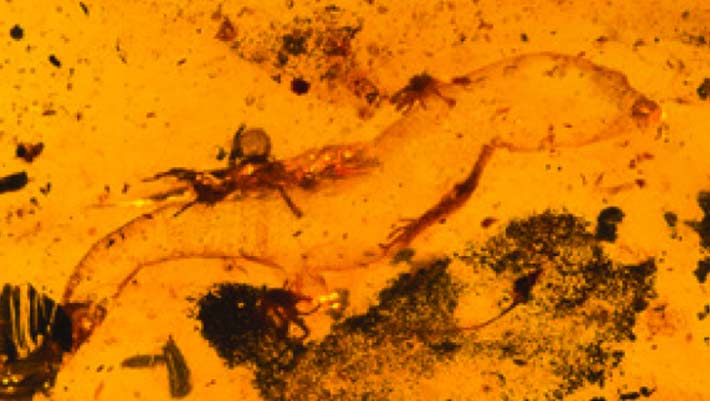
Oldest Known Male Gecko Found Preserved in Kachin Amber
Le plus ancien gecko mâle connu trouvé préservé dans l'ambre Kachin
Myanmar Crétacé nouvelle espèce autres reptiles
Les paléontologues ont décrit un nouveau genre et une nouvelle espèce de gecko ancien trouvés dans deux morceaux d'ambre provenant de gisements d'ambre vieux de 99 millions d'années (Crétacé moyen) dans la province de Kachin, au Myanmar. Le post Le plus ancien gecko mâle connu trouvé conservé dans Kachin Amber est apparu en premier sur Sci.News: Breaking Science News.
20/07/2026 sci-news ⚙ Traduction automatique
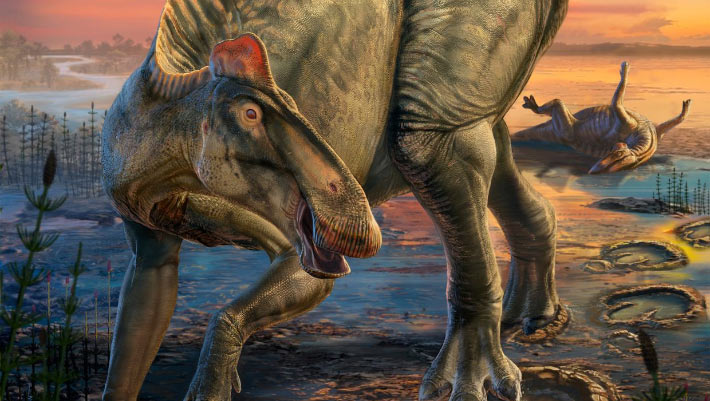
Tyrannosaurus rex Scavenged Duck-Billed Dinosaurs in Ancient Wyoming, Bite Marks Reveal
Des dinosaures à bec de canard récupérés par Tyrannosaurus rex dans l'ancien Wyoming et des marques de morsure révélées
os alimentation chasse États-Unis Crétacé Canardia Dinosauria Edmontosaurus Tyrannosaurus comportement
Des milliers d'os fossilisés provenant d'un gisement d'ossements du Crétacé dans le Wyoming, aux États-Unis, offrent des preuves physiques rares que le Tyrannosaurus rex s'est nourri des carcasses d'une espèce de dinosaure à bec de canard appelée Edmontosaurus annectens. L'article Tyrannosaurus rex a récupéré des dinosaures à bec de canard dans l'ancien Wyoming, les marques de morsure révèlent est apparu en premier sur Sci.News : Breaking Science News.
16/07/2026 sci-news ⚙ Traduction automatique
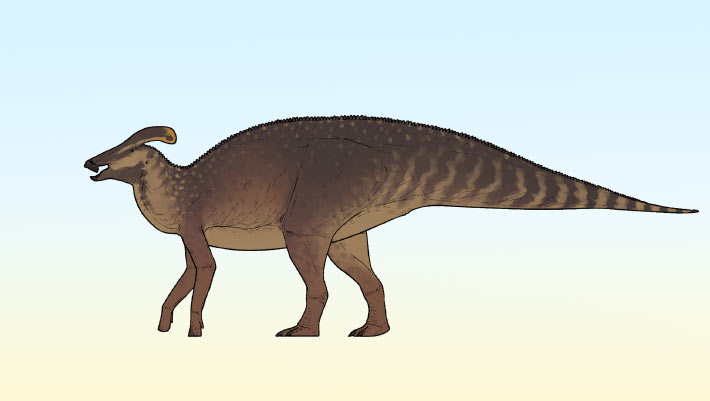
New Crested Dinosaur Species Identified in Canada
De nouvelles espèces de dinosaures à crête identifiées au Canada
crête Canada Campanien Crétacé Dinosauria Hadrosauridae datation nouvelle espèce
Un nouveau genre et une nouvelle espèce de dinosaure hadrosauridé lambéosaurine ont été identifiés dans le sud de l'Alberta, au Canada, remontant à 77 millions d'années, à l'âge campanien du Crétacé. L'article Nouvelles espèces de dinosaures à crête identifiées au Canada apparaît en premier sur Sci.News : Breaking Science News.
14/07/2026 sci-news ⚙ Traduction automatique
Des scientifiques décrivent officiellement le premier fossile de dinosaure découvert en Antarctique
vertèbre Antarctique Crétacé Crétacé supérieur fossile Dinosauria Titanosauria découverte
Les scientifiques ont officiellement décrit le premier fossile de dinosaure découvert en Antarctique. La découverte remarquable est une seule vertèbre provenant d’un titanosaure du Crétacé supérieur. Bien que le fossile ait été collecté il y a plus de quarante ans, les chercheurs n’ont confirmé son identité que récemment.  Le premier fossile de dinosaure découvert en Antarctique est décrit dans la revue Acta Palaeontologica Polonica.
29/06/2026 everythingdinosaur ⚙ Traduction automatique
1 2 3 4 5 6 7 8 9 10 11 12