Dinosauria

Taxon

285 image(s) · 193 Actualités

Voir la fiche

Galerie d'images

Material of the dinosaur Bahariasaurus ingens (1-4, 7-18, 24-26) and indeterminate theropods (5-6, 19-23) from the Bahariya Formation of Egypt.
Taxons Bahariasaurus

Material of the dinosaur Bahariasaurus ingens (1-4, 7-18, 24-26) and indeterminate theropods (5-6, 19-23) from the Bahariya Formation of Egypt.

Égypte Bahariasaurus Dinosauria formation
A cast of BYU 9025, the holotype fossil of the sauropod dinosaur Supersaurus, a giant scapulocoracoid measuring 2.4m long.
• The source photo was taken at the Dinosaur Journey Musuem.
• Notes regarding the file; This image was edited and extracted from the original seen here. [1] The Photoshop CC lens correction profile and a 'perspective warp' correction were applied.
Taxons Supersaurus

A cast of BYU 9025, the holotype fossil of the sauropod dinosaur Supersaurus, a giant scapulocoracoid measuring 2.4m long. • The source photo was taken at the Dinosaur Journey Musuem. • Notes regarding the file; This image was edited and extracted from the original seen here. [1] The Photoshop CC lens correction profile and a 'perspective warp' correction were applied.

moulage fossile holotype Dinosauria +1
Digital illustration of the Sauropod Dinosaur Isisaurus colberti from the Late Cretaceous (Maastrichtian) of India (72.2-66 MYA). References include Jain & Bandyopadhyay (1997), several papers from Wilson et al. and skeletal reconstruction by Scott Hartman.
Illustrated by Ansh Saxena.
About Isisaurus–

Isisaurus colberti (=Titanosaurus colberti) was a species of Titanosaurian Sauropod Dinosaur from the Late Cretaceous (Maastrichtian) age in the Indian Subcontinent. Isisaurus lived sympatrically with another Titanosaurian Sauropod Jainosaurus. It also lived alongside Theropods like Rajasaurus, Rahiolisaurus, Indosuchus etc. Remains of Isisaurus come from the Lameta formation of Central India.
Taxons Isisaurus

Digital illustration of the Sauropod Dinosaur Isisaurus colberti from the Late Cretaceous (Maastrichtian) of India (72.2-66 MYA). References include Jain & Bandyopadhyay (1997), several papers from Wilson et al. and skeletal reconstruction by Scott Hartman. Illustrated by Ansh Saxena. About Isisaurus– Isisaurus colberti (=Titanosaurus colberti) was a species of Titanosaurian Sauropod Dinosaur from the Late Cretaceous (Maastrichtian) age in the Indian Subcontinent. Isisaurus lived sympatrically with another Titanosaurian Sauropod Jainosaurus. It also lived alongside Theropods like Rajasaurus, Rahiolisaurus, Indosuchus etc. Remains of Isisaurus come from the Lameta formation of Central India.

Inde Lameta Crétacé Crétacé supérieur +9
Saurexallopus, a four toed dinosaur or bird trace fossil (jr syn Exallopus
Taxons Saurexallopus

Saurexallopus, a four toed dinosaur or bird trace fossil (jr syn Exallopus

fossile Dinosauria Exallopus Saurexallopus +1
Fossil samples – e.g. ‘primitive’ bony fish (1, 2), a skull of a temnospondyl ‘amphibian’ (probably a metoposauroid) in dorsal view (3), a skull of an archosaur of the crocodile lineage (probably a phytosaur) in palatal view (4), holotype of the “gliding reptile” Icarosaurus siefkeri [1] (5) and Atreipus-Grallator-type dinosaur tracks (bottom right) – from the Newark Supergroup, i.e. a series of mainly Late Triassic to Early Jurassic sedimentary rocks of eastern North America


↑ Edwin H. Colbert: A gliding reptile from the Triassic of New Jersey. American Museum Novitates, 2230. American Museum of Natural History, New York 1966, digitallibrary.amnh.org, cf. fig. 3 therein.
Taxons Atreipus

Fossil samples – e.g. ‘primitive’ bony fish (1, 2), a skull of a temnospondyl ‘amphibian’ (probably a metoposauroid) in dorsal view (3), a skull of an archosaur of the crocodile lineage (probably a phytosaur) in palatal view (4), holotype of the “gliding reptile” Icarosaurus siefkeri [1] (5) and Atreipus-Grallator-type dinosaur tracks (bottom right) – from the Newark Supergroup, i.e. a series of mainly Late Triassic to Early Jurassic sedimentary rocks of eastern North America ↑ Edwin H. Colbert: A gliding reptile from the Triassic of New Jersey. American Museum Novitates, 2230. American Museum of Natural History, New York 1966, digitallibrary.amnh.org, cf. fig. 3 therein.

musée Jurassique inférieur Jurassique Trias supérieur +9
An Ankylosaurus head (cast of specimen AMNH 5214), on display at the Museum of the Rockies in Bozeman, Montana.  This is from a specimen collected in Custer County, Montana.
The Ankylosauria were armored dinosaurs that lived from 122 million years ago to 66 million years ago in western North America, Europe, and East Asia.  There were two subgroups:  The Nodosauridae and Ankylosauridae. 
The Ankylosauridae contained six species, and a single subfamily -- the Ankylosaurinae.  There 18 genus within the subfamily, of which Ankylosaurus is the best known.  Ankylosaurus as the last of these, and lived 65.5 to 66.5 million years ago.
Ankylosaurus was about 20.5 feet long, 5 feet wide, and 5.5 feet tall at the hip.  It walked on all fours, with the rear legs longer than the front ones.  They ripped vegetation, and swallowed it whole.  Their defining feature was their armor.  They body was covered in thick, heavy bony plates, and most of the plates were fused together to make them even stronger.  Embedded in the skin were more knobs of bone, and the outer skin above these knobs covered in keratin (the same stuff fingernails are made of).  Ankylosaurus had a tail club, which consisted of several large osteoderms fused to the last few tail vertebrae.

Ankylosaurus was discovered in 1908.
Taxons Ankylosaurus

An Ankylosaurus head (cast of specimen AMNH 5214), on display at the Museum of the Rockies in Bozeman, Montana. This is from a specimen collected in Custer County, Montana. The Ankylosauria were armored dinosaurs that lived from 122 million years ago to 66 million years ago in western North America, Europe, and East Asia. There were two subgroups: The Nodosauridae and Ankylosauridae. The Ankylosauridae contained six species, and a single subfamily -- the Ankylosaurinae. There 18 genus within the subfamily, of which Ankylosaurus is the best known. Ankylosaurus as the last of these, and lived 65.5 to 66.5 million years ago. Ankylosaurus was about 20.5 feet long, 5 feet wide, and 5.5 feet tall at the hip. It walked on all fours, with the rear legs longer than the front ones. They ripped vegetation, and swallowed it whole. Their defining feature was their armor. They body was covered in thick, heavy bony plates, and most of the plates were fused together to make them even stronger. Embedded in the skin were more knobs of bone, and the outer skin above these knobs covered in keratin (the same stuff fingernails are made of). Ankylosaurus had a tail club, which consisted of several large osteoderms fused to the last few tail vertebrae. Ankylosaurus was discovered in 1908.

armure os peau musée +7
The "Dinosaurs in Their Time" exhibit at the Carnegie Museum of Natural History.
Pictures from some of my free time during the Project Zero Perspectives conference (#PZPGH) in Pittsburg, Pennsylvania - May 2017.
Taxons Corythosaurus

The "Dinosaurs in Their Time" exhibit at the Carnegie Museum of Natural History. Pictures from some of my free time during the Project Zero Perspectives conference (#PZPGH) in Pittsburg, Pennsylvania - May 2017.

musée Corythosaurus Dinosauria
Holotype specimen (CRILAR-Pv 151) of Huayracursor jaguensis, a long-necked dinosaur that lived approximately 230 million years ago, placed in approximate anatomical articulation.
Taxons Huayracursor

Holotype specimen (CRILAR-Pv 151) of Huayracursor jaguensis, a long-necked dinosaur that lived approximately 230 million years ago, placed in approximate anatomical articulation.

holotype spécimen Dinosauria Huayracursor
Musango is a basal sauropodomorph dinosaur that lived during the Late Triassic period in what is now Zimbabwe. Typical of early sauropodomorphs, or "prosauropods," it was an obligate biped with a long neck, and a long tail for counterbalance. Musango grew to approximately 5 m in total body length.

Musango is a basal sauropodomorph dinosaur that lived during the Late Triassic period in what is now Zimbabwe. Typical of early sauropodomorphs, or "prosauropods," it was an obligate biped with a long neck, and a long tail for counterbalance. Musango grew to approximately 5 m in total body length.

Zimbabwe Trias supérieur Trias Dinosauria +1
Uragasaurus is a sauropod dinosaur, and the first mamenchisaurid known from Thailand. Mamenchisaurids exhibit the basic sauropod body plan, processing their herbivorous diet in their large gut. Uniquely, mamenchisaurid necks, like that of Uragasaurus, are proportionately long, even by sauropod standards.

Uragasaurus is a sauropod dinosaur, and the first mamenchisaurid known from Thailand. Mamenchisaurids exhibit the basic sauropod body plan, processing their herbivorous diet in their large gut. Uniquely, mamenchisaurid necks, like that of Uragasaurus, are proportionately long, even by sauropod standards.

Thaïlande Dinosauria Mamenchisauridae Uragasaurus
Brontotholus is a relatively large pachycephalosaurian dinosaur. Like all pachycephalosaurs, it was bipedal and sported the characteristic bony dome on top of its skull. Brontotholus grew to nearly 4 m in length, making it one of the largest known pachycephalosaurs, and the largest from the Campanian age.

Brontotholus is a relatively large pachycephalosaurian dinosaur. Like all pachycephalosaurs, it was bipedal and sported the characteristic bony dome on top of its skull. Brontotholus grew to nearly 4 m in length, making it one of the largest known pachycephalosaurs, and the largest from the Campanian age.

Campanien Brontotholus Dinosauria Pachycephalosauria +1
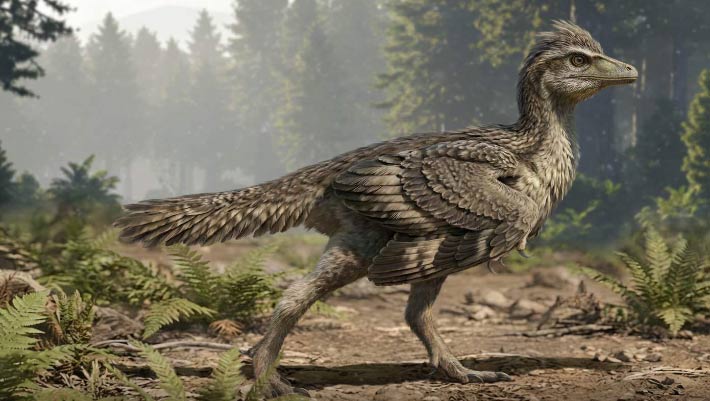
Restored profile of the oviraptorid dinosaur Heyuannia yanshini by Matt Martyniuk.

Restored profile of the oviraptorid dinosaur Heyuannia yanshini by Matt Martyniuk.

Dinosauria Heyuannia Ingenia Oviraptoridae
Reconstruction of Bissektipelta archibaldi an ankylosaurid dinosaur from the Late Cretaceous of Uzbekistan
Taxons Bissektipelta

Reconstruction of Bissektipelta archibaldi an ankylosaurid dinosaur from the Late Cretaceous of Uzbekistan

Ouzbékistan Crétacé Crétacé supérieur Ankylosauridae +2
Huaxiazhoulong is a fairly large ankylosaurid dinosaur, at around 6 m in length. It was a robust quadruped with a beak and teeth adapted for processing its herbivorous diet. Huaxiazhoulong had an armor of osteoderms, and the characteristic ankylosaurid tail club which was likely used in defense against predators, as well as intraspecific combat.
Taxons Huaxiazhoulong

Huaxiazhoulong is a fairly large ankylosaurid dinosaur, at around 6 m in length. It was a robust quadruped with a beak and teeth adapted for processing its herbivorous diet. Huaxiazhoulong had an armor of osteoderms, and the characteristic ankylosaurid tail club which was likely used in defense against predators, as well as intraspecific combat.

armure défense prédateur Ankylosauridae +2
Calvarius is a genus of styracosternan ornithopod from the Late Cretaceous of Spain. The name alludes to its chronostratigraphic proximity to the extinction event that wiped out the non-avian dinosaurs at the end of the Cretaceous. The highly modified metatarsal that is known from shows an example of convergent evolution, as it is more similar to non-iguanodontian ornithopods than to other styracosternans. It is thought that this is due to fulfilling a niche in its island habitat, resulting in Calvarius becoming a small-bodied animal, capable of rapid locomotion.
Taxons Calvarius

Calvarius is a genus of styracosternan ornithopod from the Late Cretaceous of Spain. The name alludes to its chronostratigraphic proximity to the extinction event that wiped out the non-avian dinosaurs at the end of the Cretaceous. The highly modified metatarsal that is known from shows an example of convergent evolution, as it is more similar to non-iguanodontian ornithopods than to other styracosternans. It is thought that this is due to fulfilling a niche in its island habitat, resulting in Calvarius becoming a small-bodied animal, capable of rapid locomotion.

locomotion Espagne Crétacé Crétacé supérieur +6
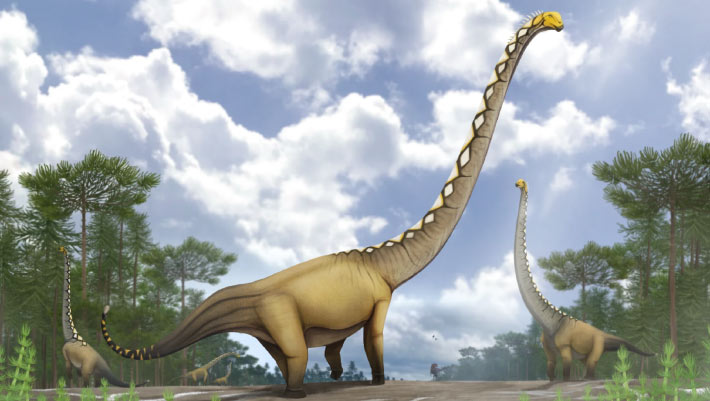
Astigmasaura is a medium-sized rebbachisaurid sauropod dinosaur from the Late Cretaceous period of what is now Argentina. Rebbachisaurids had highly pneumatized bones that helped them to hold their weight on their four pillar-like legs, and extremely long tails. Astigmasaura was likely a ground-level browsing herbivore.
Taxons Astigmasaura

Astigmasaura is a medium-sized rebbachisaurid sauropod dinosaur from the Late Cretaceous period of what is now Argentina. Rebbachisaurids had highly pneumatized bones that helped them to hold their weight on their four pillar-like legs, and extremely long tails. Astigmasaura was likely a ground-level browsing herbivore.

os Argentine Crétacé Crétacé supérieur +3
1 2 3 4 5 6 7 8 9 10 11 12 13 14 15 16 17 18

Actualités

Une illustration magnifique et détaillée du spinosaure
dessin Dinosauria Spinosauria
Merci Caldey d'avoir envoyé dans Everything Dinosaur votre illustration des nouveau-nés Spinosaurus "Surviving Earth".  Le célèbre paléoartiste Gabriel Ugueto a réalisé le concept art de cette nouvelle série télévisée en huit épisodes. Nous avons eu la chance de voir certaines de ses illustrations remarquables, notamment les dessins de Spinosaurus.  Le dessin de Caldey recrée fidèlement la scène mettant en scène le
29/05/2026 everythingdinosaur ⚙ Traduction automatique
Fungi Bloomed Twice around End-Cretaceous Mass Extinction
Les champignons ont fleuri deux fois autour de l'extinction massive de la fin du Crétacé
bassin Denver Crétacé Dinosauria extinction
En étudiant les microfossiles fongiques dans des échantillons de roches vieilles de 66 millions d'années du bassin de Denver, au Colorado, les microbiologistes de l'Université Johns Hopkins ont confirmé que l'impact de l'astéroïde tueur de dinosaures a déclenché une invasion fongique mondiale et a découvert une deuxième crise écologique, jusqu'alors inconnue, juste avant elle. L'article Les champignons ont fleuri deux fois autour de l'extinction massive de la fin du Crétacé est apparu en premier sur Sci.News : Breaking Science News.
28/05/2026 sci-news ⚙ Traduction automatique
Un nouvel e-mail de bienvenue pour les abonnés à la newsletter
Dinosauria
Everything Dinosaur a créé un nouvel e-mail de bienvenue pour les abonnés à la newsletter. Les membres de l'équipe révèlent le premier remerciement de l'entreprise pour avoir rejoint l'e-mail de la newsletter Everything Dinosaur. Mike et Sue accueillent les nouveaux abonnés avec un message personnel et amical.  De plus, l'e-mail de bienvenue met en valeur l'expertise de l'entreprise et sa vaste présence sur les réseaux sociaux. Merci pour
28/05/2026 everythingdinosaur ⚙ Traduction automatique
Quelle est la différence entre un ptérosaure et un dinosaure ?
Dinosauria Pterosauria
Quelle est la différence entre un ptérosaure et un dinosaure ? Beaucoup de gens pensent que les ptérosaures étaient des dinosaures, mais ce n’est pas exact. Les ptérosaures étaient des reptiles volants qui vivaient en même temps que les dinosaures.  Bien que les ptérosaures et les dinosaures soient tous deux des reptiles et appartiennent à un groupe plus large appelé Archosauria, les ptérosaures ont évolué séparément et
27/05/2026 everythingdinosaur ⚙ Traduction automatique
Rare Ostrich-Like Dinosaur Fossil Found on Canadian Island
Un rare fossile de dinosaure ressemblant à une autruche découvert sur une île canadienne
vertèbre Canada Colombie fossile Dinosauria Ornithomimosauria oiseau
Des paléontologues canadiens affirment avoir découvert une vertèbre caudale de dinosaure dans des roches marines vieilles de 75 à 80 millions d'années sur une petite île au large de la Colombie-Britannique, fournissant ainsi la preuve la plus claire à ce jour que des ornithomimosaures ressemblant à des oiseaux parcouraient autrefois l'ancienne côte du Pacifique de l'Amérique du Nord. L'article Un fossile rare de dinosaure ressemblant à une autruche trouvé sur une île canadienne est apparu en premier sur Sci.News : Breaking Science News.
25/05/2026 sci-news ⚙ Traduction automatique
1 2 3 4 5 6 7 8 9 10 11 12 13 14 15 16 17 18 19 20 21 22 23 24 25 26 27 28 29 30 31 32 33 34 35 36 37 38 39