←

Dinosauria

Taxon

251 image(s) · 248 News

View page

Image gallery

Huaxiazhoulong is a fairly large ankylosaurid dinosaur, at around 6 m in length. It was a robust quadruped with a beak and teeth adapted for processing its herbivorous diet. Huaxiazhoulong had an armor of osteoderms, and the characteristic ankylosaurid tail club which was likely used in defense against predators, as well as intraspecific combat.
Taxa Huaxiazhoulong

Huaxiazhoulong is a fairly large ankylosaurid dinosaur, at around 6 m in length. It was a robust quadruped with a beak and teeth adapted for processing its herbivorous diet. Huaxiazhoulong had an armor of osteoderms, and the characteristic ankylosaurid tail club which was likely used in defense against predators, as well as intraspecific combat.

armor defense predator Ankylosauridae +2
Holotype specimen of Notatesseraeraptor frickensis, a theropod dinosaur, in Sauriermuseum Frick .
Taxa Notatesseraeraptor

Holotype specimen of Notatesseraeraptor frickensis, a theropod dinosaur, in Sauriermuseum Frick .

holotype specimen Dinosauria Notatesseraeraptor
Calvarius is a genus of styracosternan ornithopod from the Late Cretaceous of Spain. The name alludes to its chronostratigraphic proximity to the extinction event that wiped out the non-avian dinosaurs at the end of the Cretaceous. The highly modified metatarsal that is known from shows an example of convergent evolution, as it is more similar to non-iguanodontian ornithopods than to other styracosternans. It is thought that this is due to fulfilling a niche in its island habitat, resulting in Calvarius becoming a small-bodied animal, capable of rapid locomotion.
Taxa Calvarius

Calvarius is a genus of styracosternan ornithopod from the Late Cretaceous of Spain. The name alludes to its chronostratigraphic proximity to the extinction event that wiped out the non-avian dinosaurs at the end of the Cretaceous. The highly modified metatarsal that is known from shows an example of convergent evolution, as it is more similar to non-iguanodontian ornithopods than to other styracosternans. It is thought that this is due to fulfilling a niche in its island habitat, resulting in Calvarius becoming a small-bodied animal, capable of rapid locomotion.

locomotion Spain Cretaceous Late Cretaceous +6
Illustration of the pelvis from the theropod dinosaur Siamotyrannus isanensis. Siamotyrannus lived in Thailand, according to scientists about 90 MYA. It has been estimated to a length of 7 meter, and a weight of about 2 tonnes. Scientists has been uncertain if Siamotyrannus is a member of the family Tyrannosauridae or to Sinraptoridae.
Taxa Siamotyrannus

Illustration of the pelvis from the theropod dinosaur Siamotyrannus isanensis. Siamotyrannus lived in Thailand, according to scientists about 90 MYA. It has been estimated to a length of 7 meter, and a weight of about 2 tonnes. Scientists has been uncertain if Siamotyrannus is a member of the family Tyrannosauridae or to Sinraptoridae.

pelvis Thailand Dinosauria Siamotyrannus +2
Changchunsaurus parvus, a neornithischian dinosaur.
Taxa Changchunsaurus

Changchunsaurus parvus, a neornithischian dinosaur.

Changchunsaurus Dinosauria Neornithischia
A replica of MIWG 1530, the holotype of the indeterminate archosaur Yaverlandia bitholus. As seen from two angles.
Taxa Yaverlandia

A replica of MIWG 1530, the holotype of the indeterminate archosaur Yaverlandia bitholus. As seen from two angles.

holotype Dinosauria Maniraptora Yaverlandia
Notohypsilodon comodorensis, an elasmarian ornithopod dinosaur.
Taxa Notohypsilophodon

Notohypsilodon comodorensis, an elasmarian ornithopod dinosaur.

Dinosauria Elasmaria Notohypsilophodon
Holotype (MTM V 2009.192.1) of Ajkaceratops kozmai .mw-parser-output .smallcaps{font-variant:small-caps}Ősi et al., 2010 (Dinosauria: Ceratopsia), fused rostral and premaxillae, in lateral view, length of scale bar = 1 cm.
Taxa Ajkaceratops

Holotype (MTM V 2009.192.1) of Ajkaceratops kozmai .mw-parser-output .smallcaps{font-variant:small-caps}Ősi et al., 2010 (Dinosauria: Ceratopsia), fused rostral and premaxillae, in lateral view, length of scale bar = 1 cm.

scale holotype Ajkaceratops Ceratopsia +1
Gandititan is a basal titanosaurian sauropod dinosaur from the Late Cretaceous of what is now China. It was a long-necked herbivore, typical of sauropods, with a relatively short tail, a characteristic of titanosaurs compared to other sauropods. Titanosauria have a wide range of body sizes, and Gandititan falls around the middle, slightly on the smaller side. Discovered with a fairly well articluated spine from neck to tail, Gandititan is estimated at about 14 m in total body length.
Taxa Gandititan

Gandititan is a basal titanosaurian sauropod dinosaur from the Late Cretaceous of what is now China. It was a long-necked herbivore, typical of sauropods, with a relatively short tail, a characteristic of titanosaurs compared to other sauropods. Titanosauria have a wide range of body sizes, and Gandititan falls around the middle, slightly on the smaller side. Discovered with a fairly well articluated spine from neck to tail, Gandititan is estimated at about 14 m in total body length.

China Cretaceous Late Cretaceous Dinosauria +2
Holotype of Ferrisaurus sustutensis, RBCM P900, on display in the Okanagan Heritage Museum exhibition Dinosaurs of BC, June-September 2024.
Taxa Ferrisaurus

Holotype of Ferrisaurus sustutensis, RBCM P900, on display in the Okanagan Heritage Museum exhibition Dinosaurs of BC, June-September 2024.

museum holotype Dinosauria Ferrisaurus
Astigmasaura is a medium-sized rebbachisaurid sauropod dinosaur from the Late Cretaceous period of what is now Argentina. Rebbachisaurids had highly pneumatized bones that helped them to hold their weight on their four pillar-like legs, and extremely long tails. Astigmasaura was likely a ground-level browsing herbivore.
Taxa Astigmasaura

Astigmasaura is a medium-sized rebbachisaurid sauropod dinosaur from the Late Cretaceous period of what is now Argentina. Rebbachisaurids had highly pneumatized bones that helped them to hold their weight on their four pillar-like legs, and extremely long tails. Astigmasaura was likely a ground-level browsing herbivore.

bone Argentina Cretaceous Late Cretaceous +3
Illustration of Sinusonasus (Dinosauria, Theropoda, Coelurosauria, Deinonychosauria, Troodontidae). This restoration is an edited and updated version of a drawing I originally uploaded on Wikimedia at December 11th 2009 (which i turn is based on a fossil seen at http://site.sinodino.com/Museum/images/Sinusonasus.JPG.).
Taxa Sinusonasus

Illustration of Sinusonasus (Dinosauria, Theropoda, Coelurosauria, Deinonychosauria, Troodontidae). This restoration is an edited and updated version of a drawing I originally uploaded on Wikimedia at December 11th 2009 (which i turn is based on a fossil seen at http://site.sinodino.com/Museum/images/Sinusonasus.JPG.).

drawing museum fossil Coelurosauria +5
Rebbachisaurids are the latest known sauropod dinosaurs outside the titanosaur lineage. Cienciargentina is a rebbachisaurid from the Late Cretaceous, making it among the most recent. It had many hollow bones, and likely had batteries of teeth used for chewing, a rebbachisaurid feature unique among sauropods.
Taxa Cienciargentina

Rebbachisaurids are the latest known sauropod dinosaurs outside the titanosaur lineage. Cienciargentina is a rebbachisaurid from the Late Cretaceous, making it among the most recent. It had many hollow bones, and likely had batteries of teeth used for chewing, a rebbachisaurid feature unique among sauropods.

bone Cretaceous Late Cretaceous Cienciargentina +3
Skeletal reconstruction of the Sauropod dinosaur Abdarainurus barsboldi based on holotype PIN 5669/1, as figured in Averianov and Lopatin, 2020. Outline is based on related Sauropods, modified from SlvrHwk.
Taxa Abdarainurus

Skeletal reconstruction of the Sauropod dinosaur Abdarainurus barsboldi based on holotype PIN 5669/1, as figured in Averianov and Lopatin, 2020. Outline is based on related Sauropods, modified from SlvrHwk.

holotype Abdarainurus Dinosauria
Reconstructed skull of Duriavenator hesperis showing known material (white) of the holotype and only known specimen. Unknown bones based on related Eustreptospondylus oxoniensis. Scale bar is 10cm, image is 10px/cm. Cranial anatomy based on Benson (2008) "A redescription of "Megalosaurus" hesperis (Dinosauria, Theropoda) from the Inferior Oolite (Bajocian, Middle Jurassic) of Dorset, United Kingdom"
Taxa Duriavenator

Reconstructed skull of Duriavenator hesperis showing known material (white) of the holotype and only known specimen. Unknown bones based on related Eustreptospondylus oxoniensis. Scale bar is 10cm, image is 10px/cm. Cranial anatomy based on Benson (2008) "A redescription of "Megalosaurus" hesperis (Dinosauria, Theropoda) from the Inferior Oolite (Bajocian, Middle Jurassic) of Dorset, United Kingdom"

bone scale United Kingdom Bajocian +11
Reconstructed skull of Wiehenvenator albati based on holotype specimen (white). Scale bar is 10cm, image if 10px/cm. Unknown material based on related Torvosaurus tanneri. Cranial anatomy based on Rauhut et al (2016) "A new megalosaurid theropod dinosaur from the late Middle Jurassic (Callovian) of north-western Germany: implications for theropod evolution and faunal turnover in the Jurassic"
Taxa Wiehenvenator

Reconstructed skull of Wiehenvenator albati based on holotype specimen (white). Scale bar is 10cm, image if 10px/cm. Unknown material based on related Torvosaurus tanneri. Cranial anatomy based on Rauhut et al (2016) "A new megalosaurid theropod dinosaur from the late Middle Jurassic (Callovian) of north-western Germany: implications for theropod evolution and faunal turnover in the Jurassic"

scale Germany Callovian Jurassic +10
1 2 3 4 5 6 7 8 9 10 11 12 13 14 15 16

News

Exclusive Spinosaurus Scale Drawing Celebrating a New Species
scale drawing Niger Dinosauria Spinosauria Spinosauridae formation new species
Everything Dinosaur has commissioned a Spinosaurus mirabilis scale drawing as the company prepares for the arrival of the new Haolonggood S. mirabilis models.  This illustration will be used in the company's fact sheet about this recently described spinosaurid known from the Farak Formation of Niger (Africa).  Creating the scale drawing for this dinosaur was challenging. 
04/10/2026 everythingdinosaur
New Haolonggood Purussaurus Models Coming into Stock
United Kingdom Miocene Dinosauria Ouranosaurus Spinosauria
The two, recently announced Haolonggood Purussaurus models are coming into stock at Everything Dinosaur. The UK-based mail order company already stocks the Haolonggood Sarcosuchus figures. They make an excellent accompaniment to Haolonggood's Spinosaurus and Ouranosaurus models.  Purussaurus lived during the Miocene Epoch. Therefore, this crocodilian is geologically much younger than Sarcosuchus. Two colour variants
03/10/2026 everythingdinosaur
Why Do Different Dinosaur Models of the Same Animal Look Different?
Dinosauria Stegosauria
If you collect dinosaur and prehistoric animal models, you may have noticed something curious. Two models representing exactly the same dinosaur can look surprisingly different. The arrangement of the armour plates on a stegosaur might differ.  One T. rex figure might be heavily built with extremely wide hips, whereas another model could look slimmer.  A
02/10/2026 everythingdinosaur
Dinosaur-Era Mammal Swam Like Platypus and Replaced Its Teeth Multiple Times
China Dinosauria mammals
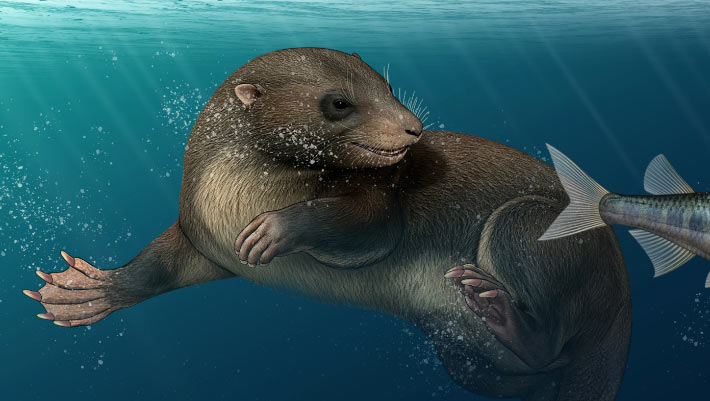
Dongoconodon platycauda, a small eutriconodontan mammal that lived alongside dinosaurs in what is now northeastern China paddled through the water with webbed, platypus-like hands and feet, and replaced its teeth multiple times. The post Dinosaur-Era Mammal Swam Like Platypus and Replaced Its Teeth Multiple Times appeared first on Sci.News: Breaking Science News.
01/10/2026 sci-news
Dinosaurs May Have Dined on Seaweed, Study Suggests
Cretaceous fossil Dinosauria isotope study
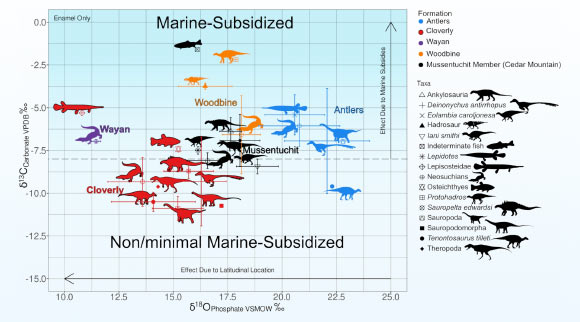
Paleontologists studying Cretaceous fossils have repeatedly found that the teeth of many ancient animals contain more of a heavier carbon isotope, carbon-13, than their presumed plant-based diets would predict. The post Dinosaurs May Have Dined on Seaweed, Study Suggests appeared first on Sci.News: Breaking Science News.
01/10/2026 sci-news
1 2 3 4 5 6 7 8 9 10 11 12 13 14 15 16 17 18 19 20 21 22 23 24 25 26 27 28 29 30 31 32 33 34 35 36 37 38 39 40 41 42 43 44 45 46 47 48 49 50