←

Dinosauria

Taxon

251 image(s) · 248 Actualités

Voir la fiche

Galerie d'images

Huaxiazhoulong is a fairly large ankylosaurid dinosaur, at around 6 m in length. It was a robust quadruped with a beak and teeth adapted for processing its herbivorous diet. Huaxiazhoulong had an armor of osteoderms, and the characteristic ankylosaurid tail club which was likely used in defense against predators, as well as intraspecific combat.
Taxons Huaxiazhoulong

Huaxiazhoulong is a fairly large ankylosaurid dinosaur, at around 6 m in length. It was a robust quadruped with a beak and teeth adapted for processing its herbivorous diet. Huaxiazhoulong had an armor of osteoderms, and the characteristic ankylosaurid tail club which was likely used in defense against predators, as well as intraspecific combat.

armure défense prédateur Ankylosauridae +2
Holotype specimen of Notatesseraeraptor frickensis, a theropod dinosaur, in Sauriermuseum Frick .
Taxons Notatesseraeraptor

Holotype specimen of Notatesseraeraptor frickensis, a theropod dinosaur, in Sauriermuseum Frick .

holotype spécimen Dinosauria Notatesseraeraptor
Calvarius is a genus of styracosternan ornithopod from the Late Cretaceous of Spain. The name alludes to its chronostratigraphic proximity to the extinction event that wiped out the non-avian dinosaurs at the end of the Cretaceous. The highly modified metatarsal that is known from shows an example of convergent evolution, as it is more similar to non-iguanodontian ornithopods than to other styracosternans. It is thought that this is due to fulfilling a niche in its island habitat, resulting in Calvarius becoming a small-bodied animal, capable of rapid locomotion.
Taxons Calvarius

Calvarius is a genus of styracosternan ornithopod from the Late Cretaceous of Spain. The name alludes to its chronostratigraphic proximity to the extinction event that wiped out the non-avian dinosaurs at the end of the Cretaceous. The highly modified metatarsal that is known from shows an example of convergent evolution, as it is more similar to non-iguanodontian ornithopods than to other styracosternans. It is thought that this is due to fulfilling a niche in its island habitat, resulting in Calvarius becoming a small-bodied animal, capable of rapid locomotion.

locomotion Espagne Crétacé Crétacé supérieur +6
Illustration of the pelvis from the theropod dinosaur Siamotyrannus isanensis. Siamotyrannus lived in Thailand, according to scientists about 90 MYA. It has been estimated to a length of 7 meter, and a weight of about 2 tonnes. Scientists has been uncertain if Siamotyrannus is a member of the family Tyrannosauridae or to Sinraptoridae.
Taxons Siamotyrannus

Illustration of the pelvis from the theropod dinosaur Siamotyrannus isanensis. Siamotyrannus lived in Thailand, according to scientists about 90 MYA. It has been estimated to a length of 7 meter, and a weight of about 2 tonnes. Scientists has been uncertain if Siamotyrannus is a member of the family Tyrannosauridae or to Sinraptoridae.

bassin Thaïlande Dinosauria Siamotyrannus +2
Changchunsaurus parvus, a neornithischian dinosaur.
Taxons Changchunsaurus

Changchunsaurus parvus, a neornithischian dinosaur.

Changchunsaurus Dinosauria Neornithischia
A replica of MIWG 1530, the holotype of the indeterminate archosaur Yaverlandia bitholus. As seen from two angles.
Taxons Yaverlandia

A replica of MIWG 1530, the holotype of the indeterminate archosaur Yaverlandia bitholus. As seen from two angles.

holotype Dinosauria Maniraptora Yaverlandia
Notohypsilodon comodorensis, an elasmarian ornithopod dinosaur.
Taxons Notohypsilophodon

Notohypsilodon comodorensis, an elasmarian ornithopod dinosaur.

Dinosauria Elasmaria Notohypsilophodon
Holotype (MTM V 2009.192.1) of Ajkaceratops kozmai .mw-parser-output .smallcaps{font-variant:small-caps}Ősi et al., 2010 (Dinosauria: Ceratopsia), fused rostral and premaxillae, in lateral view, length of scale bar = 1 cm.
Taxons Ajkaceratops

Holotype (MTM V 2009.192.1) of Ajkaceratops kozmai .mw-parser-output .smallcaps{font-variant:small-caps}Ősi et al., 2010 (Dinosauria: Ceratopsia), fused rostral and premaxillae, in lateral view, length of scale bar = 1 cm.

écaille holotype Ajkaceratops Ceratopsia +1
Gandititan is a basal titanosaurian sauropod dinosaur from the Late Cretaceous of what is now China. It was a long-necked herbivore, typical of sauropods, with a relatively short tail, a characteristic of titanosaurs compared to other sauropods. Titanosauria have a wide range of body sizes, and Gandititan falls around the middle, slightly on the smaller side. Discovered with a fairly well articluated spine from neck to tail, Gandititan is estimated at about 14 m in total body length.
Taxons Gandititan

Gandititan is a basal titanosaurian sauropod dinosaur from the Late Cretaceous of what is now China. It was a long-necked herbivore, typical of sauropods, with a relatively short tail, a characteristic of titanosaurs compared to other sauropods. Titanosauria have a wide range of body sizes, and Gandititan falls around the middle, slightly on the smaller side. Discovered with a fairly well articluated spine from neck to tail, Gandititan is estimated at about 14 m in total body length.

Chine Crétacé Crétacé supérieur Dinosauria +2
Holotype of Ferrisaurus sustutensis, RBCM P900, on display in the Okanagan Heritage Museum exhibition Dinosaurs of BC, June-September 2024.
Taxons Ferrisaurus

Holotype of Ferrisaurus sustutensis, RBCM P900, on display in the Okanagan Heritage Museum exhibition Dinosaurs of BC, June-September 2024.

musée holotype Dinosauria Ferrisaurus
Astigmasaura is a medium-sized rebbachisaurid sauropod dinosaur from the Late Cretaceous period of what is now Argentina. Rebbachisaurids had highly pneumatized bones that helped them to hold their weight on their four pillar-like legs, and extremely long tails. Astigmasaura was likely a ground-level browsing herbivore.
Taxons Astigmasaura

Astigmasaura is a medium-sized rebbachisaurid sauropod dinosaur from the Late Cretaceous period of what is now Argentina. Rebbachisaurids had highly pneumatized bones that helped them to hold their weight on their four pillar-like legs, and extremely long tails. Astigmasaura was likely a ground-level browsing herbivore.

os Argentine Crétacé Crétacé supérieur +3
Illustration of Sinusonasus (Dinosauria, Theropoda, Coelurosauria, Deinonychosauria, Troodontidae). This restoration is an edited and updated version of a drawing I originally uploaded on Wikimedia at December 11th 2009 (which i turn is based on a fossil seen at http://site.sinodino.com/Museum/images/Sinusonasus.JPG.).
Taxons Sinusonasus

Illustration of Sinusonasus (Dinosauria, Theropoda, Coelurosauria, Deinonychosauria, Troodontidae). This restoration is an edited and updated version of a drawing I originally uploaded on Wikimedia at December 11th 2009 (which i turn is based on a fossil seen at http://site.sinodino.com/Museum/images/Sinusonasus.JPG.).

dessin musée fossile Coelurosauria +5
Rebbachisaurids are the latest known sauropod dinosaurs outside the titanosaur lineage. Cienciargentina is a rebbachisaurid from the Late Cretaceous, making it among the most recent. It had many hollow bones, and likely had batteries of teeth used for chewing, a rebbachisaurid feature unique among sauropods.
Taxons Cienciargentina

Rebbachisaurids are the latest known sauropod dinosaurs outside the titanosaur lineage. Cienciargentina is a rebbachisaurid from the Late Cretaceous, making it among the most recent. It had many hollow bones, and likely had batteries of teeth used for chewing, a rebbachisaurid feature unique among sauropods.

os Crétacé Crétacé supérieur Cienciargentina +3
Skeletal reconstruction of the Sauropod dinosaur Abdarainurus barsboldi based on holotype PIN 5669/1, as figured in Averianov and Lopatin, 2020. Outline is based on related Sauropods, modified from SlvrHwk.
Taxons Abdarainurus

Skeletal reconstruction of the Sauropod dinosaur Abdarainurus barsboldi based on holotype PIN 5669/1, as figured in Averianov and Lopatin, 2020. Outline is based on related Sauropods, modified from SlvrHwk.

holotype Abdarainurus Dinosauria
Reconstructed skull of Duriavenator hesperis showing known material (white) of the holotype and only known specimen. Unknown bones based on related Eustreptospondylus oxoniensis. Scale bar is 10cm, image is 10px/cm. Cranial anatomy based on Benson (2008) "A redescription of "Megalosaurus" hesperis (Dinosauria, Theropoda) from the Inferior Oolite (Bajocian, Middle Jurassic) of Dorset, United Kingdom"
Taxons Duriavenator

Reconstructed skull of Duriavenator hesperis showing known material (white) of the holotype and only known specimen. Unknown bones based on related Eustreptospondylus oxoniensis. Scale bar is 10cm, image is 10px/cm. Cranial anatomy based on Benson (2008) "A redescription of "Megalosaurus" hesperis (Dinosauria, Theropoda) from the Inferior Oolite (Bajocian, Middle Jurassic) of Dorset, United Kingdom"

os écaille Royaume-Uni Bajocien +11
Reconstructed skull of Wiehenvenator albati based on holotype specimen (white). Scale bar is 10cm, image if 10px/cm. Unknown material based on related Torvosaurus tanneri. Cranial anatomy based on Rauhut et al (2016) "A new megalosaurid theropod dinosaur from the late Middle Jurassic (Callovian) of north-western Germany: implications for theropod evolution and faunal turnover in the Jurassic"
Taxons Wiehenvenator

Reconstructed skull of Wiehenvenator albati based on holotype specimen (white). Scale bar is 10cm, image if 10px/cm. Unknown material based on related Torvosaurus tanneri. Cranial anatomy based on Rauhut et al (2016) "A new megalosaurid theropod dinosaur from the late Middle Jurassic (Callovian) of north-western Germany: implications for theropod evolution and faunal turnover in the Jurassic"

écaille Allemagne Callovien Jurassique +10
1 2 3 4 5 6 7 8 9 10 11 12 13 14 15 16

Actualités

Des scientifiques découvrent le premier diplodocus jamais découvert en dehors de l'Amérique du Nord
os Espagne Jurassique Jurassique supérieur fossile Dinosauria Diplodocia
Un fossile de dinosaure vieux de 150 millions d'années provenant d'Espagne a été identifié comme le premier Diplodocus confirmé jamais découvert en dehors de l'Amérique du Nord. Le sauropode géant mesurait environ 25 mètres de long et était suffisamment bien conservé pour que les chercheurs puissent associer les caractéristiques distinctives de ses os de la queue au célèbre genre. Son apparition inattendue en Europe suggère que les dinosaures se déplaçaient entre les continents à la fin du Jurassique, peut-être via des connexions terrestres temporaires.
19/09/2026 sciencedaily ⚙ Traduction automatique
Une explication utile sur la formation de traces probables de tyrannosaure
empreintes Dinosauria Tyrannosaurus découverte formation
Récemment, Everything Dinosaur a publié un article sur la découverte de traces remarquables et probables de Tyrannosaurus rex qui avaient été découvertes dans le Dakota du Nord. Les empreintes à trois doigts ont été réalisées par un grand théropode. La piste mesure environ sept mètres de long et quatre empreintes individuelles ont été fouillées. Il y en a probablement davantage, mais les surcharges dues
18/09/2026 everythingdinosaur ⚙ Traduction automatique
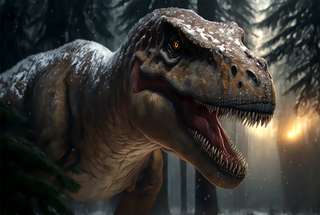
On connaît désormais la température du T. rex, et elle n’est pas celle qu’on aurait imaginée
dent Dinosauria oiseau mammifères
Et si le T. rex avait eu une température corporelle proche de la nôtre ? Longtemps considérés comme des animaux à « sang froid », les dinosaures pourraient en réalité avoir développé une physiologie bien plus proche de celle des oiseaux et des mammifères. Une dent fossilisée vient aujourd’hui...
18/09/2026 futura-terre
Sur l'origine de ma première espèce : Dinodontosaurus isiyavamanda
fossile Dinosauria nouvelle espèce
Je ne peux pas imaginer à quel point mon enfant de 9 ans aurait été ravi si je lui avais dit qu’il allait dévoiler au monde une nouvelle espèce fossile, sans parler de celle qui renseigne sur les plus anciens dinosaures. Moi aussi, j'ai 25 ans, je suis plutôt content du travail, mais pour être honnête, ce n'est pas du frisson ou de la joie que [&hellip
18/09/2026 palaeocast ⚙ Traduction automatique
Une découverte passionnante de fossiles fournit la première preuve définitive de Diplodocus en Europe
vertèbre Espagne fossile Dinosauria Diplodocia Diplodocus découverte étude
La découverte de Diplodocus en Europe a été confirmée suite à l'étude de fossiles de sauropodes de l'est de l'Espagne. Quatorze vertèbres caudales et plusieurs chevrons de Teruel ont été attribués au genre emblématique Diplodocus. Il s'agit de la première preuve définitive de l'existence de ce célèbre dinosaure en dehors de l'Amérique du Nord. Les fossiles proviennent du site de La Tejería
17/09/2026 everythingdinosaur ⚙ Traduction automatique
1 2 3 4 5 6 7 8 9 10 11 12 13 14 15 16 17 18 19 20 21 22 23 24 25 26 27 28 29 30 31 32 33 34 35 36 37 38 39 40 41 42 43 44 45 46 47 48 49 50