découverte

Thématique

9 image(s) · 73 Actualités

Galerie d'images

Diagram made to illustrate the debate over the hands of theropod dinosaurs and their alleged descendants, the birds ( Aves ). In the last years, the difference between the hands of theropods and birds have been an important thing when it comes question the theory that birds evolved from dinosaurs, even though some scientists may could refute it. In the diagram, a Neotheropoda ( 1 ), basal tetanurae ( 2 ), a coelurosaurian ( 3 ), the bird (?)Archaeopteryx ( 4 ) and modern bird ( 5 ).
In 1997, birdexpert Alan Feduccia at University of North Carolina discovered that birds develop hands with the digits II, III and IV ( see The Cincinnati Enquirer, 25 - 10 - 1997 ). This is in contrast with the hands of tetanurae, which seems to have the digits I, II and III. This make it almost impossible for dinosaurs and birds to be closely related, according to Feduccia.
Since the discovery by Feduccia, scientific research have came up with a possible explanation to the mystery of the dinosaur - bird hand difference, called The frame shift hypothesis ( see http://scienceblogs.com/tetrapodzoology/2009/06/limusaurus_is_awesome.php ). This hypothesis is based on a discovery which shows that although bird embryos develop the fingers II, III and IV, the genes which is coding for the external appearance of the digits seems to be from the fingers I, II and III. Based on this, scientists belive this: when neotheropods evolved into tetanurae, the losed digit I ( not digit IV, as earlier suggested ). During this process, the genes which coded for how the digits should looks like ( the number of phalanges, for example ) became refurnished ( see the color spots in th upper section in the diagram to understan ). The discovery of Limusaurus has been said to support this theory ( see https://www.livescience.com/animals/090617-dinosaur-hands.html ).
One thing is that may can be used to refute that Limusaurus should support the Frame shift hypothesis is that Limusaurus was a ceratosaurian, and is dated to be much younger than the oldest tetanurae's.
Also, some tetanure´s may had 4 digits' like the Archaeornithomimus ( see number 4 in the diagram ) ( see also http://dml.cmnh.org/1998Oct/msg00443.html and the Allosaurus hand in the image here: http://upload.wikimedia.org/wikipedia/commons/6/69/Allosaurus-mounted.jpg ). If this is the digits I, II, III and IV. If so, it shows that tetanurae had the digits I, II and III, and not II, II and IV, like birds.
For more in this debate, see text section to my picture Raptor-Archaeopteryx-bird hands differens.JPG at http://commons.wikimedia.org/wiki/File:Raptor-Archaeopteryx-bird_hands_differens.JPG.

Diagram made to illustrate the debate over the hands of theropod dinosaurs and their alleged descendants, the birds ( Aves ). In the last years, the difference between the hands of theropods and birds have been an important thing when it comes question the theory that birds evolved from dinosaurs, even though some scientists may could refute it. In the diagram, a Neotheropoda ( 1 ), basal tetanurae ( 2 ), a coelurosaurian ( 3 ), the bird (?)Archaeopteryx ( 4 ) and modern bird ( 5 ). In 1997, birdexpert Alan Feduccia at University of North Carolina discovered that birds develop hands with the digits II, III and IV ( see The Cincinnati Enquirer, 25 - 10 - 1997 ). This is in contrast with the hands of tetanurae, which seems to have the digits I, II and III. This make it almost impossible for dinosaurs and birds to be closely related, according to Feduccia. Since the discovery by Feduccia, scientific research have came up with a possible explanation to the mystery of the dinosaur - bird hand difference, called The frame shift hypothesis ( see http://scienceblogs.com/tetrapodzoology/2009/06/limusaurus_is_awesome.php ). This hypothesis is based on a discovery which shows that although bird embryos develop the fingers II, III and IV, the genes which is coding for the external appearance of the digits seems to be from the fingers I, II and III. Based on this, scientists belive this: when neotheropods evolved into tetanurae, the losed digit I ( not digit IV, as earlier suggested ). During this process, the genes which coded for how the digits should looks like ( the number of phalanges, for example ) became refurnished ( see the color spots in th upper section in the diagram to understan ). The discovery of Limusaurus has been said to support this theory ( see https://www.livescience.com/animals/090617-dinosaur-hands.html ). One thing is that may can be used to refute that Limusaurus should support the Frame shift hypothesis is that Limusaurus was a ceratosaurian, and is dated to be much younger than the oldest tetanurae's. Also, some tetanure´s may had 4 digits' like the Archaeornithomimus ( see number 4 in the diagram ) ( see also http://dml.cmnh.org/1998Oct/msg00443.html and the Allosaurus hand in the image here: http://upload.wikimedia.org/wikipedia/commons/6/69/Allosaurus-mounted.jpg ). If this is the digits I, II, III and IV. If so, it shows that tetanurae had the digits I, II and III, and not II, II and IV, like birds. For more in this debate, see text section to my picture Raptor-Archaeopteryx-bird hands differens.JPG at http://commons.wikimedia.org/wiki/File:Raptor-Archaeopteryx-bird_hands_differens.JPG.

Archaeopteryx Coelurosauria Dinosauria Neotheropoda +3
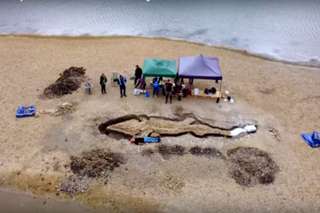
The Canadian Fossil Discovery Centre in Morden boasts the largest collection of marine invertebrate fossils in Canada. Visitors to the museum not only get to see this collection, but can join a dig in search for more fossils at a 109-acre escarpment property.

Photo credit: Robyn Hanson

The Canadian Fossil Discovery Centre in Morden boasts the largest collection of marine invertebrate fossils in Canada. Visitors to the museum not only get to see this collection, but can join a dig in search for more fossils at a 109-acre escarpment property. Photo credit: Robyn Hanson

musée Canada fossile Tylosaurus +1
Tawa is an early theropod from the Late Triassic. The genus is named after the Hopi word for the Puebloan sun god. It was a bipedal carnivore, estimated around 2.5 m in length, and weighing about 15 kg. A basal theropod, Tawa shares physical characteristics with coelophysoids and herrerasaurids, and its discovery supports the theory that dinosaurs originated in the southern supercontinent of Gondwanna, before diversifying as Pangea split apart.

Tawa is an early theropod from the Late Triassic. The genus is named after the Hopi word for the Puebloan sun god. It was a bipedal carnivore, estimated around 2.5 m in length, and weighing about 15 kg. A basal theropod, Tawa shares physical characteristics with coelophysoids and herrerasaurids, and its discovery supports the theory that dinosaurs originated in the southern supercontinent of Gondwanna, before diversifying as Pangea split apart.

Trias supérieur Trias Dinosauria Herrerasauridae +2
Tyrannosaurus rex, Palais de la Découverte, Paris

Tyrannosaurus rex, Palais de la Découverte, Paris

Tyrannosaurus découverte
Reconstruceted skull of Dubreuillosaurus illustrating known (white) and unknown (grey) material. Scale bar is 10cm. Based of figures and description of Allain (2002) "Discovery of megalosaur (Dinosauria, Theropoda) in the middle Bathonian of Normandy (France) and its implications for the phylogeny of basal Tetanurae"
Taxons Dubreuillosaurus

Reconstruceted skull of Dubreuillosaurus illustrating known (white) and unknown (grey) material. Scale bar is 10cm. Based of figures and description of Allain (2002) "Discovery of megalosaur (Dinosauria, Theropoda) in the middle Bathonian of Normandy (France) and its implications for the phylogeny of basal Tetanurae"

écaille description France Bathonien +8
Malefica is a hadrosaurid dinosaur from the Late Cretaceous of Texas in the United States. Like other hadrosaurs, Malefica was herbivorous, processing plant matter with their broad beaks and battery of teeth in the back of the mouth. It could grow to around 6 m in length, and weighed about 1 t. The discovery of Malefica helped to understand the distribution of hadrosaurs in Cretaceous North America, as well as evolutionary lineages between basal hadrosaurs and the more derived saurolophids.
Taxons Malefica

Malefica is a hadrosaurid dinosaur from the Late Cretaceous of Texas in the United States. Like other hadrosaurs, Malefica was herbivorous, processing plant matter with their broad beaks and battery of teeth in the back of the mouth. It could grow to around 6 m in length, and weighed about 1 t. The discovery of Malefica helped to understand the distribution of hadrosaurs in Cretaceous North America, as well as evolutionary lineages between basal hadrosaurs and the more derived saurolophids.

États-Unis Crétacé Crétacé supérieur Dinosauria +5
Jiangxititan a titanosaurian sauropod from the Late Cretaceous of China. Typical for a sauropod, it had a long neck and stood on four pillar-like legs to support its massive body. Jiangxititan is a member of the Lognkosauria, which include some of the largest dinosaurs known, and is one of the few from mainland Asia. The discovery of Jiangxititan demonstrates the presence of both early-diverging and late-diverging titanosauriform sauropods in that area during the Late Cretaceous.
Taxons Jiangxititan

Jiangxititan a titanosaurian sauropod from the Late Cretaceous of China. Typical for a sauropod, it had a long neck and stood on four pillar-like legs to support its massive body. Jiangxititan is a member of the Lognkosauria, which include some of the largest dinosaurs known, and is one of the few from mainland Asia. The discovery of Jiangxititan demonstrates the presence of both early-diverging and late-diverging titanosauriform sauropods in that area during the Late Cretaceous.

Chine Crétacé Crétacé supérieur Dinosauria +5
Qunkasaura is a titanosaurian sauropod dinosaur that lived approximately 75 million years ago in the Late Cretaceous of what is now Spain. Specifically, it is a saltasaurid titanosaur, and its discovery marks the first instance of two distinct lineages of this group present in the same locality. In the Late Cretaceous, Europe was a large archipelago, and the coexistence of these differing lineages indicates that saltasaurids arrived in the Iberian Peninsula much later than other groups of dinosaurs.
Taxons Qunkasaura

Qunkasaura is a titanosaurian sauropod dinosaur that lived approximately 75 million years ago in the Late Cretaceous of what is now Spain. Specifically, it is a saltasaurid titanosaur, and its discovery marks the first instance of two distinct lineages of this group present in the same locality. In the Late Cretaceous, Europe was a large archipelago, and the coexistence of these differing lineages indicates that saltasaurids arrived in the Iberian Peninsula much later than other groups of dinosaurs.

Espagne Crétacé Crétacé supérieur Dinosauria +4
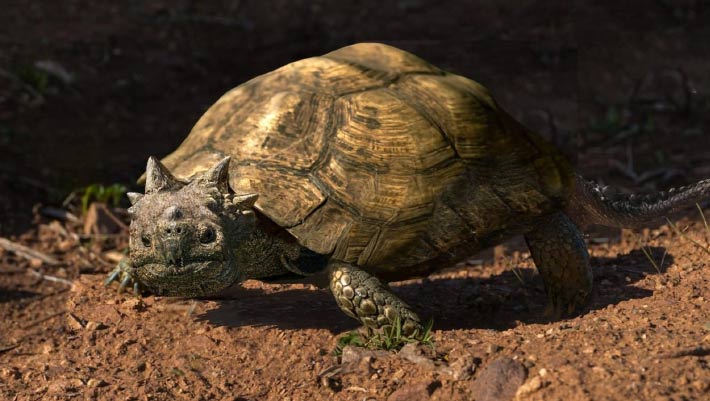
In 2000 a virtually complete Scelidosaurus skeleton was discovered in England. This fossil's hundreds of armor plates and spikes are preserved in their life positions, providing extraordinary details about how this dinosaur looked. St. George is the only place anywhere in the Western Hemisphere that the 11-foot long Scelidosaurus replica has been on display.
The St. George Dinosaur Discovery Site at Johnson Farm (St. George, Utah) is home to exceptionally well-preserved dinosaur tracks, some displaying skin impressions. These tracks, along with hundreds of fossil fish, plants, rare dinosaur remains, invertebrates traces and important sedimentary structures, show evidence that this site was produced along the western edge of a large, Early Jurassic (age between 195-198 million years ago) freshwater lake named Lake Dixie. 

Source: www.sgcity.org/dinotrax/
Taxons Scelidosaurus

In 2000 a virtually complete Scelidosaurus skeleton was discovered in England. This fossil's hundreds of armor plates and spikes are preserved in their life positions, providing extraordinary details about how this dinosaur looked. St. George is the only place anywhere in the Western Hemisphere that the 11-foot long Scelidosaurus replica has been on display. The St. George Dinosaur Discovery Site at Johnson Farm (St. George, Utah) is home to exceptionally well-preserved dinosaur tracks, some displaying skin impressions. These tracks, along with hundreds of fossil fish, plants, rare dinosaur remains, invertebrates traces and important sedimentary structures, show evidence that this site was produced along the western edge of a large, Early Jurassic (age between 195-198 million years ago) freshwater lake named Lake Dixie. Source: www.sgcity.org/dinotrax/

armure Jurassique inférieur Jurassique fossile +6
In 2000 a virtually complete Scelidosaurus skeleton was discovered in England. This fossil's hundreds of armor plates and spikes are preserved in their life positions, providing extraordinary details about how this dinosaur looked. St. George is the only place anywhere in the Western Hemisphere that the 11-foot long Scelidosaurus replica has been on display.
The St. George Dinosaur Discovery Site at Johnson Farm (St. George, Utah) is home to exceptionally well-preserved dinosaur tracks, some displaying skin impressions. These tracks, along with hundreds of fossil fish, plants, rare dinosaur remains, invertebrates traces and important sedimentary structures, show evidence that this site was produced along the western edge of a large, Early Jurassic (age between 195-198 million years ago) freshwater lake named Lake Dixie. 

Source: www.sgcity.org/dinotrax/
Taxons Scelidosauridae

In 2000 a virtually complete Scelidosaurus skeleton was discovered in England. This fossil's hundreds of armor plates and spikes are preserved in their life positions, providing extraordinary details about how this dinosaur looked. St. George is the only place anywhere in the Western Hemisphere that the 11-foot long Scelidosaurus replica has been on display. The St. George Dinosaur Discovery Site at Johnson Farm (St. George, Utah) is home to exceptionally well-preserved dinosaur tracks, some displaying skin impressions. These tracks, along with hundreds of fossil fish, plants, rare dinosaur remains, invertebrates traces and important sedimentary structures, show evidence that this site was produced along the western edge of a large, Early Jurassic (age between 195-198 million years ago) freshwater lake named Lake Dixie. Source: www.sgcity.org/dinotrax/

armure Jurassique inférieur Jurassique fossile +6

Actualités

D’étranges roches en « peau d’éléphant » révèlent une vie ancienne dans l’océan sombre
Maroc fossile découverte formation
Une étrange formation rocheuse ridée au Maroc a amené les scientifiques à repenser l'endroit où pourraient vivre d'anciens microbes. Au lieu d’eaux peu profondes et ensoleillées, ces microbes pourraient avoir prospéré dans les profondeurs de l’océan, alimentés par les produits chimiques libérés par les glissements de terrain sous-marins. La découverte suggère que les environnements sombres et riches en nutriments ont abrité des écosystèmes prospères beaucoup plus tôt que prévu. Cela soulève également la possibilité que de nombreux fossiles similaires aient été négligés ou mal interprétés.
03/04/2026 sciencedaily-paleo ⚙ Traduction automatique
Les scientifiques ont trouvé un bébé dinosaure caché dans la roche et il est étonnamment mignon
os dessin Corée du Sud Dinosauria Doolysaurus tomographie découverte crâne
Des scientifiques ont découvert un bébé dinosaure rare en Corée du Sud et l'ont baptisé Doolysaurus, en hommage à un célèbre personnage de dessin animé. Grâce à des tomodensitogrammes de pointe, ils ont découvert des os cachés, notamment un crâne, dans la roche beaucoup plus rapidement que les méthodes traditionnelles. Le jeune dinosaure, peut-être duveteux et ressemblant à un agneau, avait même des calculs gastriques révélant qu'il mangeait un mélange de plantes et de petits animaux. Cette découverte suggère que de nombreux autres dinosaures pourraient encore être cachés dans les roches coréennes.
01/04/2026 sciencedaily ⚙ Traduction automatique
Cette empreinte de main vieille de 67 800 ans est la plus ancienne œuvre d'art jamais découverte
griffe Australie Indonésie découverte
Des chercheurs ont découvert l’art rupestre le plus ancien au monde : un pochoir peint à la main vieux de 67 800 ans en Indonésie. Le design inhabituel en forme de griffe fait allusion aux premières pensées symboliques et éventuellement aux croyances spirituelles. Cette découverte renforce également l’hypothèse selon laquelle les humains ont atteint l’Australie il y a au moins 65 000 ans. Il offre un aperçu rare de la vie créative de certains de nos premiers ancêtres.
22/03/2026 sciencedaily-human-evo ⚙ Traduction automatique
Une étude du MIT révèle que les premiers animaux de la Terre étaient probablement d’anciennes éponges de mer
empreintes découverte géologie étude
Les scientifiques du MIT ont trouvé des preuves chimiques convaincantes selon lesquelles les premiers animaux de la Terre étaient probablement d’anciennes éponges marines. Cachées à l’intérieur de roches vieilles de plus de 541 millions d’années se trouvent de rares « empreintes digitales » moléculaires qui correspondent aux composés fabriqués par les démosponges modernes. Après avoir testé des roches, des éponges vivantes et des molécules fabriquées en laboratoire, les chercheurs ont confirmé que les signaux provenaient de la vie et non de la géologie. Cette découverte suggère que les éponges prospéraient dans les océans bien avant l’apparition de la plupart des autres groupes d’animaux.
27/02/2026 sciencedaily-paleo ⚙ Traduction automatique
L'ADN ancien résout un mystère funéraire vieux de 5 500 ans en Suède
membre ADN Suède découverte
L'ADN ancien provenant d'un site funéraire de l'âge de pierre en Suède montre qu'il y a 5 500 ans, les familles étaient plus complexes que prévu. De nombreuses personnes enterrées ensemble n'étaient pas des membres de la famille immédiate, mais des parents au deuxième ou au troisième degré. Une tombe contenait une jeune femme aux côtés de deux enfants frères et sœurs, mais elle n’était pas leur mère. Les découvertes font allusion à des communautés très unies où la parenté élargie comptait profondément.
19/02/2026 sciencedaily-human-evo ⚙ Traduction automatique
1 2 3 4 5 6 7 8 9 10 11 12 13 14 15