←

fossile

Nature du spécimen

248 image(s) · 267 Actualités

Galerie d'images

The Pectinida fossil Neithea in Lower Santonian bioclastic limestone. Found near Les Âges in the commune of Saint-Crépin-de-Richemont, Dordogne, France.
Intervalles Santonian

The Pectinida fossil Neithea in Lower Santonian bioclastic limestone. Found near Les Âges in the commune of Saint-Crépin-de-Richemont, Dordogne, France.

France Santonien fossile
Crommium angustatum Grateloup, 1827 fossil snail shell (apical view) from the Oligocene of France. (42 mm across at its widest)
Of all the molluscs, the gastropods (snails) have made the most ecological adaptations.  They can be found in almost all fundamental environments: marine, freshwater, terrestrial.  Most gastropods live in the ocean, and have a single, asymmetrically coiled, external shell of calcium carbonate (CaCO3 - usually aragonite).  The hard calcareous shell is the most easily fossilized part of the gastropod.  The soft parts of a snail (the “slug” portion) include a well developed head having eyes, tentacles, and a mouth, and a well developed, strong, muscular foot used principally for locomotion.  The shell is carried upright on the snail’s back, or is partially dragged behind.  When threatened by a predator, many snails can retract their soft parts into the shell’s interior for protection.
Many fossil snails in the Paleozoic rock record are often not well preserved, or are preserved as internal molds.  The original aragonite of many gastropod shells is not stable on geologic time scales, and often recrystallizes or dissolves completely away.  Fossil snail shells in Mesozoic and Cenozoic rocks are usually better preserved.
Classification: Animalia, Mollusca, Gastropoda, Naticoidea, Ampullinidae
Age: Rupelian Stage (Stampian Stage), Lower Oligocene

Locality: Gaas, Landes Department, Aquitaine, southwestern France

Crommium angustatum Grateloup, 1827 fossil snail shell (apical view) from the Oligocene of France. (42 mm across at its widest) Of all the molluscs, the gastropods (snails) have made the most ecological adaptations. They can be found in almost all fundamental environments: marine, freshwater, terrestrial. Most gastropods live in the ocean, and have a single, asymmetrically coiled, external shell of calcium carbonate (CaCO3 - usually aragonite). The hard calcareous shell is the most easily fossilized part of the gastropod. The soft parts of a snail (the “slug” portion) include a well developed head having eyes, tentacles, and a mouth, and a well developed, strong, muscular foot used principally for locomotion. The shell is carried upright on the snail’s back, or is partially dragged behind. When threatened by a predator, many snails can retract their soft parts into the shell’s interior for protection. Many fossil snails in the Paleozoic rock record are often not well preserved, or are preserved as internal molds. The original aragonite of many gastropod shells is not stable on geologic time scales, and often recrystallizes or dissolves completely away. Fossil snail shells in Mesozoic and Cenozoic rocks are usually better preserved. Classification: Animalia, Mollusca, Gastropoda, Naticoidea, Ampullinidae Age: Rupelian Stage (Stampian Stage), Lower Oligocene Locality: Gaas, Landes Department, Aquitaine, southwestern France

écaille locomotion prédateur France +6
Crommium angustatum Grateloup, 1827 fossil snail shell (abapertural view) from the Oligocene of France. (57 mm tall)
Of all the molluscs, the gastropods (snails) have made the most ecological adaptations.  They can be found in almost all fundamental environments: marine, freshwater, terrestrial.  Most gastropods live in the ocean, and have a single, asymmetrically coiled, external shell of calcium carbonate (CaCO3 - usually aragonite).  The hard calcareous shell is the most easily fossilized part of the gastropod.  The soft parts of a snail (the “slug” portion) include a well developed head having eyes, tentacles, and a mouth, and a well developed, strong, muscular foot used principally for locomotion.  The shell is carried upright on the snail’s back, or is partially dragged behind.  When threatened by a predator, many snails can retract their soft parts into the shell’s interior for protection.
Many fossil snails in the Paleozoic rock record are often not well preserved, or are preserved as internal molds.  The original aragonite of many gastropod shells is not stable on geologic time scales, and often recrystallizes or dissolves completely away.  Fossil snail shells in Mesozoic and Cenozoic rocks are usually better preserved.
Classification: Animalia, Mollusca, Gastropoda, Naticoidea, Ampullinidae
Age: Rupelian Stage (Stampian Stage), Lower Oligocene

Locality: Gaas, Landes Department, Aquitaine, southwestern France

Crommium angustatum Grateloup, 1827 fossil snail shell (abapertural view) from the Oligocene of France. (57 mm tall) Of all the molluscs, the gastropods (snails) have made the most ecological adaptations. They can be found in almost all fundamental environments: marine, freshwater, terrestrial. Most gastropods live in the ocean, and have a single, asymmetrically coiled, external shell of calcium carbonate (CaCO3 - usually aragonite). The hard calcareous shell is the most easily fossilized part of the gastropod. The soft parts of a snail (the “slug” portion) include a well developed head having eyes, tentacles, and a mouth, and a well developed, strong, muscular foot used principally for locomotion. The shell is carried upright on the snail’s back, or is partially dragged behind. When threatened by a predator, many snails can retract their soft parts into the shell’s interior for protection. Many fossil snails in the Paleozoic rock record are often not well preserved, or are preserved as internal molds. The original aragonite of many gastropod shells is not stable on geologic time scales, and often recrystallizes or dissolves completely away. Fossil snail shells in Mesozoic and Cenozoic rocks are usually better preserved. Classification: Animalia, Mollusca, Gastropoda, Naticoidea, Ampullinidae Age: Rupelian Stage (Stampian Stage), Lower Oligocene Locality: Gaas, Landes Department, Aquitaine, southwestern France

écaille locomotion prédateur France +6
Permineralized Jurassic fern rhizome from Korsaröd (Sweden) of Osmundastrum pulchellum. It has preserved Nuclei and Chromosomes, a fine subcellular detail has rarely been documented in fossils. It´s Rooted in DNA content was used to extrapolate relative genome, finding relationships with extant Osmundastrum cinnamomeum, and confirmed a monophyletic Osmunda. Osmundastrum pulchellum is one of the earliest fossil Osmundastrum rhizomes known so far, and the first of its kind from the Mesozoic of Europe. Its impressive preservation has lead to know even the biotic interactions with the Plant. It also has recovered the only know case know to preserve the ongoing mitosis processes in plant cells via calcification from volcanic hydrothermal brine.

Permineralized Jurassic fern rhizome from Korsaröd (Sweden) of Osmundastrum pulchellum. It has preserved Nuclei and Chromosomes, a fine subcellular detail has rarely been documented in fossils. It´s Rooted in DNA content was used to extrapolate relative genome, finding relationships with extant Osmundastrum cinnamomeum, and confirmed a monophyletic Osmunda. Osmundastrum pulchellum is one of the earliest fossil Osmundastrum rhizomes known so far, and the first of its kind from the Mesozoic of Europe. Its impressive preservation has lead to know even the biotic interactions with the Plant. It also has recovered the only know case know to preserve the ongoing mitosis processes in plant cells via calcification from volcanic hydrothermal brine.

ADN Suède Jurassique Mésozoïque +1
Reprodução a partir da gravura original do Holótipo, Hybodus acutus Agassiz, 1837, na publicação e prancha: L. Agassiz. 1837. Recherches sur les poissons fossiles Vol.3 (Atlas); Tab 10

Reprodução a partir da gravura original do Holótipo, Hybodus acutus Agassiz, 1837, na publicação e prancha: L. Agassiz. 1837. Recherches sur les poissons fossiles Vol.3 (Atlas); Tab 10

fossile poisson
Graph of relative Dinosaur fossil populations from each period of geologic time in the Mesozoic, ordered by major clade

Graph of relative Dinosaur fossil populations from each period of geologic time in the Mesozoic, ordered by major clade

Mésozoïque fossile Dinosauria
Fossil of the Decapod Cycleryon

Fossil of the Decapod Cycleryon

fossile
Fig 2. Geological section of the “Mittlerer Kimmeridge”.
This figure is based on Fischer and modified from Lallensack et al. Beds yielding terrestrial fossils are listed.

Fig 2. Geological section of the “Mittlerer Kimmeridge”. This figure is based on Fischer and modified from Lallensack et al. Beds yielding terrestrial fossils are listed.

fossile
Fossil shell of Aulacostephanus yo from France, on display at Gallery of Paleontology and Comparative Anatomy, Paris.
Intervalles Kimmeridgian

Fossil shell of Aulacostephanus yo from France, on display at Gallery of Paleontology and Comparative Anatomy, Paris.

France fossile anatomie
The GSSP for the Hirnantian stage in the ICS geological timescale (uppermost Ordovician stage), located in the Wangjiawan profile (an outcrop of black shale, brownishly weathered siliceous shale and chert layers of the Wufeng Formation) along the G241 road, about 40 km north of Yichang, Hubei, China. An exact golden spike is missing in the profile (2025) but a memorial plague marks the place. The GSSP occurs at the first appearance of fossils of the graptolite species Normalograptus extraordinarius. It was ratified in 2006.

The GSSP for the Hirnantian stage in the ICS geological timescale (uppermost Ordovician stage), located in the Wangjiawan profile (an outcrop of black shale, brownishly weathered siliceous shale and chert layers of the Wufeng Formation) along the G241 road, about 40 km north of Yichang, Hubei, China. An exact golden spike is missing in the profile (2025) but a memorial plague marks the place. The GSSP occurs at the first appearance of fossils of the graptolite species Normalograptus extraordinarius. It was ratified in 2006.

Chine Hirnantien Ordovicien fossile +1
Crioceratites fabreae fossils on display at the French National Museum of Natural History in Paris, France.

Crioceratites fabreae fossils on display at the French National Museum of Natural History in Paris, France.

musée France fossile
Crioceratites duvali fossil on display at the French National Museum of Natural History in Paris, France.

Crioceratites duvali fossil on display at the French National Museum of Natural History in Paris, France.

musée France fossile
“Sternberger Kuchen” (“Sternberg cake”), a large late Pleistocene glaciofluvial pebble of a highly fossiliferous, shallow marine sandstone of the North German Paleogene (Sülstorf beds, formerly known as “Sternberg rock”, Chattian, Oligocene, about 25 million years old). The fossil content is mainly made up of mollusks (pelecypods, gastropods, scaphopods). Provenance: Sternberg, Mecklenburg-Vorpommern, Northeast Germany.

“Sternberger Kuchen” (“Sternberg cake”), a large late Pleistocene glaciofluvial pebble of a highly fossiliferous, shallow marine sandstone of the North German Paleogene (Sülstorf beds, formerly known as “Sternberg rock”, Chattian, Oligocene, about 25 million years old). The fossil content is mainly made up of mollusks (pelecypods, gastropods, scaphopods). Provenance: Sternberg, Mecklenburg-Vorpommern, Northeast Germany.

Allemagne Chattien Pléistocène supérieur Oligocène +3
Fossil of Cainotherium, an extinct mammal https://hdl.handle.net/21.12123/66925 in ferruginous rock of Oligocene (Chattian) age from Ingolstadt in Bavaria, Germany - Took the photo at Museon museum, Den Haag
Intervalles Chattian

Fossil of Cainotherium, an extinct mammal https://hdl.handle.net/21.12123/66925 in ferruginous rock of Oligocene (Chattian) age from Ingolstadt in Bavaria, Germany - Took the photo at Museon museum, Den Haag

musée Allemagne Chattien Oligocène +1
A fossil tree from the Coal Creek region, Fruitland Formation, latest Cretaceous (Late Campanian), San Juan Basin, New Mexico

A fossil tree from the Coal Creek region, Fruitland Formation, latest Cretaceous (Late Campanian), San Juan Basin, New Mexico

Mexique Fruitland Campanien Crétacé +2
1 2 3 4 5 6 7 8 9 10 11 12 13 14 15 16

Actualités

Les cahiers disparus qui ont résolu un mystère fossile vieux de 55 millions d'années
prédateur Nouvelle-Zélande fossile découverte poisson
Un poisson fossile spectaculaire découvert sur une falaise isolée en Nouvelle-Zélande il y a près de 30 ans a enfin révélé toute son histoire grâce à une découverte inattendue : les carnets de terrain du collectionneur original, perdus depuis longtemps. Le fossile de 1,2 mètre, conservé dans des détails tridimensionnels époustouflants, appartenait à un ancien prédateur ressemblant à un tarpon qui naviguait dans les eaux néo-zélandaises il y a environ 55 millions d'années.
12/06/2026 sciencedaily ⚙ Traduction automatique
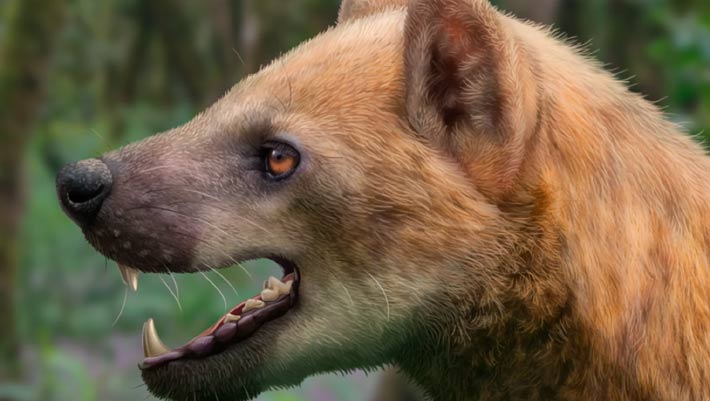
New Species of Ancient Bear-Dog Identified in Spain
Nouvelle espèce d'ancien chien-ours identifiée en Espagne
bassin Espagne fossile spécimen mammifères nouvelle espèce
Les paléontologues ont identifié une espèce jusqu'alors inconnue d'amphicyonidés - la famille éteinte de mammifères carnivores communément connue sous le nom de chiens-ours - à partir de deux spécimens découverts sur un riche site fossile du bassin du Vallès-Penedès, près de Barcelone, en Espagne. L'article Nouvelle espèce d'ancien chien-ours identifié en Espagne est apparu en premier sur Sci.News : Breaking Science News.
11/06/2026 sci-news ⚙ Traduction automatique
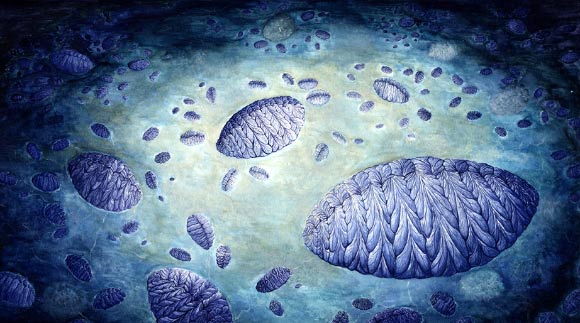
Earth’s Earliest Animals May Have Thrived Too Easily to Evolve
Les premiers animaux de la Terre ont peut-être prospéré trop facilement pour évoluer
reproduction Édiacarien fossile datation évolution
Les fossiles de certains des animaux les plus anciens connus sur Terre, datant d'il y a 574 millions d'années (période Édiacarienne), suggèrent que le clonage, et non la compétition, a dominé les mers de l'Édiacarien, ralentissant l'évolution jusqu'à ce que le stress environnemental contribue à l'essor de la reproduction sexuée et à un éclatement de la biodiversité. L’article Les premiers animaux de la Terre ont peut-être prospéré trop facilement pour évoluer est apparu en premier sur Sci.News : Breaking Science News.
10/06/2026 sci-news ⚙ Traduction automatique
Description d'un fossile de dinosaure rare du groupe de Nanaimo du Crétacé supérieur
os vertèbre description Canada Colombie Crétacé Crétacé supérieur fossile Dinosauria Ornithomimosauria
Les chercheurs ont décrit une seule vertèbre caudale de dinosaure (coccyx) de l'île Denman (Colombie-Britannique, Canada).  Il a été identifié comme une vertèbre caudale d'ornithomimosaure. Le fossile, censé représenter un os de la partie médiane de la queue, n'est que le deuxième fossile de dinosaure identifié dans le groupe de Nanaimo du Crétacé supérieur. De plus, il
10/06/2026 everythingdinosaur ⚙ Traduction automatique
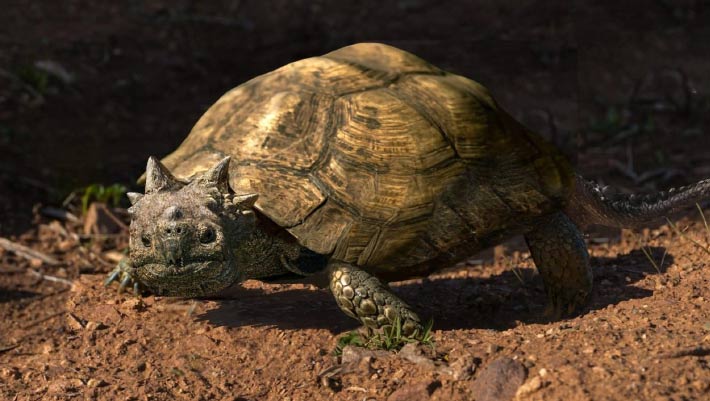
Fossil Discovery in Patagonia Reveals New Species of Horned Turtle
La découverte de fossiles en Patagonie révèle de nouvelles espèces de tortues à cornes
Argentine Maastrichtien fossile Dinosauria découverte extinction nouvelle espèce autres reptiles
Les paléontologues ont identifié une nouvelle espèce de tortue méiolaniforme du nord de la Patagonie, en Argentine, qui vivait à l'époque maastrichtienne, juste avant l'extinction massive déclenchée par un astéroïde qui a anéanti tous les dinosaures non aviaires. L'article La découverte de fossiles en Patagonie révèle de nouvelles espèces de tortues à cornes apparaît en premier sur Sci.News : Breaking Science News.
09/06/2026 sci-news ⚙ Traduction automatique
1 2 3 4 5 6 7 8 9 10 11 12 13 14 15 16 17 18 19 20 21 22 23 24 25 26 27 28 29 30 31 32 33 34 35 36 37 38 39 40 41 42 43 44 45 46 47 48 49 50 51 52 53 54